Artwork
Brahma
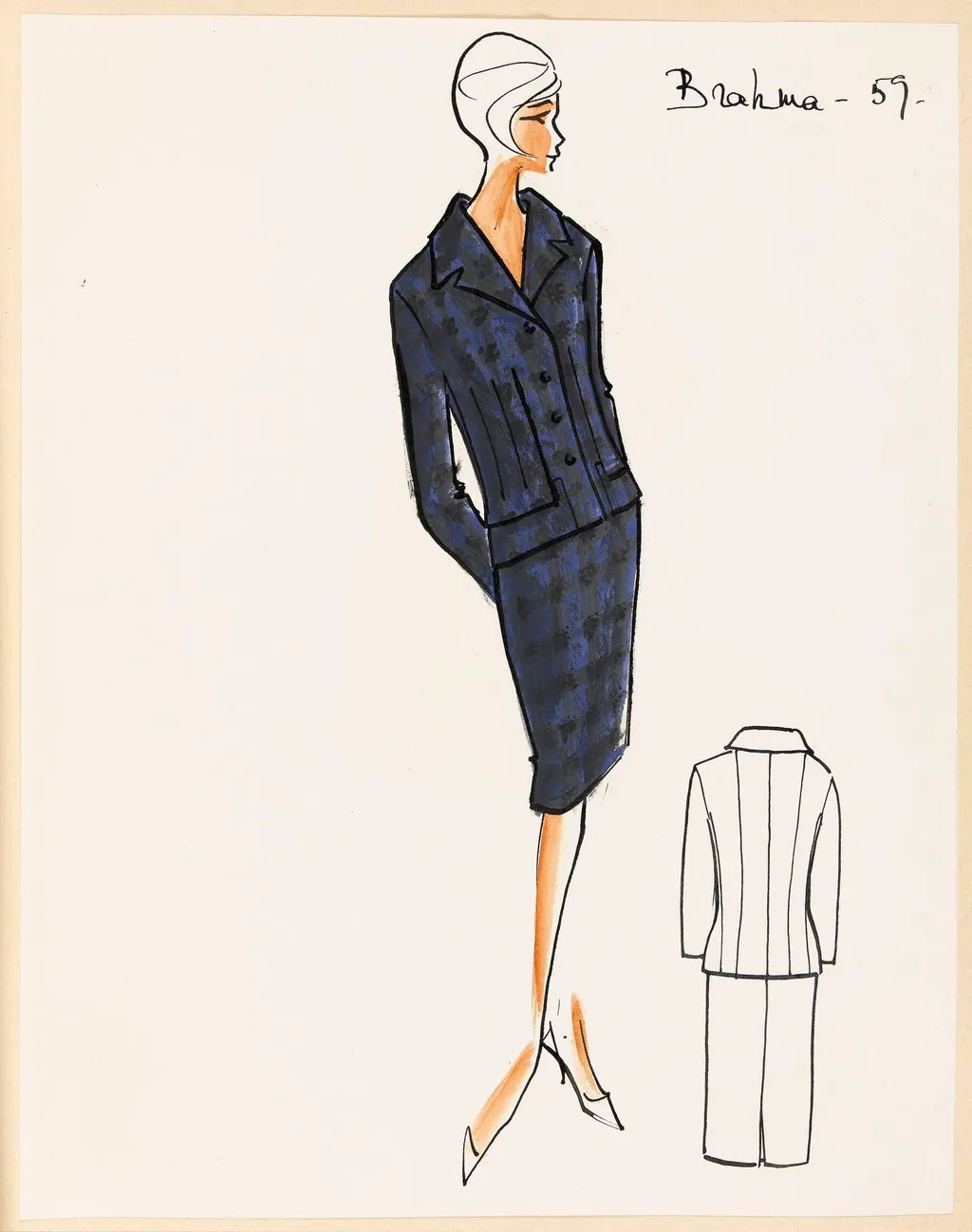
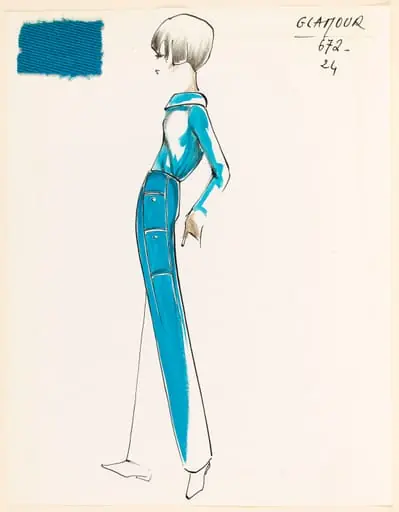
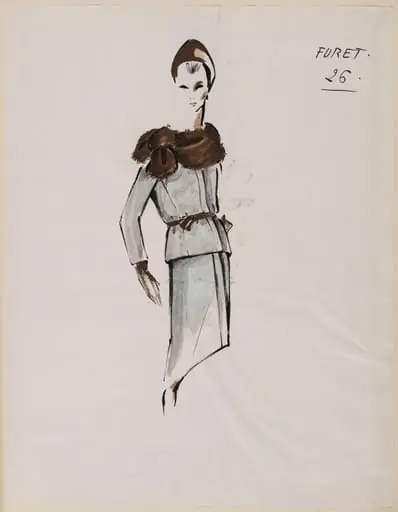
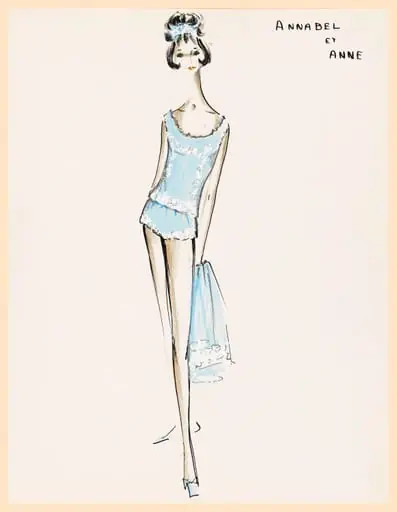
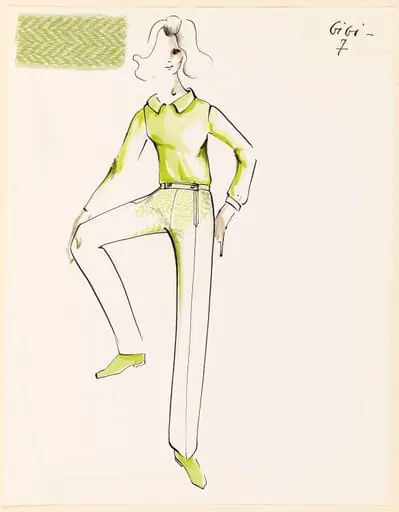
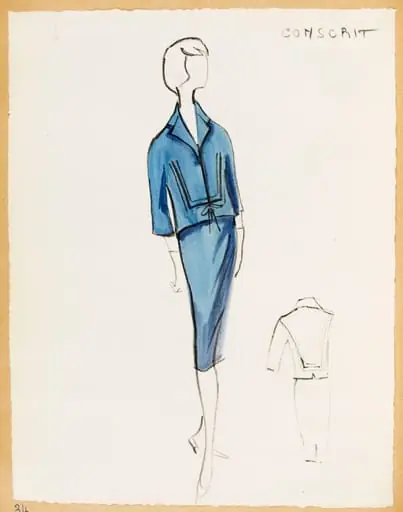
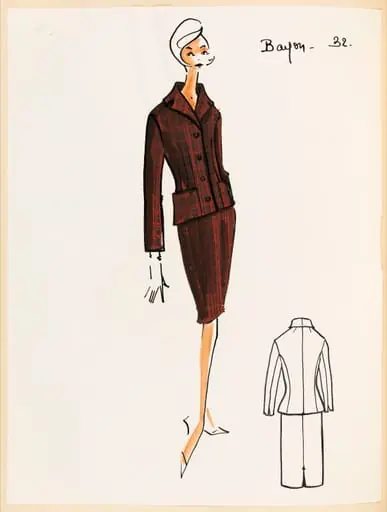
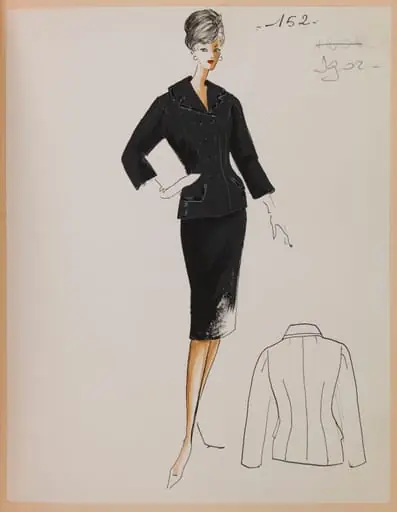
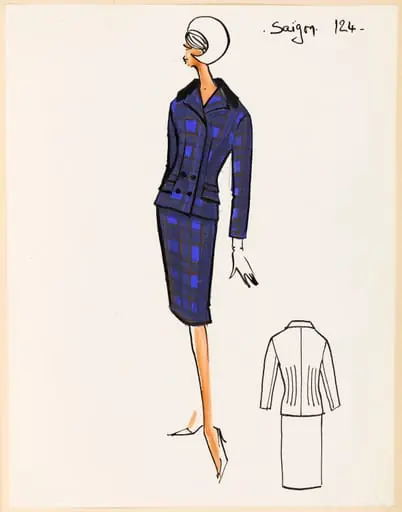
Brahma is a drawing by Carven. It dates from 1959 and is held in the collection of the Palais Galliera - Musée de la Mode de la Ville de Paris.
About this work
Overview
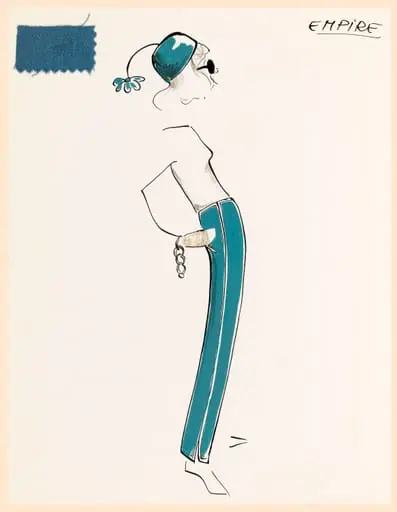
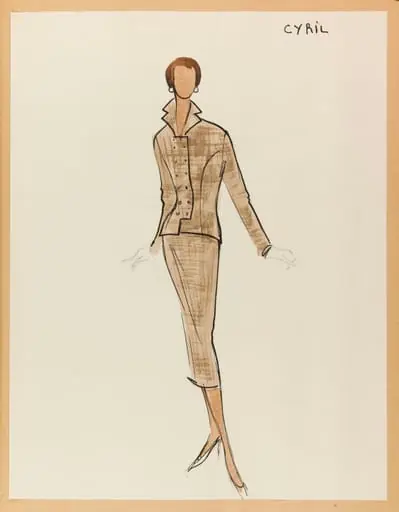
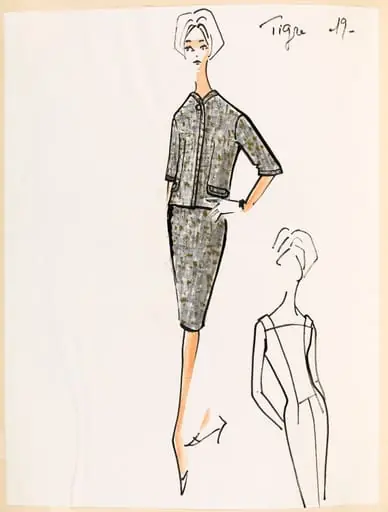
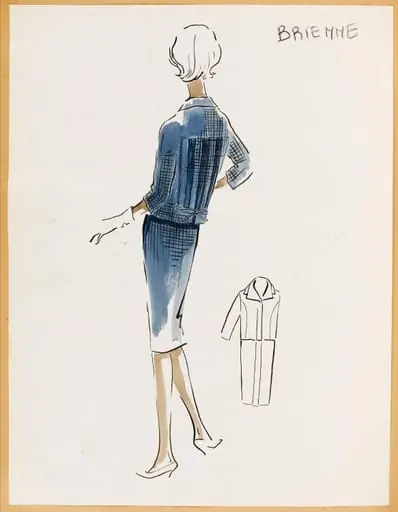
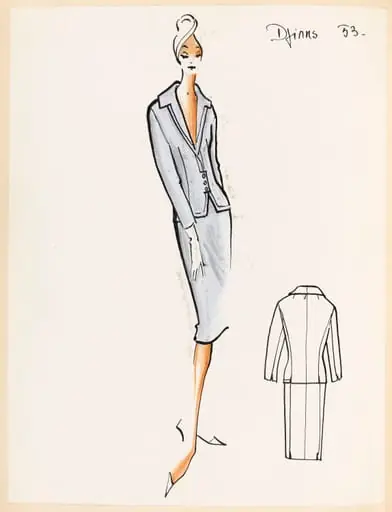
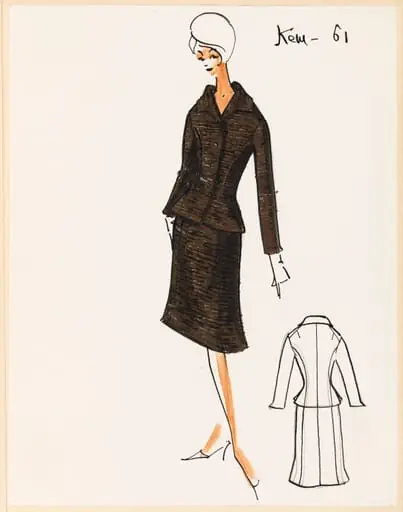
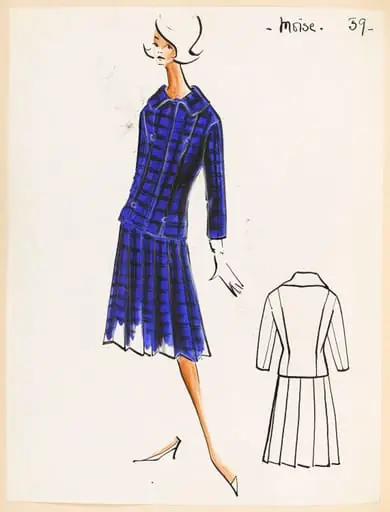
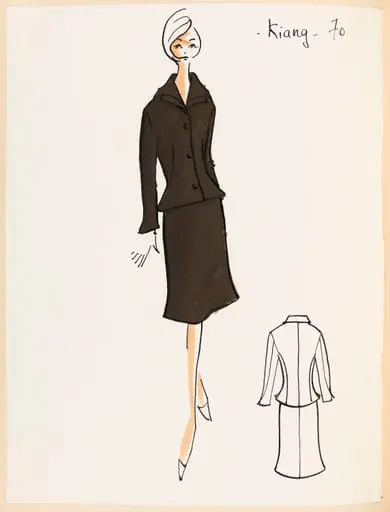
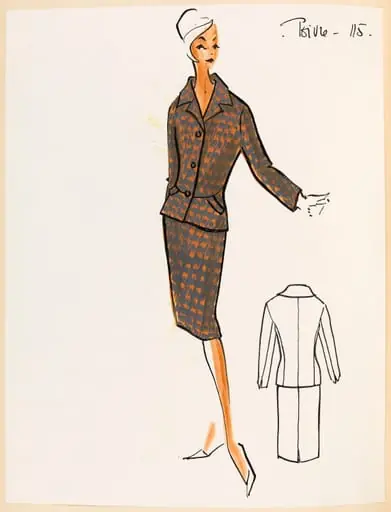
Created around 1959 by the artist Carven, this work is part of the Museum of Ethnography’s collection. It presents a stylized portrait of a woman in a tailored dark blue suit, rendered with minimal detail and a focus on form. The composition combines a realistic figure with an abstracted outline of the garment, suggesting an interest in the relationship between clothing and identity.
Subject & Meaning
The attire and posture reflect mid-century norms of female professionalism, while the head covering introduces cultural or personal symbolism.
The subject is a woman dressed in a professional ensemble—jacket, skirt, high heels, and a white head covering—posing with hands in pockets, conveying quiet self-assurance. The attire and posture reflect mid-century norms of female professionalism, while the head covering introduces cultural or personal symbolism. The work avoids narrative, instead inviting contemplation of how dress communicates status and presence.
Technique & Style
Carven employs a restrained palette dominated by deep blue, with stark white accents for the head covering. The figure is rendered with clean lines and subtle modeling, while the outline of the suit to the right is drawn in sparse, elegant strokes. This dual representation—realistic figure alongside abstracted garment—creates a visual dialogue between the body and its attire, emphasizing structure over emotion.
History & Provenance
The work entered the Museum of Ethnography’s collection following its creation in 1959. No documentation exists regarding its initial exhibition or ownership prior to acquisition. Its inclusion in an ethnographic context suggests the museum viewed the piece as a cultural artifact reflecting social norms of the era, rather than as a conventional fine art portrait.
Context
In late 1950s Europe and North America, women’s professional attire was becoming more standardized, with tailored suits symbolizing entry into formal workplaces. The white head covering may reference religious practice, regional dress, or a stylistic choice common in certain design circles. Carven’s focus on clothing as a marker of identity aligns with broader postwar interests in material culture and gender roles.
Legacy
Though not widely exhibited outside the Museum of Ethnography, the work remains a quiet example of how mid-century artists engaged with everyday dress as a subject of visual inquiry. Its understated approach contrasts with more overtly political or expressive works of the period, offering a nuanced record of how women’s presence in public life was visually encoded through fashion.
Artist & collection
Artist
These delicate ink-on-paper drawings capture the quiet poetry of everyday things: pinecones, reeds, apples.
Museum
Palais Galliera - Musée de la Mode de la Ville de Paris
Continue through works from the same source collection.