Artwork
Caille
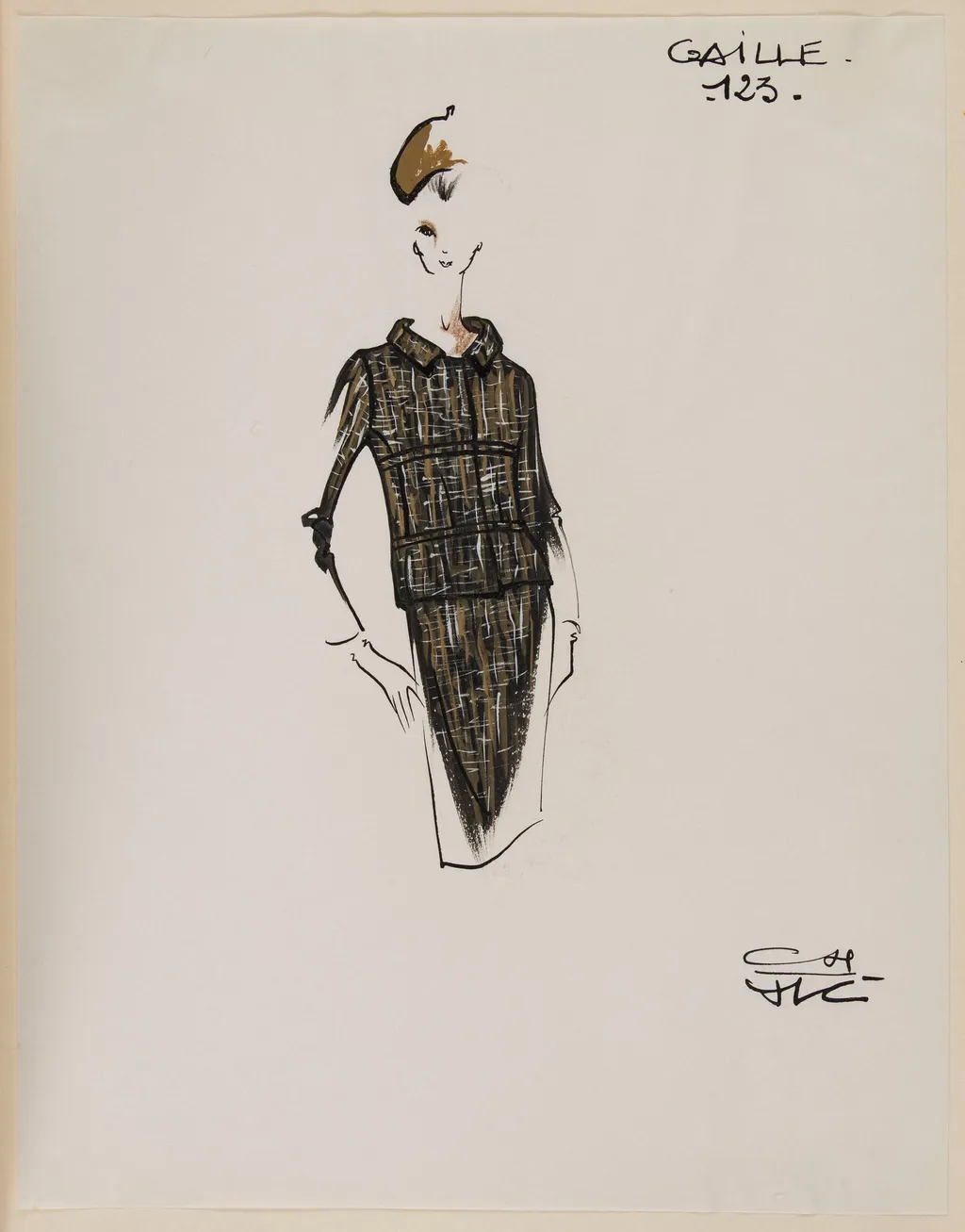
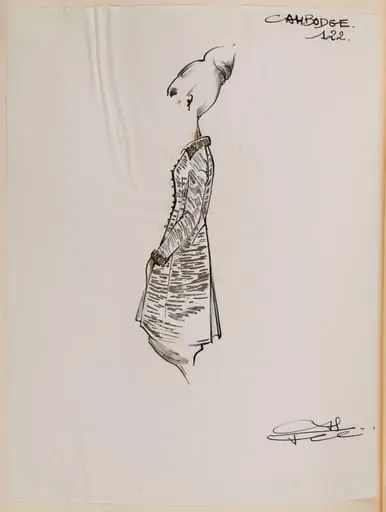
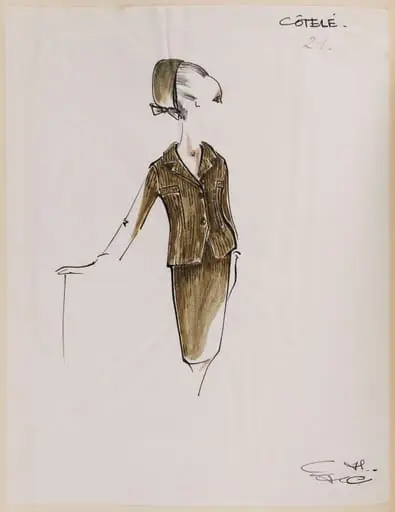
Caille is a drawing by Carven. It dates from 1963 and is held in the collection of the Palais Galliera - Musée de la Mode de la Ville de Paris.
About this work
Overview
Caille is a graphite drawing created around 1963 by the artist Carven. It is part of the collection at the Museum of Ethnography. The work presents a seated female figure rendered with precise linework and subtle tonal variations, emphasizing fabric texture and posture over facial detail. The composition is restrained, focusing on the interplay of clothing and form within a minimal background.
Subject & Meaning
The absence of a visible face shifts focus to the body’s posture and clothing, possibly reflecting societal norms around female decorum during the period.
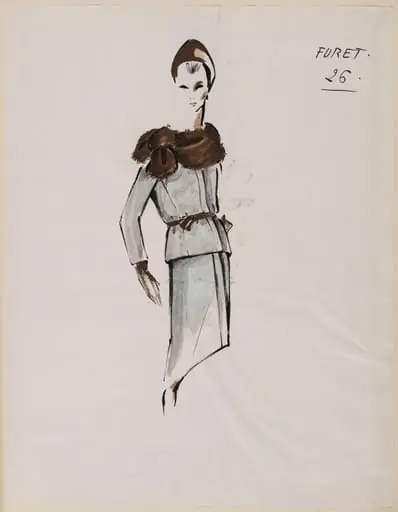
The figure is depicted in a modest, everyday attire—a tweed shirt and pencil skirt—suggesting a middle-class woman of the early 1960s. Her turned posture and downcast gaze imply introspection or quiet composure. The absence of a visible face shifts focus to the body’s posture and clothing, possibly reflecting societal norms around female decorum during the period. The hat or headpiece reinforces a sense of formal presentation.
Technique & Style
Carven employs fine graphite strokes to simulate the woven texture of tweed, using layered hatching and light washes to differentiate between dark brown, light brown, and white threads. The grid-like pattern of the fabric is suggested rather than outlined, enhancing realism through tonal nuance. The smooth, untextured beige background isolates the figure, directing attention to the intricate rendering of clothing and hair.
History & Provenance
The drawing entered the Museum of Ethnography’s collection in the late 1960s, likely acquired directly from the artist or through a private donor with ties to Carven’s circle. No exhibition history or documentation of prior ownership is publicly available. Its classification within an ethnographic institution suggests an interest in documenting contemporary social dress as cultural artifact.
Context
Created during a period of shifting gender roles in Europe, the drawing reflects a conservative aesthetic in women’s fashion, even as societal changes were underway. The emphasis on tailored clothing and restrained posture aligns with mid-century ideals of femininity. Carven’s focus on ordinary attire may reflect an interest in the quiet rituals of daily life, distinct from the more overtly political art of the time.
Legacy
Caille remains a quiet example of Carven’s engagement with domestic and sartorial detail. While not widely exhibited, it contributes to scholarly discussions on mid-century drawing practices and the representation of everyday women in art. Its preservation in an ethnographic context underscores its value as a record of material culture rather than a purely aesthetic object.
Artist & collection
Artist
These delicate ink-on-paper drawings capture the quiet poetry of everyday things: pinecones, reeds, apples.
Museum
Palais Galliera - Musée de la Mode de la Ville de Paris
Continue through works from the same source collection.