Artwork
Ceinture verte
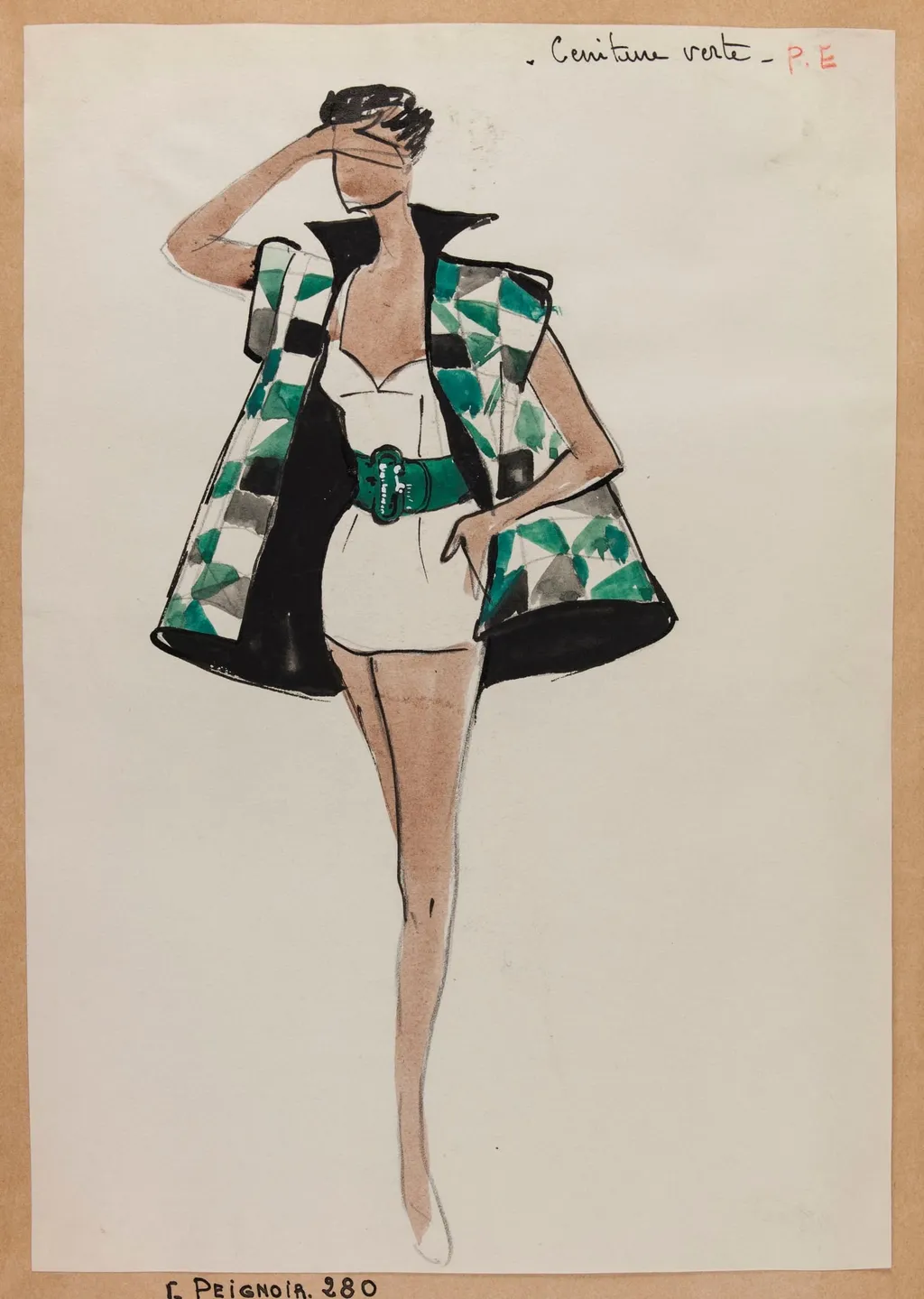
Ceinture verte is a drawing by Carven. It dates from 1951 and is held in the collection of the Palais Galliera - Musée de la Mode de la Ville de Paris.
About this work
Overview
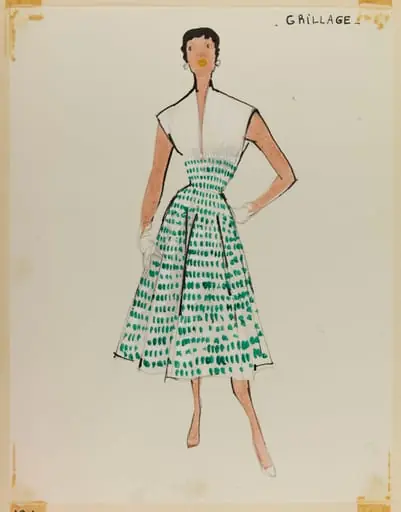
Created around 1951, *Ceinture verte* is a drawing by the French fashion house Carven, now part of the collection of the Museum of Ethnography. The work portrays a woman in a striking ensemble, captured in a relaxed stance with one hand placed on her head. The title, translating to “green belt,” refers to the vivid cummerbund that anchors the composition.
Subject & Meaning
The figure is dressed in a white blouse whose sleeves and skirt are overlaid with bold black and green geometric panels. A black cummerbund cinches the waist, while the sole element of bright green—the belt—draws immediate attention, suggesting a focal point of fashion emphasis. The pose and attire together hint at mid‑century modernity and the playful experimentation of post‑war style.
Technique & Style
Carven employs loose, confident lines and rapid brushwork, allowing the drawing’s contours to emerge with a sense of immediacy. Flat areas of color—predominantly black, white, and a single green accent—reinforce the graphic quality of the composition. The minimal shading and swift strokes convey both movement and the crisp geometry characteristic of early 1950s fashion illustration.
History & Provenance
The piece dates to the early 1950s, a period when Carven was expanding its reputation for innovative ready‑to‑wear designs. After its creation, the drawing entered the holdings of the Museum of Ethnography, where it serves as a visual document of contemporary dress and the evolving role of accessories such as belts in women’s fashion.
Artist & collection
Artist
These delicate ink-on-paper drawings capture the quiet poetry of everyday things: pinecones, reeds, apples.

Museum
Palais Galliera - Musée de la Mode de la Ville de Paris
Continue through works from the same source collection.