Artwork
Scarabé d'or
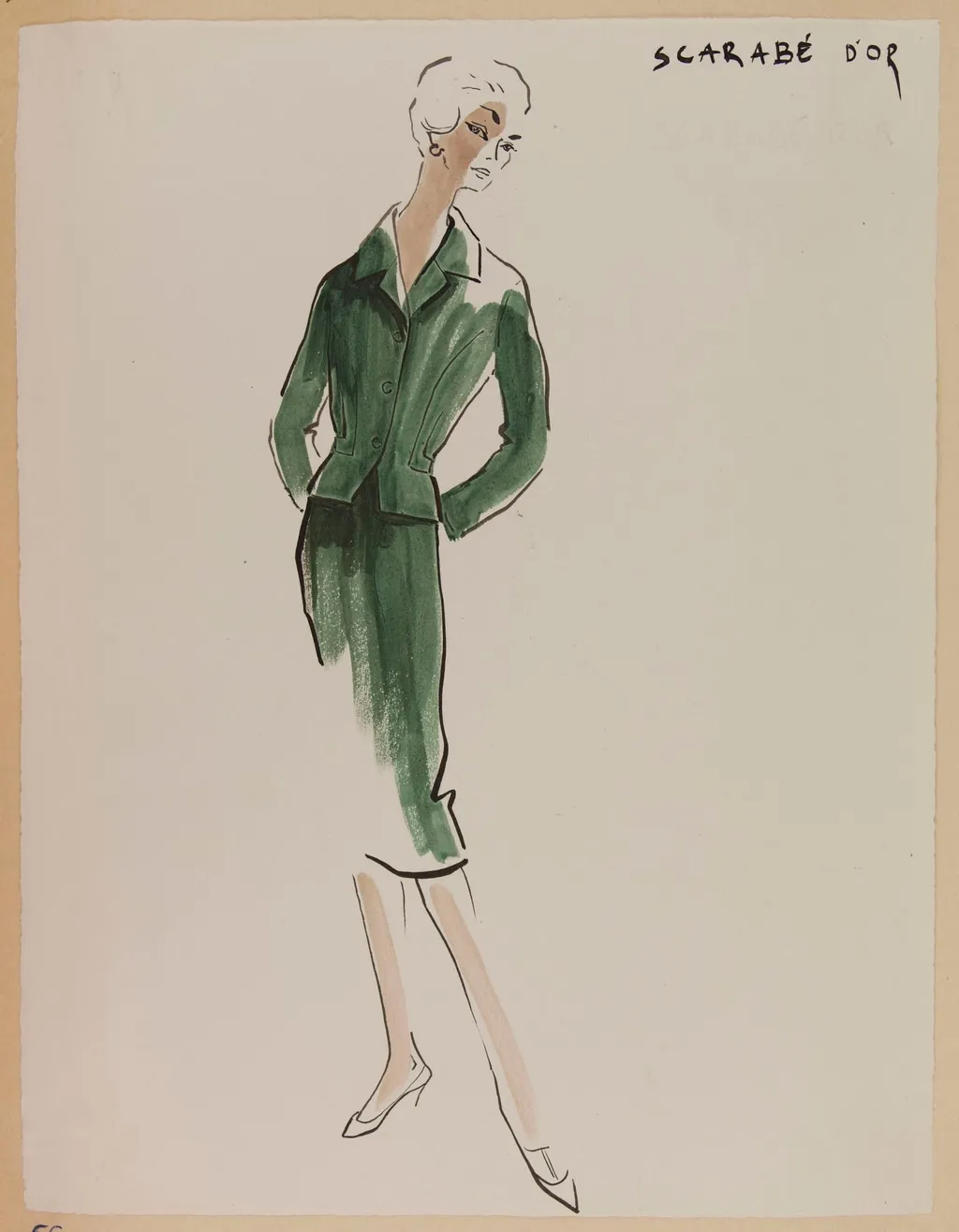
Scarabé d'or is a drawing by Marie-Louise Carven. It dates from 1956 and is held in the collection of the Palais Galliera - Musée de la Mode de la Ville de Paris.
About this work
Overview
Created around 1956, *Scarabé d'or* is a pencil sketch by French designer Marie-Louise Carven, capturing a woman in a green suit and light trousers.
Created around 1956, *Scarabé d'or* is a pencil sketch by French designer Marie-Louise Carven, capturing a woman in a green suit and light trousers. The drawing, executed with minimal, fluid strokes, lacks detailed rendering but conveys posture and silhouette with economy. Though styled as a fashion study, it resides in the Museum of Ethnography—a rare placement for such a work, suggesting its cultural or anthropological significance beyond mere design.
Subject & Meaning
The figure in *Scarabé d'or* is depicted with hands tucked into pockets, suggesting a casual, self-contained demeanor. The absence of facial detail and the plain background isolate the form, emphasizing the garment’s structure over individual identity. The title, possibly naming the outfit, hints at a symbolic or poetic intent—perhaps evoking the golden scarab as a motif of transformation or elegance, though no explicit narrative is given.
Technique & Style
Carven rendered the sketch with swift, unembellished lines, focusing on the silhouette of a tailored jacket with two buttons and relaxed trousers. The face and hair are suggested with barely three strokes each, prioritizing movement and proportion over realism. The background remains untouched, reinforcing the figure’s autonomy. This restrained approach reflects the functional immediacy of fashion drafting, yet retains an expressive looseness uncommon in formal technical drawings.
History & Provenance
Marie-Louise Carven founded her eponymous fashion house in 1945 and was among the first French couturiers to develop a ready-to-wear line. While *Scarabé d'or* is not documented as part of a commercial collection, its preservation in the Museum of Ethnography implies recognition of its cultural value. Its presence there may reflect broader mid-century efforts to document everyday fashion as material culture, rather than solely as high art.
Context
In the 1950s, fashion design increasingly intersected with anthropology as institutions began collecting garments as artifacts of social life. Carven’s focus on petite silhouettes and lightweight fabrics aligned with postwar shifts toward practical, accessible style. *Scarabé d'or*, though a personal sketch, may represent this transition—bridging the studio and the museum, the ephemeral and the archival, in a moment when fashion’s cultural role was being redefined.
Legacy
The sketch endures not as a prototype for production but as a quiet testament to Carven’s observational practice. Its placement in an ethnographic museum invites reconsideration of fashion drawings as cultural documents, not merely preparatory tools. While Carven’s commercial legacy is well known, this work suggests a more introspective dimension of her design process—one that valued gesture and form as expressions of everyday life.
Artist & collection
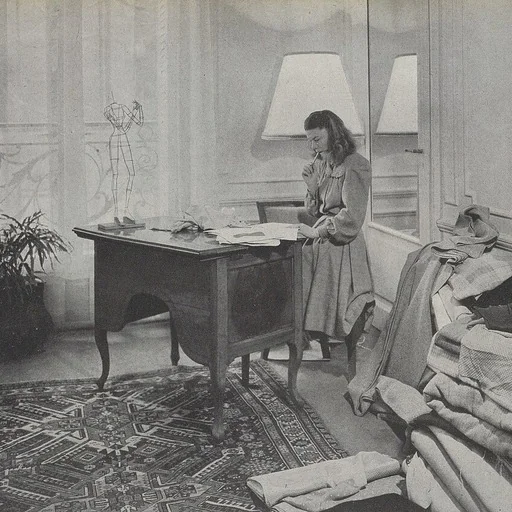
Artist
Marie-Louise Carven (31 August 1909 – 8 June 2015), born Carmen de Tommaso, was a French fashion designer who founded the house of Carven in 1945.
Museum
Palais Galliera - Musée de la Mode de la Ville de Paris
Continue through works from the same source collection.
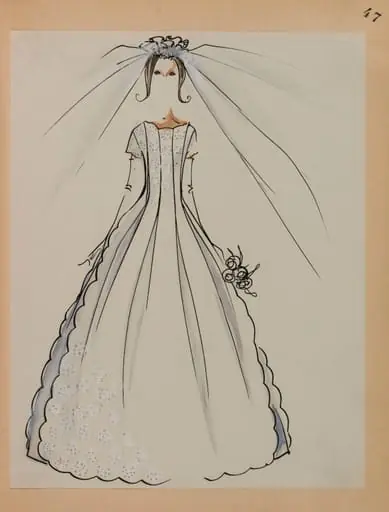 Robe de mariée festonnée et son voile
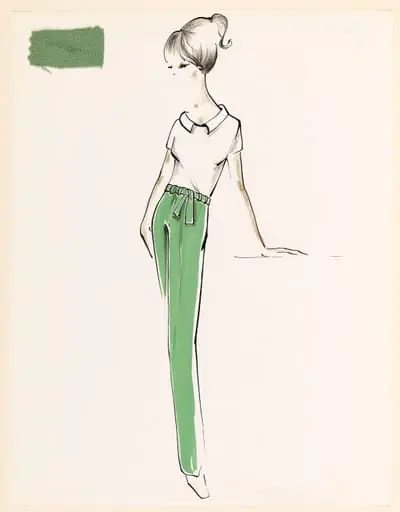 Haut blanc à manches courtes et pantalon vert à ceinture nouée
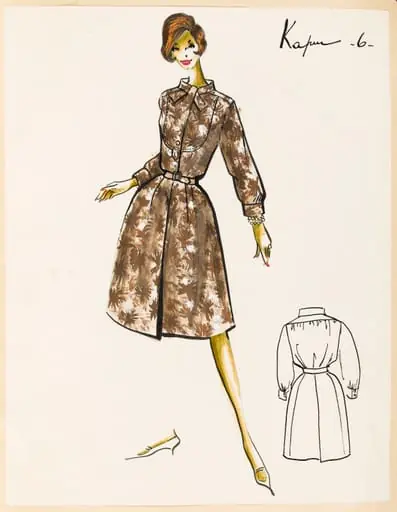 Kapur
Kapur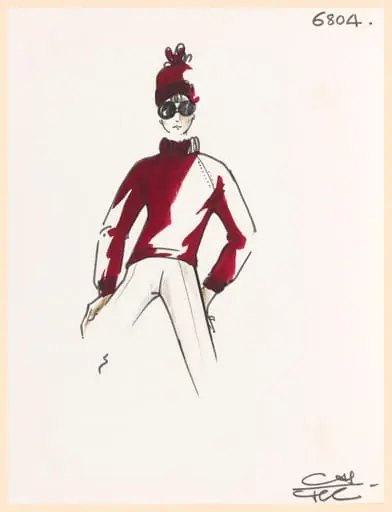 Pull-over à manches longues pourpre, bonnet assorti, pantalon et lunettes de soleil
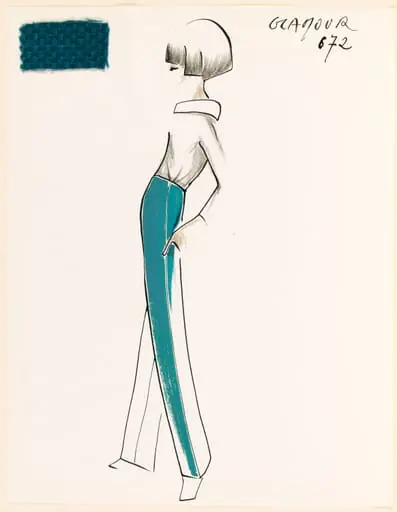 GLAMOUR
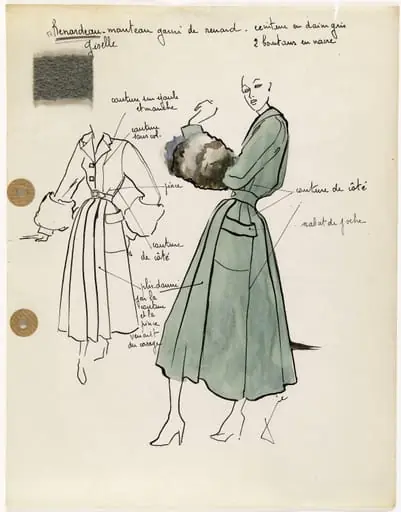 'Renardeau'
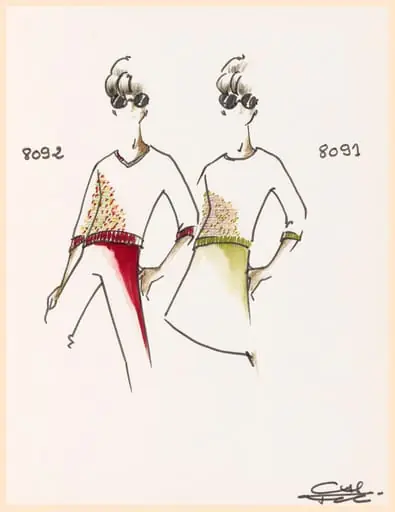 Pull-over à manches trois quarts et à encolure V à motifs multicolores, pantalon cerise et lunettes de soleil
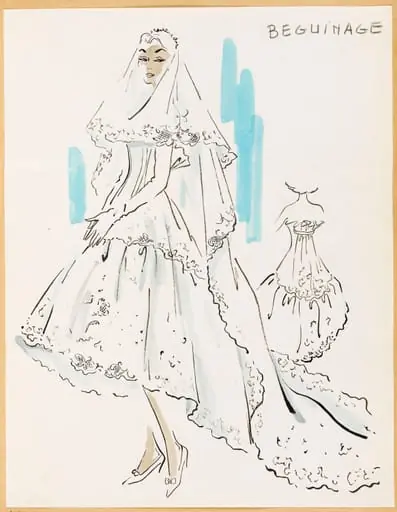 Béguinage