Artwork
Frangipane
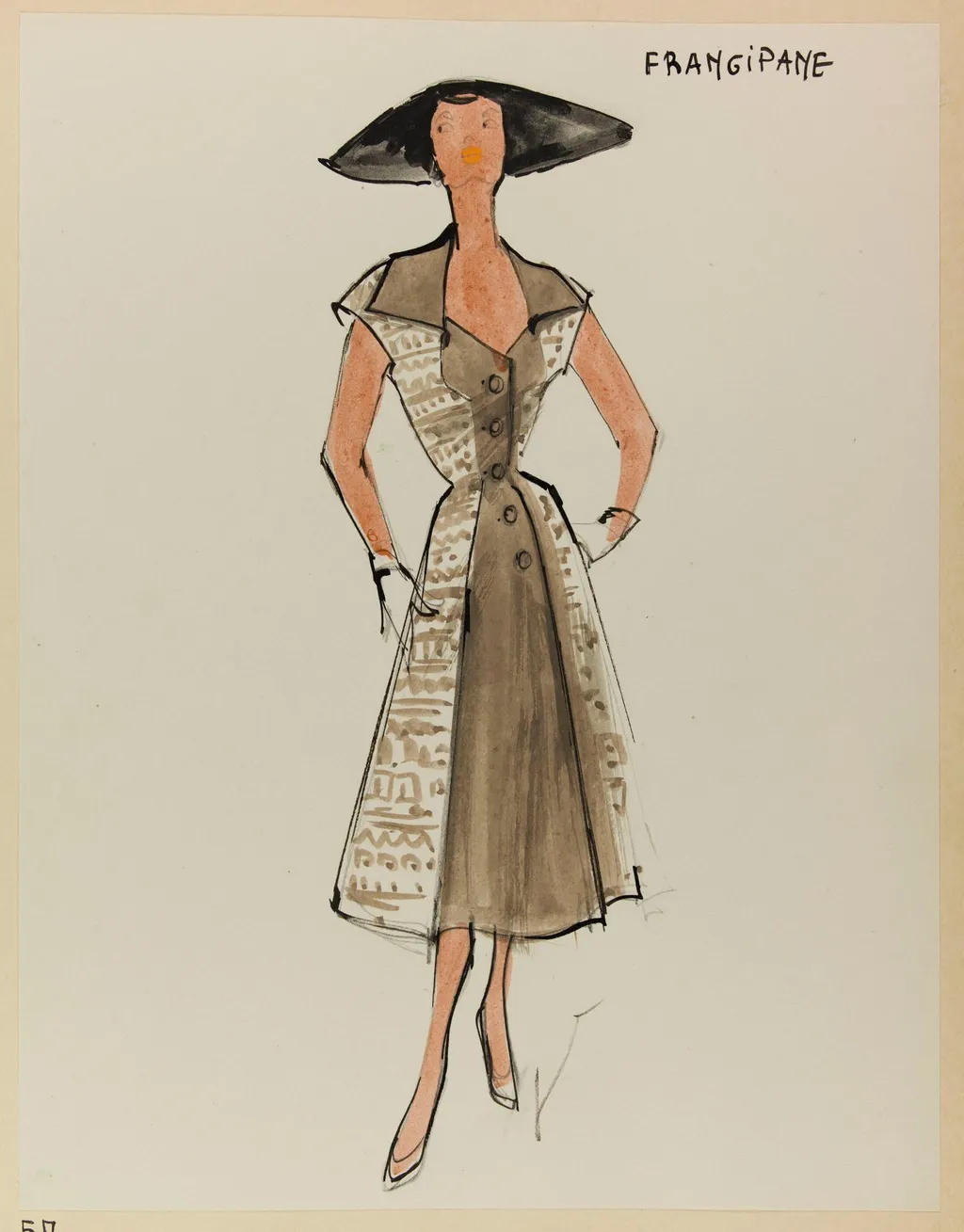
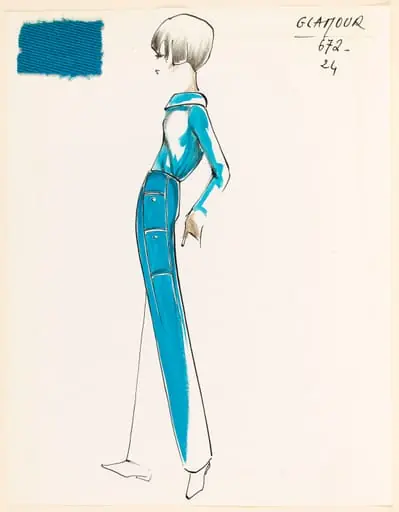
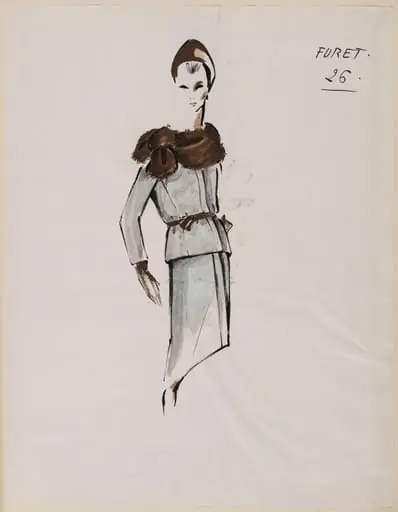
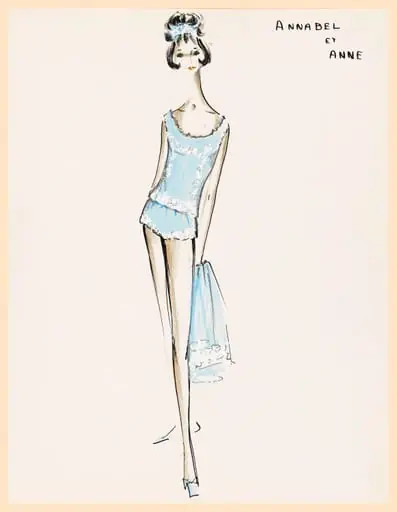
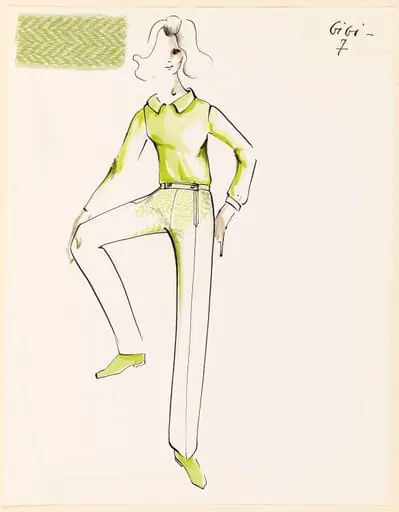
Frangipane is a drawing by Carven. It dates from 1953 and is held in the collection of the Palais Galliera - Musée de la Mode de la Ville de Paris.
About this work
Overview
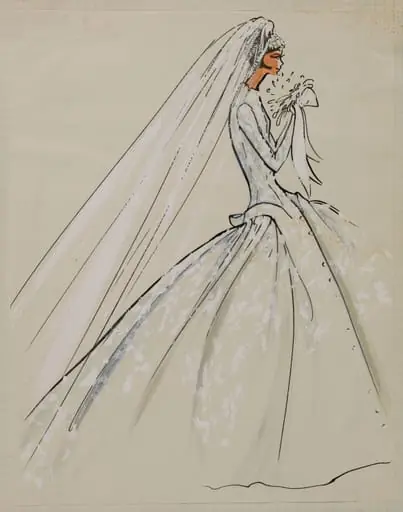
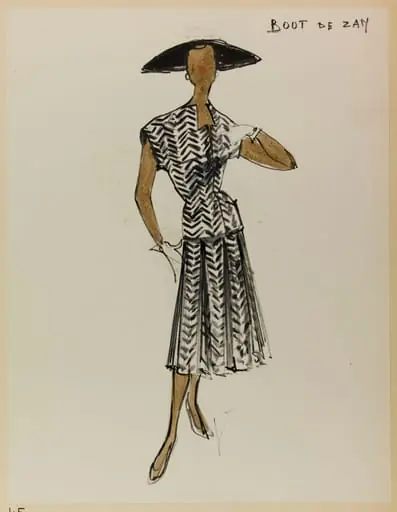
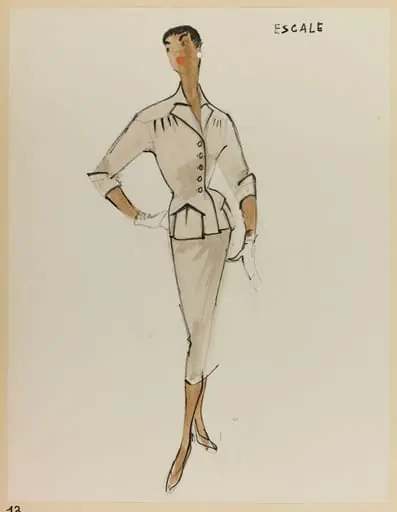
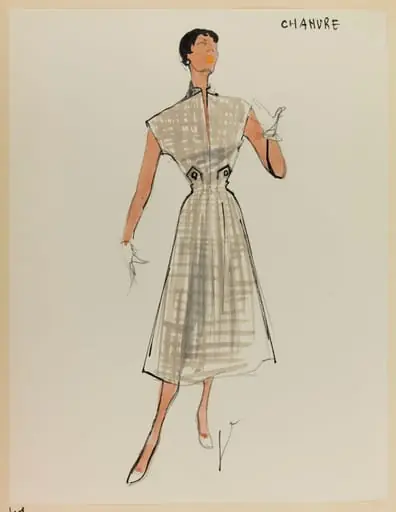
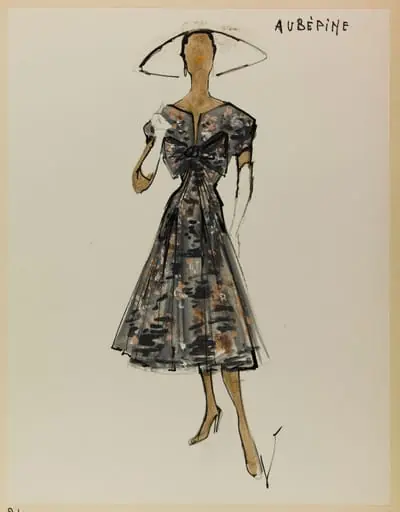
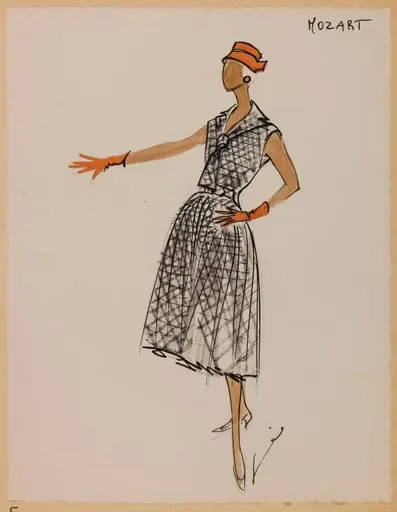
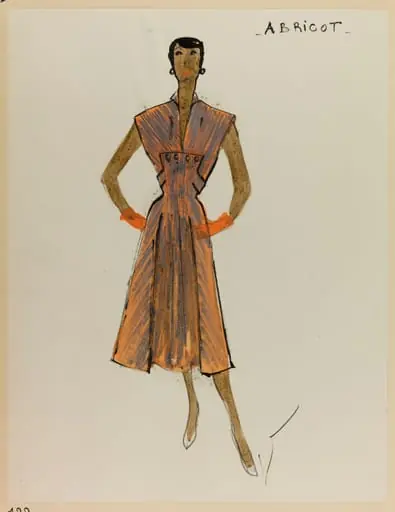
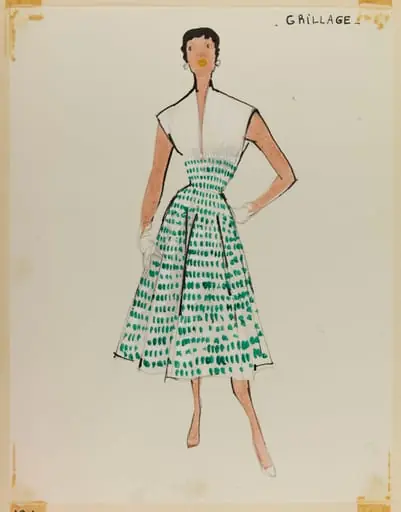
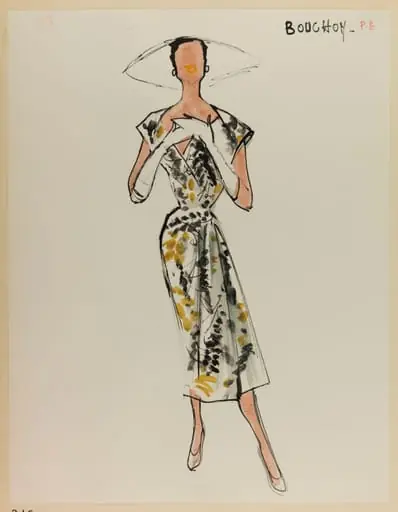
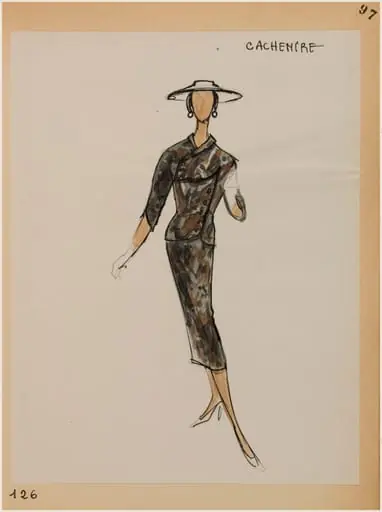
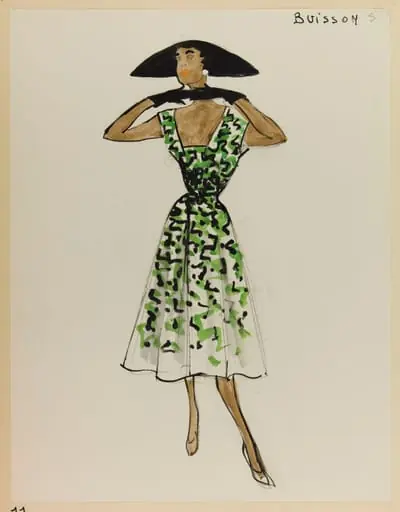
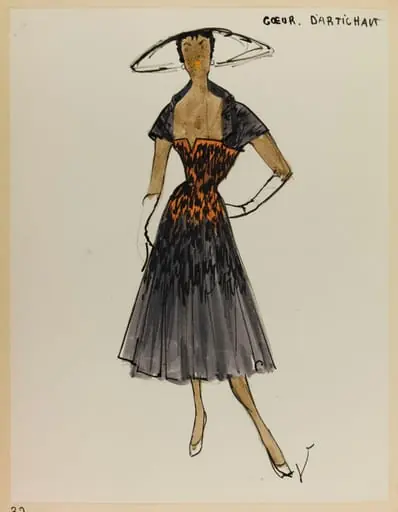
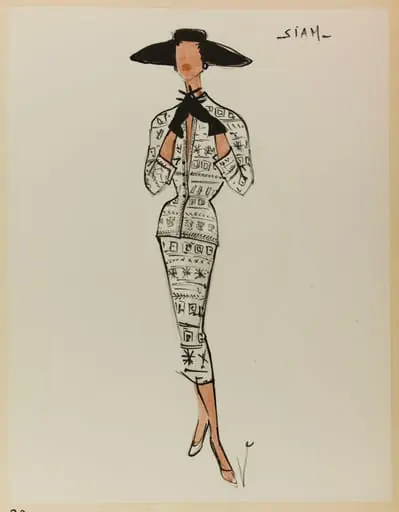
It captures a woman in full figure, dressed in a tailored sleeveless gown and wide-brimmed hat, rendered with precise, uncluttered lines.
Created around 1953 by the French fashion designer Carven, this drawing is part of the Museum of Ethnography’s collection. It captures a woman in full figure, dressed in a tailored sleeveless gown and wide-brimmed hat, rendered with precise, uncluttered lines. The image lacks overt detail or shading, emphasizing form and posture over realism. Its quiet elegance suggests a connection to mid-century fashion illustration rather than fine art.
Subject & Meaning
The figure appears as a stylized representation of a fashionable woman of the early 1950s, standing with composed stillness. Her turned head and direct gaze imply a moment of self-possession, as if caught between pose and movement. The attire—buttoned dress, high heels, and hat—reflects contemporary feminine norms, but the absence of context or narrative leaves the image open to interpretation as a study in elegance rather than a specific portrait.
Technique & Style
Executed in a minimalist line drawing style, the work relies on contour and proportion to define form. There is no use of tone or texture; instead, clarity and restraint dominate. The smooth, continuous lines suggest a rapid, confident hand, typical of fashion sketches intended to convey silhouette and movement. The absence of background or environmental cues focuses attention entirely on the figure’s posture and attire.
History & Provenance
The drawing entered the Museum of Ethnography’s holdings as part of a collection related to 20th-century dress and cultural expression. While Carven is known primarily for fashion design, this piece appears to be a preparatory or illustrative sketch, possibly used in editorial or promotional contexts. Its preservation in an ethnographic institution signals its value as a cultural artifact reflecting postwar aesthetic ideals.
Context
In the early 1950s, fashion illustration was a vital medium for communicating style to the public, often appearing in magazines and catalogs. Carven, a prominent Parisian designer, frequently collaborated with illustrators to translate her designs into visual form. This drawing aligns with that tradition, embodying the era’s emphasis on refined femininity and structured silhouettes, even as it departs from photographic realism.
Legacy
Though not widely exhibited, the drawing remains a quiet example of how fashion design intersected with visual culture in postwar Europe. Its presence in an ethnographic museum underscores its role as a document of everyday aesthetics rather than high art. It continues to inform studies of mid-century gender representation and the visual language of fashion media.
Artist & collection
Artist
These delicate ink-on-paper drawings capture the quiet poetry of everyday things: pinecones, reeds, apples.
Museum
Palais Galliera - Musée de la Mode de la Ville de Paris
Continue through works from the same source collection.