Artwork
Chevalier
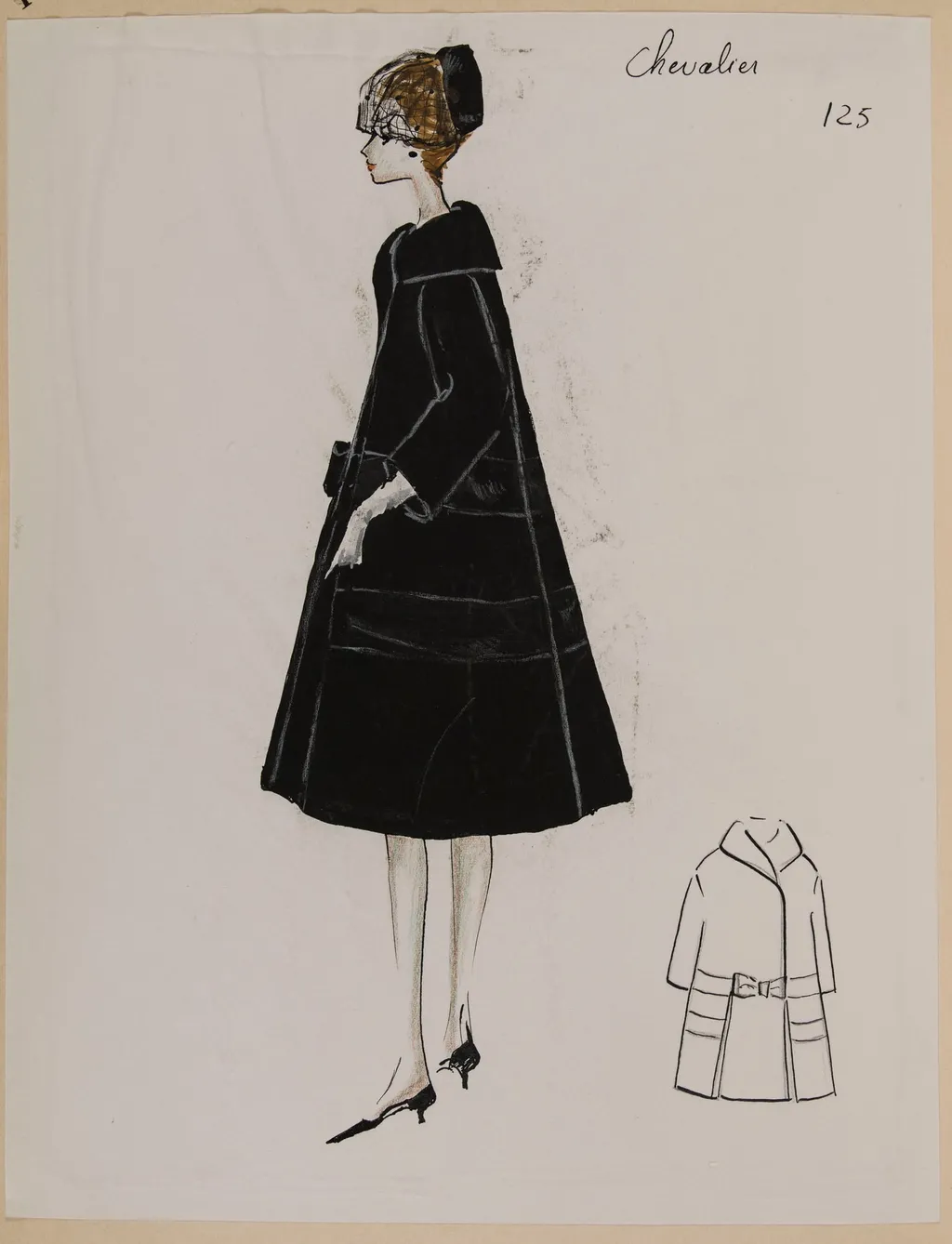
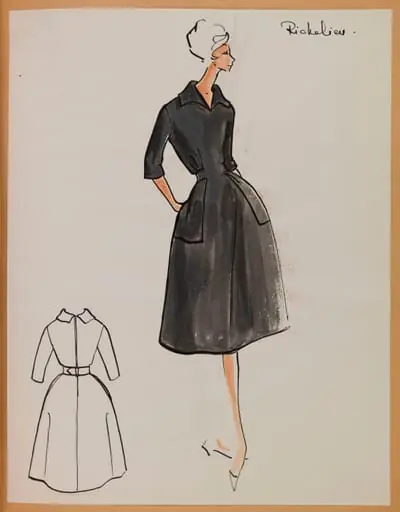
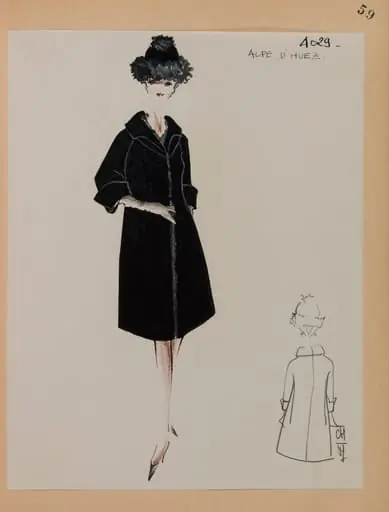
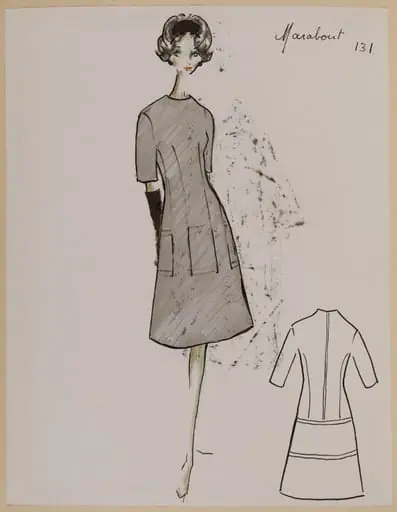
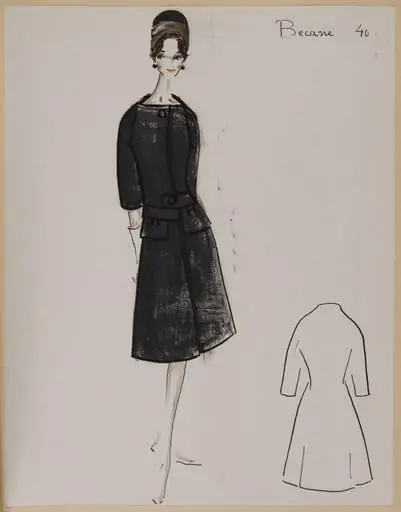
Chevalier is a drawing by Carven. It dates from 1960 and is held in the collection of the Palais Galliera - Musée de la Mode de la Ville de Paris.
About this work
Overview
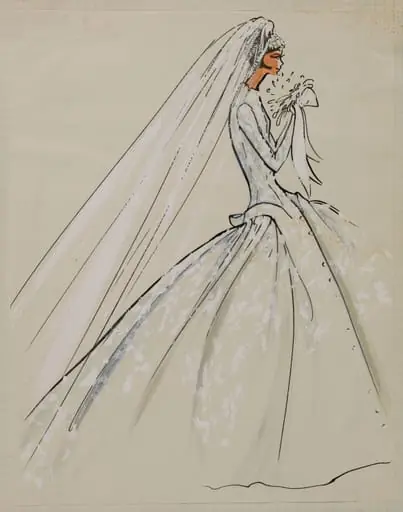
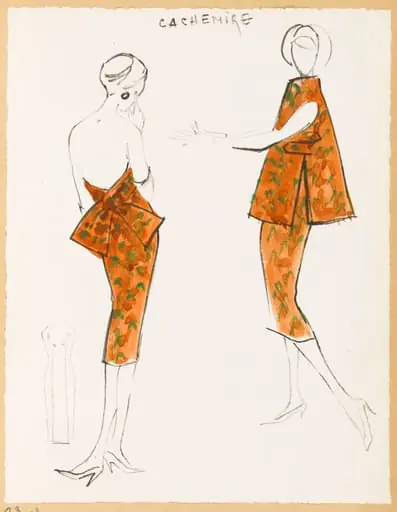
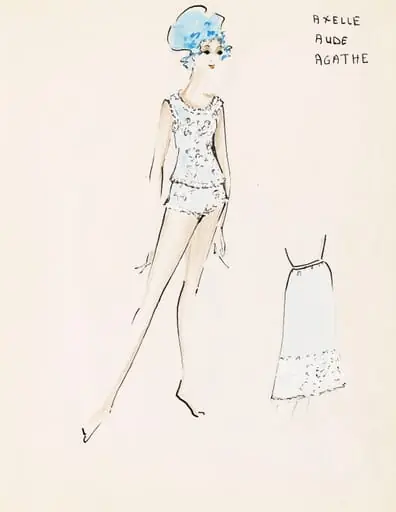
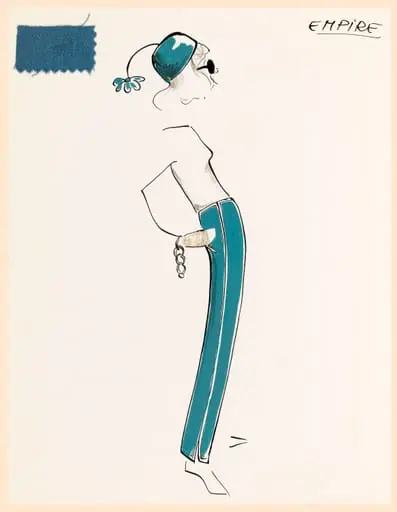
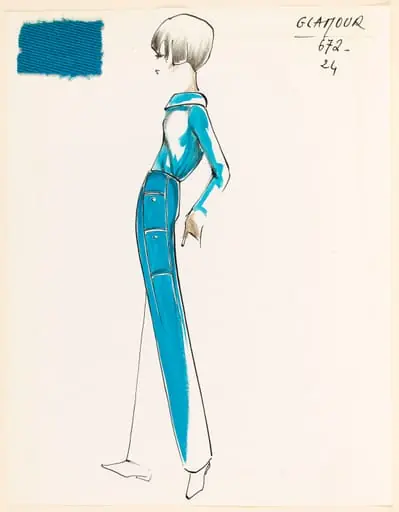
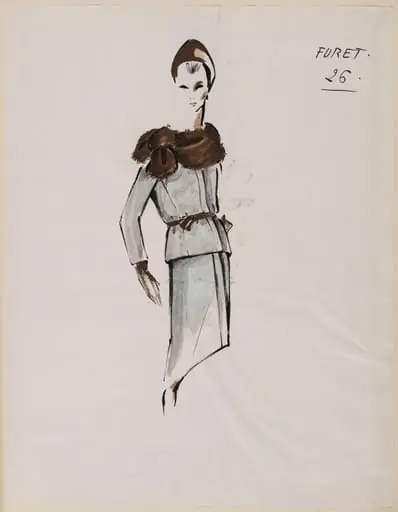
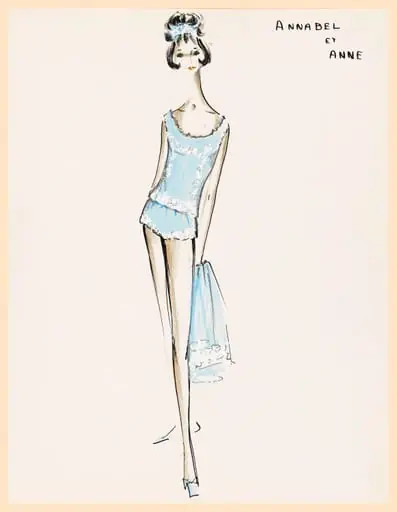
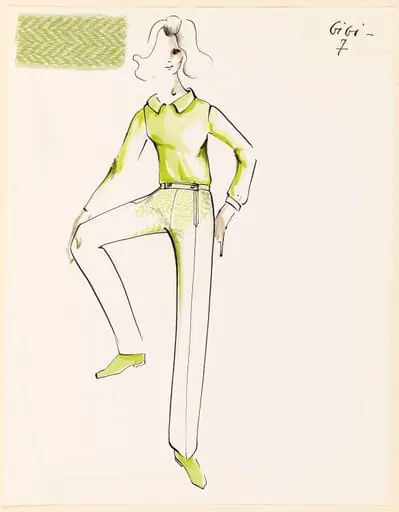
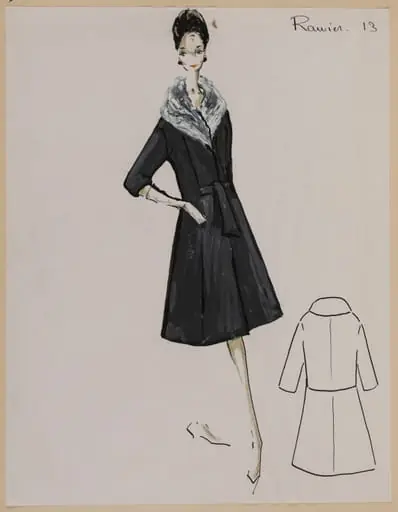
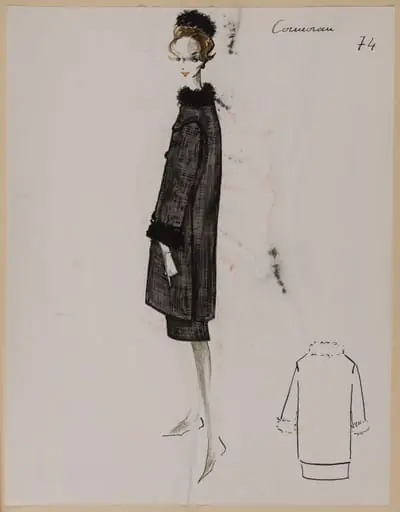
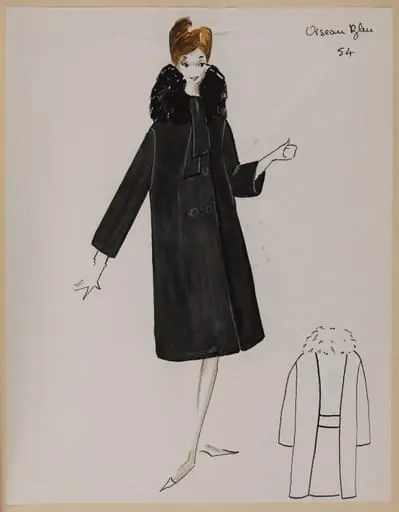
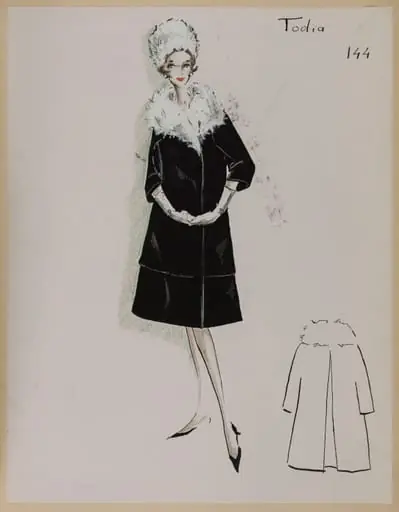
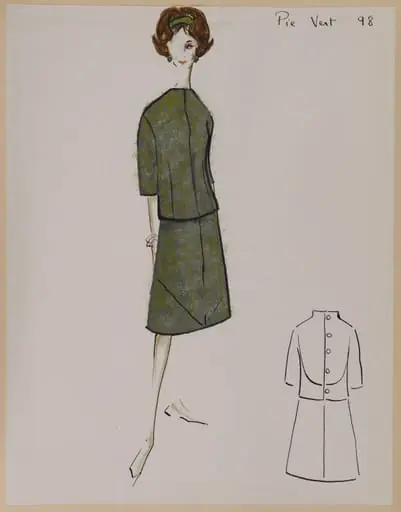
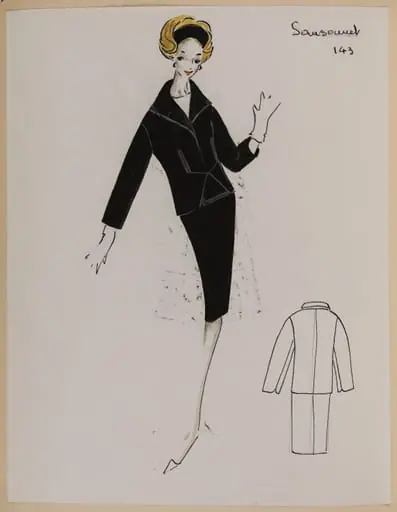
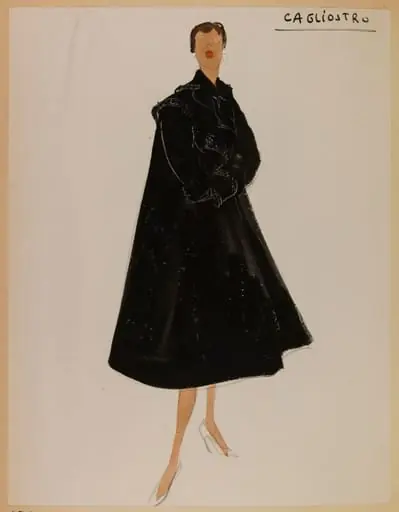
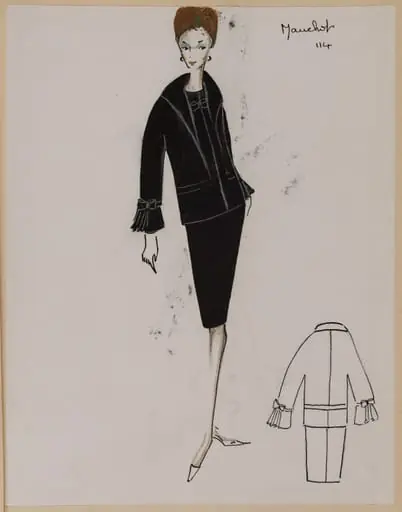
Created around 1960 by the French designer Carven, this ink sketch depicts a woman’s tailored ensemble with precision and economy. Executed in rapid, assured lines, the drawing emphasizes silhouette over detail. It resides in the collection of the Museum of Ethnography, where it functions as a record of mid-century fashion design rather than a fine art object.
Subject & Meaning
The plain background isolates the outfit, suggesting the drawing’s purpose was to document design rather than portray a person.
The figure wears a black dress with a fitted waist, a matching coat, a small hat, and pointed shoes—elements characteristic of Parisian women’s wear in the late 1950s and early 1960s. The plain background isolates the outfit, suggesting the drawing’s purpose was to document design rather than portray a person. The back view of the coat reveals structural details, indicating its use in production or presentation.
Technique & Style
The artist employed swift, confident ink strokes to define form and fabric texture. Lines are clean and unmodulated, avoiding shading or embellishment. This approach prioritizes clarity and speed, typical of fashion sketches made for design development. The minimalism directs attention to cut and proportion, reflecting the functional intent of the medium.
History & Provenance
The work entered the Museum of Ethnography’s collection as part of a broader archive of fashion design materials. Its origin lies within Carven’s atelier, where such sketches served as working documents. Unlike finished illustrations for magazines, this piece was likely used internally to communicate design intent to tailors or clients.
Context
In the postwar era, Paris remained a center of haute couture, and designers like Carven relied on rapid sketching to translate ideas into garments. This drawing reflects the industry’s emphasis on precision and efficiency. Similar sketches from the period were often retained by houses as archival records, later acquired by institutions documenting material culture.
Legacy
The sketch endures as a quiet testament to the craftsmanship behind everyday elegance. It contributes to scholarly understanding of how fashion was conceptualized before digital tools. While not widely exhibited, it remains a valuable resource for researchers studying mid-century design processes and the material history of women’s clothing.
Artist & collection
Artist
These delicate ink-on-paper drawings capture the quiet poetry of everyday things: pinecones, reeds, apples.
Museum
Palais Galliera - Musée de la Mode de la Ville de Paris
Continue through works from the same source collection.