Artwork
Alpe d'Huez
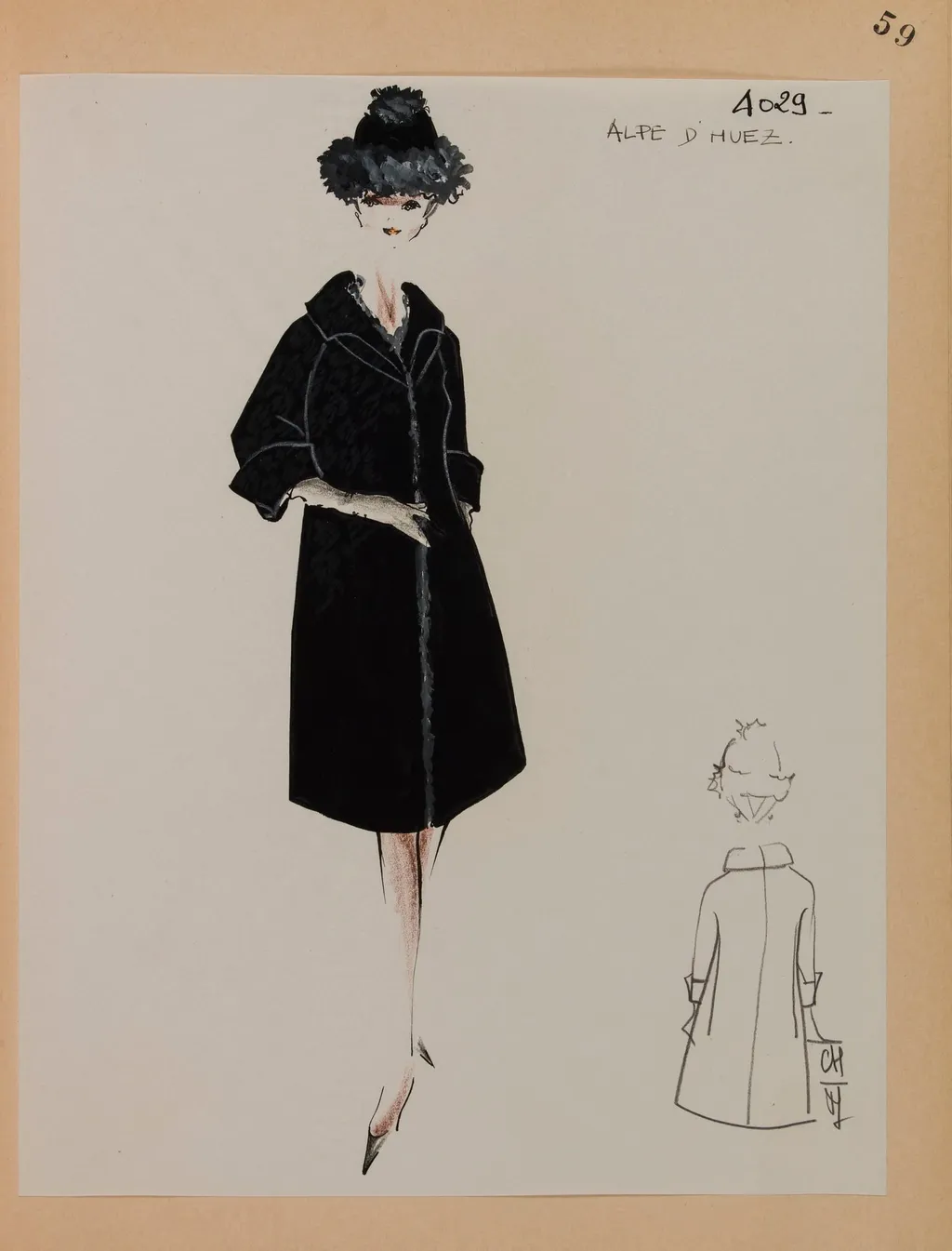
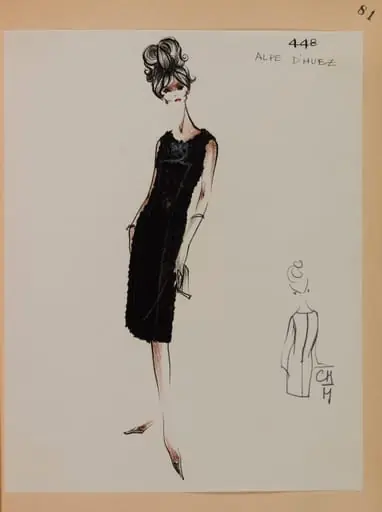
Alpe d'Huez is a drawing by Marie-Louise Carven. It dates from 1963 and is held in the collection of the Palais Galliera - Musée de la Mode de la Ville de Paris.
About this work
Overview
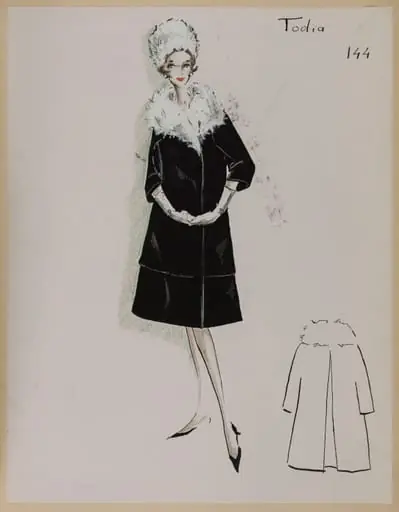
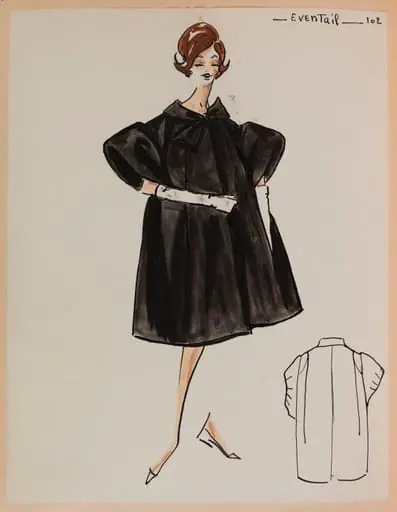
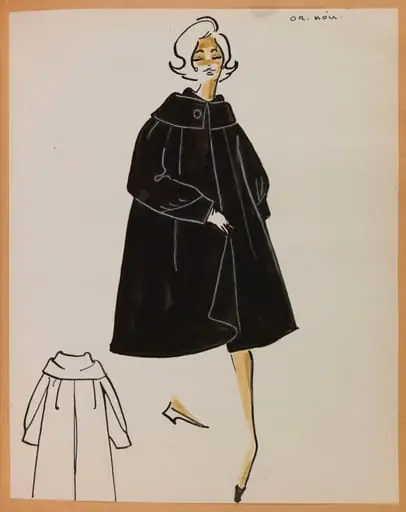
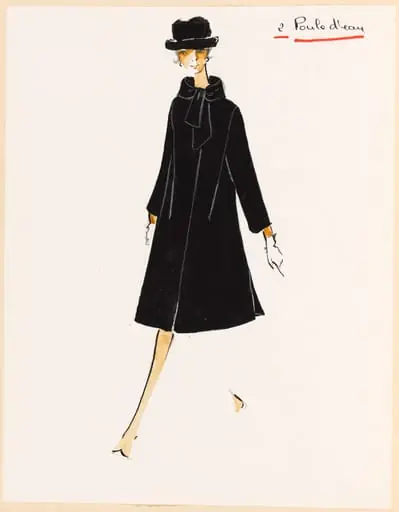
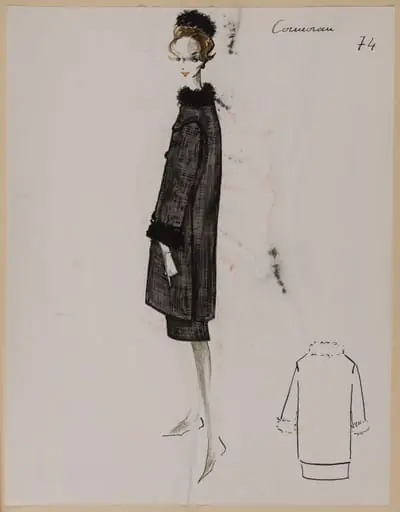
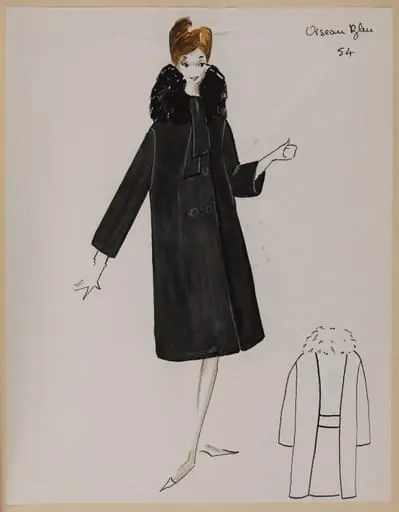
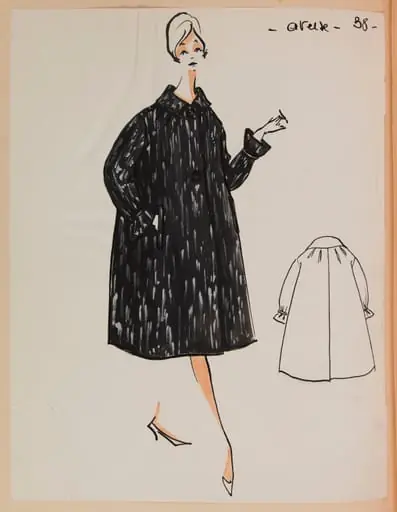
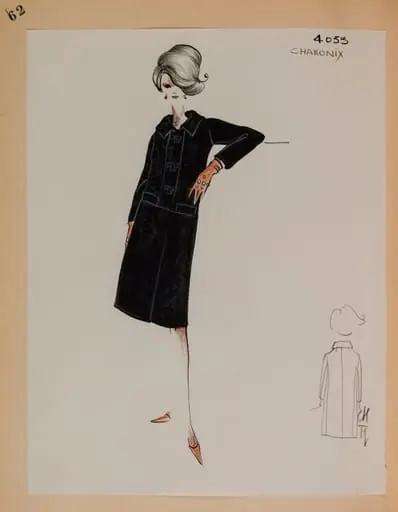
Executed in ink with swift, assured lines, the drawing captures a tailored black coat with fur trim, worn with a voluminous hat and high heels.
Created around 1963, *Alpe d'Huez* is a fashion sketch by Marie-Louise Carven, founder of the Parisian house Carven. Executed in ink with swift, assured lines, the drawing captures a tailored black coat with fur trim, worn with a voluminous hat and high heels. The design name and artist’s handwriting appear in the corner, suggesting it was a working prototype. The piece resides in the Museum of Ethnography’s collection, reflecting its significance beyond fashion into cultural documentation.
Subject & Meaning
The figure depicted embodies a refined, urban winter aesthetic, blending practicality with elegance. The long coat, belted at the waist and flaring slightly, suggests movement and structure, while the fur accents and exaggerated hat convey warmth and theatricality. The title, referencing a famous Alpine ski resort, implies a connection between fashion and the lifestyle of winter travel, positioning the garment as both functional and aspirational for a cosmopolitan clientele.
Technique & Style
Carven rendered the design with rapid, fluid ink strokes that prioritize gesture over precision. The loose lines capture volume and texture—particularly in the fur collar and hat—without detailed rendering. A small supplementary sketch of the coat’s back view reveals her methodical approach to construction. The handwriting, integrated into the composition, adds a personal, immediate quality, characteristic of design drafts made for internal use or client presentation.
History & Provenance
Marie-Louise Carven established her fashion house in 1945 and was among the earliest Parisian designers to embrace prêt-à-porter, democratizing high fashion. *Alpe d'Huez* dates from the height of her influence in the early 1960s, a period when her designs gained international recognition. The sketch entered the Museum of Ethnography’s collection as part of a broader effort to document fashion as a cultural artifact, not merely a commercial product.
Context
In the early 1960s, Parisian fashion was shifting toward accessibility and mobility, mirroring societal changes in women’s roles and leisure activities. Alpine resorts like Alpe d'Huez symbolized a new kind of refined escape, and fashion responded with garments that merged elegance with outdoor practicality. Carven’s sketch reflects this trend, positioning her work at the intersection of sportswear, haute couture, and emerging ready-to-wear culture.
Legacy
The sketch endures as evidence of Carven’s role in redefining women’s fashion through simplicity and proportion. Her integration of functional design with poetic detail influenced later generations of designers who valued understated sophistication. As a preserved working document, *Alpe d'Huez* illustrates how fashion ideas were conceived and communicated before mass production, offering insight into the creative process behind mid-century style.
Artist & collection
Artist
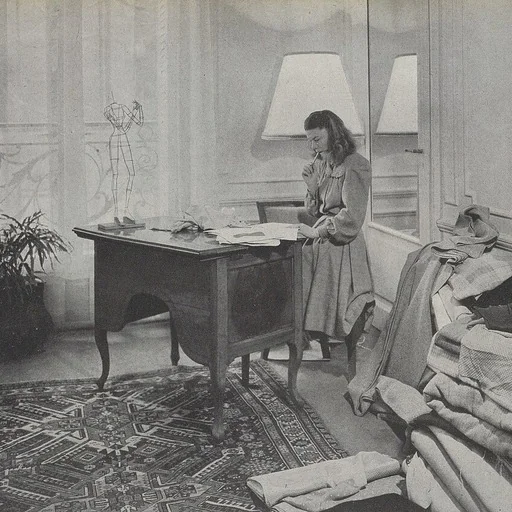
Marie-Louise Carven (31 August 1909 – 8 June 2015), born Carmen de Tommaso, was a French fashion designer who founded the house of Carven in 1945.
Museum
Palais Galliera - Musée de la Mode de la Ville de Paris
Continue through works from the same source collection.
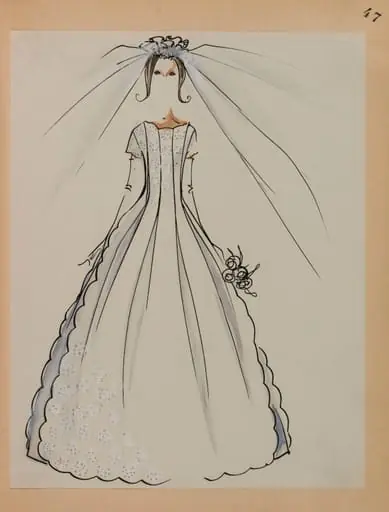 Robe de mariée festonnée et son voile
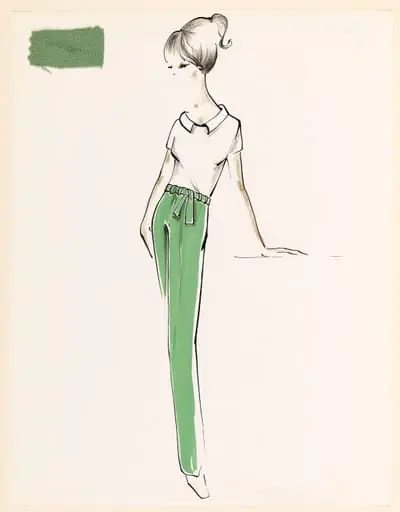 Haut blanc à manches courtes et pantalon vert à ceinture nouée
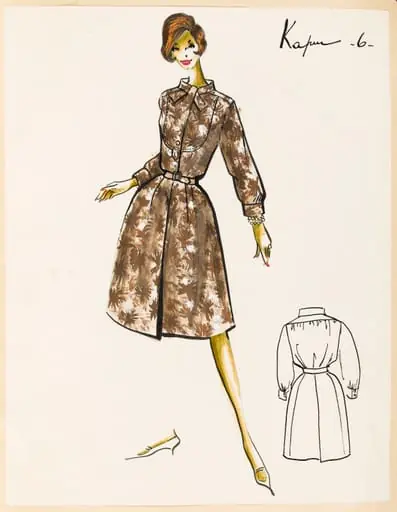 Kapur
Kapur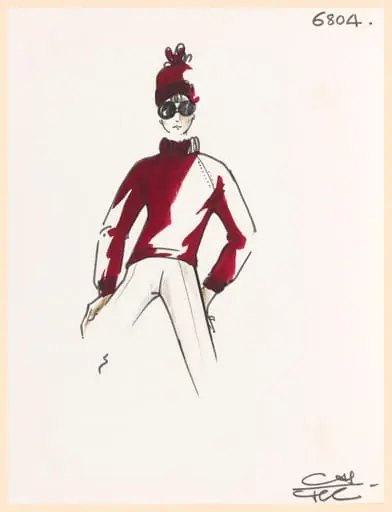 Pull-over à manches longues pourpre, bonnet assorti, pantalon et lunettes de soleil
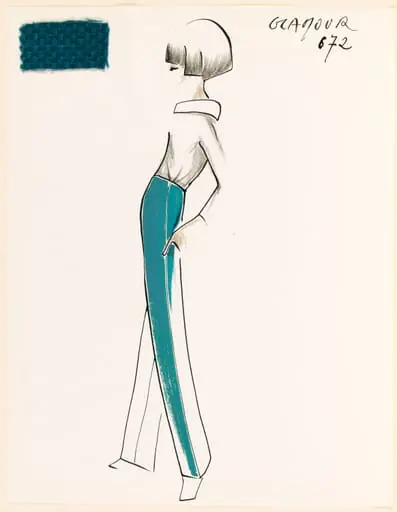 GLAMOUR
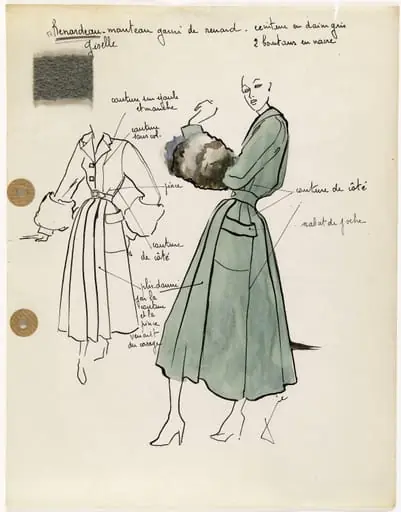 'Renardeau'
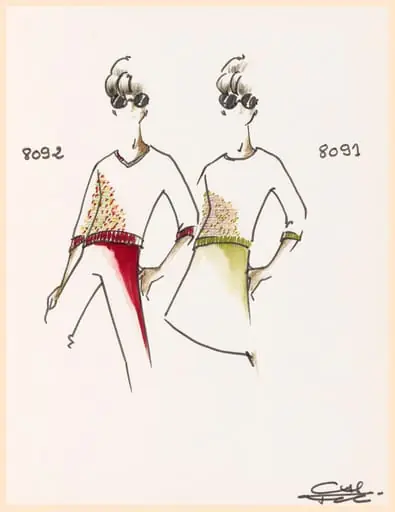 Pull-over à manches trois quarts et à encolure V à motifs multicolores, pantalon cerise et lunettes de soleil
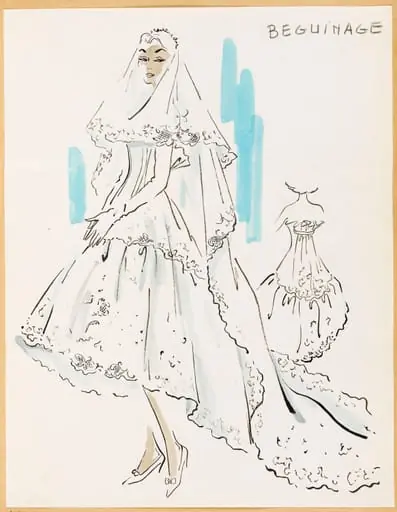 Béguinage