Artwork
Richelieu
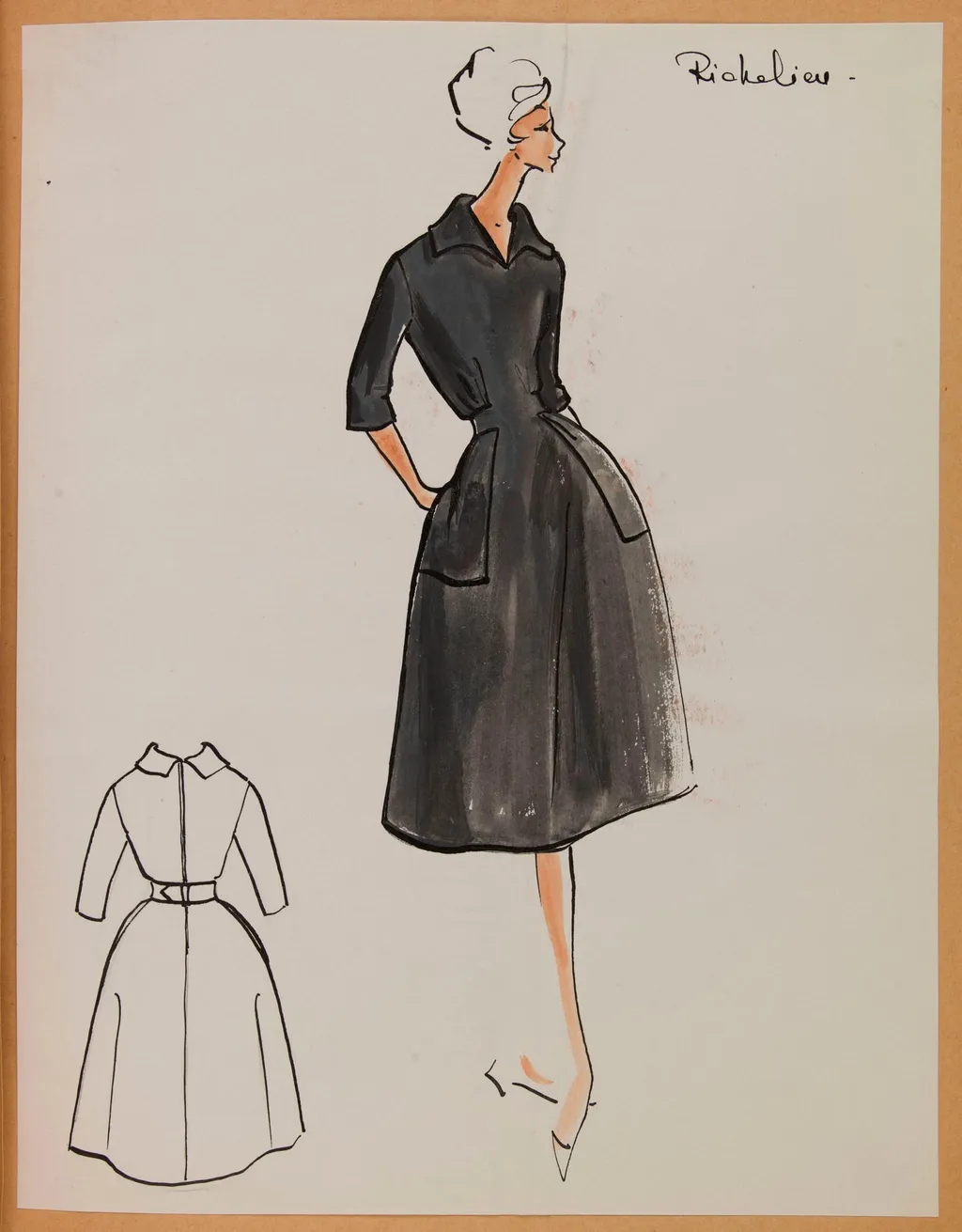
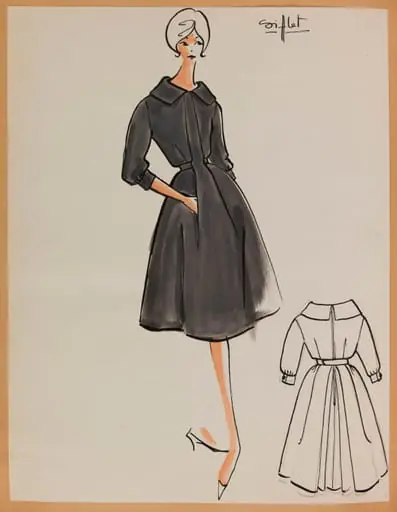
Richelieu is a drawing by Marie-Louise Carven. It dates from 1958 and is held in the collection of the Palais Galliera - Musée de la Mode de la Ville de Paris.
About this work
Overview
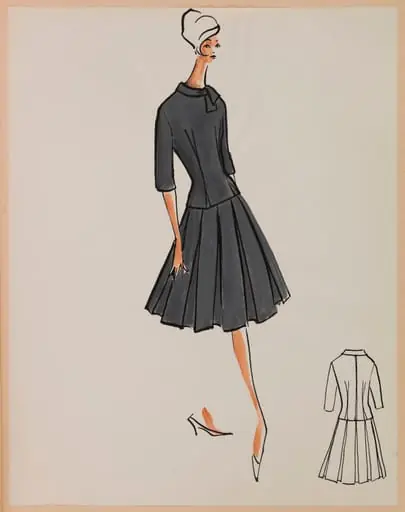
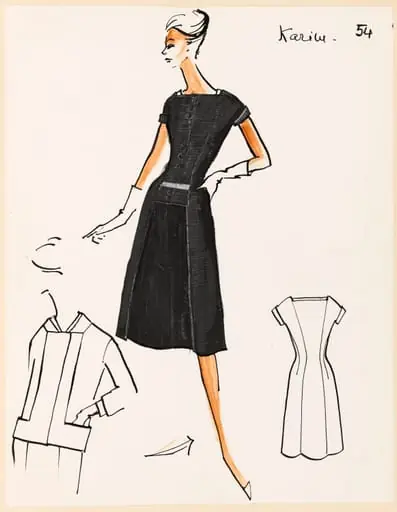
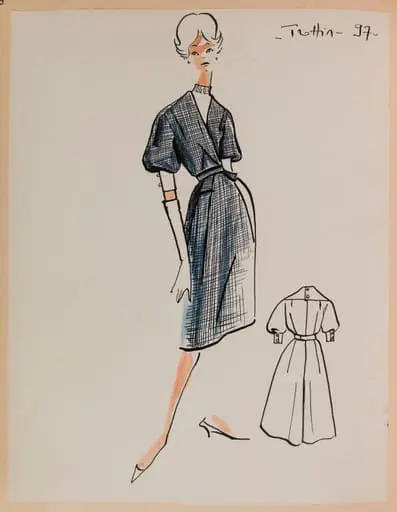
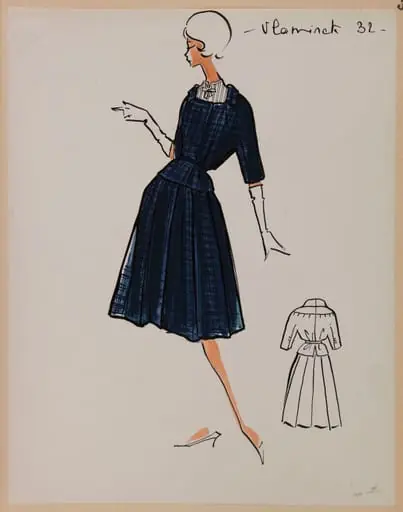
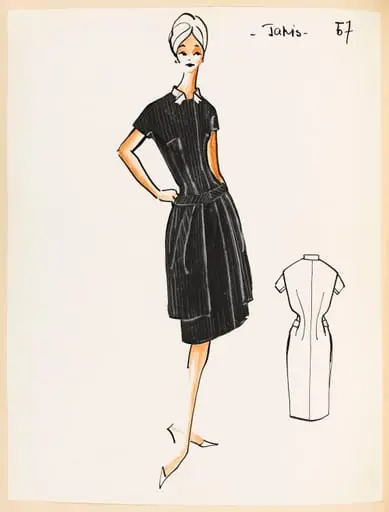
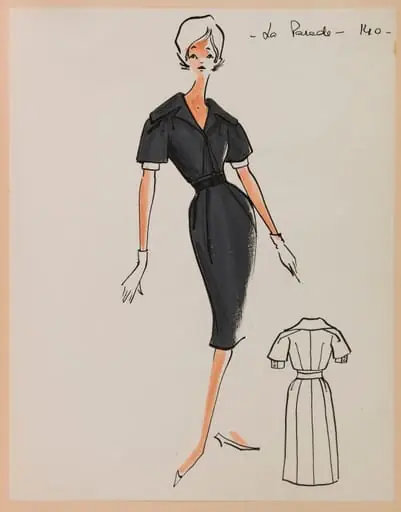
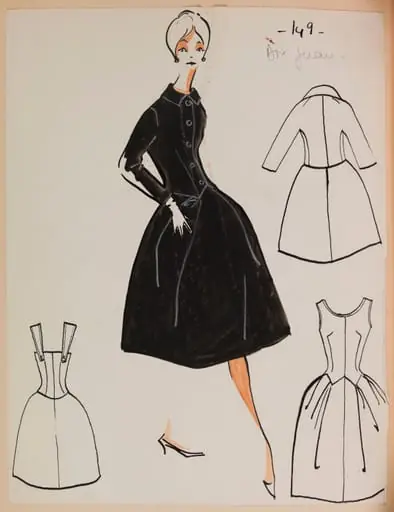
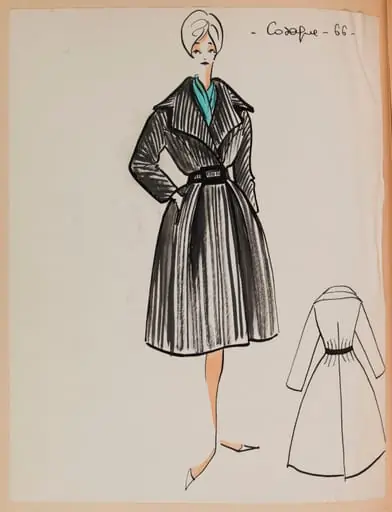
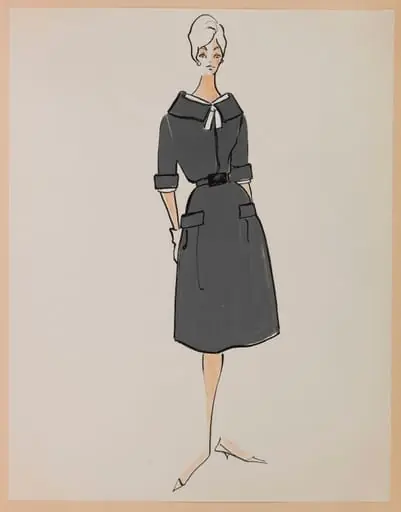
The drawing captures a tailored black ensemble with a fitted jacket and flared skirt, rendered in loose, confident lines typical of design drafts.
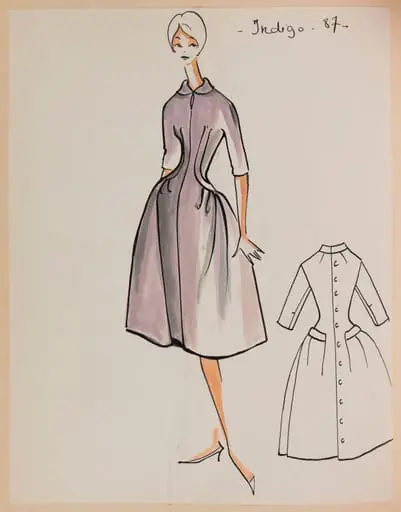
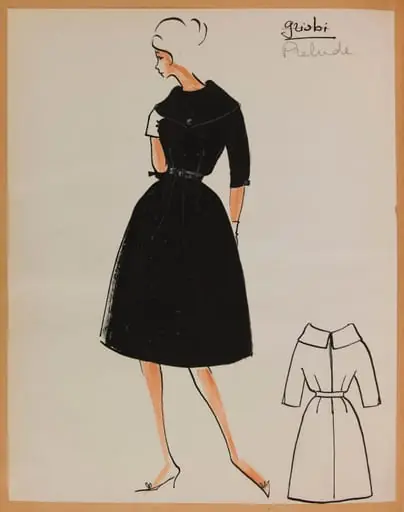
Created around 1958, *Richelieu* is a fashion sketch by Marie-Louise Carven, founder of the Parisian house Carven established in 1945. The drawing captures a tailored black ensemble with a fitted jacket and flared skirt, rendered in loose, confident lines typical of design drafts. It was produced as part of Carven’s efforts to bridge haute couture and emerging ready-to-wear markets, reflecting her innovative approach to accessible fashion.
Subject & Meaning
The sketch depicts a woman in a minimalist black outfit, hands resting in her pockets, suggesting ease and quiet confidence. The inclusion of a rear view of the garment emphasizes structural clarity over ornamentation. This duality—between the living figure and the technical flat—highlights Carven’s focus on fit and movement, prioritizing practical elegance for the modern woman rather than theatrical display.
Technique & Style
Carven employed swift, fluid ink lines to convey form and volume without excessive detail. The sketch’s spontaneity suggests it was made quickly, likely as a working draft for production. The absence of color and the restrained use of shading direct attention to silhouette and proportion, aligning with her design philosophy: clean lines, lightweight fabrics, and adaptability for smaller frames.
History & Provenance
The drawing resides in the collection of the Museum of Ethnography, a rare placement for a fashion sketch, indicating its significance as a cultural artifact. While Carven’s brand gained recognition for pioneering prêt-à-porter in postwar Paris, this particular piece remains a private design record, preserved not as a finished garment but as evidence of her creative process.
Context
In the late 1950s, Parisian fashion was shifting toward democratized style, and Carven was among the first to respond by launching accessible lines. *Richelieu* reflects this transition: its simplicity, functional cut, and emphasis on wearability contrasted with the elaborate silhouettes of high couture. The sketch embodies a broader cultural move toward practical, individualized dress in postwar Europe.
Legacy
Carven’s sketches like *Richelieu* illustrate how design documentation can serve as historical testimony. Though not widely exhibited, such works underpin her influence on the evolution of ready-to-wear. Her integration of tailored structure with lightness and proportion continues to inform contemporary designers who prioritize wearable, understated elegance over spectacle.
Artist & collection
Artist
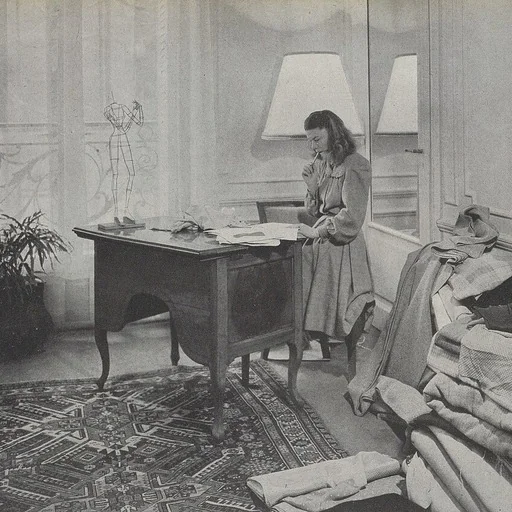
Marie-Louise Carven (31 August 1909 – 8 June 2015), born Carmen de Tommaso, was a French fashion designer who founded the house of Carven in 1945.
Museum
Palais Galliera - Musée de la Mode de la Ville de Paris
Continue through works from the same source collection.
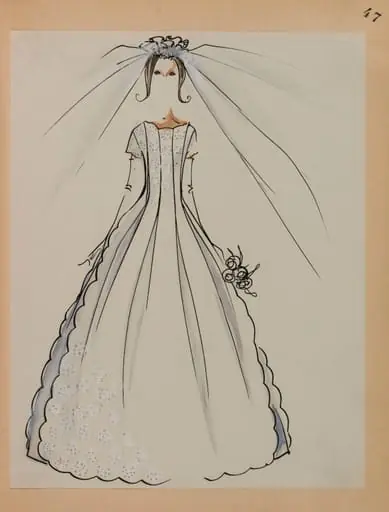 Robe de mariée festonnée et son voile
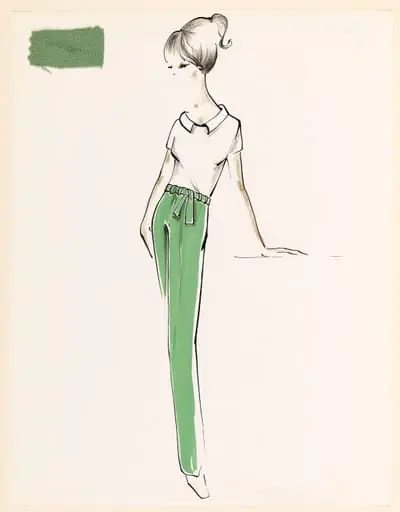 Haut blanc à manches courtes et pantalon vert à ceinture nouée
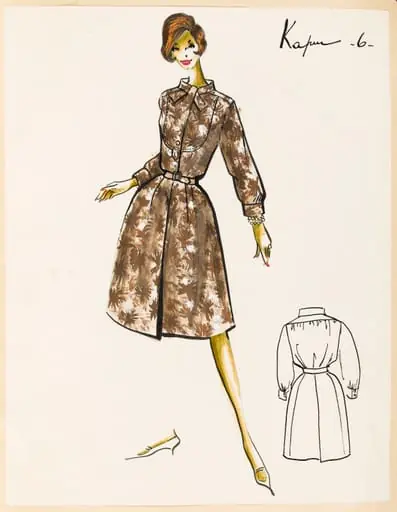 Kapur
Kapur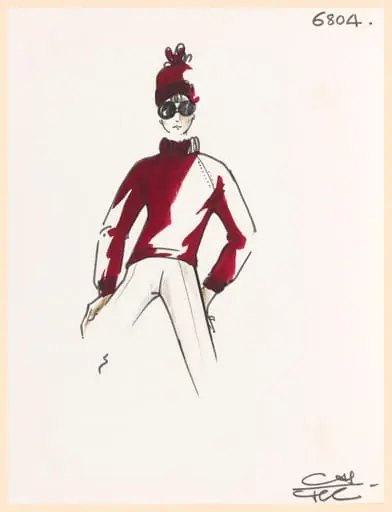 Pull-over à manches longues pourpre, bonnet assorti, pantalon et lunettes de soleil
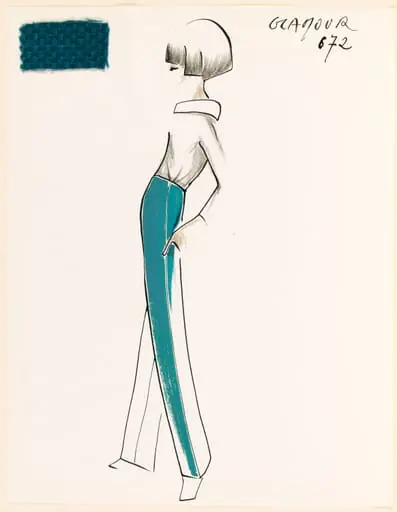 GLAMOUR
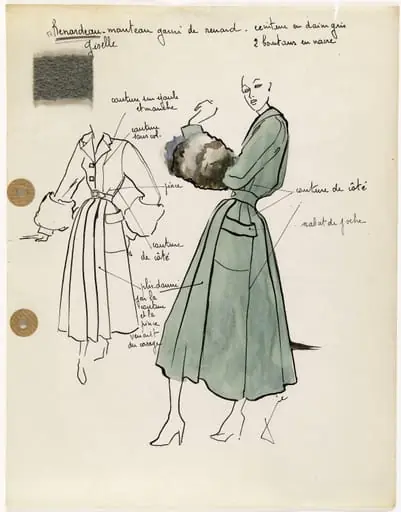 'Renardeau'
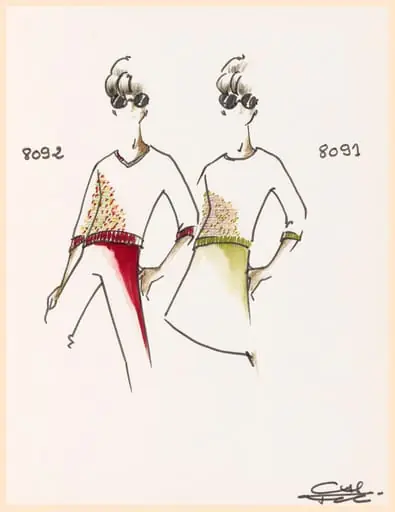 Pull-over à manches trois quarts et à encolure V à motifs multicolores, pantalon cerise et lunettes de soleil
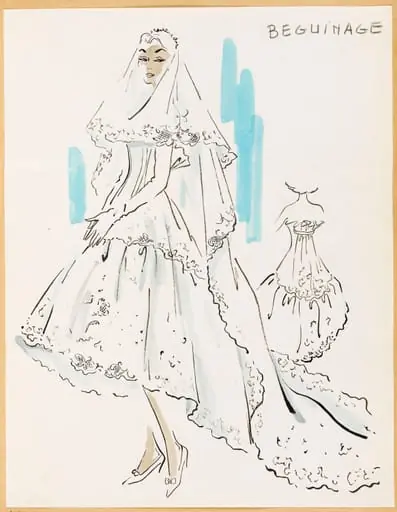 Béguinage