Artwork
Mille feuilles
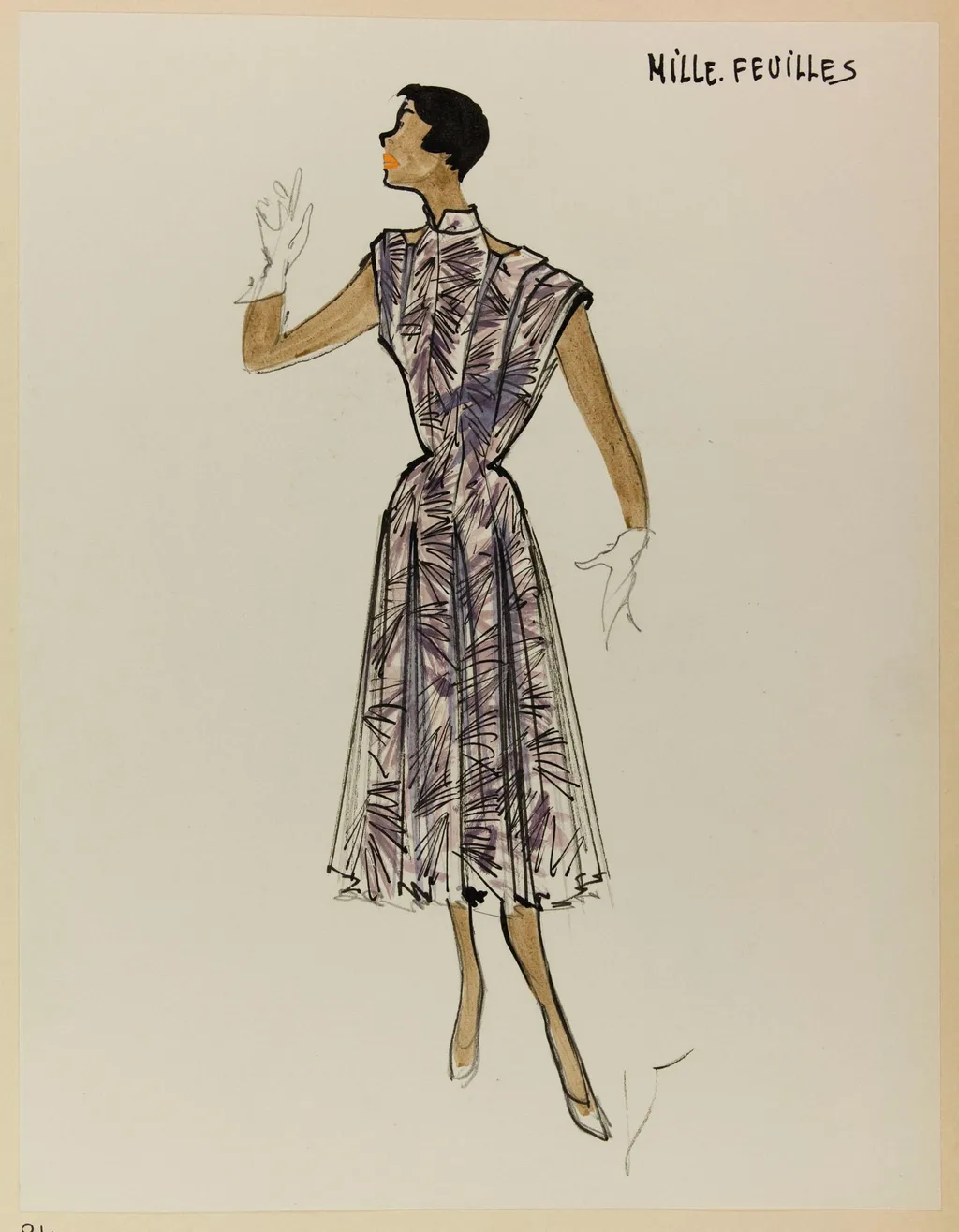
Mille feuilles is a drawing by Marie-Louise Carven. It dates from 1953 and is held in the collection of the Palais Galliera - Musée de la Mode de la Ville de Paris.
About this work
Overview
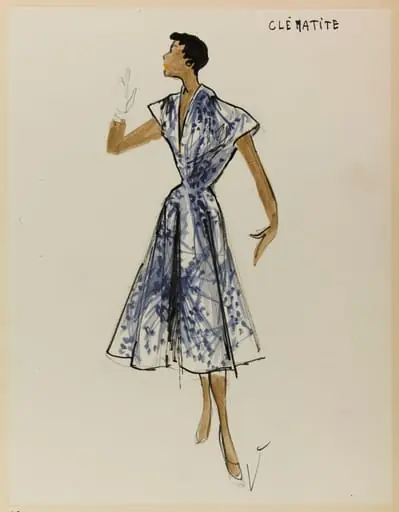
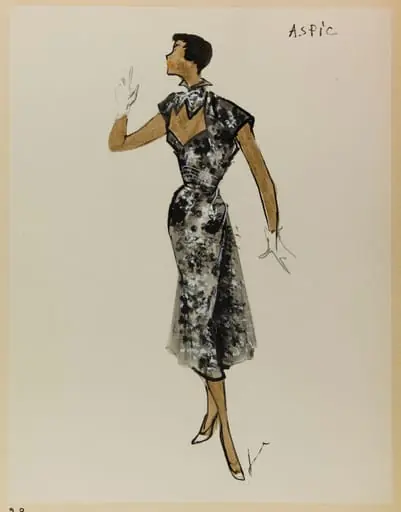
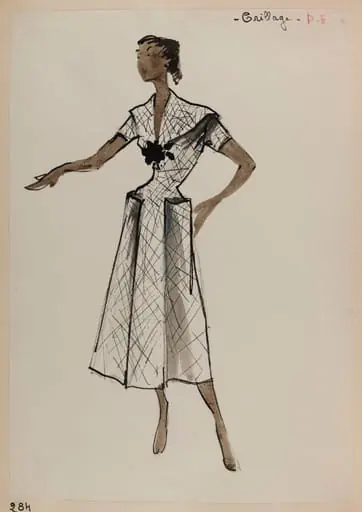
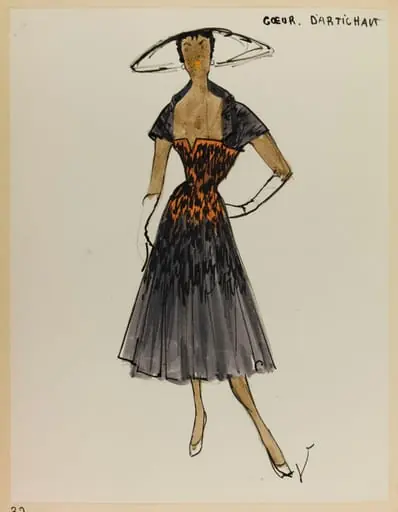
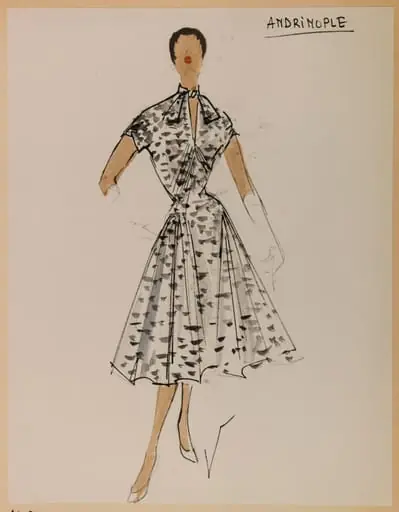
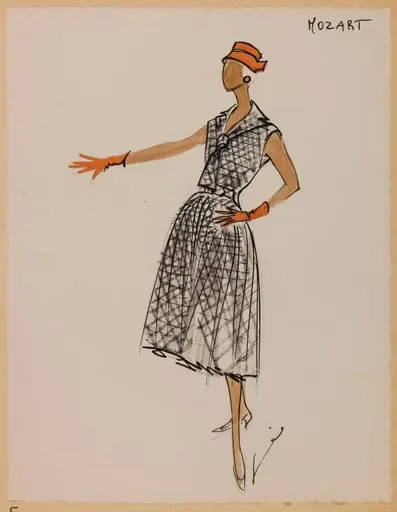
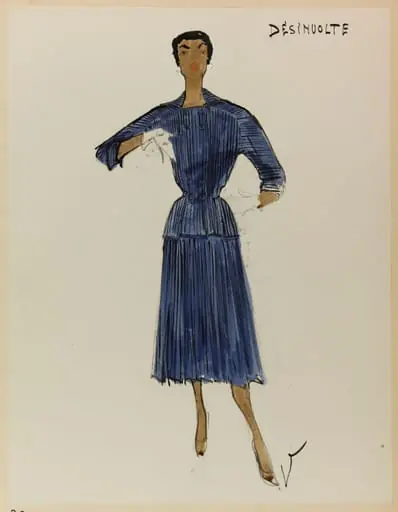
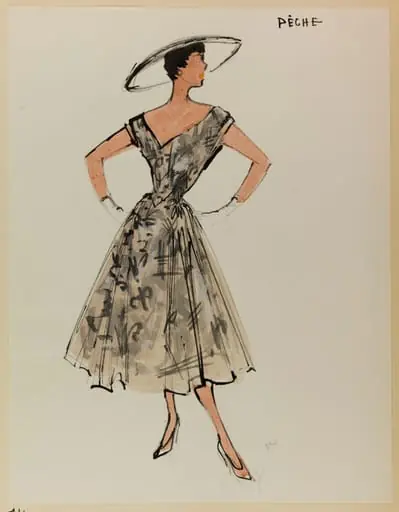
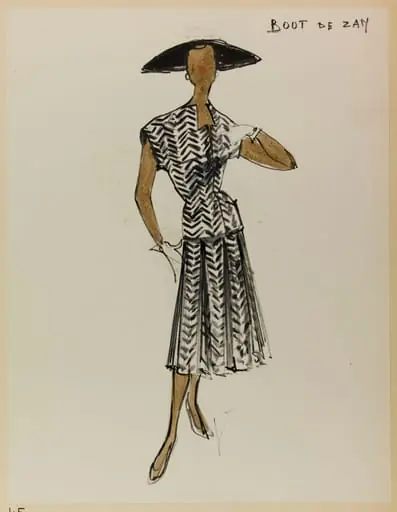
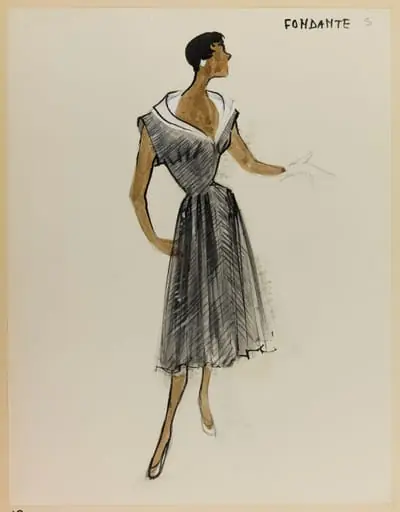
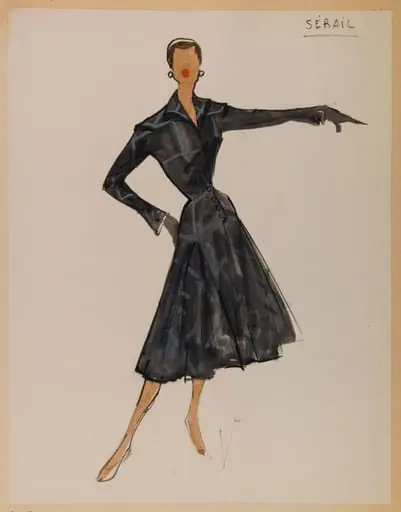
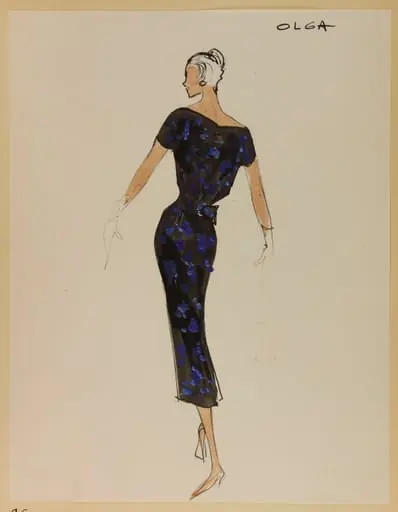
The drawing captures a knee-length dress with a tailored bodice and flared skirt, rendered in delicate lines that suggest movement and texture.
Created around 1953, *Mille feuilles* is a fashion sketch by Marie-Louise Carven, founder of the Parisian label Carven established in 1945. The drawing captures a knee-length dress with a tailored bodice and flared skirt, rendered in delicate lines that suggest movement and texture. It reflects Carven’s interest in lightweight, wearable designs for smaller frames, aligning with her pioneering role in bringing couture sensibilities to ready-to-wear fashion.
Subject & Meaning
The figure depicted is a poised woman in a modest, structured dress, her short hair and neutral posture conveying quiet elegance. The title, meaning 'thousand layers,' alludes to the dress’s construction—possibly referencing its tiered or textured fabric. The subtle interplay of soft purple and gray stripes suggests refinement without ornamentation, emphasizing form and material over decoration, consistent with Carven’s understated aesthetic.
Technique & Style
Carven’s sketch employs loose, rapid linework to imply fabric drape and surface detail, avoiding heavy shading in favor of suggestive cross-hatching. The pattern on the dress is rendered with rhythmic, parallel strokes, evoking gingham or woven texture. The figure’s limbs are minimally defined, allowing the garment to dominate the composition. This approach prioritizes the garment’s structure and movement over anatomical precision.
History & Provenance
The sketch resides in the collection of the Museum of Ethnography, indicating its significance as a cultural artifact rather than merely a design draft. It likely originated from Carven’s atelier during the early years of her prêt-à-porter line, a radical move in postwar Paris. Its preservation suggests recognition of its role in documenting the shift from haute couture to accessible fashion in mid-century Europe.
Context
In the early 1950s, Parisian fashion was redefining itself after wartime austerity. Carven stood apart by designing for everyday women, favoring simplicity and comfort. Her use of gingham and lace—materials associated with domestic life—elevated them into couture contexts. *Mille feuilles* embodies this philosophy, merging practicality with quiet sophistication in a moment when fashion was becoming more democratic.
Legacy
The sketch endures as a quiet testament to Carven’s influence on modern ready-to-wear. By focusing on proportion, fabric, and wearability, she helped dismantle the notion that elegance required extravagance. Her approach paved the way for later designers who prioritized accessibility without sacrificing refinement, making *Mille feuilles* a representative artifact of a broader transformation in 20th-century dress.
Artist & collection
Artist
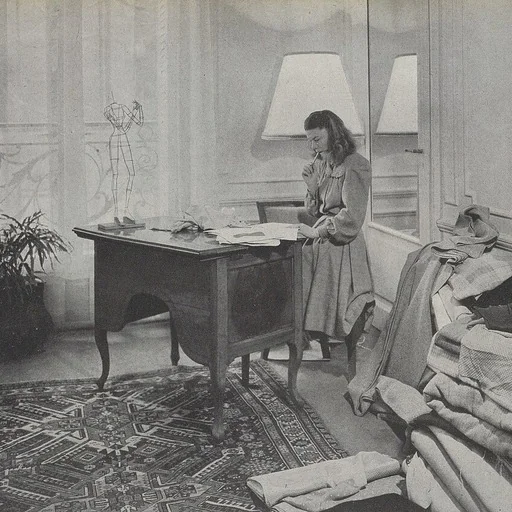
Marie-Louise Carven (31 August 1909 – 8 June 2015), born Carmen de Tommaso, was a French fashion designer who founded the house of Carven in 1945.
Museum
Palais Galliera - Musée de la Mode de la Ville de Paris
Continue through works from the same source collection.
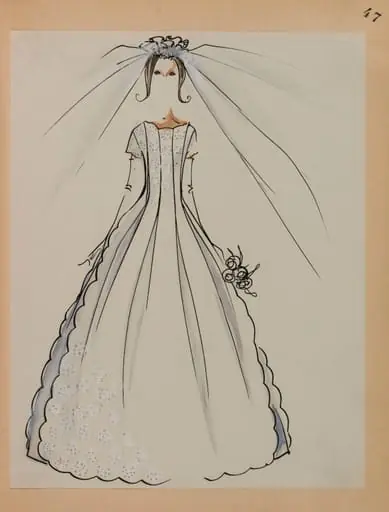 Robe de mariée festonnée et son voile
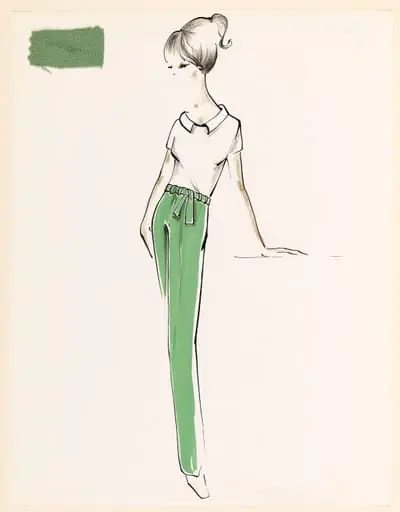 Haut blanc à manches courtes et pantalon vert à ceinture nouée
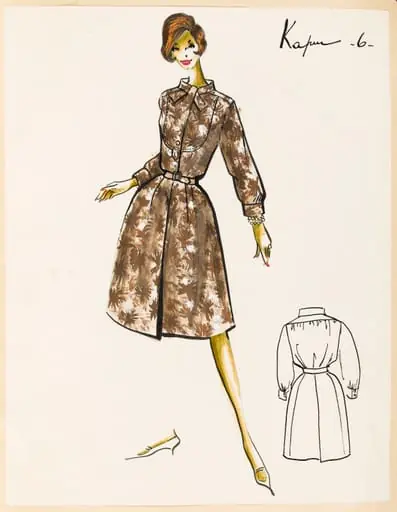 Kapur
Kapur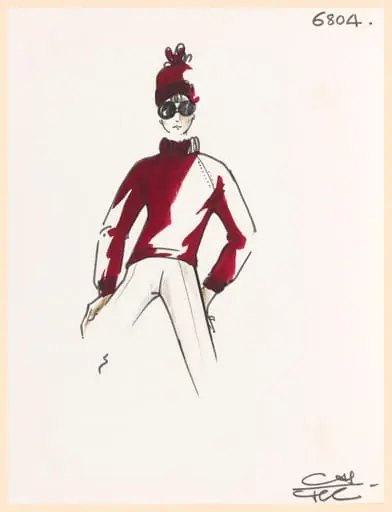 Pull-over à manches longues pourpre, bonnet assorti, pantalon et lunettes de soleil
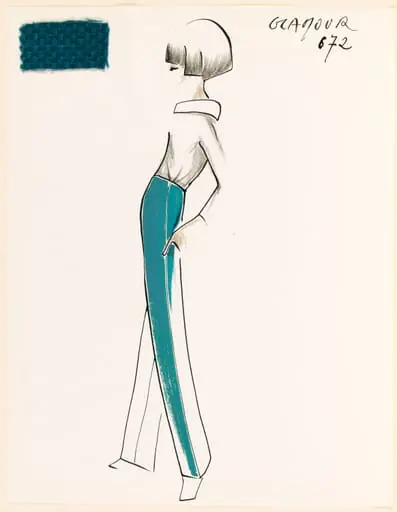 GLAMOUR
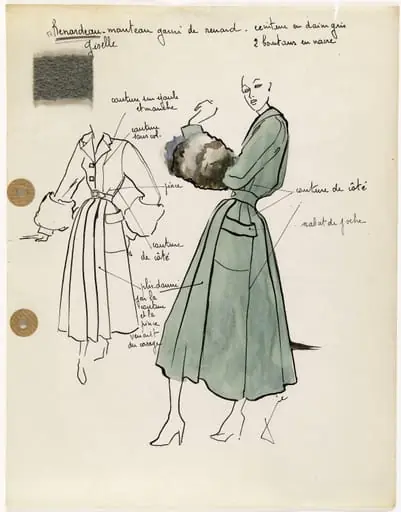 'Renardeau'
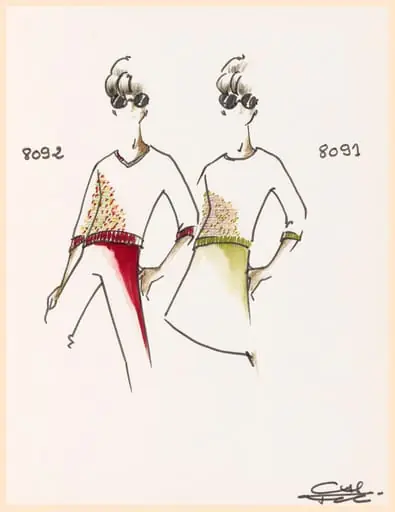 Pull-over à manches trois quarts et à encolure V à motifs multicolores, pantalon cerise et lunettes de soleil
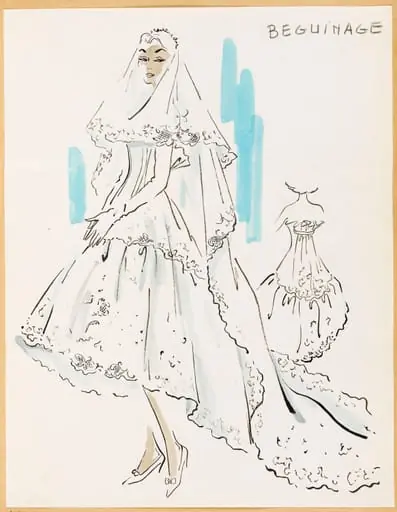 Béguinage