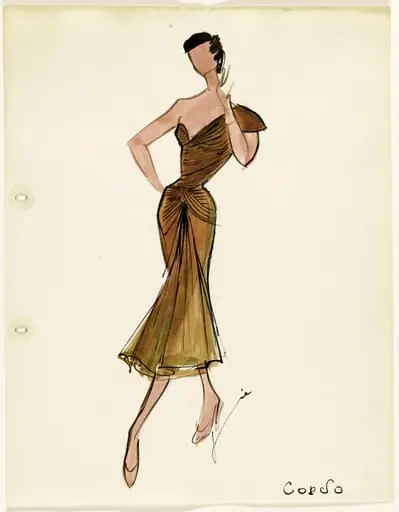
Artwork
'Colopavo'
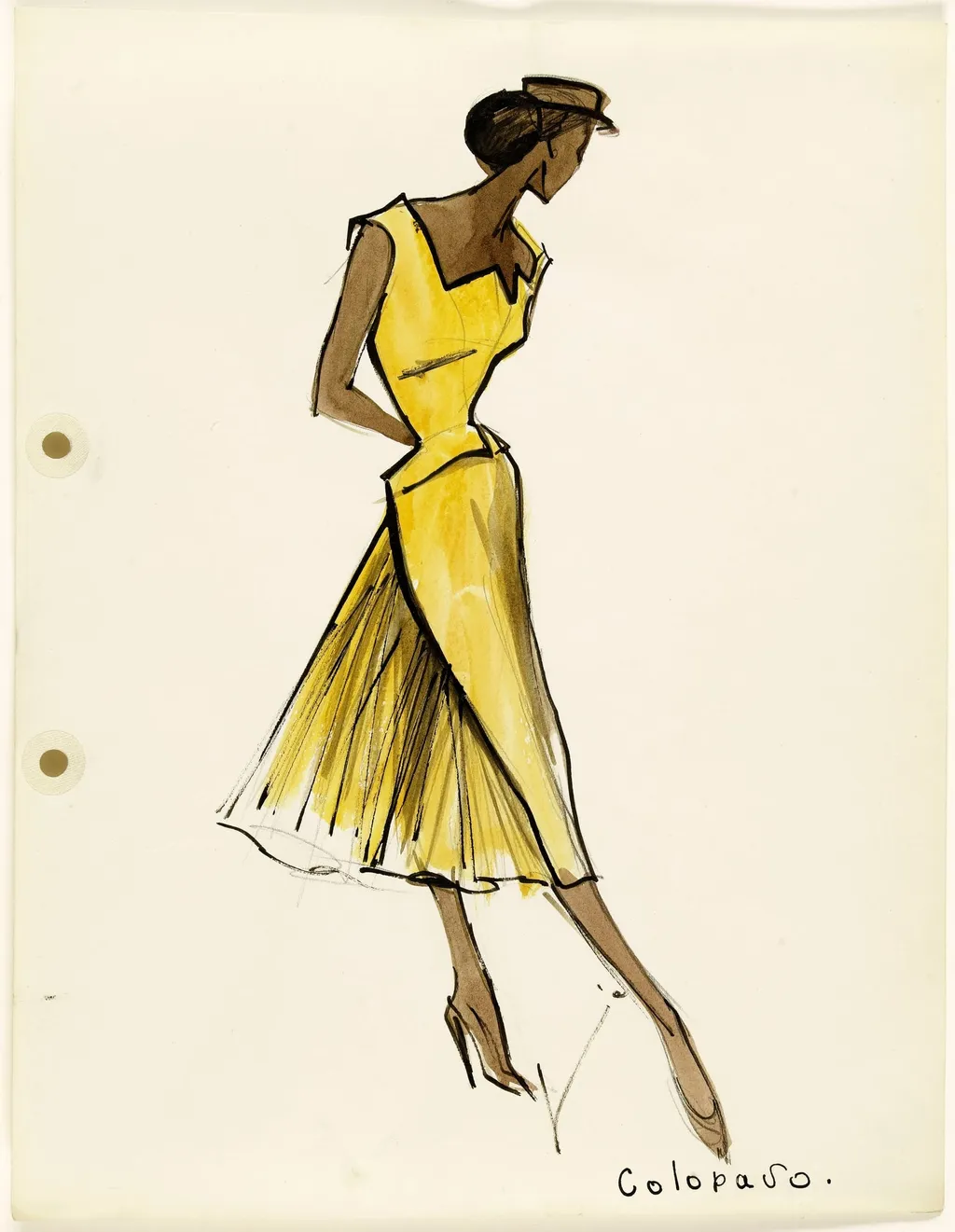
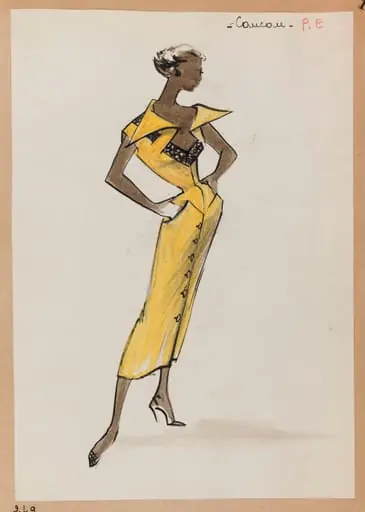
'Colopavo' is a drawing by Carven. It dates from 1951 and is held in the collection of the Palais Galliera - Musée de la Mode de la Ville de Paris.
About this work
Overview
Executed on paper, it captures a figure in motion with minimal detail, suggesting it was made as a rapid design study rather than a finished illustration.
Created in 1951 by the French designer Carven, this ink sketch bears the informal signature 'Colopavo,' possibly a personal pseudonym. Executed on paper, it captures a figure in motion with minimal detail, suggesting it was made as a rapid design study rather than a finished illustration. The work resides in the collection of the Museum of Ethnography, where it is preserved as part of a broader archive of mid-century fashion documentation.
Subject & Meaning
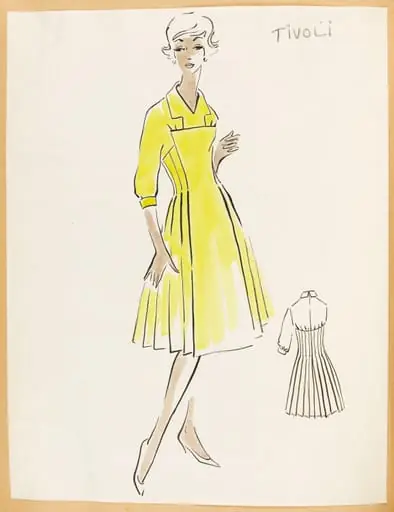
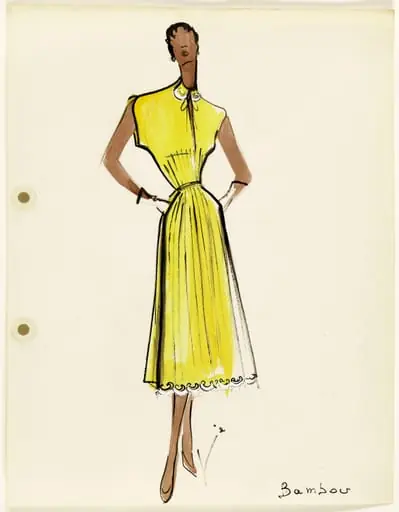
The figure is a woman rendered in profile, dressed in a vivid yellow ensemble with a tailored bodice and a full, flaring skirt. Her posture—hand on hip, head turned slightly—conveys casual poise. The absence of facial features or contextual elements shifts focus to silhouette and movement, emphasizing the garment’s form rather than identity. The title 'Colopavo' offers no clear reference, leaving its meaning open, perhaps reflecting the artist’s private whimsy.
Technique & Style
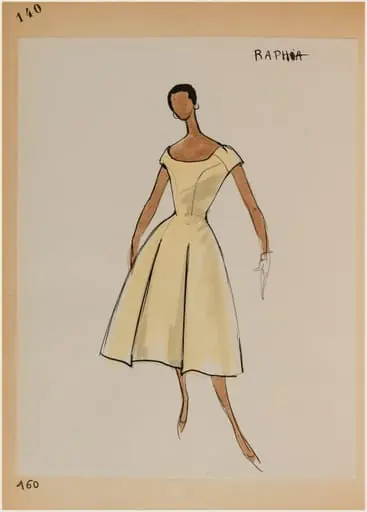
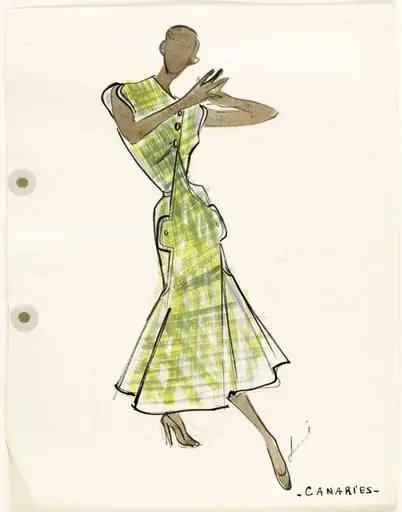
The sketch employs swift, fluid ink lines with light washes to suggest fabric volume and shadow. There is no heavy outlining or precise rendering; instead, the artist uses economy of mark to imply texture and drape. The loose handling suggests spontaneity, typical of preparatory work in fashion design. The contrast between the bright yellow dress and the dark hat adds visual rhythm without complicating the composition.
History & Provenance
The drawing entered the Museum of Ethnography’s holdings after being acquired from Carven’s personal archive, likely during the 1960s. Its classification as an ethnographic artifact reflects the museum’s interest in everyday cultural expression through dress. No exhibition history is documented prior to its inclusion in the collection, and it has remained largely unseen outside institutional storage.
Context
In the early 1950s, Carven was active in Parisian fashion circles, producing ready-to-wear designs that balanced elegance with accessibility. This sketch aligns with the era’s emphasis on streamlined silhouettes and playful femininity. While not tied to a specific collection, its style echoes the lightweight, movement-oriented garments popular among postwar French designers seeking to redefine feminine attire.
Legacy
The sketch remains a quiet testament to the informal processes behind fashion design. Unlike finished illustrations, it reveals the immediacy of creative thought—unpolished, intuitive, and unburdened by commercial demands. Its preservation underscores the value placed on ephemeral design artifacts, offering insight into how garments were conceived before they reached the runway.
Artist & collection
Artist
These delicate ink-on-paper drawings capture the quiet poetry of everyday things: pinecones, reeds, apples.
Museum
Palais Galliera - Musée de la Mode de la Ville de Paris
Continue through works from the same source collection.