Artwork
'Canaries'
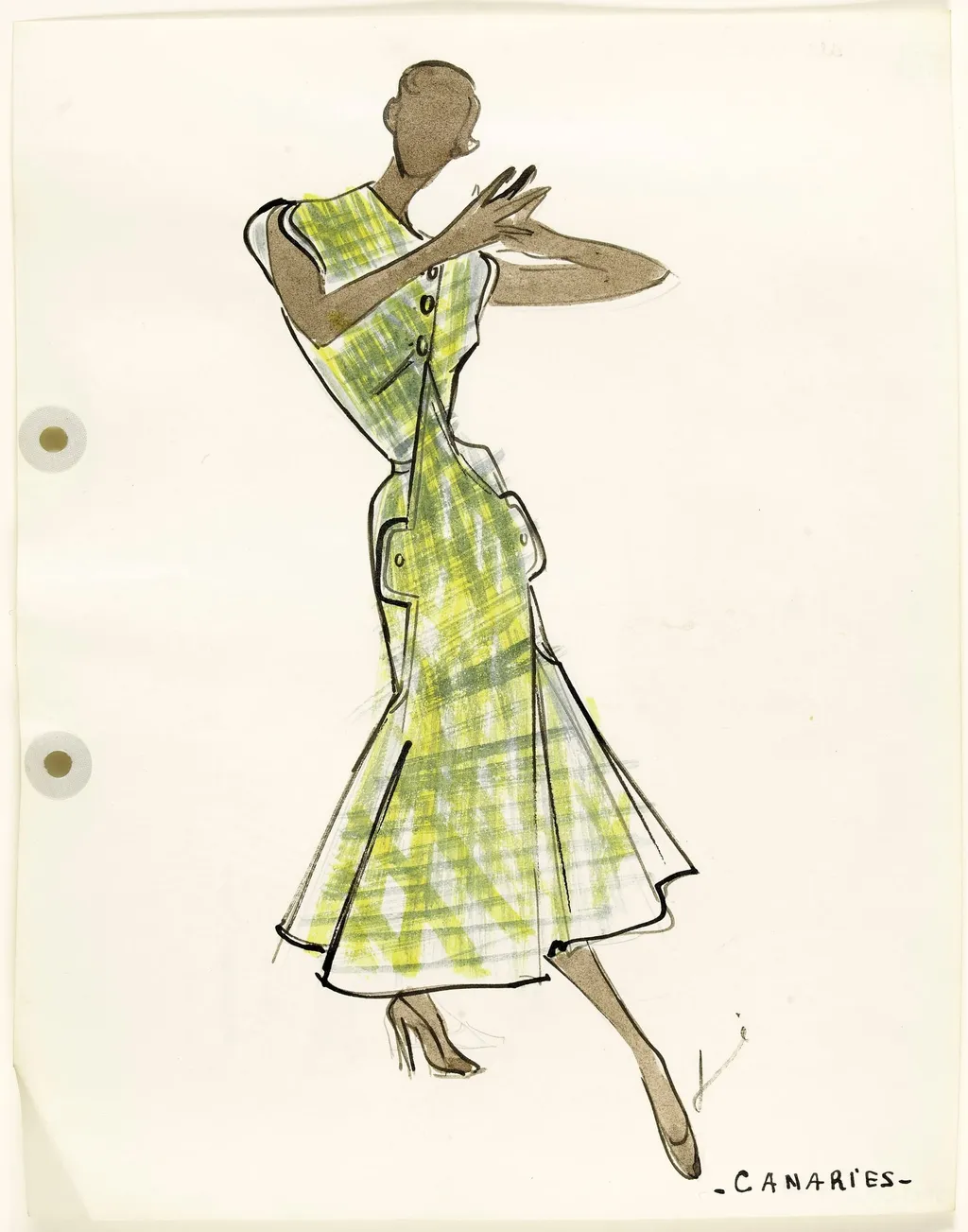
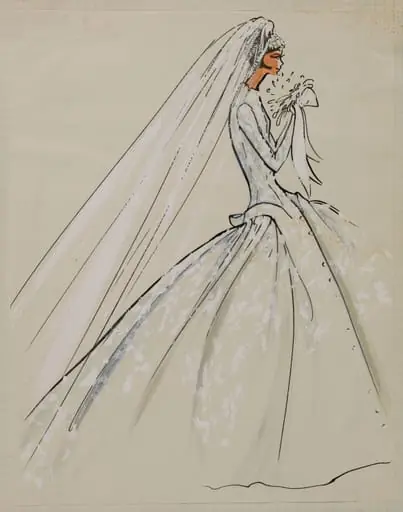
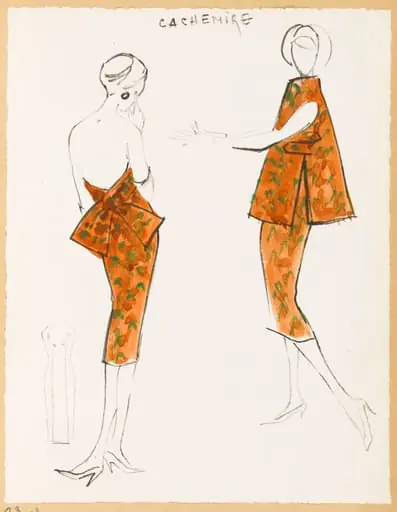
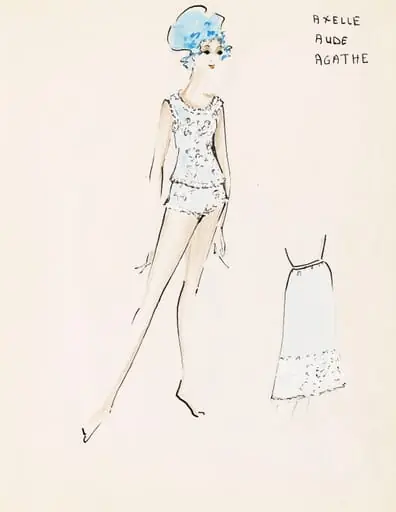
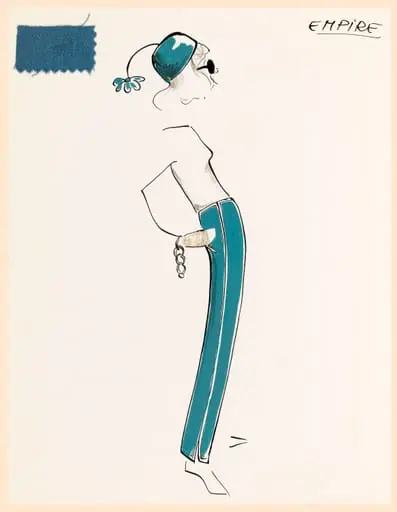
'Canaries' is a drawing by Carven. It dates from 1951 and is held in the collection of the Palais Galliera - Musée de la Mode de la Ville de Paris.
About this work
Overview
Though labeled as an image, its intimate scale and informal technique suggest it was made as a study or personal record rather than a finished piece.
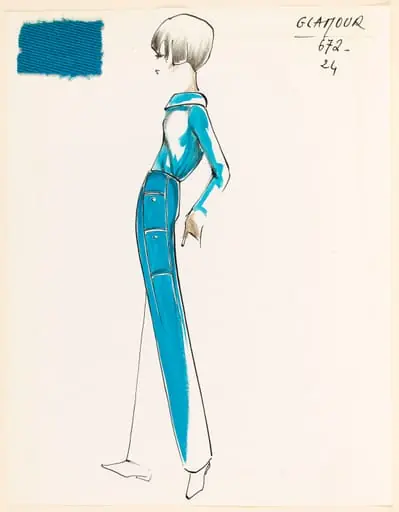
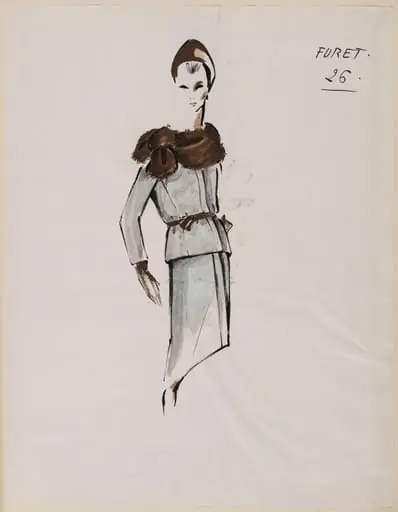
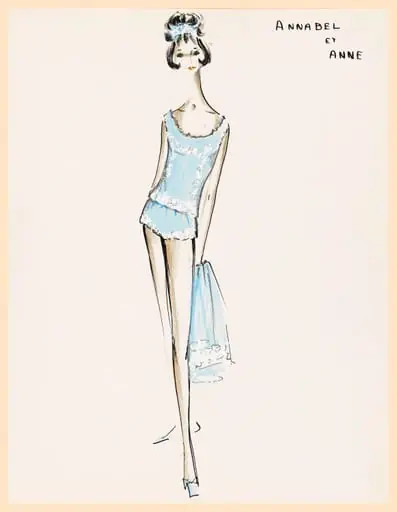
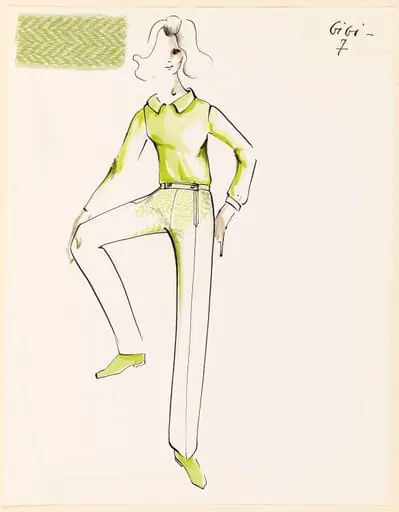
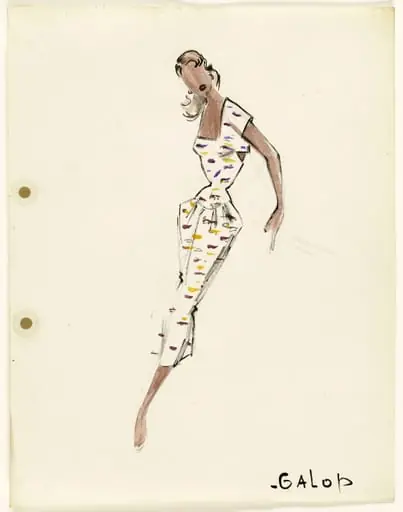
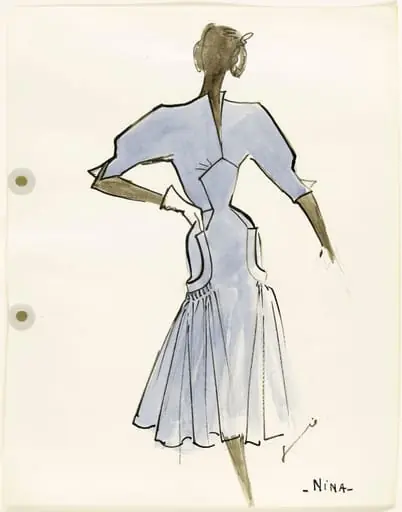
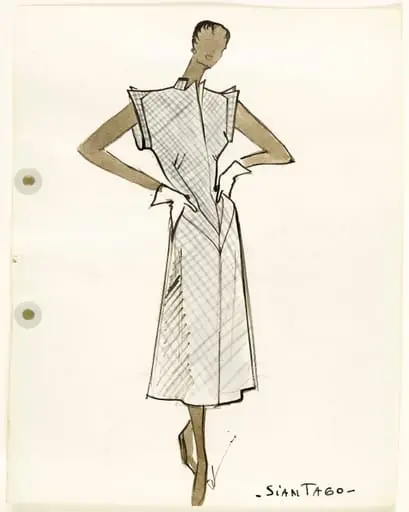
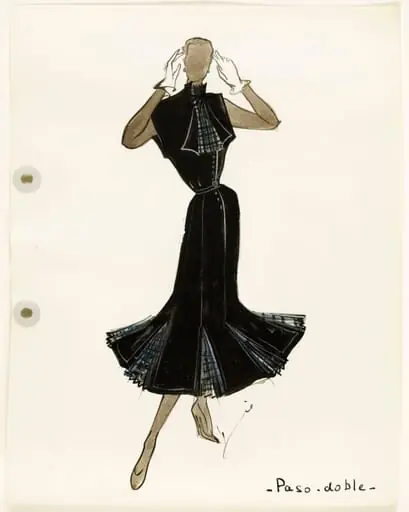
Created in 1951, 'Canaries' is a watercolor sketch by the French designer Carven. It is part of the collection at the Museum of Ethnography. The work captures a single figure in motion, rendered with swift, fluid lines and delicate washes of yellow and green. Though labeled as an image, its intimate scale and informal technique suggest it was made as a study or personal record rather than a finished piece.
Subject & Meaning
The subject is a woman with arms raised behind her head, standing in a relaxed, almost dancing posture. Her attire—a fitted top and flared skirt—reflects mid-century fashion, but the focus is not on social status or narrative. The title 'Canaries' may allude to the bright, airy tones of the palette, evoking lightness and movement rather than literal birds. The figure’s anonymity invites interpretation without imposing a specific story.
Technique & Style
Carven employed loose, spontaneous brushwork and translucent watercolor washes to suggest form and texture. The dress’s stripes are implied rather than precisely drawn, and the shading in greens and yellows creates a sense of ambient light. The lines are economical, avoiding detail in favor of rhythm and gesture. This approach aligns with fashion illustration practices of the time, prioritizing movement and silhouette over precision.
History & Provenance
The work entered the Museum of Ethnography’s collection as part of a broader acquisition of fashion-related sketches from the mid-20th century. Its origin as a personal study by Carven is documented in internal archives, though no exhibition history is recorded prior to its inclusion in the museum’s holdings. It has remained in the institution’s care since at least the 1970s.
Context
In early 1950s Paris, fashion designers often sketched informal studies of models to capture movement and fabric behavior. Carven, known for her tailored yet playful designs, used such drawings to refine her collections. This sketch reflects the era’s emphasis on feminine grace and ease, aligning with postwar ideals of modern living and leisure. The work is not a commercial illustration but a private tool of creative exploration.
Legacy
While Carven’s fashion house gained recognition for ready-to-wear designs, this sketch remains a quiet testament to her process. It is not widely reproduced or studied, but within the museum’s collection, it serves as an example of how designers translated aesthetic ideas from paper to garment. Its preservation underscores the value of ephemeral creative records in understanding fashion history.
Artist & collection
Artist
These delicate ink-on-paper drawings capture the quiet poetry of everyday things: pinecones, reeds, apples.
Museum
Palais Galliera - Musée de la Mode de la Ville de Paris
Continue through works from the same source collection.