Artwork
Brune
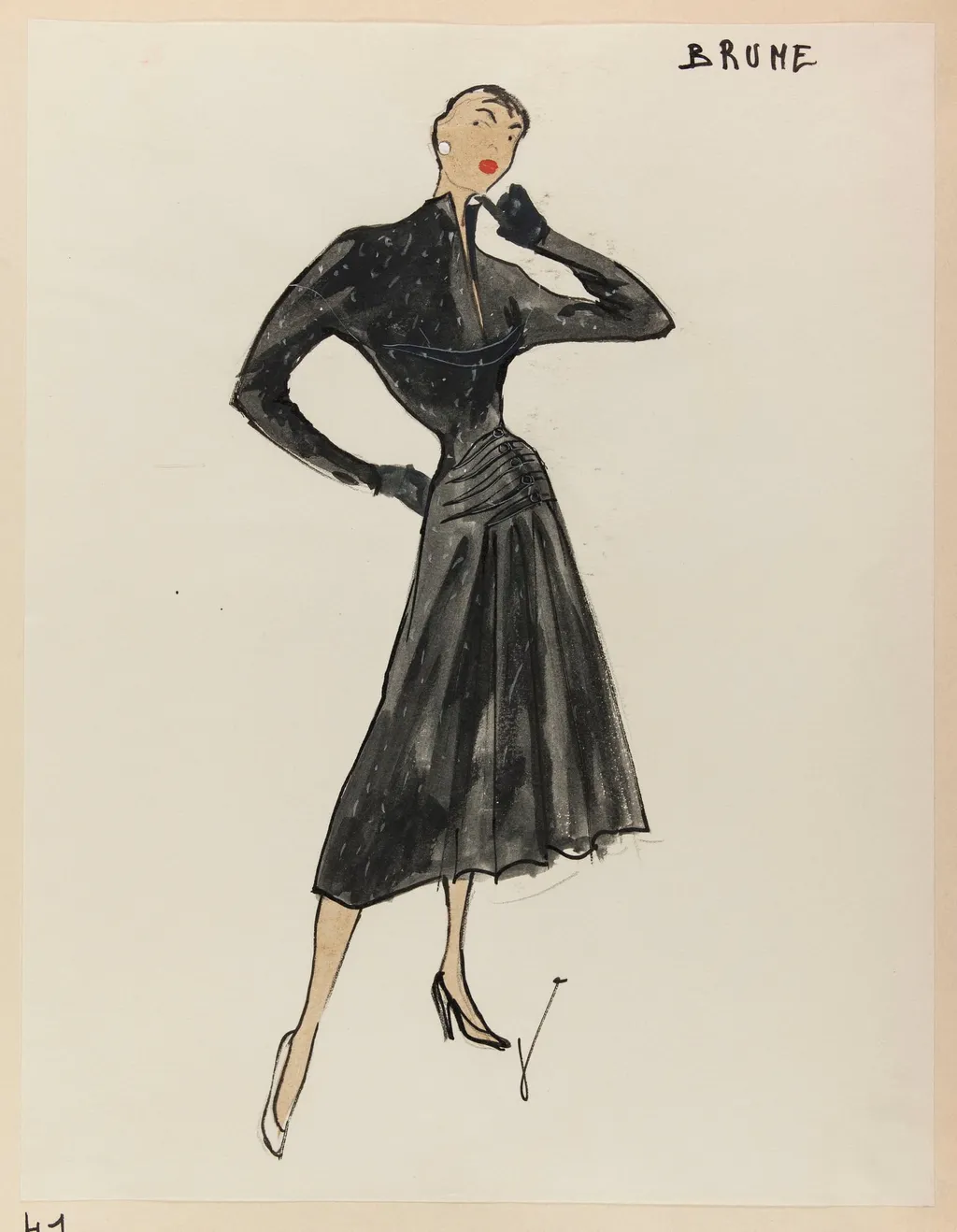
Brune is a drawing by Carven. It dates from 1952 and is held in the collection of the Palais Galliera - Musée de la Mode de la Ville de Paris.
About this work
Overview
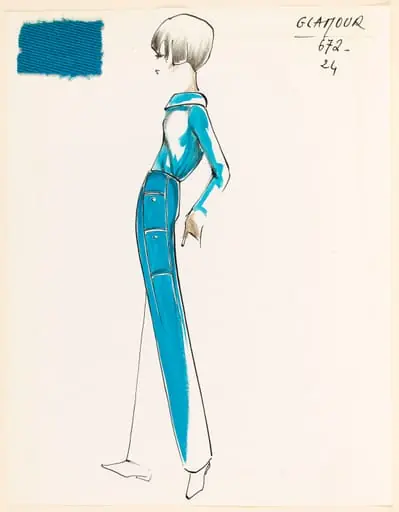
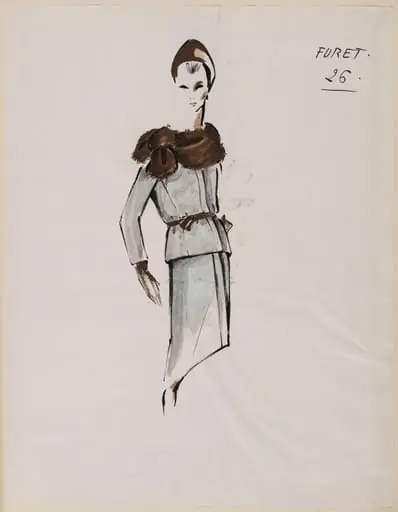
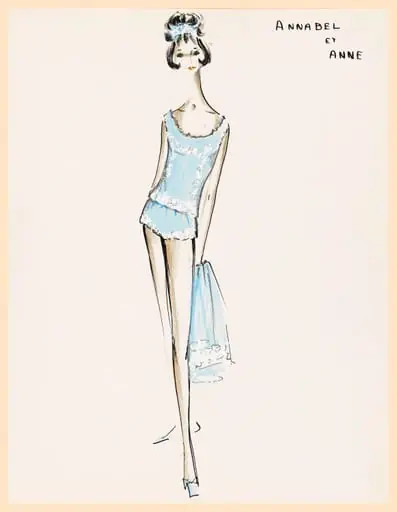
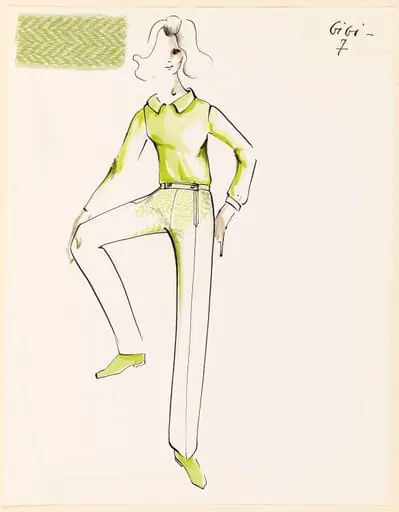
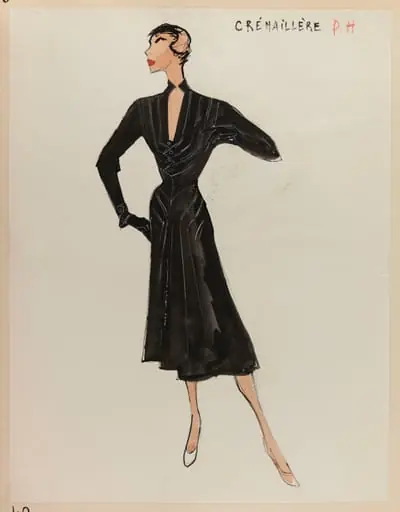
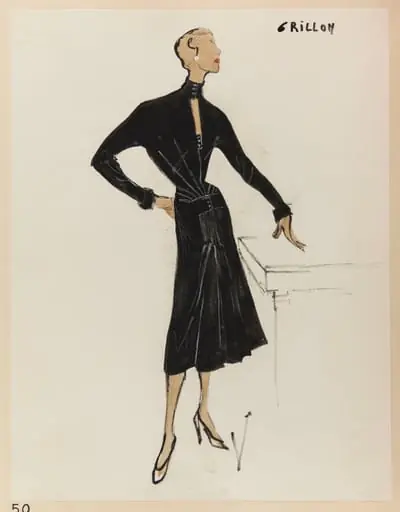
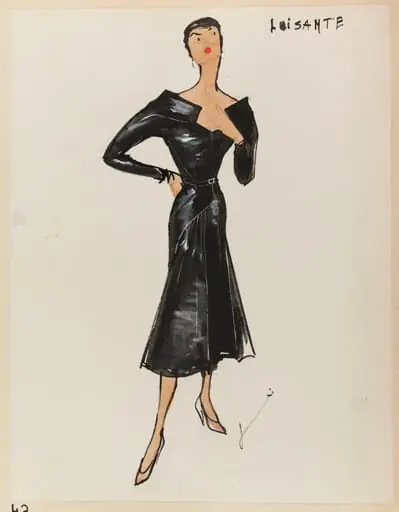
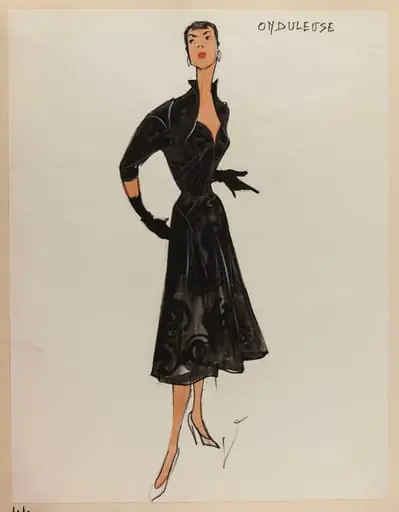
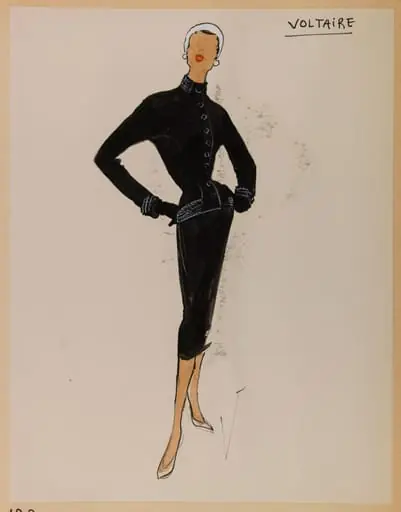
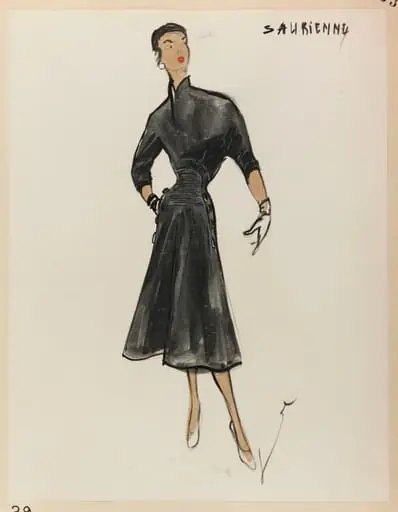
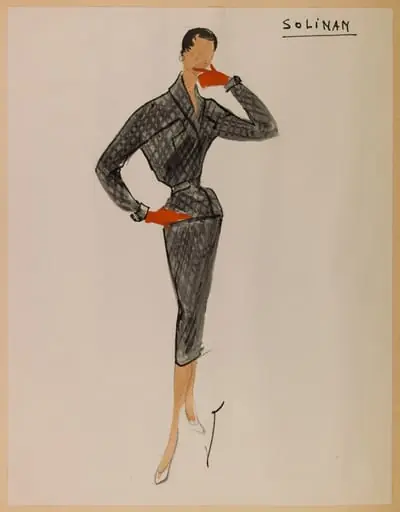
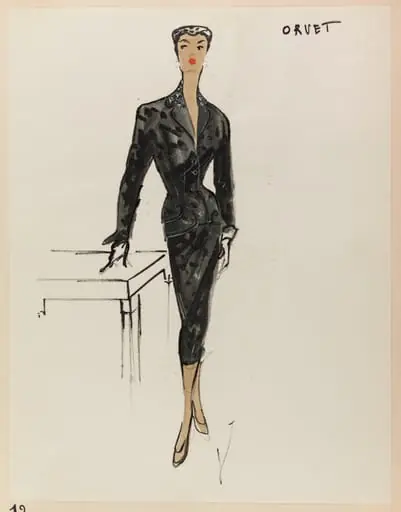
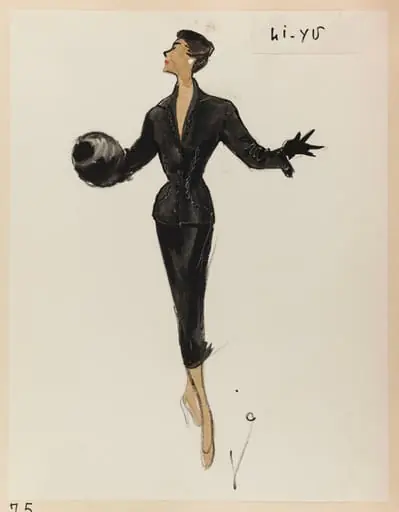
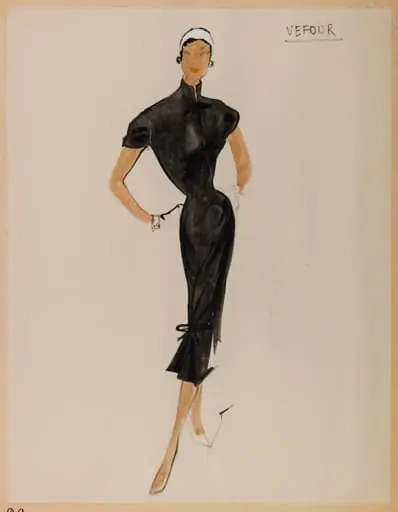
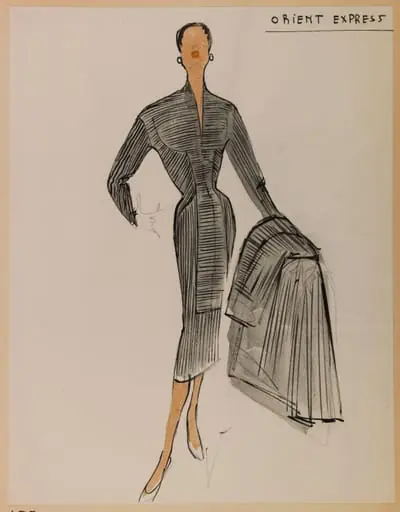
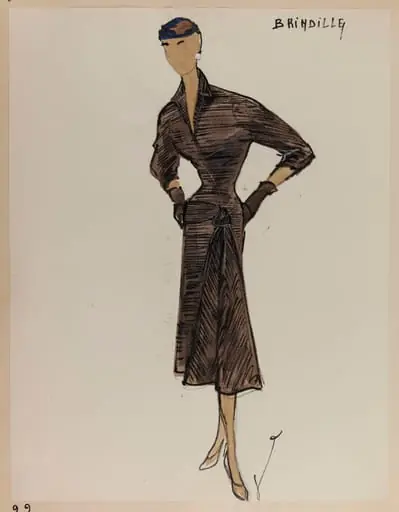
Brune is a pencil sketch from around 1952 by the French designer Carven. It depicts a woman in a minimalist black ensemble and is part of the collection at the Museum of Ethnography. The drawing captures a moment of poised stillness, emphasizing form and motion over fine detail. Its rapid, confident lines suggest it was made as a study or design reference rather than a finished illustration.
Subject & Meaning
The image reflects mid-century ideals of feminine elegance, not through ornamentation, but through clean lines and controlled movement.
The figure is a woman dressed in a tailored, flared dress with a defined waist, short hair, and subtle accessories. Her posture—one hand on the hip, the other near the face—conveys quiet self-assurance. The image reflects mid-century ideals of feminine elegance, not through ornamentation, but through clean lines and controlled movement. It presents fashion as an extension of personal presence rather than mere decoration.
Technique & Style
Carven rendered the figure with swift, unbroken contours and little to no shading. The focus lies in the silhouette and the way fabric drapes and flows, particularly around the skirt and waist. Details like earrings or lipstick are suggested with minimal strokes. This approach prioritizes rhythm and structure, aligning with fashion illustration practices of the time that valued immediacy and clarity over realism.
History & Provenance
Created circa 1952, Brune likely originated as part of Carven’s design process during her active years in Parisian haute couture. It entered the Museum of Ethnography’s collection as an artifact of 20th-century fashion culture. Its preservation there underscores its value as a document of design thinking, not merely as a work of art, but as a record of how clothing was envisioned and communicated.
Context
In the early 1950s, fashion illustration was a vital tool for designers to communicate ideas to clients and ateliers. Carven’s work, including Brune, reflects a shift toward streamlined aesthetics in postwar fashion. The sketch’s economy of line mirrors broader cultural trends favoring simplicity and functionality, distinguishing it from the more ornate styles of earlier decades.
Legacy
Brune remains a quiet example of how fashion designers used drawing to explore form and movement. Though not widely exhibited, its presence in a museum of ethnography signals its role as a cultural artifact. It contributes to understanding how mid-century designers translated ideas of modernity into wearable form, influencing later approaches to fashion visualization.
Artist & collection
Artist
These delicate ink-on-paper drawings capture the quiet poetry of everyday things: pinecones, reeds, apples.
Museum
Palais Galliera - Musée de la Mode de la Ville de Paris
Continue through works from the same source collection.