Artwork
Crevette
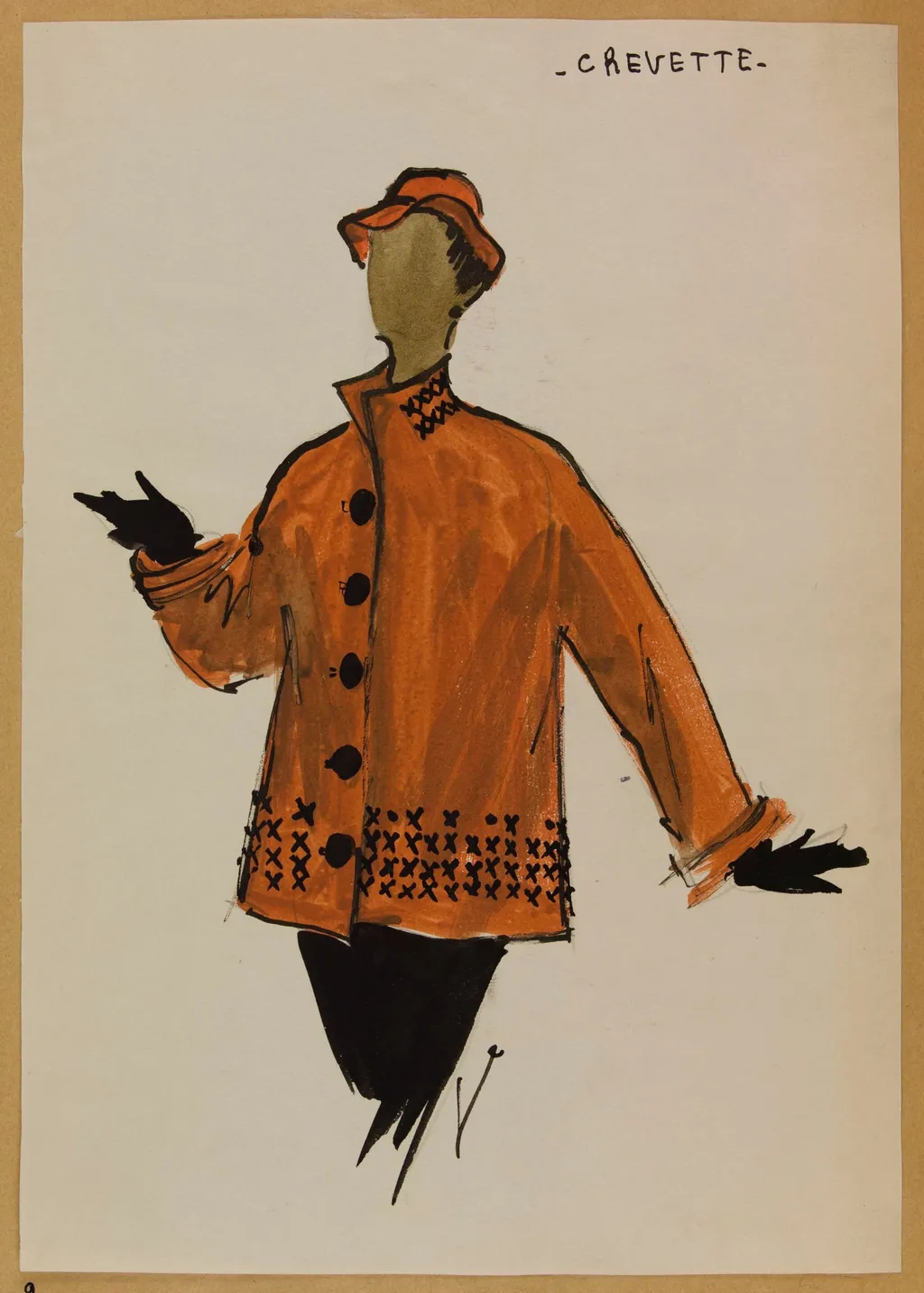
Crevette is a drawing by Carven. It dates from 1952 and is held in the collection of the Palais Galliera - Musée de la Mode de la Ville de Paris.
About this work
Overview
It is part of the collection at the Museum of Ethnography, where it is presented as a study in fashion and movement rather than a formal portrait.
Crevette is a 1952 drawing by the French designer and artist Carven. Executed in ink or pencil, the work captures a figure in motion, rendered with loose, energetic lines that suggest spontaneity. It is part of the collection at the Museum of Ethnography, where it is presented as a study in fashion and movement rather than a formal portrait. The title, inscribed at the top, gives the piece its identity without offering explicit narrative context.
Subject & Meaning
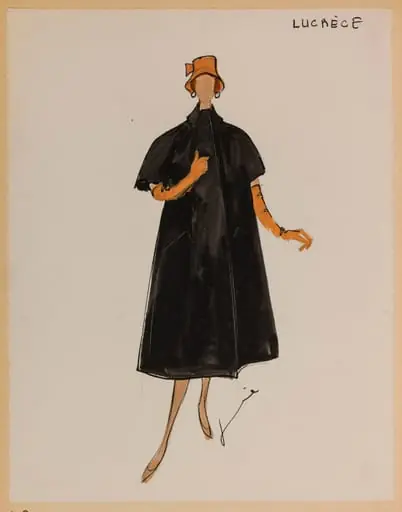
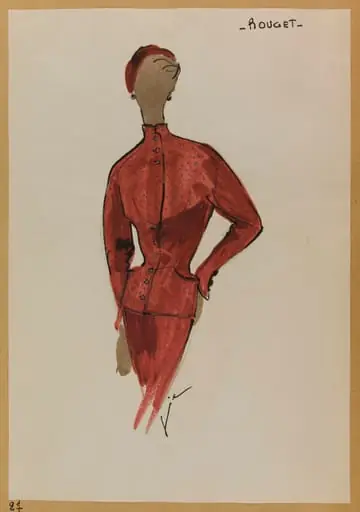
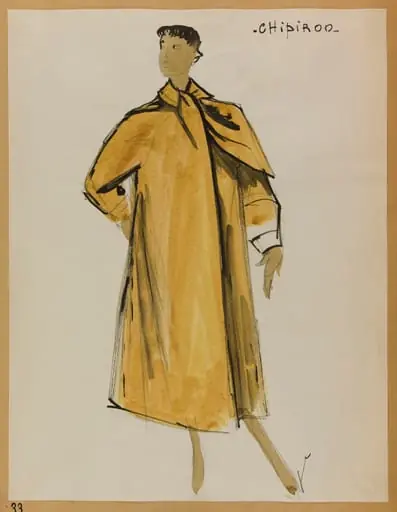
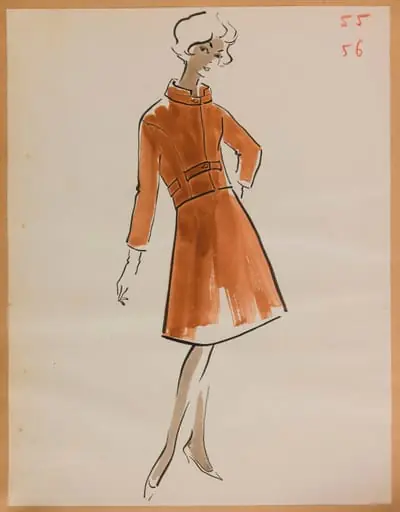
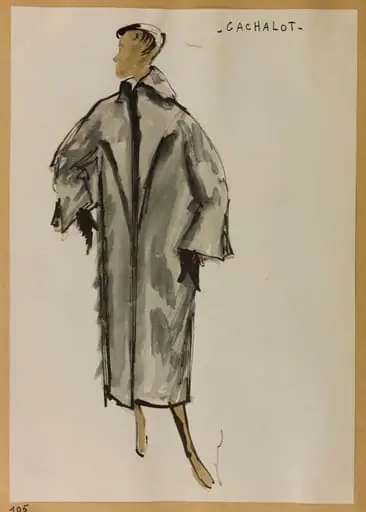
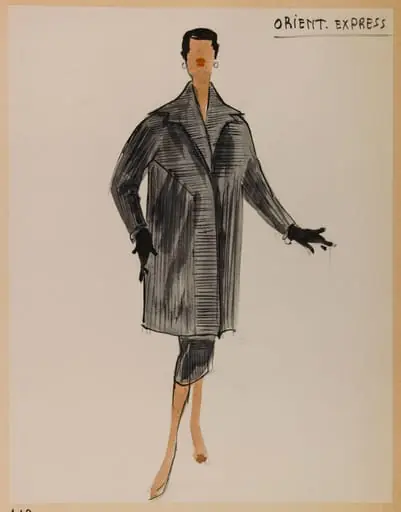
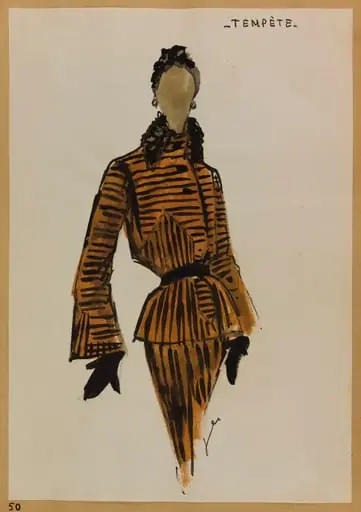
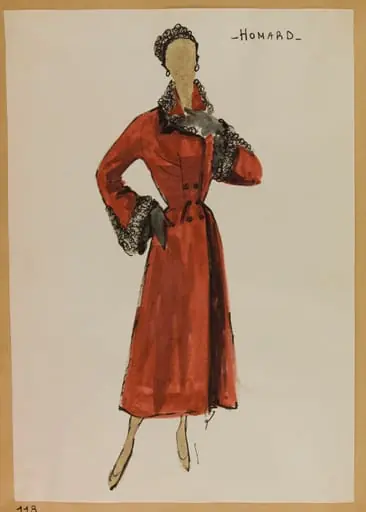
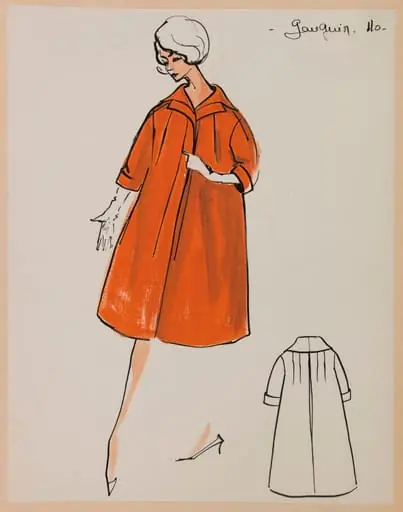
The figure depicted wears a vivid orange coat with black buttons and a matching hat, suggesting a stylized, possibly theatrical outfit. The rolled-up sleeves and raised hand imply action or gesture, evoking a moment of casual dynamism. The black cross-like motif near the hem may reference decorative embroidery or symbolic patterning, though its meaning remains ambiguous. The work does not aim for realism but instead conveys a sense of personality through costume and posture.
Technique & Style
Carven employed swift, unrefined lines to construct the figure, favoring immediacy over precision. The sketchy quality lends the image a sense of rhythm and informality, as if captured in a fleeting glance. Contrasts between the bold orange garment and the dark accents of buttons and motifs create visual emphasis without shading or modeling. The absence of background isolates the figure, directing attention to the interplay of form and attire.
History & Provenance
Created in 1952, Crevette emerged during Carven’s active years in fashion and graphic design. It entered the Museum of Ethnography’s collection at an unspecified date, likely through donation or acquisition related to the artist’s broader cultural output. The work has not been widely exhibited outside institutional contexts, and its provenance remains tied to the museum’s holdings of 20th-century fashion-related drawings.
Context
Crevette reflects Carven’s engagement with fashion as both art and lived experience. In postwar France, designers often blurred boundaries between clothing, performance, and visual art. This drawing aligns with contemporaneous explorations of the body in motion through costume, echoing trends in fashion illustration and avant-garde graphic design of the era, where spontaneity and personal expression were valued over rigid formalism.
Legacy
Crevette remains a modest but distinctive example of Carven’s graphic work, illustrating how fashion design extended beyond garments into visual studies of identity and movement. While not widely reproduced, it contributes to scholarly understanding of mid-century French design practices that treated clothing as a dynamic, expressive medium. Its preservation in an ethnographic context underscores its role as a cultural artifact rather than a fine art object.
Artist & collection
Artist
These delicate ink-on-paper drawings capture the quiet poetry of everyday things: pinecones, reeds, apples.
Museum
Palais Galliera - Musée de la Mode de la Ville de Paris
Continue through works from the same source collection.