Artwork
Quatre vingt neuf
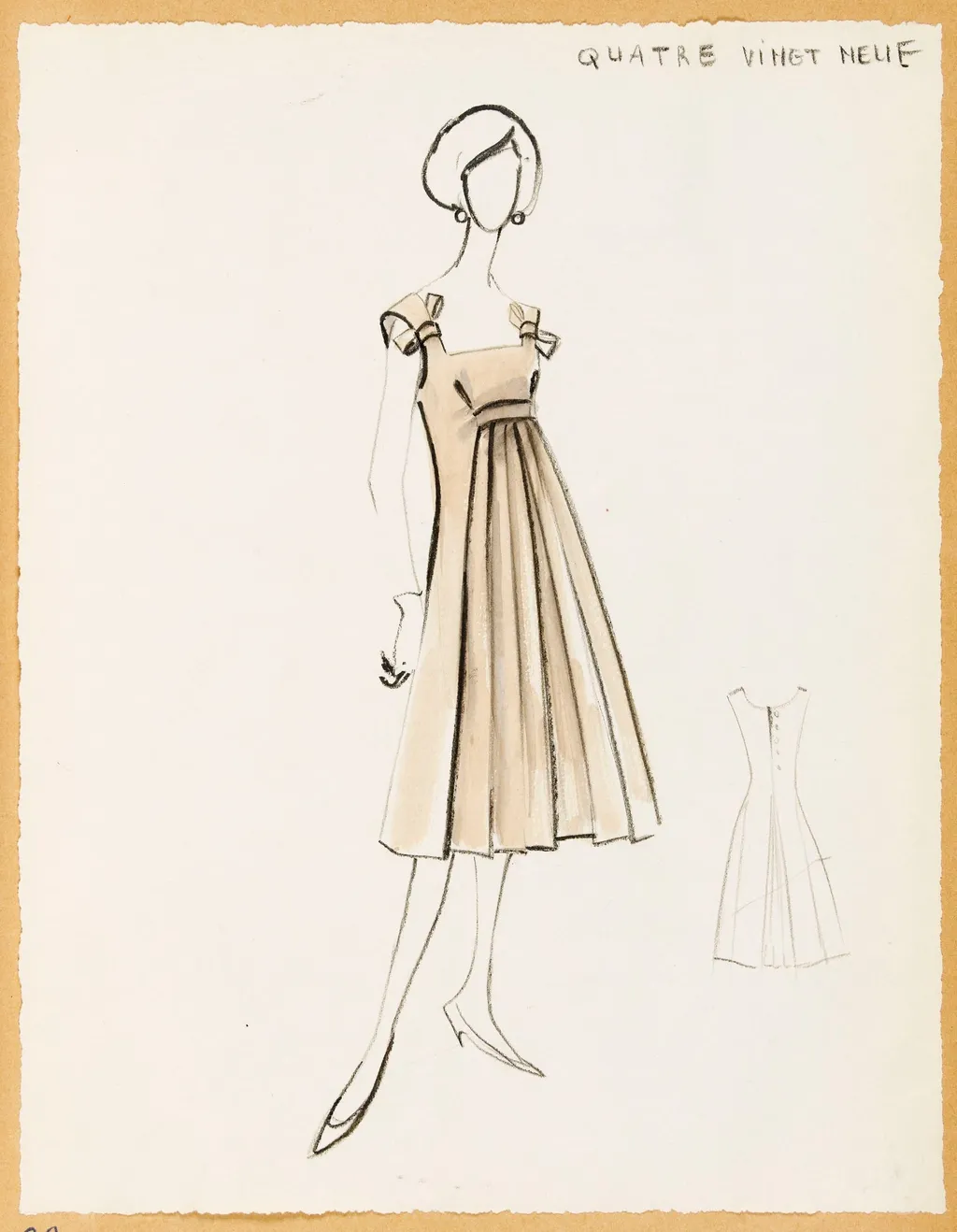
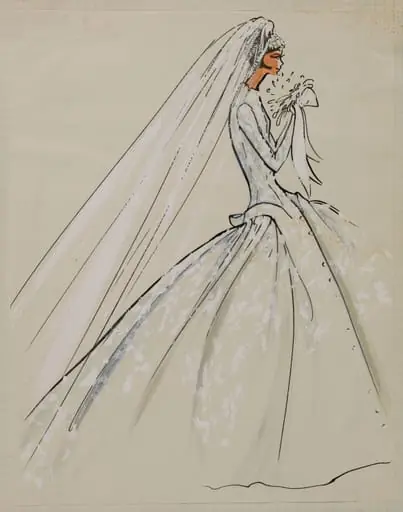
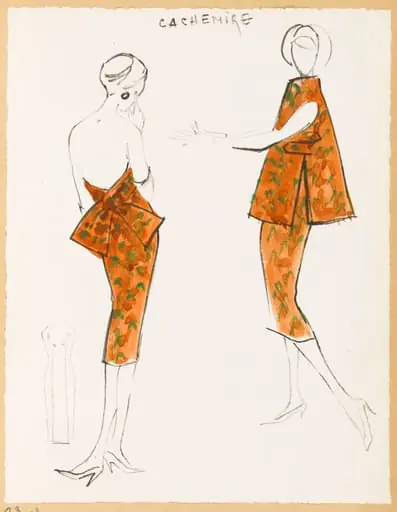
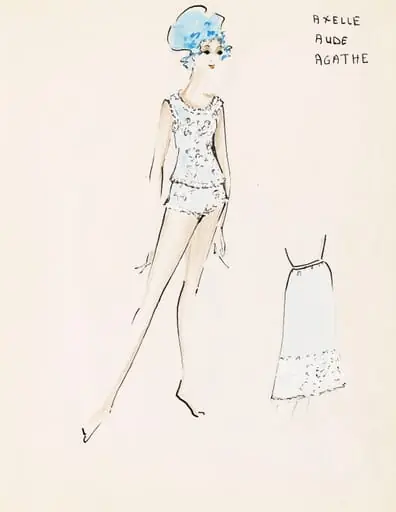
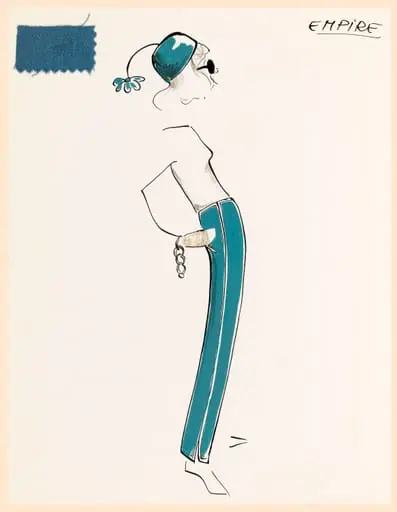
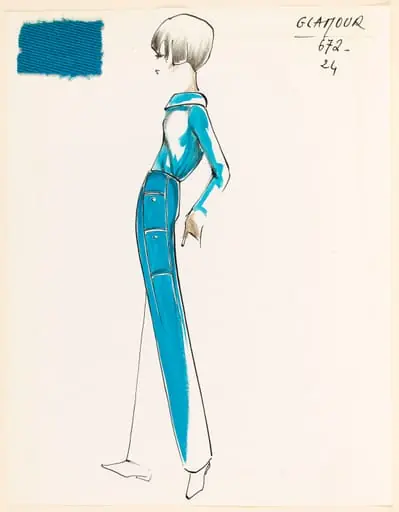
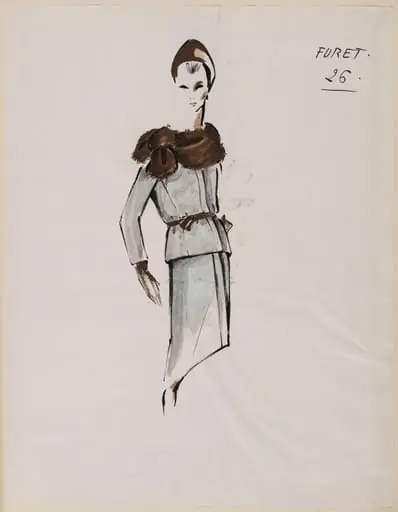
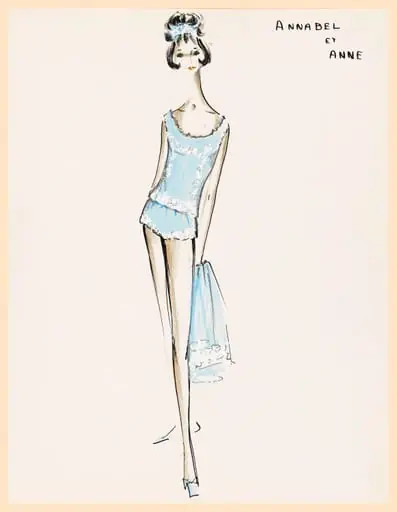
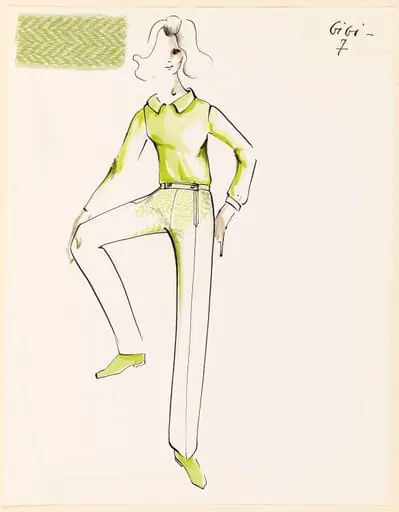
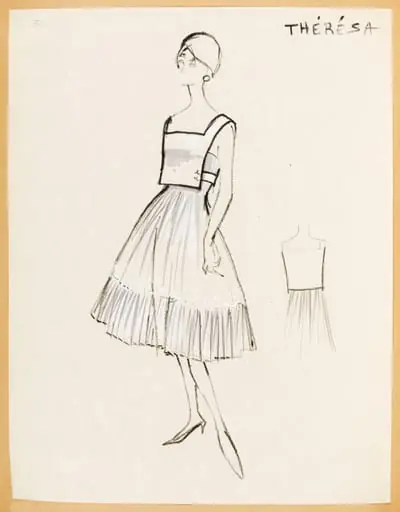
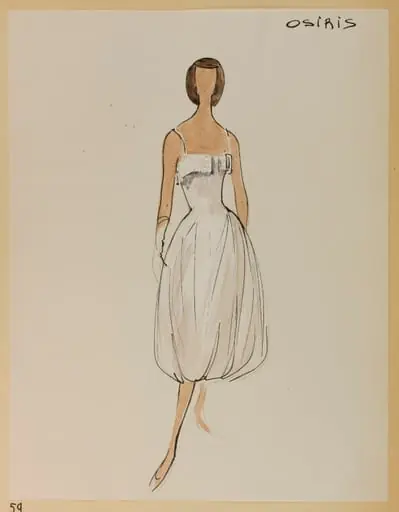
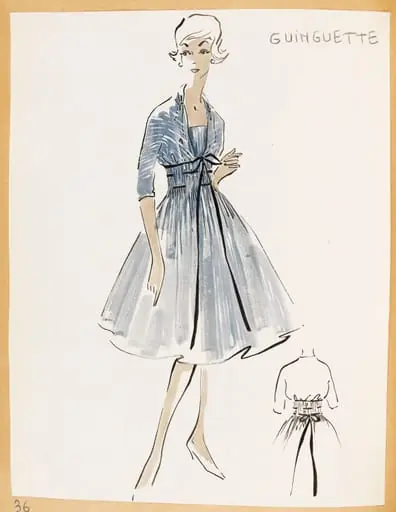
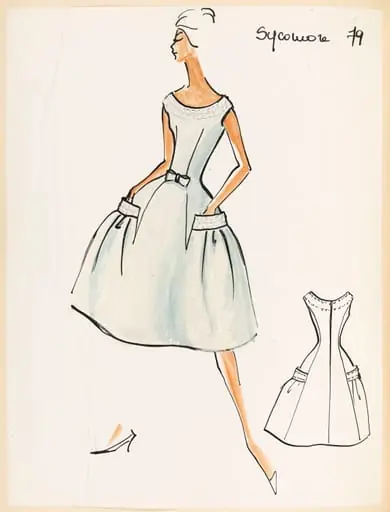
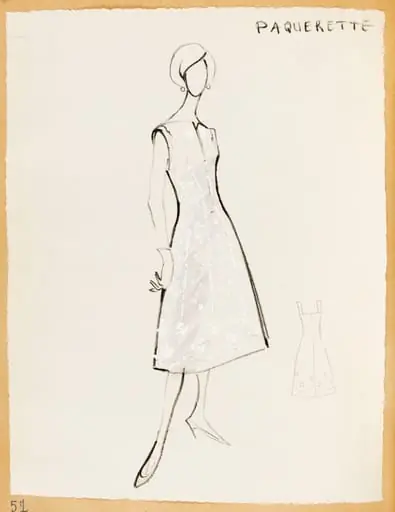
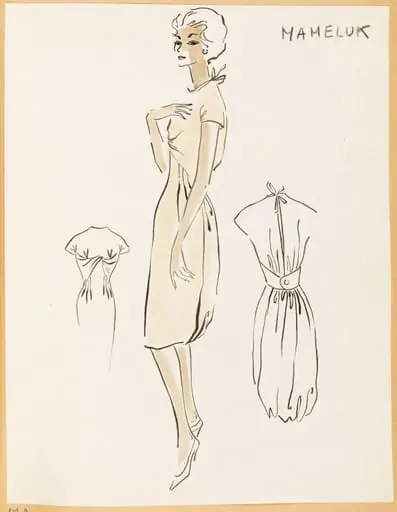
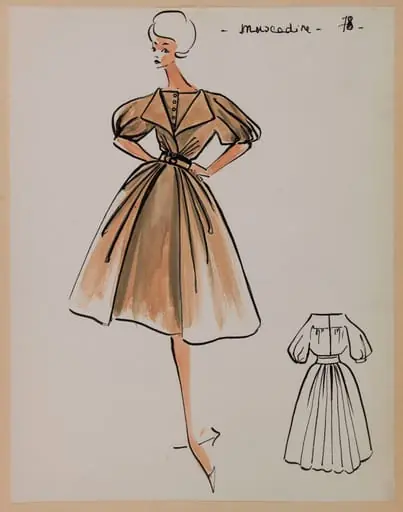
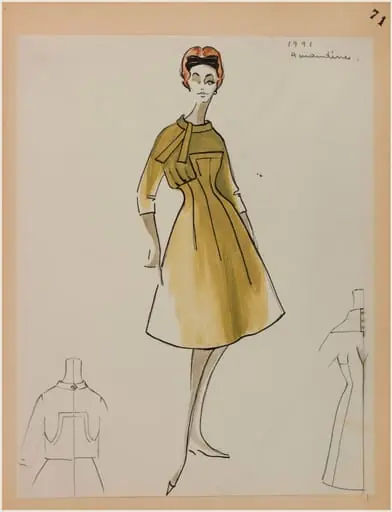
Quatre vingt neuf is a drawing by Carven. It dates from 1957 and is held in the collection of the Palais Galliera - Musée de la Mode de la Ville de Paris.
About this work
Overview
The composition emphasizes textile form over individual identity, reflecting the designer’s preoccupation with garment structure as a subject in its own right.
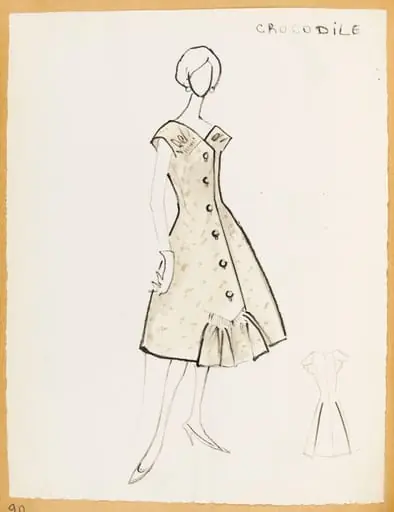
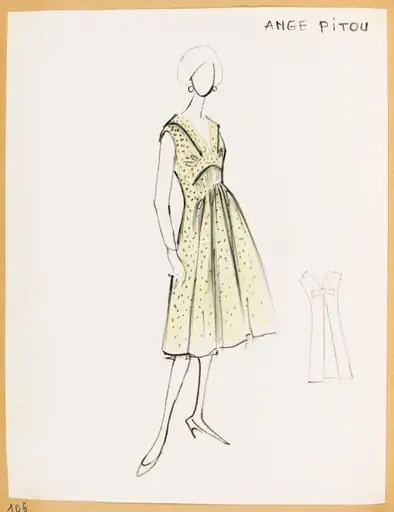
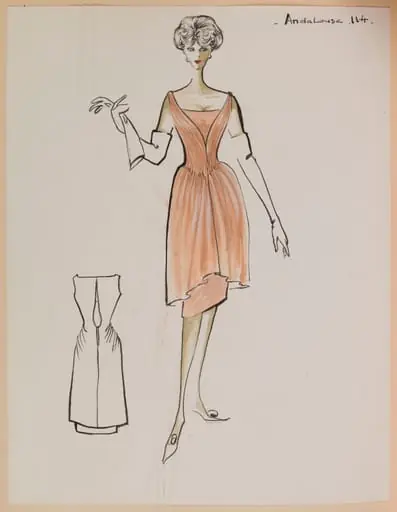
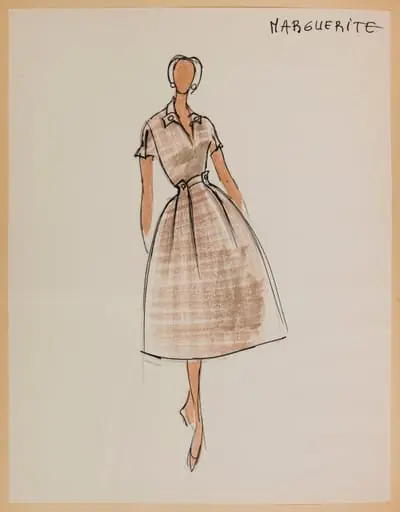
Quatre vingt neuf is a pencil and ink drawing from around 1957 by the French fashion designer Carven. It is part of the collection at the Museum of Ethnography. The work presents a solitary female figure in profile, accompanied by a smaller, isolated rendering of her dress. The composition emphasizes textile form over individual identity, reflecting the designer’s preoccupation with garment structure as a subject in its own right.
Subject & Meaning
The figure is rendered without distinct facial features, reducing personal identity to a silhouette. The repeated depiction of the dress—once worn, once suspended—suggests an interest in the garment as an autonomous object. This duality may imply the separation between wearer and attire, or the design process itself: the dress as both product and prototype, detached from the body yet defined by it.
Technique & Style
The drawing employs fine, restrained lines and a muted palette of beige, gray, and brown tones. Subtle hatching and tonal gradations create a sense of volume without heavy modeling. The absence of color and the minimalism of form align with fashion illustration traditions of the mid-20th century, where clarity and proportion took precedence over ornamentation or emotional expression.
History & Provenance
Created during Carven’s active years as a couturier, the work likely originated as a design study or archival sketch. It entered the Museum of Ethnography’s holdings through acquisition or donation, possibly as part of a broader collection documenting fashion as cultural artifact. Its presence in an ethnographic context signals an institutional recognition of clothing as material culture.
Context
In the late 1950s, fashion design was increasingly viewed as a discipline worthy of museum preservation. Carven, known for her refined, wearable silhouettes, contributed to this shift by documenting her designs with precision. This drawing reflects a broader trend in postwar Europe where haute couture was being repositioned not merely as commerce, but as a form of visual and tactile heritage.
Legacy
Quatre vingt neuf remains a quiet testament to the precision of mid-century fashion drafting. Its inclusion in an ethnographic collection underscores how garments, even in sketch form, can convey cultural values around modesty, elegance, and craftsmanship. Though not widely exhibited, it continues to inform scholarly study of fashion as a silent record of its time.
Artist & collection
Artist
These delicate ink-on-paper drawings capture the quiet poetry of everyday things: pinecones, reeds, apples.
Museum
Palais Galliera - Musée de la Mode de la Ville de Paris
Continue through works from the same source collection.