Artwork
Derviche
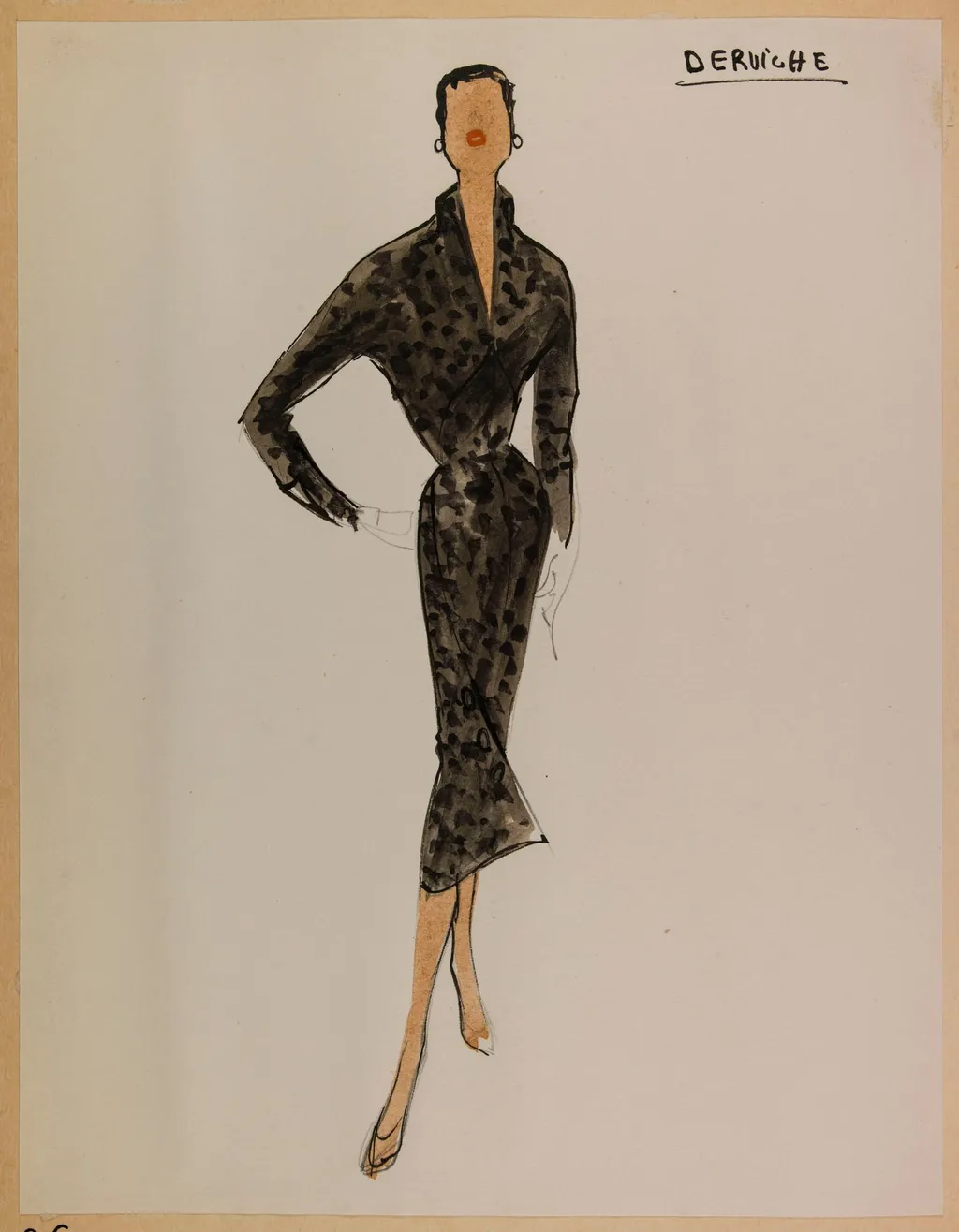
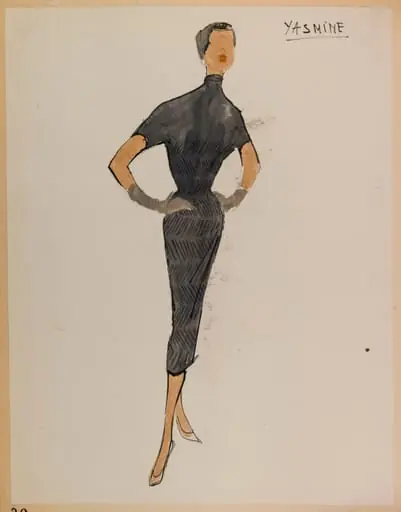
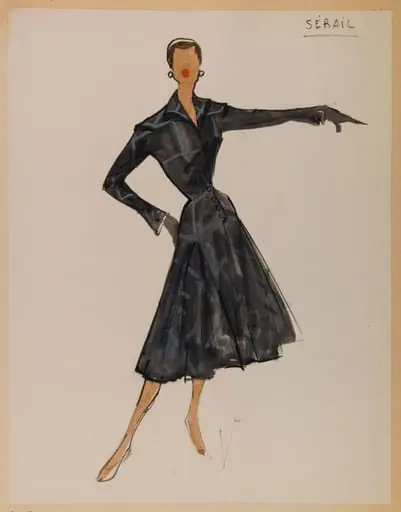
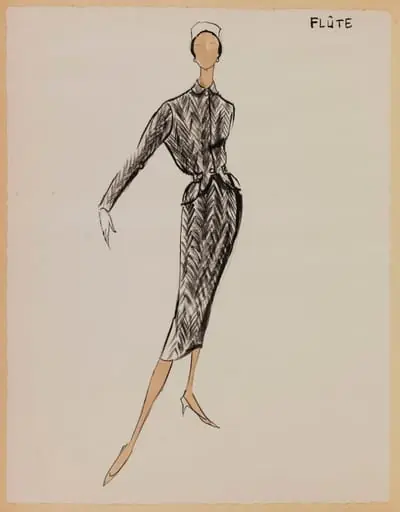
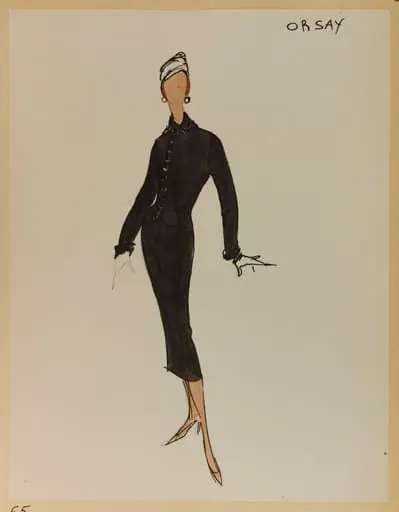
Derviche is a drawing by Carven. It dates from 1953 and is held in the collection of the Palais Galliera - Musée de la Mode de la Ville de Paris.
About this work
Overview
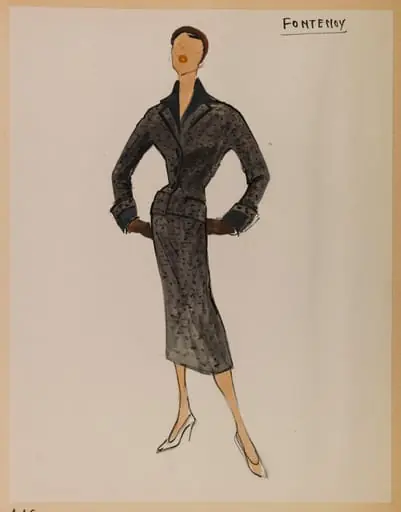
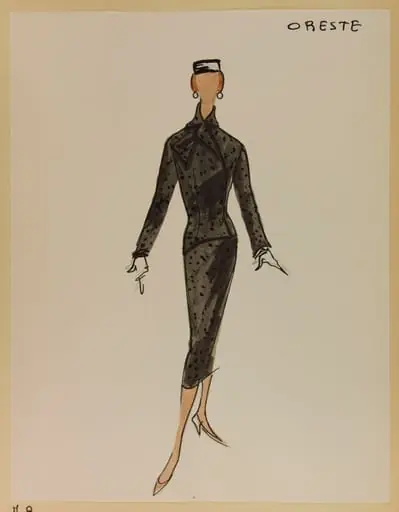
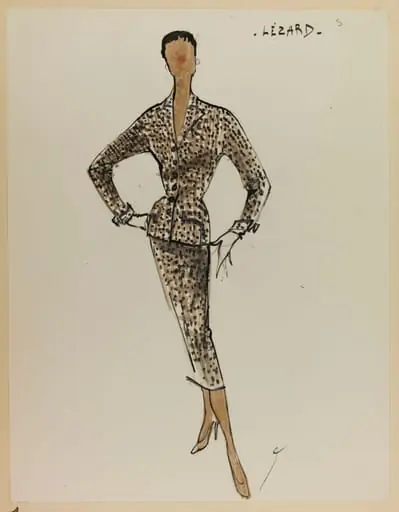
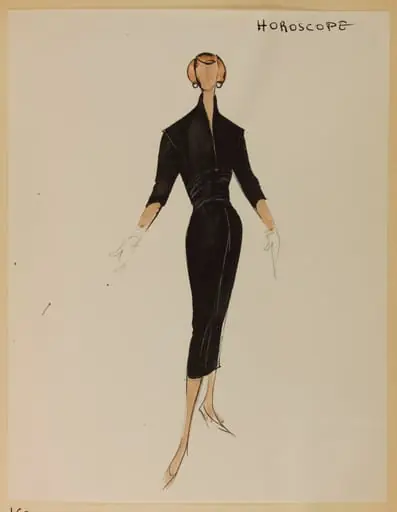
Derviche is a mid‑20th‑century image by the French fashion house Carven, dated approximately 1953. The work is part of the collection of the Museum of Ethnography, where it is displayed as an example of the label’s design archives. The piece consists of a single sketch that captures a solitary figure in a flowing garment.
Subject & Meaning
The drawing portrays a woman standing with her arms at her sides, dressed in a long, loose‑fitting dress marked by a dark pattern of small geometric shapes. The absence of any background focuses attention on the silhouette and the garment’s movement, suggesting an emphasis on the clothing’s functionality and aesthetic rather than narrative context.
Technique & Style
Rendered with quick, gestural lines, the sketch relies on minimal detail to convey form. The artist employs a simple, almost spontaneous drawing method, allowing the fluidity of the dress to emerge through the line work. The dark patterned fabric contrasts with the lighter sketch lines, highlighting the texture and cut of the garment.
History & Provenance
Created around 1953, Derviche entered the Museum of Ethnography’s holdings as part of a broader acquisition of fashion-related artifacts. Its title, placed in the lower corner, hints at an inspiration drawn from the dervish tradition, perhaps referencing the flowing, unrestricted nature of the dress. The work remains a documented example of Carven’s mid‑century design approach.
Artist & collection
Artist
These delicate ink-on-paper drawings capture the quiet poetry of everyday things: pinecones, reeds, apples.
Museum
Palais Galliera - Musée de la Mode de la Ville de Paris
Continue through works from the same source collection.