Artwork
Oreste
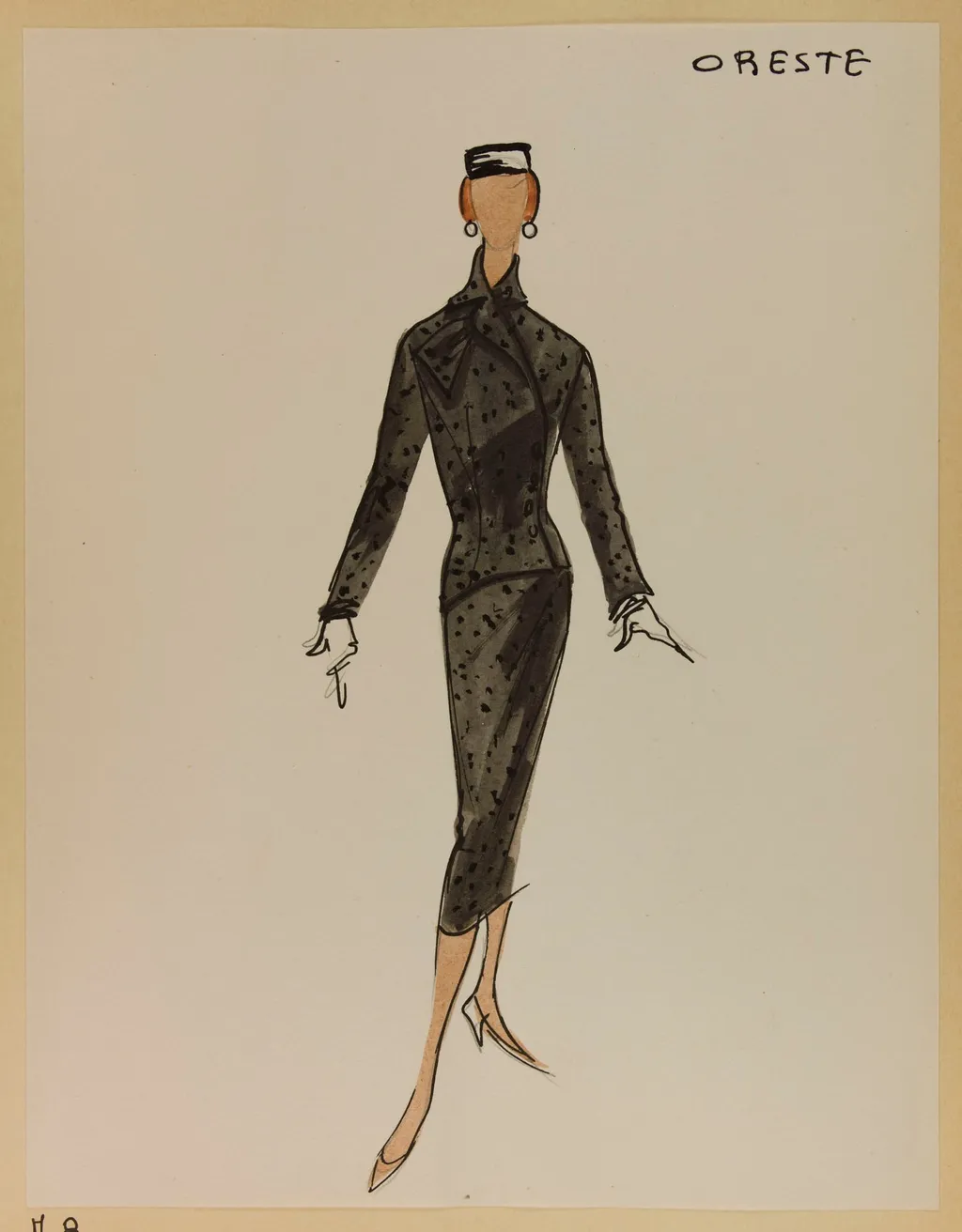
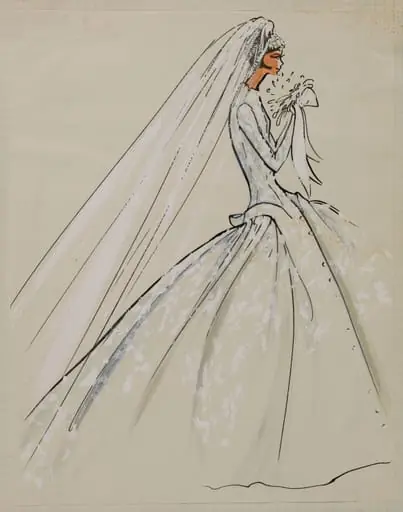
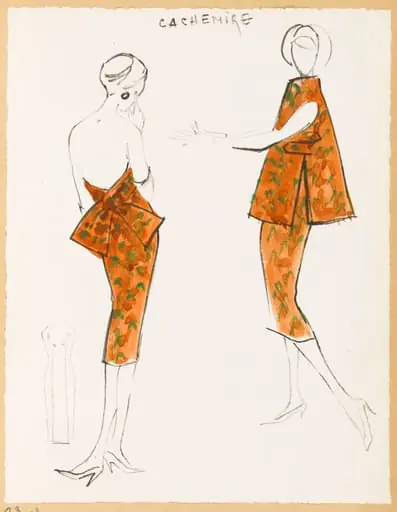
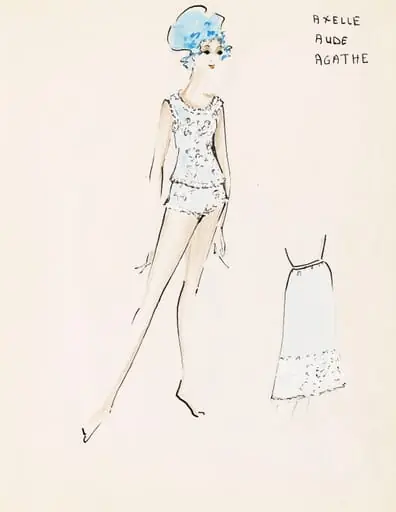
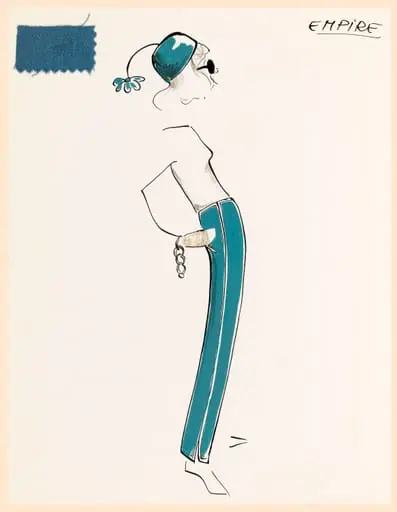
Oreste is a drawing by Carven. It dates from 1955 and is held in the collection of the Palais Galliera - Musée de la Mode de la Ville de Paris.
About this work
Overview
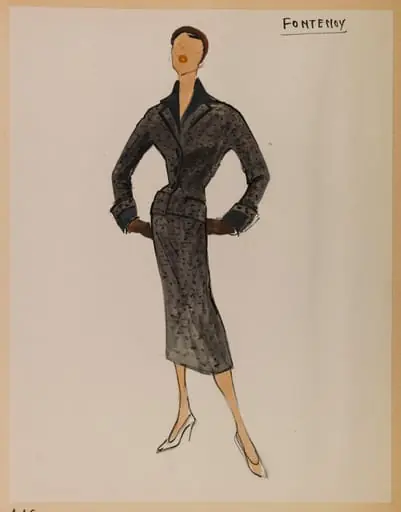
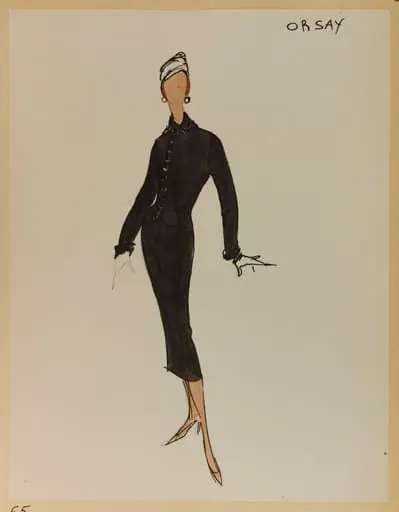
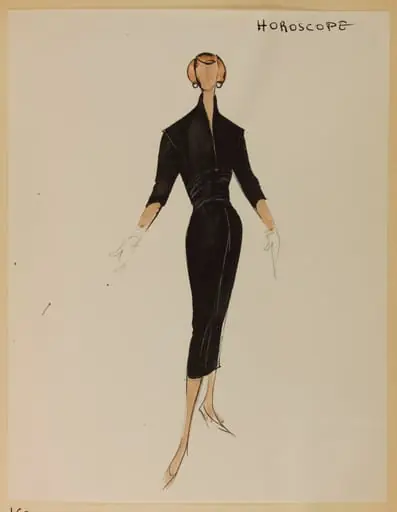
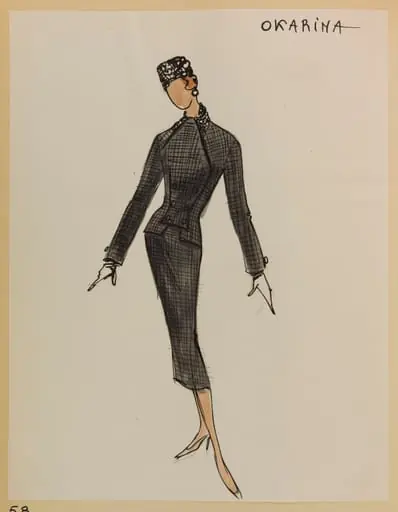
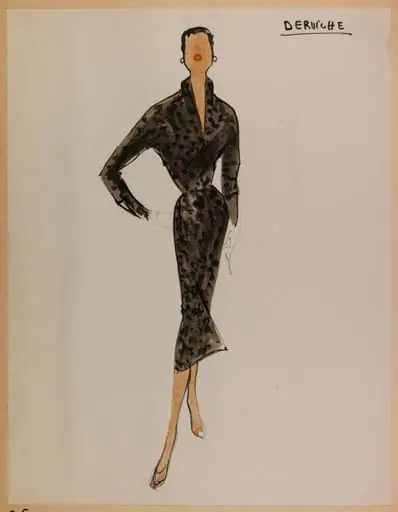
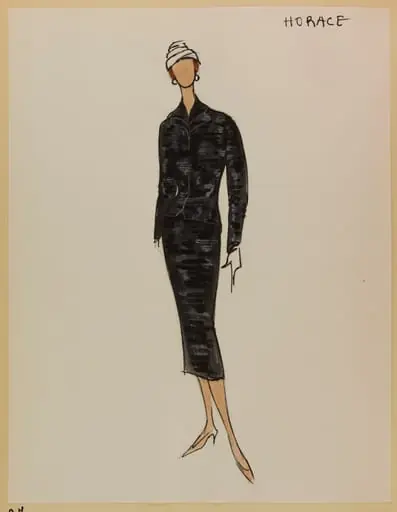
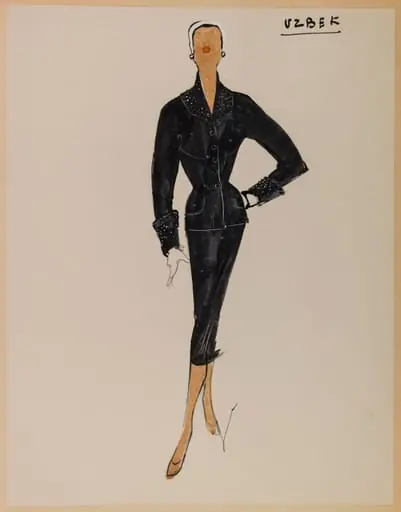
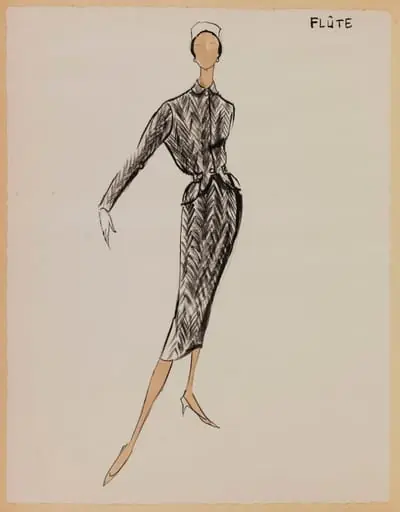
Created around 1955 by the French designer Carven, this fashion illustration depicts a woman in a tailored black ensemble. Rendered with clean, unadorned lines, the image serves as a record of mid-century style rather than a detailed portrait. It is part of the Museum of Ethnography’s collection, where it is preserved as an artifact of postwar fashion design and visual culture.
Subject & Meaning
The figure wears a high-collared jacket, matching skirt, white gloves, a black hat, and simple earrings—elements suggesting refined, understated elegance.
The figure wears a high-collared jacket, matching skirt, white gloves, a black hat, and simple earrings—elements suggesting refined, understated elegance. The absence of facial features and minimal background focus shifts attention entirely to the silhouette and structure of the clothing. The image reflects a design ethos prioritizing form and proportion over ornamentation, typical of Carven’s approach to wearable sophistication.
Technique & Style
The illustration employs bold, simplified contours with little shading or texture, emphasizing clarity over realism. The light beige background contrasts subtly with the dark clothing, enhancing the figure’s outline without distraction. This restrained aesthetic aligns with mid-century editorial illustration practices, where fashion was communicated through essential forms rather than elaborate detail.
History & Provenance
The work entered the Museum of Ethnography’s holdings as part of a broader collection documenting 20th-century dress and design. Its origin as a commercial illustration for Carven’s label is unconfirmed, but its preservation suggests recognition of its role in representing postwar French fashion aesthetics. No earlier ownership records are publicly documented.
Context
In the mid-1950s, Parisian fashion houses increasingly relied on illustrators to convey new silhouettes to clients and media. Carven, known for practical yet chic designs, used such images to communicate wearable elegance to a growing middle-class audience. This piece reflects a shift toward streamlined, accessible style in postwar Europe, away from wartime austerity.
Legacy
Though not widely reproduced, the illustration remains a quiet example of how fashion design was visually articulated beyond runway shows. Its inclusion in an ethnographic museum underscores its value as a cultural document—capturing not just clothing, but the ideals of modesty, structure, and restraint that defined a moment in fashion history.
Artist & collection
Artist
These delicate ink-on-paper drawings capture the quiet poetry of everyday things: pinecones, reeds, apples.
Museum
Palais Galliera - Musée de la Mode de la Ville de Paris
Continue through works from the same source collection.