Artwork
Nénuphar
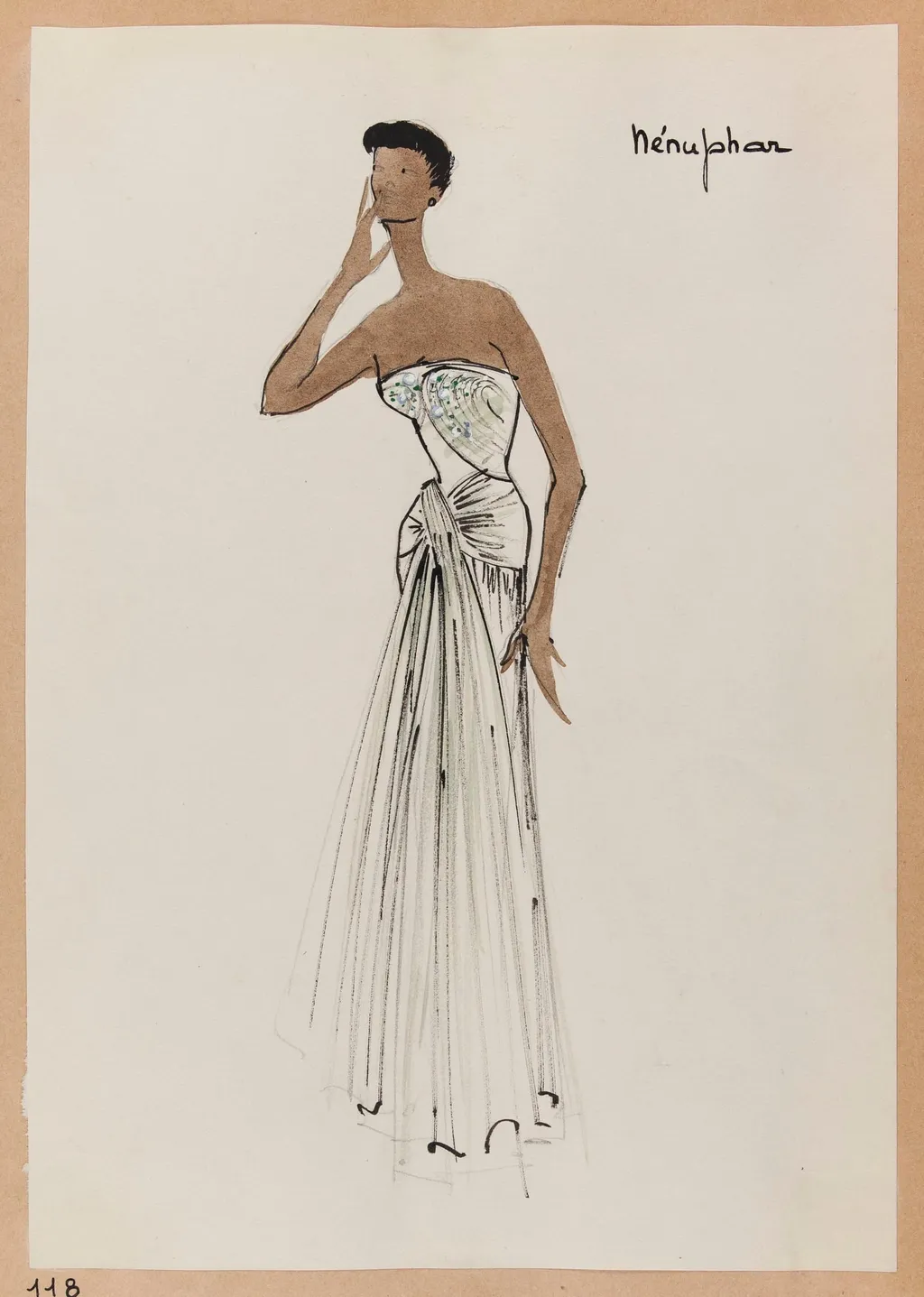
Nénuphar is a drawing by Marie-Louise Carven. It dates from 1951 and is held in the collection of the Palais Galliera - Musée de la Mode de la Ville de Paris.
About this work
Overview
Created around 1951, *Nénuphar* is a fashion illustration by Marie-Louise Carven, founder of the Parisian house Carven established in 1945.
Created around 1951, *Nénuphar* is a fashion illustration by Marie-Louise Carven, founder of the Parisian house Carven established in 1945. The work reflects her approach to design, emphasizing refined silhouettes and delicate ornamentation. Though not a painting or sculpture, the piece functions as a design artifact, capturing the aesthetic language of mid-century French couture through drawn form rather than textile.
Subject & Meaning
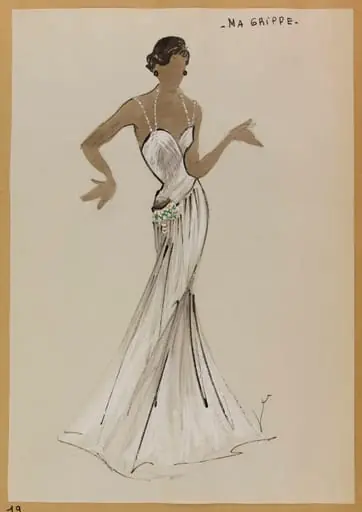
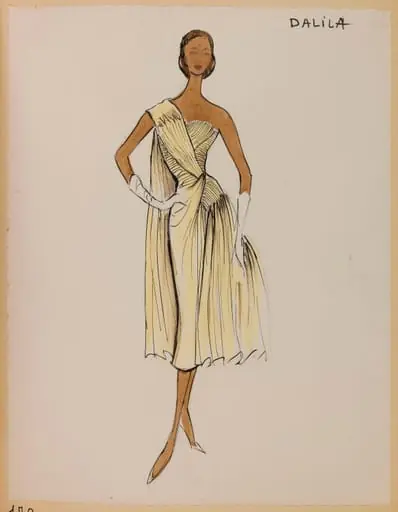
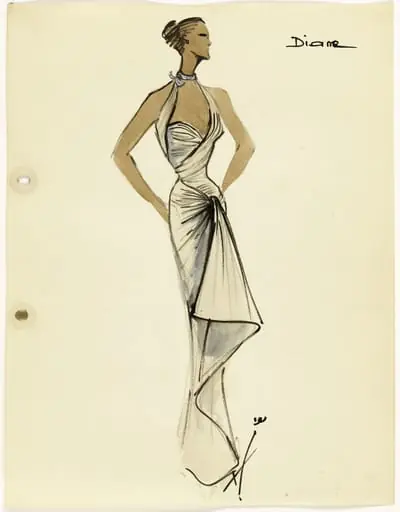
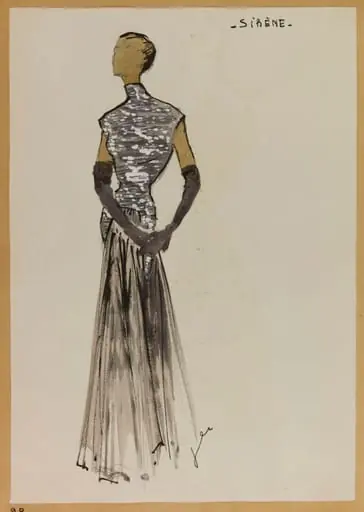
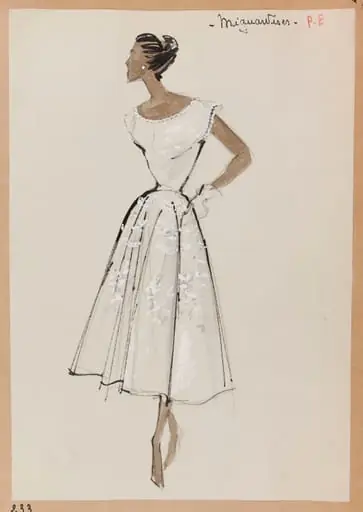
The illustration portrays a woman in a strapless white gown, her posture poised and introspective—one hand near her face, the other resting on her hip. The absence of a detailed background isolates the figure, focusing attention on the garment’s floral embroidery and fluid drapery. The title, referencing water lilies, suggests a natural elegance, aligning the dress’s motifs with organic grace rather than overt symbolism.
Technique & Style
Rendered in fine, precise lines, the drawing emphasizes fabric texture through subtle shading and contouring. The gown’s folds are carefully articulated to suggest movement and weight, while the floral patterns are rendered with delicate precision. The plain white ground enhances the contrast, allowing the intricate details of the dress to dominate the composition without distraction.
History & Provenance
As one of the earliest French designers to develop a prêt-à-porter line, Carven’s work bridged haute couture and accessible fashion. *Nénuphar* likely originated as a design study or presentation piece for her atelier, possibly used to communicate garment details to clients or manufacturers. Its survival as a standalone drawing reflects its value as both artistic and commercial documentation.
Context
In the postwar era, Parisian fashion sought to reclaim its influence through innovation and refinement. Carven’s focus on lightweight fabrics and petite proportions responded to changing lifestyles and a growing market for tailored, wearable elegance. *Nénuphar* embodies this shift—elevating simplicity through craftsmanship, aligning with broader trends toward understated sophistication in 1950s design.
Legacy
Though Carven’s name is less prominent today than some contemporaries, her contributions to democratizing fashion remain significant. *Nénuphar* stands as a quiet testament to her design philosophy: elegance rooted in precision, not excess. The illustration continues to inform understanding of how couturiers translated aesthetic ideals into wearable form during a transformative period in fashion history.
Artist & collection
Artist
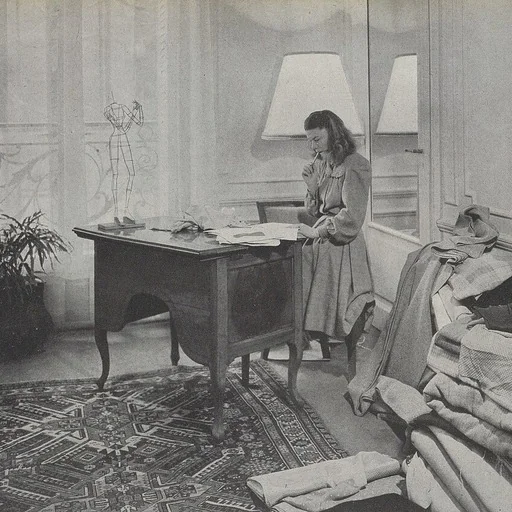
Marie-Louise Carven (31 August 1909 – 8 June 2015), born Carmen de Tommaso, was a French fashion designer who founded the house of Carven in 1945.

Museum
Palais Galliera - Musée de la Mode de la Ville de Paris
Continue through works from the same source collection.
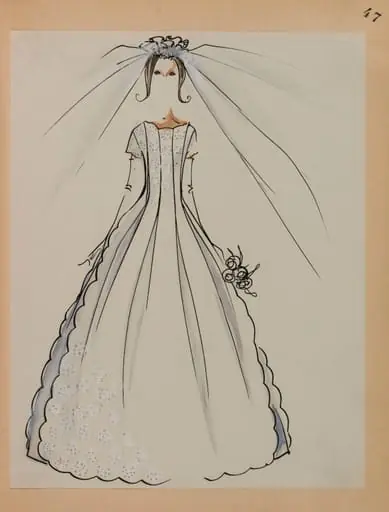 Robe de mariée festonnée et son voile
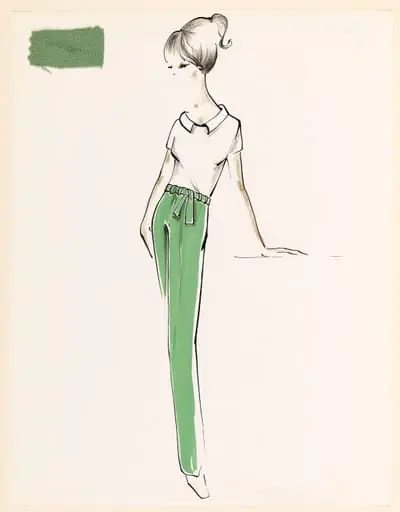 Haut blanc à manches courtes et pantalon vert à ceinture nouée
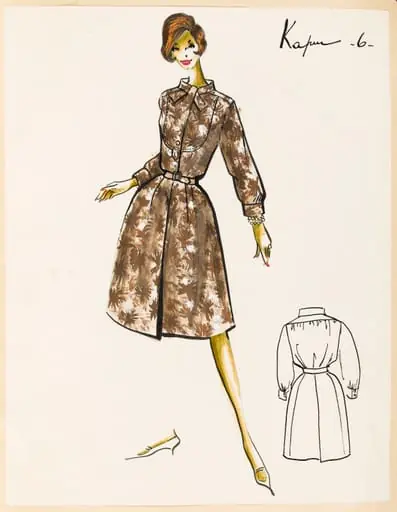 Kapur
Kapur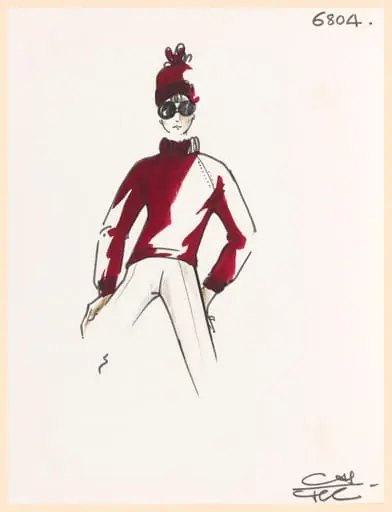 Pull-over à manches longues pourpre, bonnet assorti, pantalon et lunettes de soleil
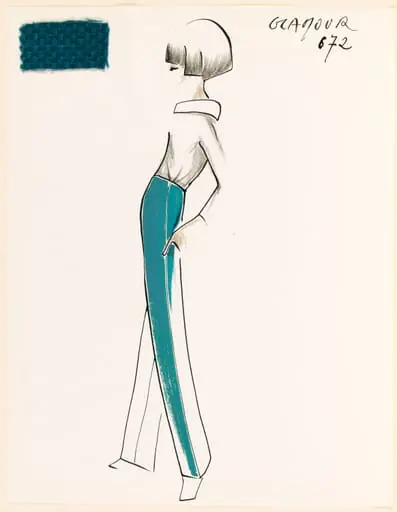 GLAMOUR
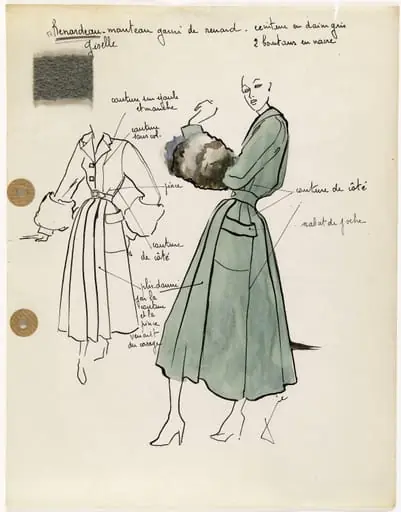 'Renardeau'
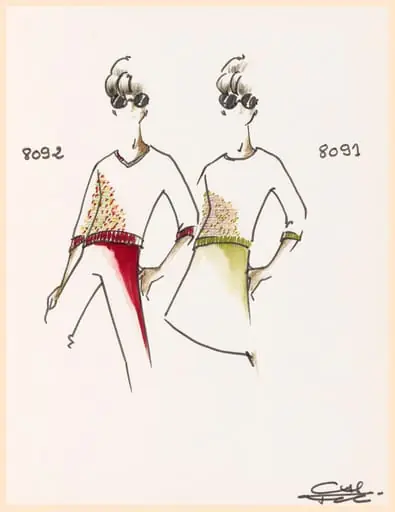 Pull-over à manches trois quarts et à encolure V à motifs multicolores, pantalon cerise et lunettes de soleil
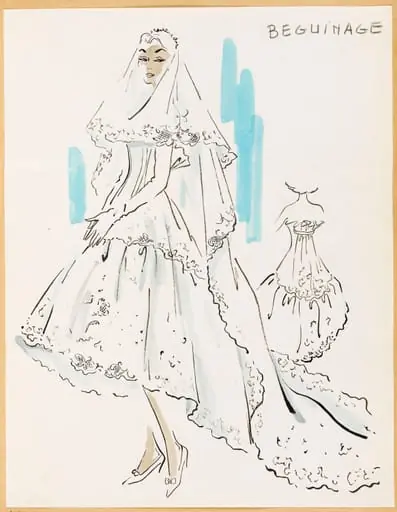 Béguinage