Artwork
Hortensia
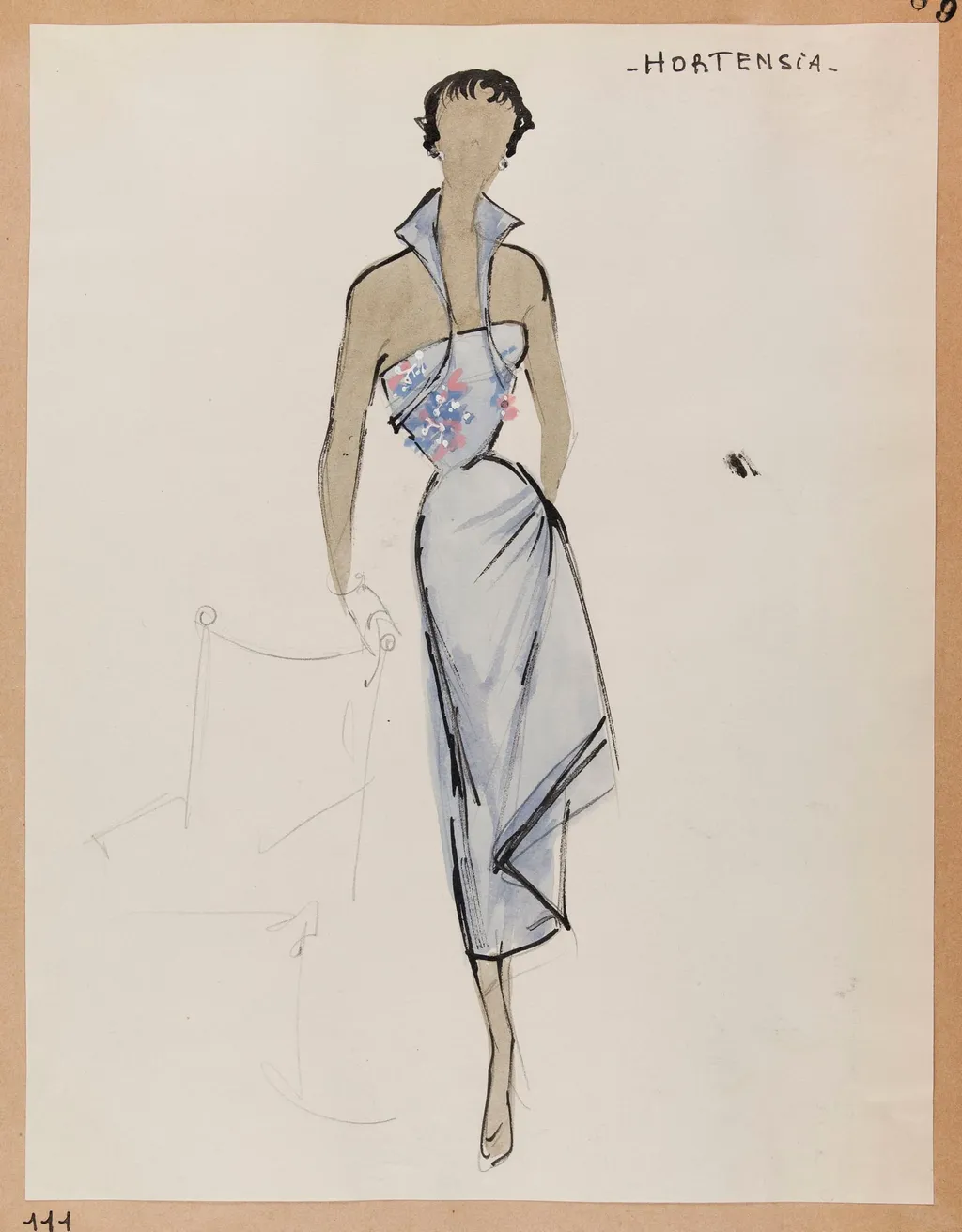
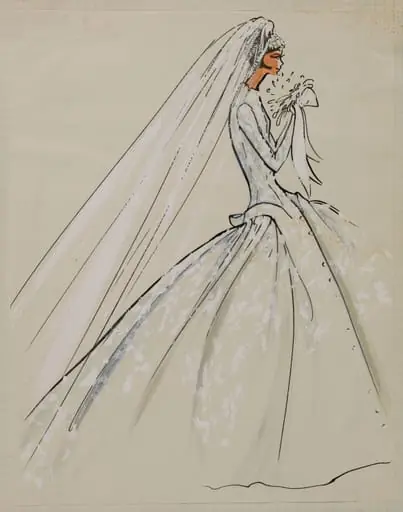
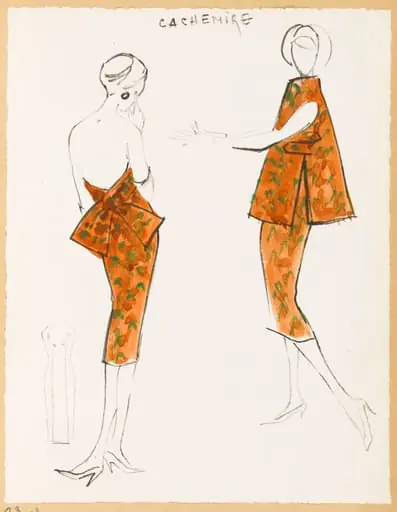
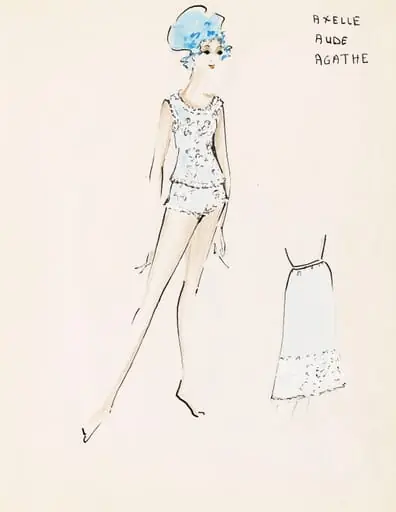
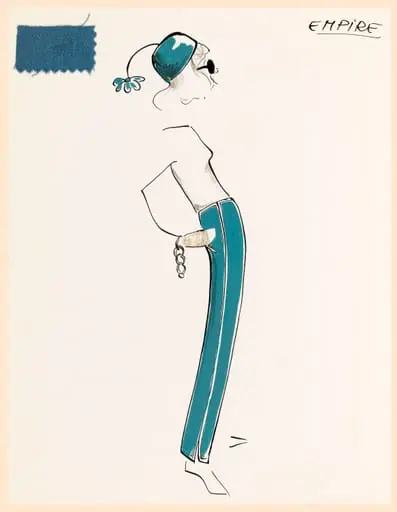
Hortensia is a drawing by Carven. It dates from 1951 and is held in the collection of the Palais Galliera - Musée de la Mode de la Ville de Paris.
About this work
Overview
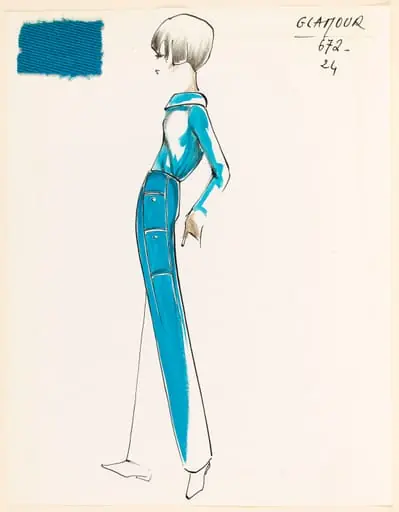
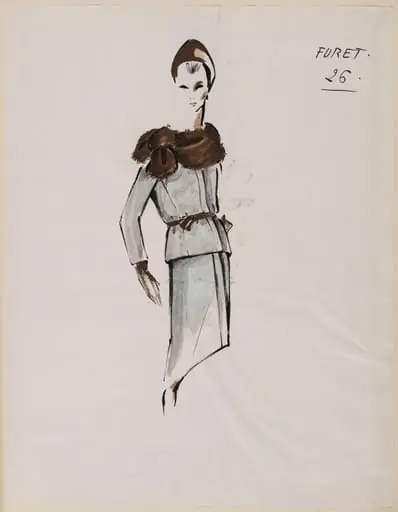
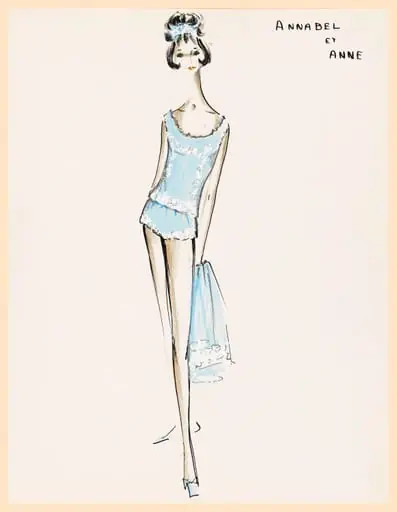
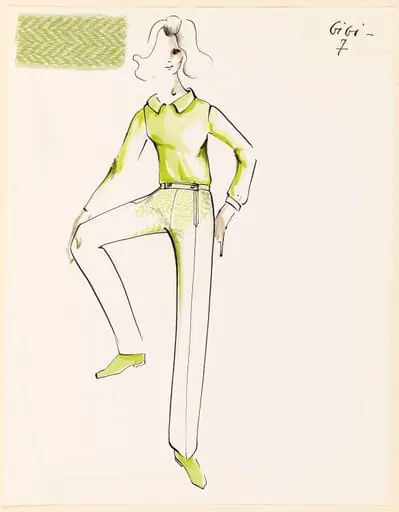
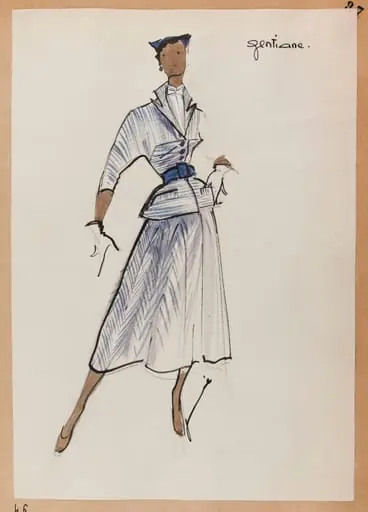
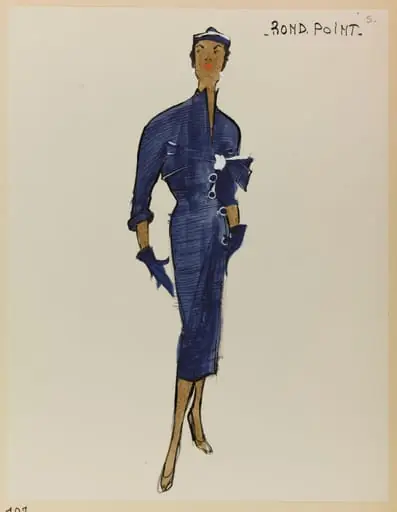
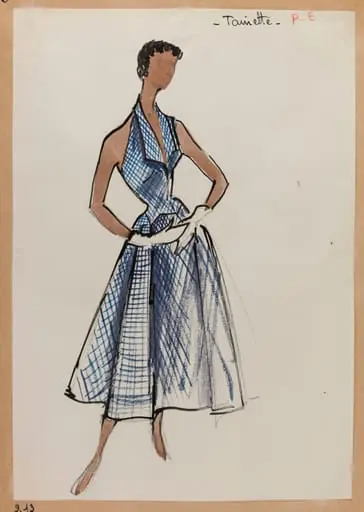
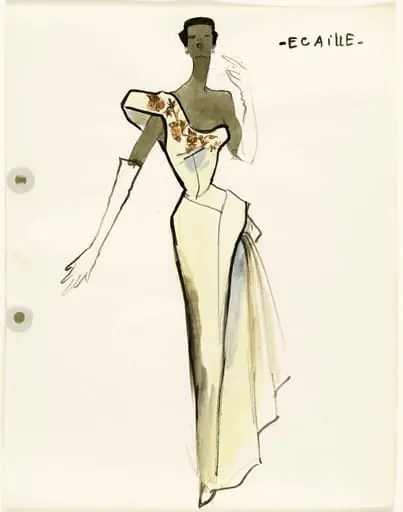
Executed in ink or pencil, it captures a woman’s silhouette in a fluid, spontaneous style typical of preparatory fashion drawings.
Hortensia is a fashion sketch dated around 1951, attributed to the French design house Carven. Executed in ink or pencil, it captures a woman’s silhouette in a fluid, spontaneous style typical of preparatory fashion drawings. The work is part of the collection at the Museum of Ethnography, where it is preserved as a record of mid-century textile and silhouette design rather than as a finished artwork.
Subject & Meaning
The figure depicts a woman in a tailored dress with a light blue bodice and a dark collar, paired with a long, draped skirt. She holds a small, patterned clutch, suggesting attention to accessory coordination. The name 'Hortensia' inscribed at the top likely refers to the dress design, not the model, indicating it was part of a labeled collection. The image conveys elegance through simplicity, reflecting postwar ideals of refined, wearable fashion.
Technique & Style
The drawing employs loose, rapid linework characteristic of fashion illustrators’ quick studies. Contours are suggestive rather than precise, emphasizing movement and form over detail. The absence of shading and minimal background focus directs attention to the garment’s structure and flow. This technique prioritizes clarity and speed, allowing designers to explore silhouettes before committing to pattern-making.
History & Provenance
Created circa 1951, Hortensia originated in Carven’s design studio during a period of renewed interest in feminine, structured yet fluid silhouettes. It entered the Museum of Ethnography’s collection as part of a broader acquisition of fashion documentation, reflecting the institution’s interest in everyday material culture. Its preservation underscores its value as a historical artifact of design practice rather than a commercial product.
Context
In early 1950s Paris, fashion houses like Carven emphasized tailored yet soft forms, responding to wartime austerity with renewed attention to detail and grace. Hortensia aligns with this trend, balancing structure and movement in a way that appealed to middle-class consumers. The sketch represents the transition from haute couture to accessible ready-to-wear, where design ideas were rapidly visualized and refined.
Legacy
Hortensia remains a quiet testament to the working methods of mid-century fashion designers. It illustrates how sketches functioned as tools of communication between designers, ateliers, and clients. While not widely exhibited, its presence in an ethnographic museum highlights the cultural significance of fashion as a reflection of social norms and aesthetic values of its time.
Artist & collection
Artist
These delicate ink-on-paper drawings capture the quiet poetry of everyday things: pinecones, reeds, apples.
Museum
Palais Galliera - Musée de la Mode de la Ville de Paris
Continue through works from the same source collection.