Artwork
Duchesse
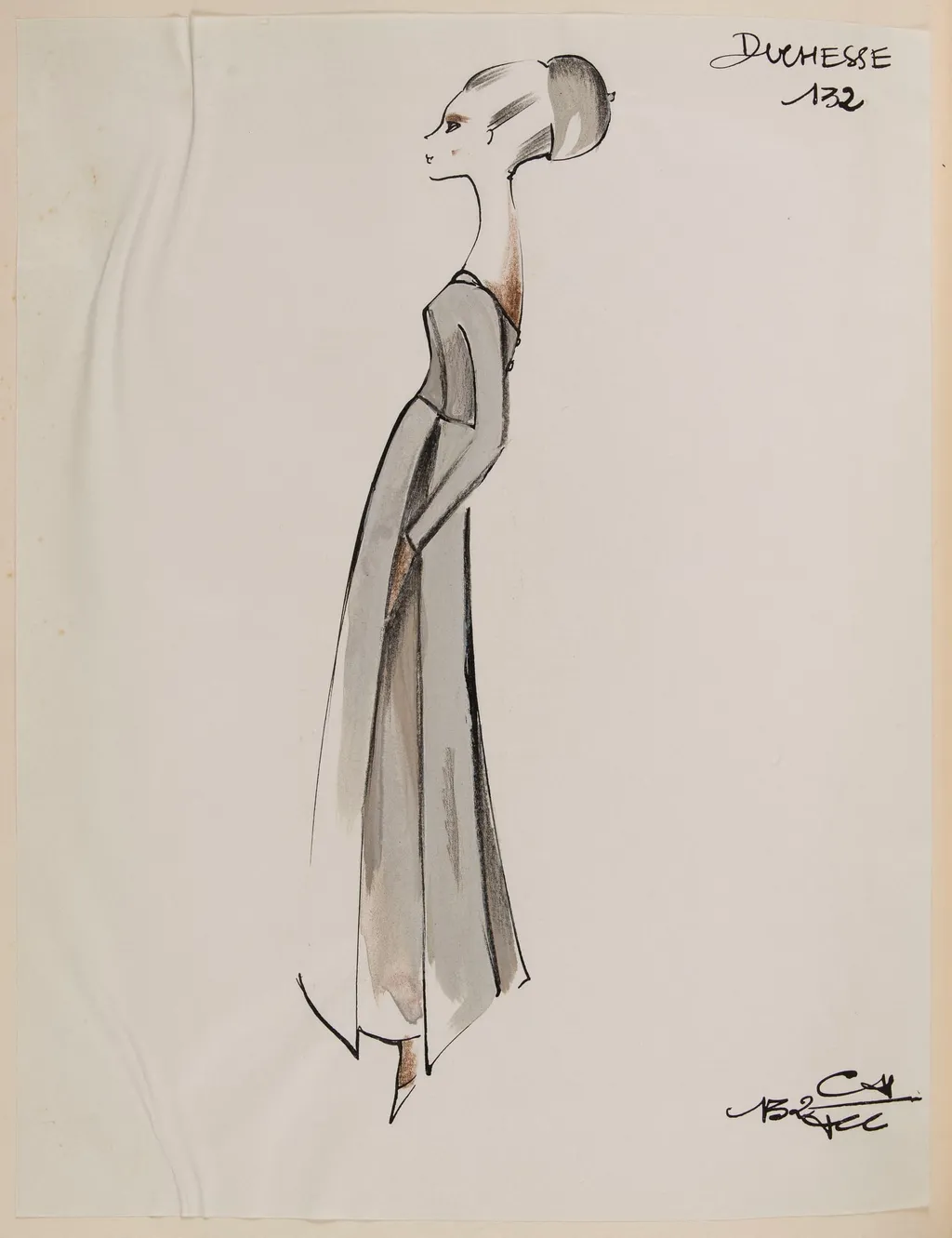
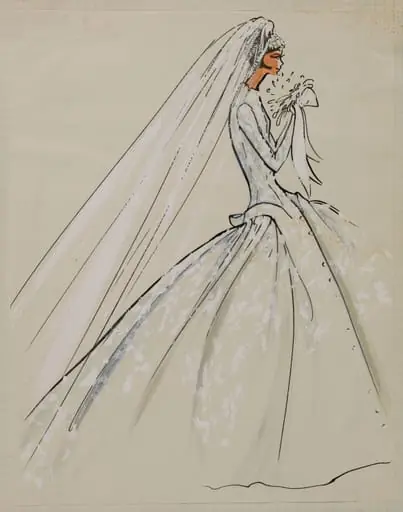
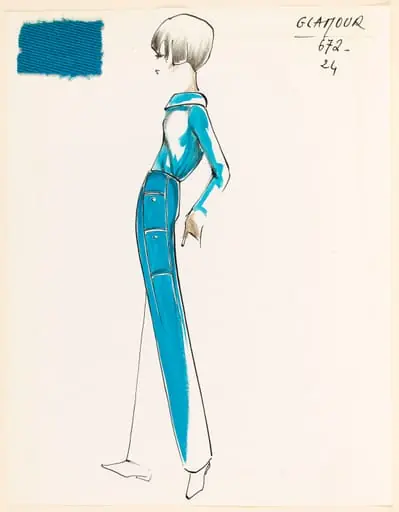
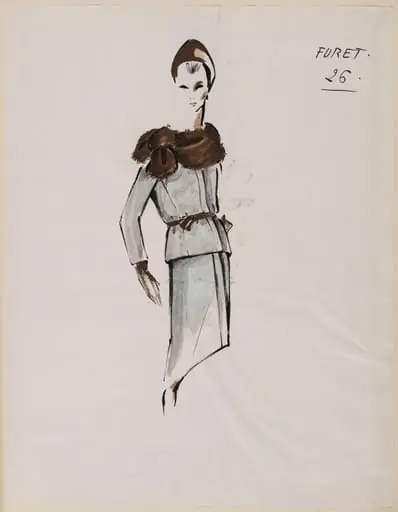
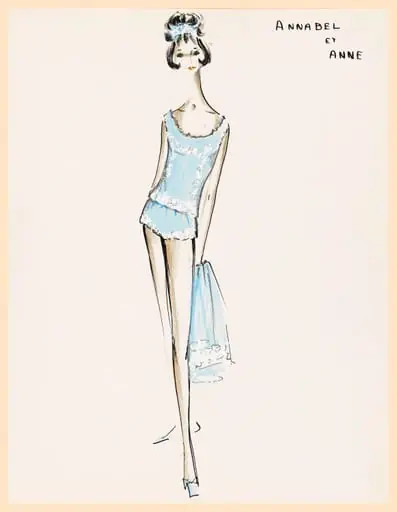
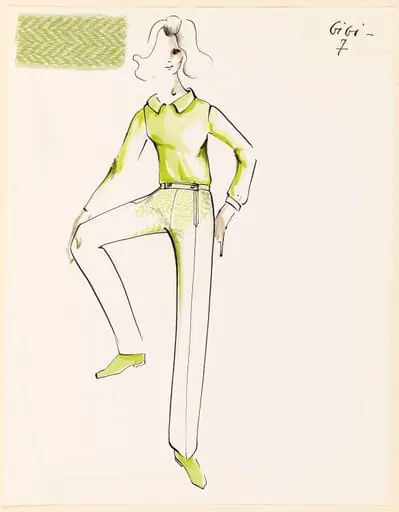
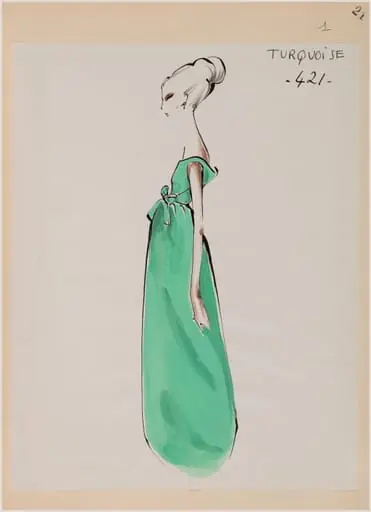
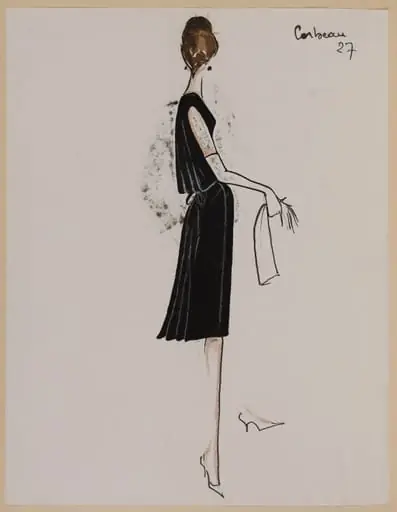
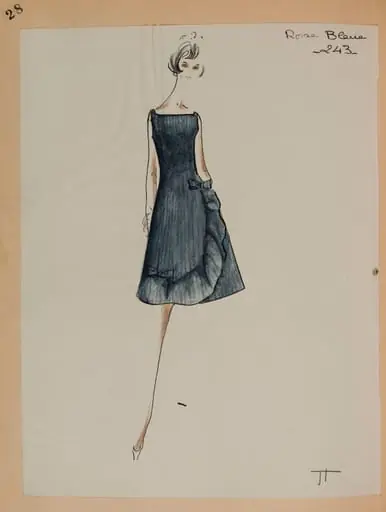
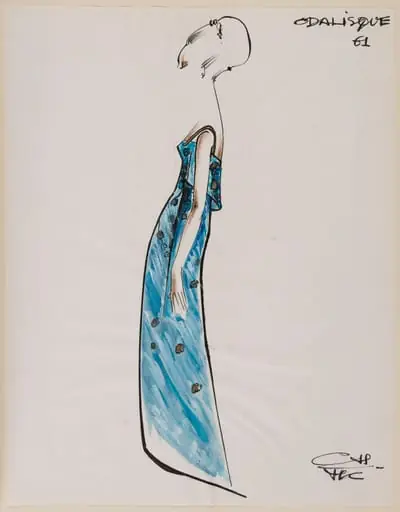
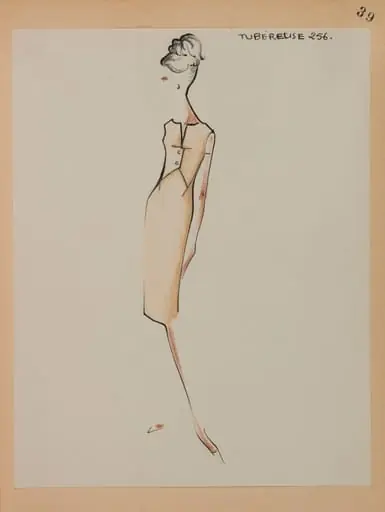
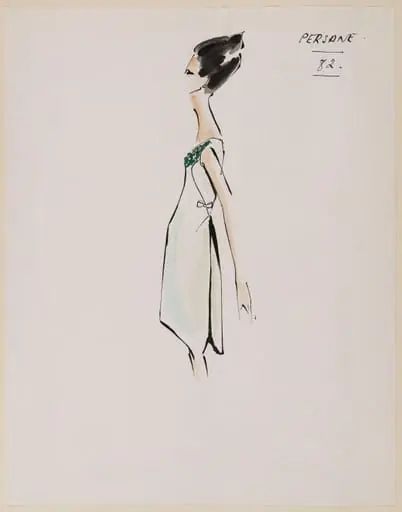
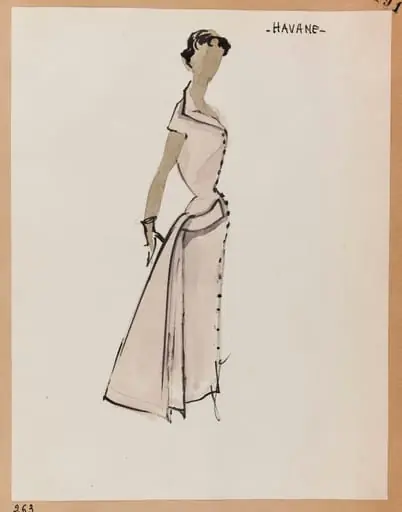
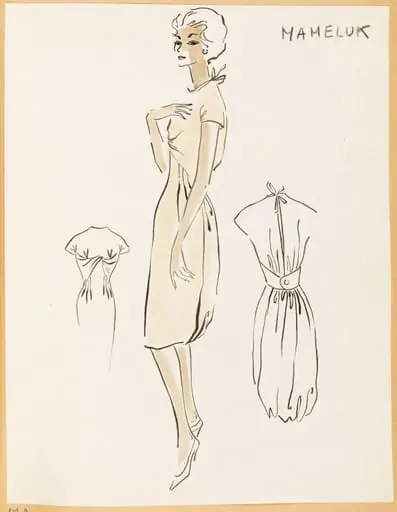
Duchesse is a drawing by Carven. It dates from 1963 and is held in the collection of the Palais Galliera - Musée de la Mode de la Ville de Paris.
About this work
Overview
The work is part of the collection at the Museum of Ethnography, where it is preserved as an example of mid-20th-century fashion illustration.
Duchesse is a graphite and ink drawing attributed to the French designer Carven, dated around 1963. It depicts a woman in formal attire, rendered in monochromatic tones of brown and gray. The work is part of the collection at the Museum of Ethnography, where it is preserved as an example of mid-20th-century fashion illustration. Its restrained palette and precise linework reflect a deliberate focus on silhouette and posture rather than color or ornamentation.
Subject & Meaning
The figure is portrayed as composed and reserved, with hands clasped behind the back and gaze lowered, suggesting quiet dignity. The high-necked, long-sleeved dress and tightly pinned bun evoke early 20th-century aristocratic dress codes, though the style is not tied to a specific historical period. The subtle smile and upright posture convey poise rather than emotion, emphasizing an idealized notion of feminine decorum associated with elite social norms of the era.
Technique & Style
The drawing employs fine, controlled lines to define the contours of the figure and garment, with soft gradations of gray to suggest volume and fabric weight. Shading is minimal but effective, avoiding dramatic contrasts in favor of tonal nuance. The absence of background elements directs attention entirely to the subject’s form and attire. The technique aligns with fashion illustration traditions that prioritize clarity and elegance over expressive flourish.
History & Provenance
Created during Carven’s later career, Duchesse likely originated as a study or sketch for a fashion design, though no published garment matches it exactly. It entered the Museum of Ethnography’s collection in the late 20th century, acquired as part of a broader effort to document the intersection of fashion and cultural identity. Its provenance within Carven’s personal archive is documented, but its original purpose remains unconfirmed.
Context
In the early 1960s, fashion illustration was transitioning from hand-drawn sketches to photographic advertising. Carven, known for her ready-to-wear designs, continued to value drawing as a tool for refining form and gesture. Duchesse reflects this transitional moment, blending the precision of couture draftsmanship with the quiet introspection characteristic of postwar European aesthetics, where restraint replaced overt opulence.
Legacy
Duchesse remains a quiet testament to Carven’s enduring interest in the expressive potential of dress. While not widely exhibited, it is referenced in academic studies on mid-century fashion drawing and women designers. Its preservation in an ethnographic context underscores its value as a cultural artifact, illustrating how clothing can encode social norms and personal demeanor beyond its functional role.
Artist & collection
Artist
These delicate ink-on-paper drawings capture the quiet poetry of everyday things: pinecones, reeds, apples.
Museum
Palais Galliera - Musée de la Mode de la Ville de Paris
Continue through works from the same source collection.