Artwork
Turquoise
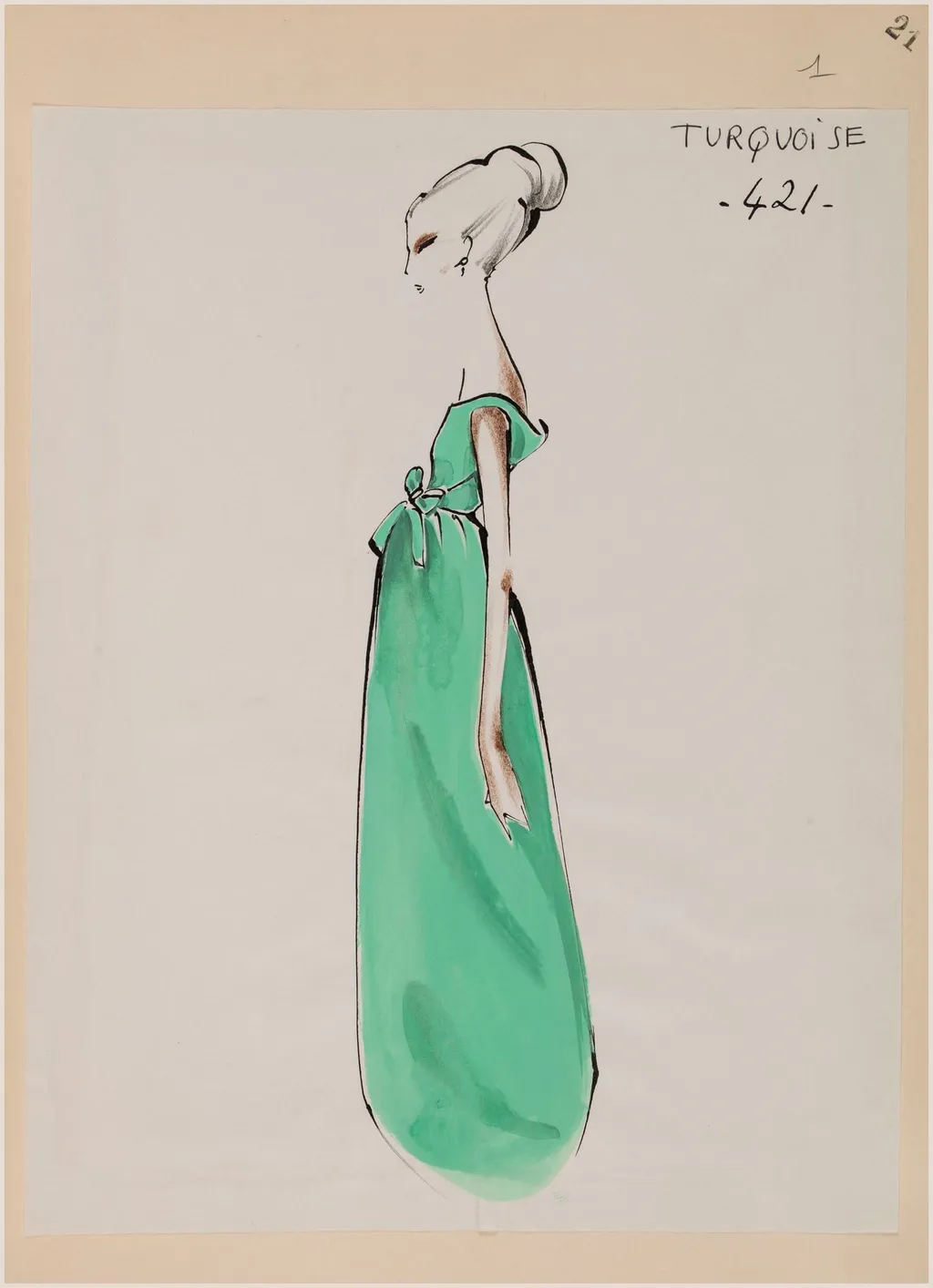
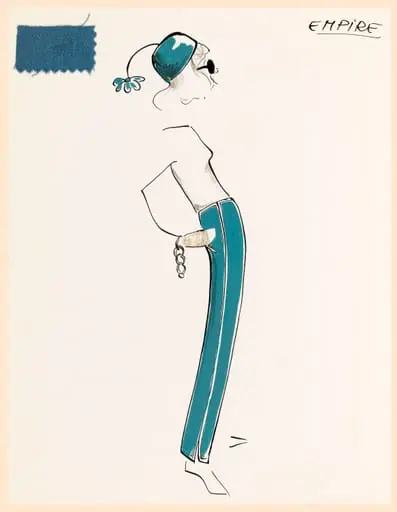
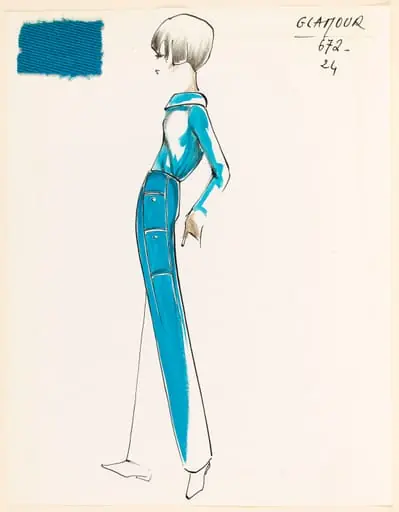
Turquoise is a drawing by Carven. It dates from 1965 and is held in the collection of the Palais Galliera - Musée de la Mode de la Ville de Paris.
About this work
Overview
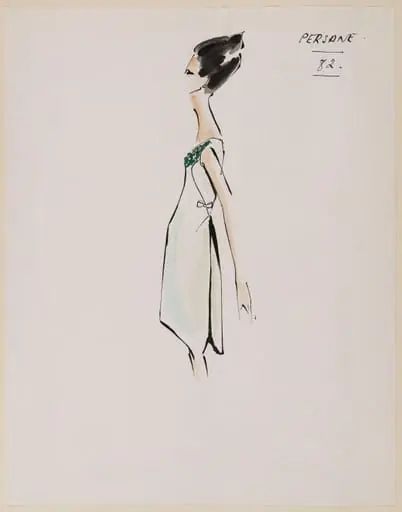
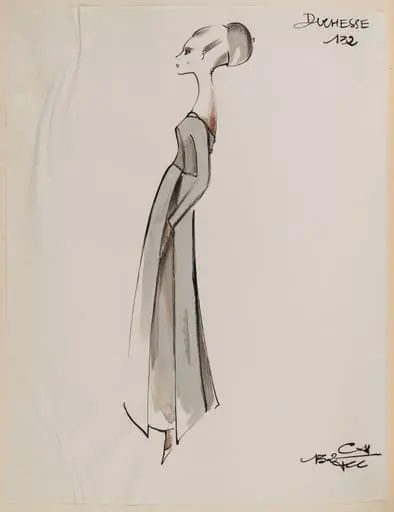
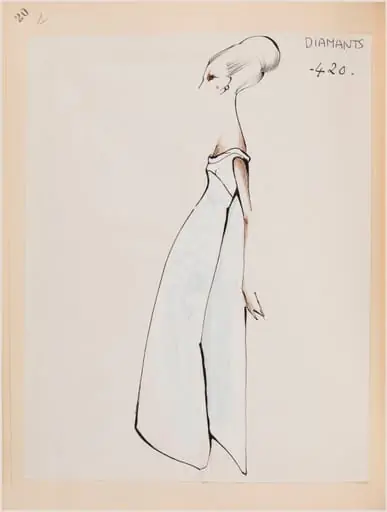
Created around 1965 by the designer Carven, this ink sketch on paper is part of the Museum of Ethnography’s collection. It captures a single figure in a candid, unembellished style, suggesting it was made as a working drawing rather than a finished illustration. The minimal background and handwritten notes imply an informal, utilitarian purpose, likely tied to garment development.
Subject & Meaning
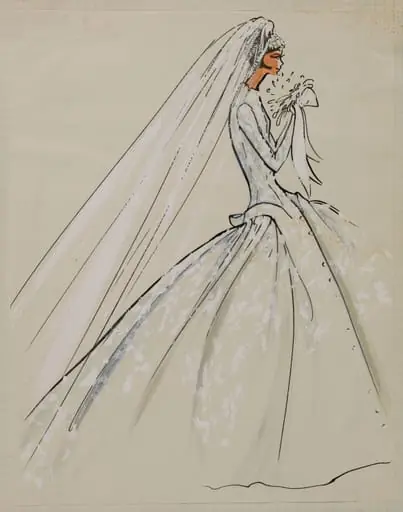
The figure is a woman viewed in profile, dressed in a long, flared gown and adorned with a small bow at the waist. Her hair is neatly gathered, emphasizing simplicity and restraint. The title 'Turquoise' may allude to the dress’s hue or reference the gemstone, evoking associations with elegance and natural materiality, though the drawing itself uses no color, leaving interpretation open.
Technique & Style
Rendered in loose, fluid ink lines, the sketch conveys movement and form with minimal detail. The absence of shading and the quick, gestural strokes suggest spontaneity, typical of fashion design drafts. Handwritten annotations in the corner hint at internal notes or measurements, reinforcing its function as a tool in the design process rather than a public-facing artwork.
History & Provenance
The drawing entered the Museum of Ethnography’s holdings as part of a broader collection of design materials, likely donated or acquired in the late 20th century. Its origin within Carven’s studio is inferred from stylistic consistency with known work, though no documentation confirms its exact date of creation or intended use beyond its role in garment development.
Context
In mid-1960s fashion, designers often produced rapid sketches to explore silhouette and detail before construction. This piece reflects a period when haute couture studios relied on hand-drawn drafts to communicate ideas. The plain background and lack of ornamentation align with contemporary trends favoring clean lines and functional aesthetics over theatrical presentation.
Legacy
As a preserved example of a designer’s working process, the sketch offers insight into the quiet, iterative nature of fashion creation. It stands as a quiet testament to the unseen labor behind clothing design, valued not for its finish but for its authenticity as a moment in the evolution of a garment.
Artist & collection
Artist
These delicate ink-on-paper drawings capture the quiet poetry of everyday things: pinecones, reeds, apples.
Museum
Palais Galliera - Musée de la Mode de la Ville de Paris
Continue through works from the same source collection.