Artwork
Etoile du sud
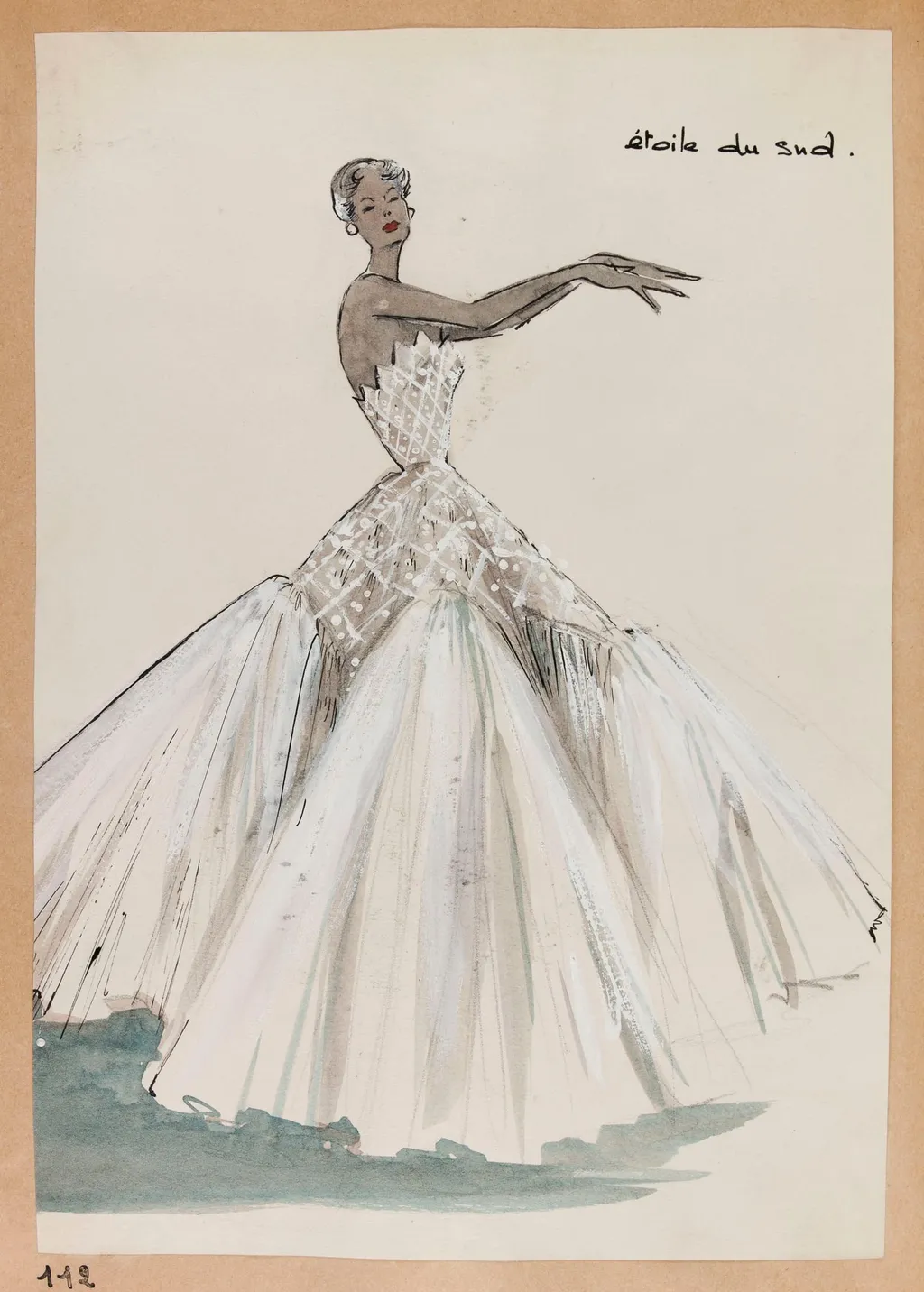
Etoile du sud is an unspecified painting by Carven. It dates from 1951 and is held in the collection of the Palais Galliera - Musée de la Mode de la Ville de Paris.
About this work
Overview
The work is part of the Museum of Ethnography’s collection and reflects Carven’s interest in capturing movement and textile dynamics.
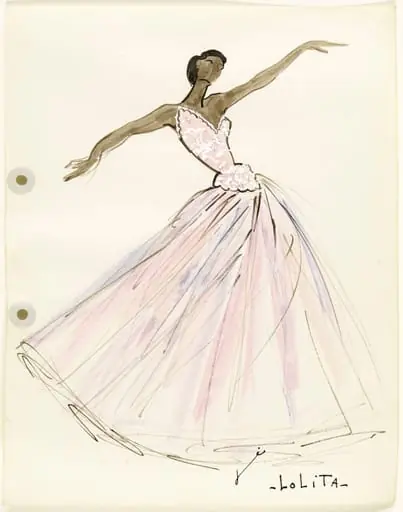
Created around 1951 by the French designer Carven, this ink-and-wash sketch depicts a female figure in motion. The work is part of the Museum of Ethnography’s collection and reflects Carven’s interest in capturing movement and textile dynamics. Executed with swift, fluid strokes, it conveys a sense of spontaneity rather than polished finish, suggesting it may have been a study for a garment design or a personal artistic exercise.
Subject & Meaning
The figure, labeled 'étoile du sud'—French for 'star of the south'—is rendered with arms outstretched, as if dancing or embracing space. The designation may allude to a southern origin, celestial symbolism, or a poetic reference to grace and lightness. The absence of facial features and the emphasis on drapery shift focus from identity to posture and flow, suggesting an idealized representation of movement rather than a portrait.
Technique & Style
Carven employed loose, rapid brushwork to suggest the volume and transparency of the dress, particularly in the skirt, which appears almost weightless. The bodice is defined with subtle patterning, contrasting with the smooth, wash-based rendering of the lower garment. Delicate lines indicate minimal jewelry, reinforcing the figure’s simplicity. The sketch’s unfinished quality enhances its immediacy, prioritizing gesture over detail.
History & Provenance
The sketch entered the Museum of Ethnography’s holdings following Carven’s active period in postwar fashion design. While its exact provenance before acquisition is undocumented, its presence in an ethnographic context suggests an interest in cultural expressions of dress and movement. It was likely preserved as an example of mid-century French design thinking, bridging fashion and visual art.
Context
In the early 1950s, Carven was known for blending elegance with playful, lightweight silhouettes, often inspired by dance and Mediterranean aesthetics. This sketch aligns with broader postwar European trends that valued fluidity and informality in design. The emphasis on motion and textile behavior reflects a design culture increasingly attuned to the body in action, rather than static formality.
Legacy
Though not widely exhibited, the sketch remains a quiet testament to Carven’s approach to fashion as a dynamic art form. Its preservation in an ethnographic museum underscores how design studies can intersect with cultural anthropology. The work continues to inform discussions on the intersection of sketching, movement, and textile innovation in 20th-century fashion.
Artist & collection
Artist
These delicate ink-on-paper drawings capture the quiet poetry of everyday things: pinecones, reeds, apples.
Museum
Palais Galliera - Musée de la Mode de la Ville de Paris
Continue through works from the same source collection.