Artwork
Figaro
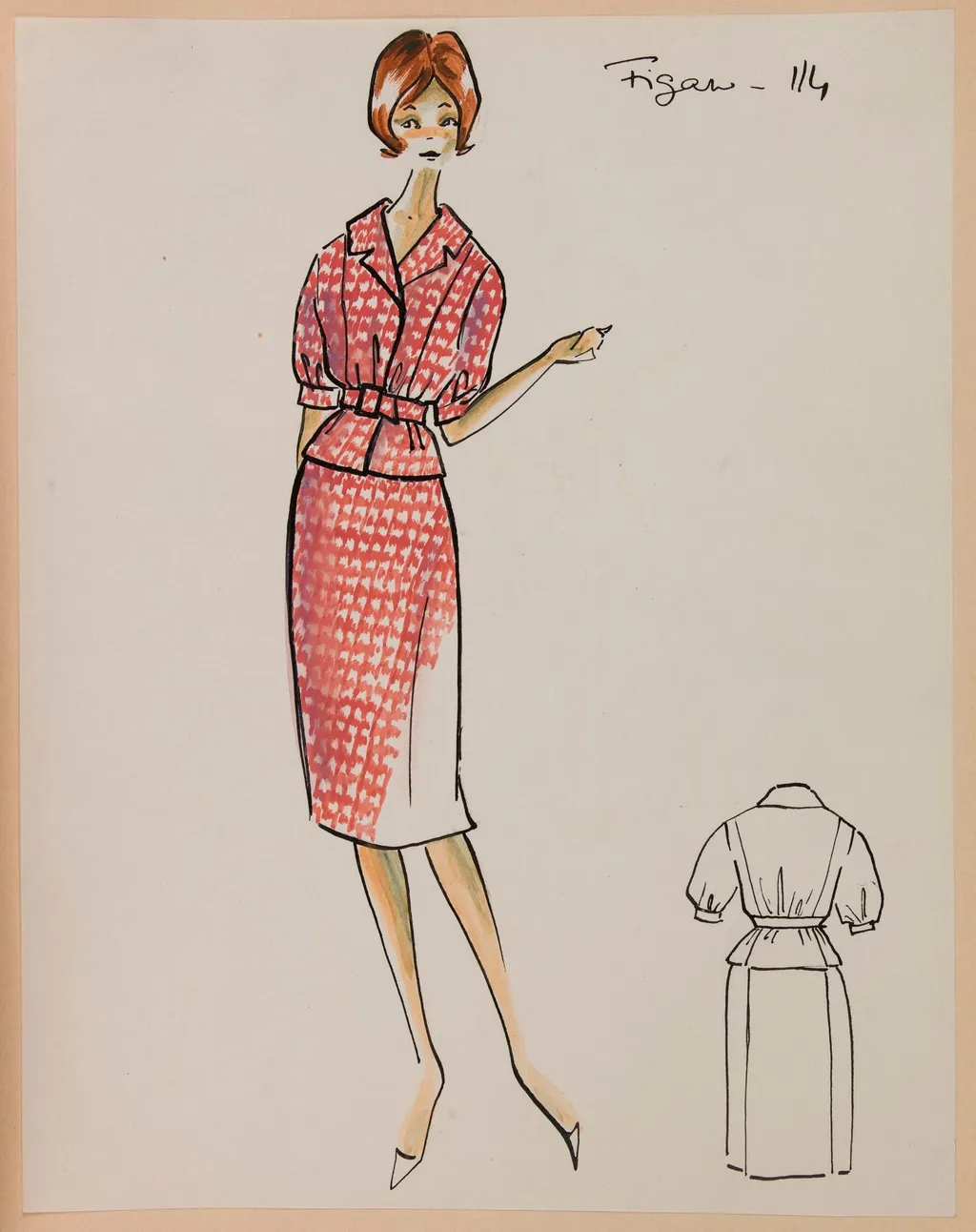
Figaro is a drawing by Carven. It dates from 1958 and is held in the collection of the Palais Galliera - Musée de la Mode de la Ville de Paris.
About this work
Overview
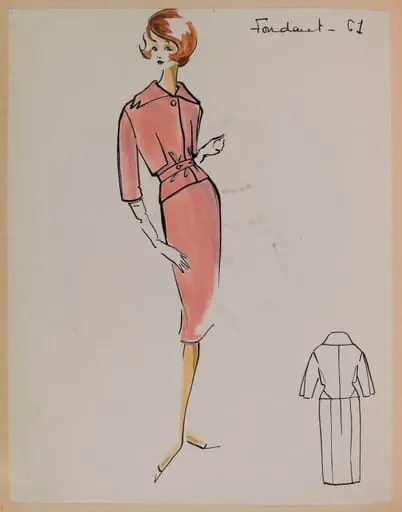
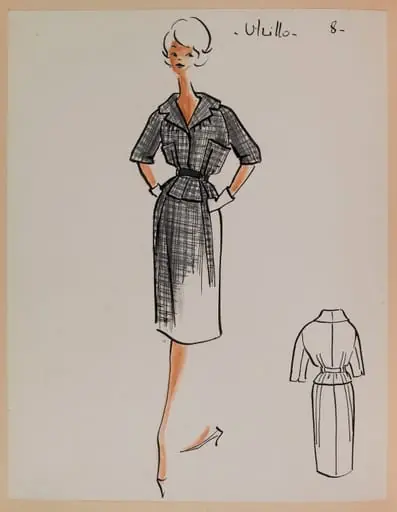
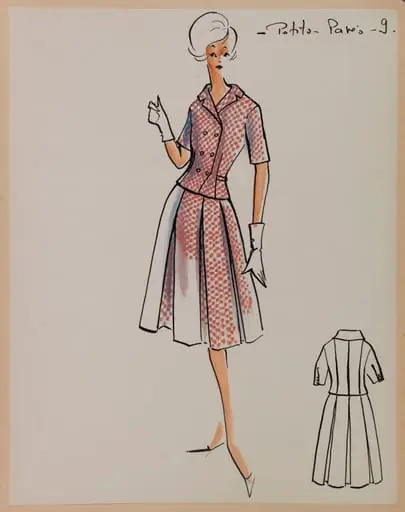
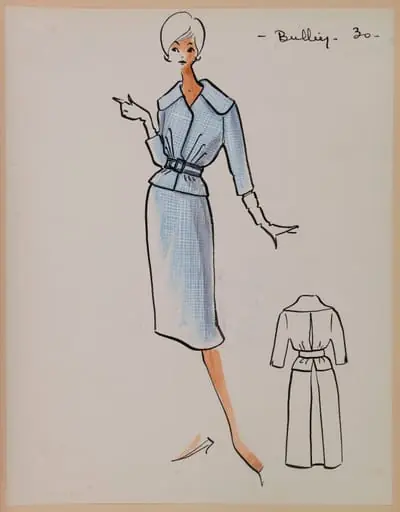
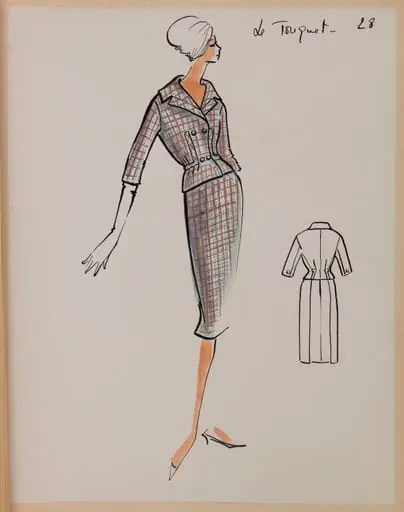
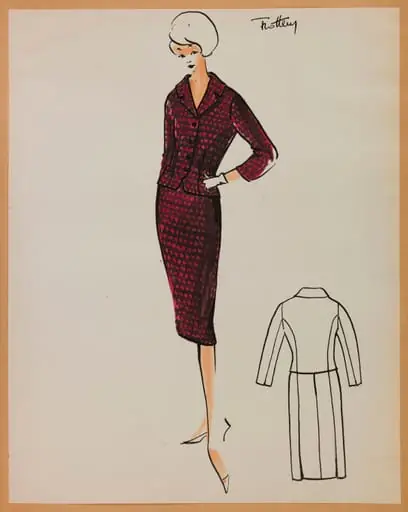
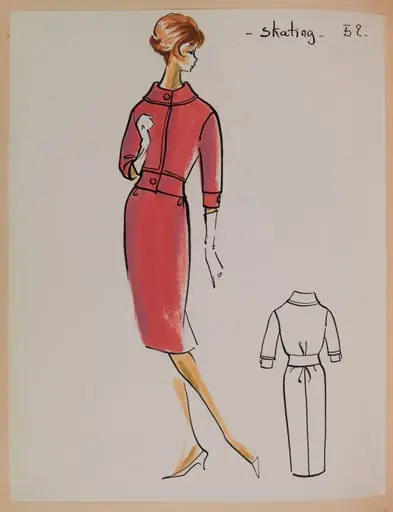
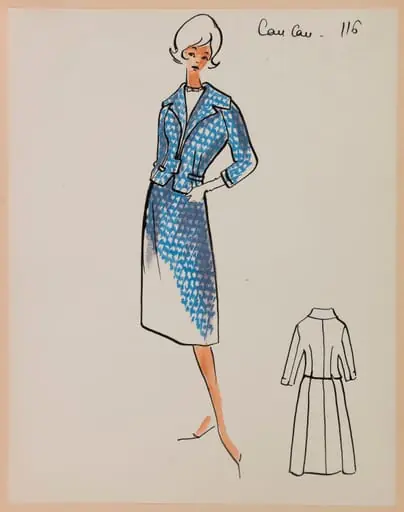
Figaro, attributed to the French fashion house Carven and dated to around 1958, is a fashion illustration preserved in the Museum of Ethnography. The work presents a single female figure dressed in a coordinated ensemble, rendered in a compact, linear format that emphasizes both silhouette and detail.
Subject & Meaning
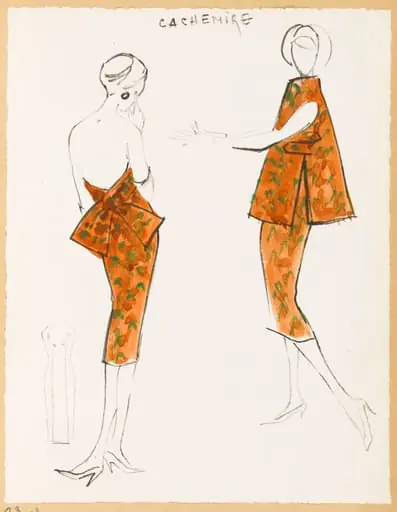
The drawing depicts a woman in a modest yet refined outfit: a knee‑length skirt adorned with a subtle red‑and‑white floral motif, complemented by a short, matching jacket. Her hair is cut short and neatly styled, and she holds a small object in her right hand, suggesting a moment of poised readiness.
Technique & Style
Executed with confident, clean lines, the illustration balances minimalism with selective color accents. A brief application of hue highlights the floral pattern and the garment’s contours, while the reverse view of the ensemble reveals button placement and the skirt’s straight cut, offering a comprehensive visual study of the design.
History & Provenance
Created circa 1958, the piece reflects Carven’s mid‑century aesthetic and was later acquired by the Museum of Ethnography, where it forms part of the institution’s collection of fashion documentation. Its presence in the museum underscores the historical value assigned to fashion sketches as cultural artifacts.
Context
During the late 1950s, French ready‑to‑wear houses like Carven were instrumental in shaping post‑war women's fashion, favoring accessible elegance over haute couture extravagance. Illustrations such as Figaro served both as design tools for manufacturers and as visual guides for consumers, bridging the gap between concept and garment.
Artist & collection
Artist
These delicate ink-on-paper drawings capture the quiet poetry of everyday things: pinecones, reeds, apples.
Museum
Palais Galliera - Musée de la Mode de la Ville de Paris
Continue through works from the same source collection.