Artwork
Rembrandt
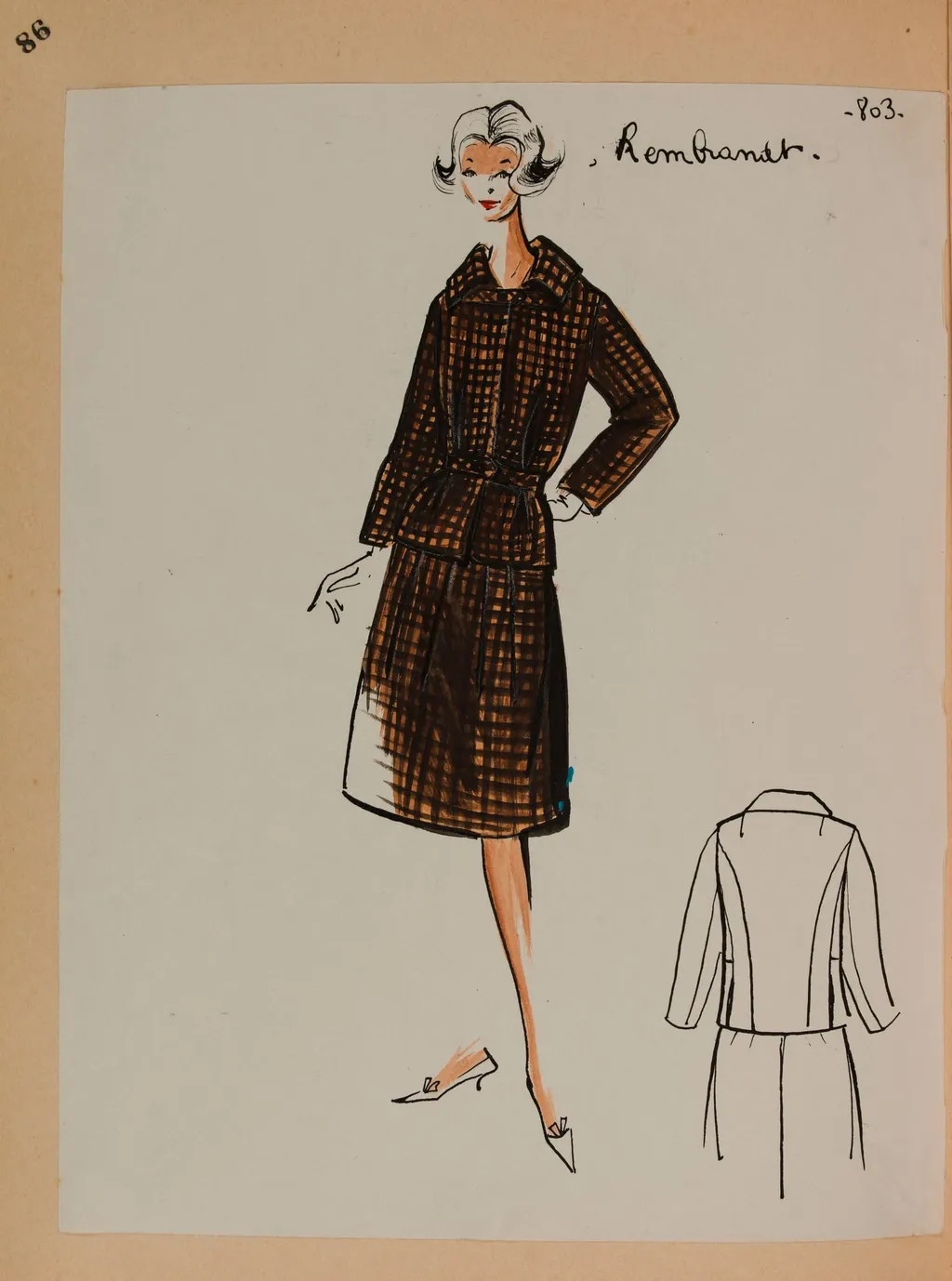
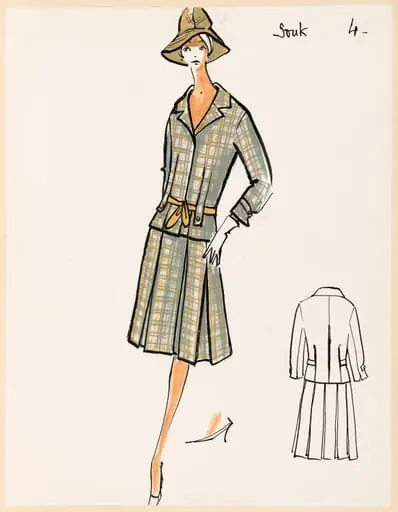
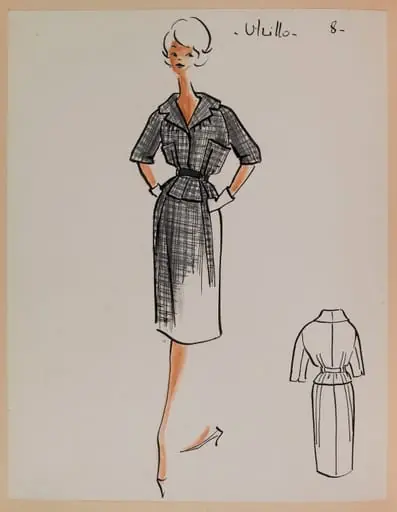
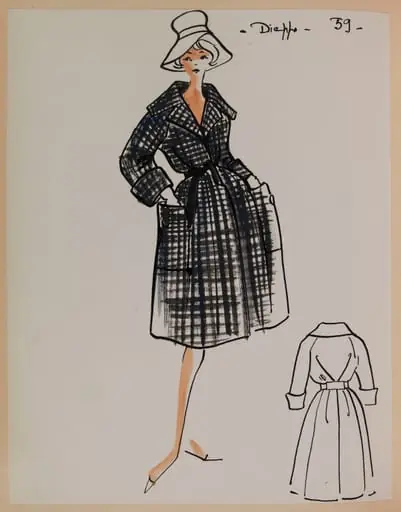
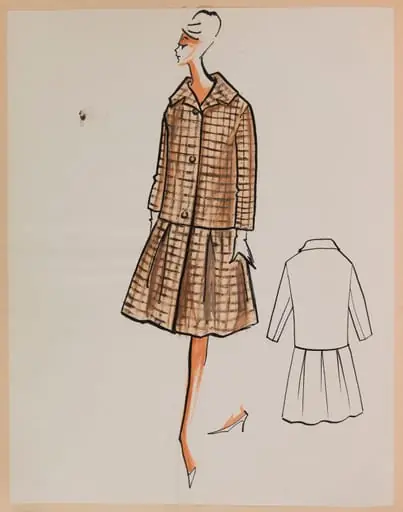
Rembrandt is a drawing by Marie-Louise Carven. It dates from 1958 and is held in the collection of the Palais Galliera - Musée de la Mode de la Ville de Paris.
About this work
Overview
It resides in the Museum of Ethnography’s collection as part of its documentation of mid-century French fashion design.
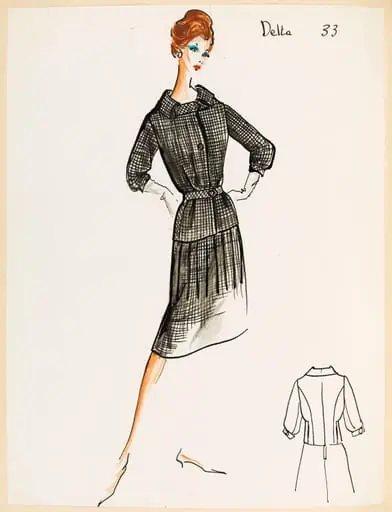
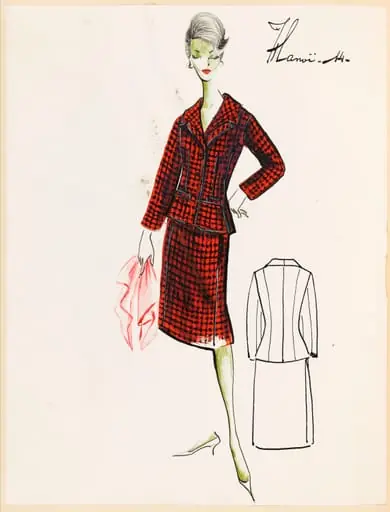
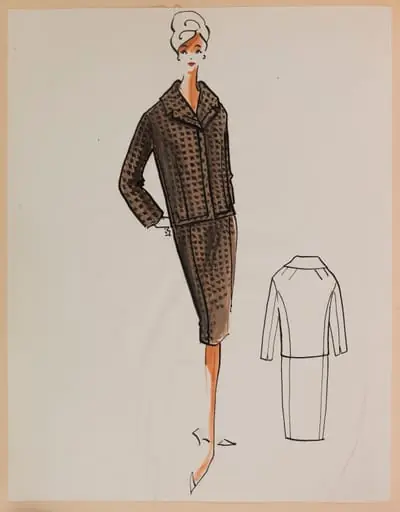
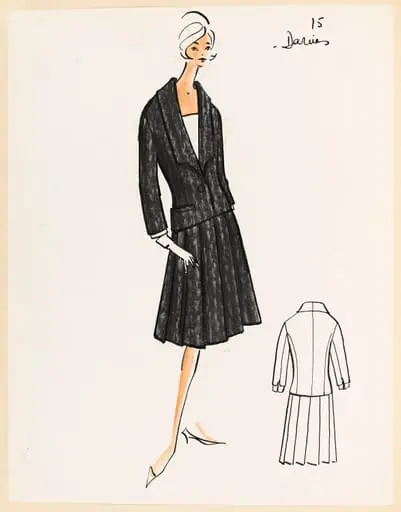
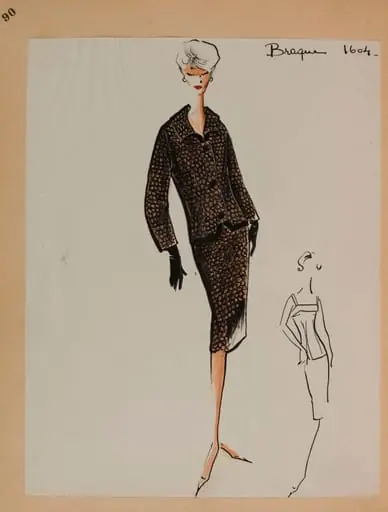
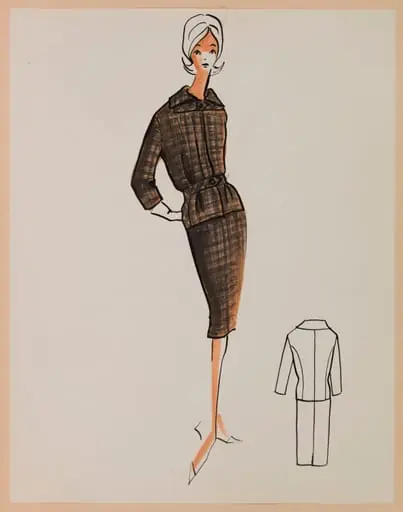
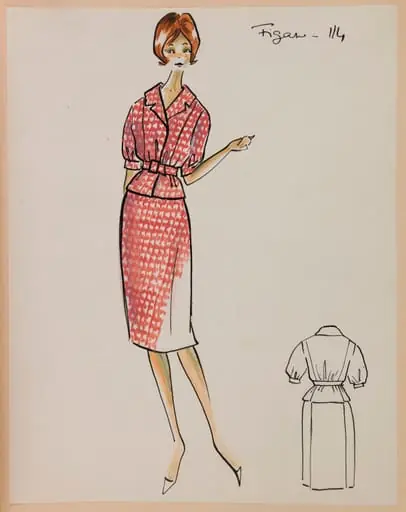
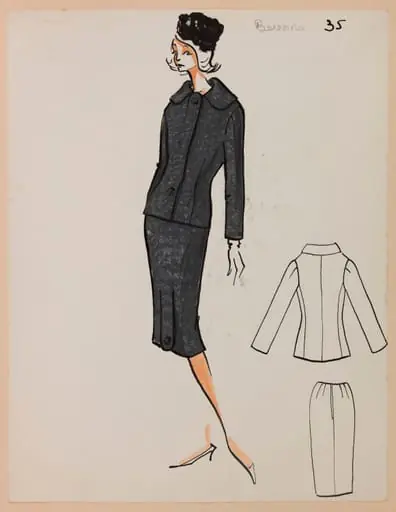
This drawing, labeled 'Rembrandt,' is a fashion sketch by Marie-Louise Carven, created around 1958. It depicts a woman in a modest plaid dress and matching jacket, rendered in pencil with clean, precise lines. Though titled after the Dutch painter, the work is not a portrait but a design study from Carven’s personal archive. The sketch includes a secondary view of the jacket’s back, indicating its construction details. It resides in the Museum of Ethnography’s collection as part of its documentation of mid-century French fashion design.
Subject & Meaning
The figure represents an idealized, everyday woman—neatly dressed, composed, and grounded in practicality. The posture, with one hand on the hip, suggests quiet confidence rather than theatricality. The title 'Rembrandt' may reference Carven’s admiration for chiaroscuro or quiet dignity in portraiture, though the drawing itself is purely functional. It reflects her design philosophy: clothing as an extension of the wearer’s poise, not a spectacle.
Technique & Style
Carven employed minimal pencil strokes to define form, emphasizing silhouette over detail. The dress’s slight flare and the jacket’s waist belt are indicated with economical lines, showcasing her focus on proportion and structure. The back view sketch, rendered with even fewer marks, reveals her method of capturing construction essentials. Her style avoids ornamentation, favoring clarity and wearability—hallmarks of her early prêt-à-porter approach.
History & Provenance
Created in the late 1950s, this sketch belongs to Carven’s private design archive, later acquired by the Museum of Ethnography. As one of Paris’s first designers to produce ready-to-wear collections, her working drawings were preserved as cultural artifacts. The sketch’s survival reflects institutional interest in documenting the transition from haute couture to accessible fashion. Its inclusion in the museum underscores its value as a record of postwar French design practice.
Context
In postwar France, fashion was shifting toward accessibility and functionality. Carven, who founded her house in 1945, catered to petite women and emphasized lightweight fabrics and tailored simplicity. This sketch aligns with broader trends in 1950s Parisian design, where couturiers began formalizing ready-to-wear lines. Unlike the opulence of haute couture, Carven’s work prioritized ease and everyday elegance, reflecting changing social roles for women.
Legacy
Carven’s sketches, including this one, illustrate the quiet revolution in mid-century fashion: the elevation of practical design to artistic merit. Her emphasis on fit, proportion, and wearability influenced later generations of designers focused on accessible clothing. Though not widely exhibited, such drawings remain vital to understanding how ready-to-wear became a legitimate cultural force. The Museum of Ethnography’s preservation of this work affirms its role in fashion history beyond the runway.
Artist & collection
Artist
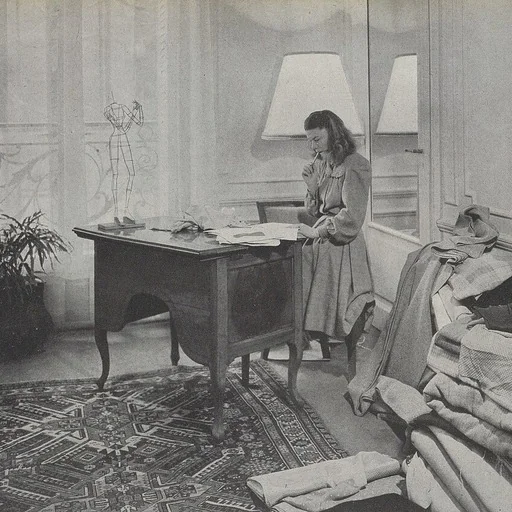
Marie-Louise Carven (31 August 1909 – 8 June 2015), born Carmen de Tommaso, was a French fashion designer who founded the house of Carven in 1945.
Museum
Palais Galliera - Musée de la Mode de la Ville de Paris
Continue through works from the same source collection.
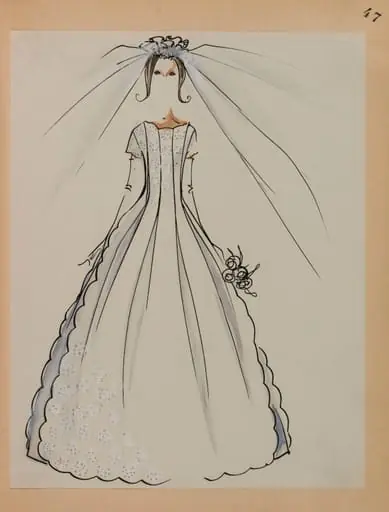 Robe de mariée festonnée et son voile
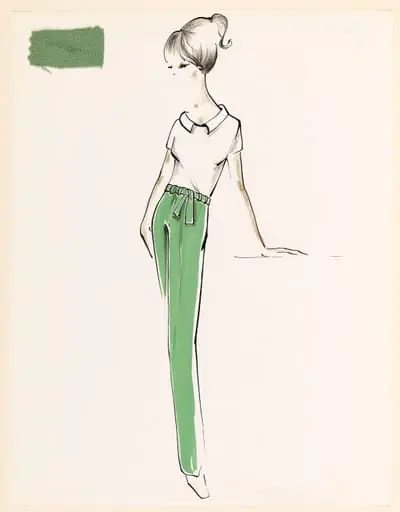 Haut blanc à manches courtes et pantalon vert à ceinture nouée
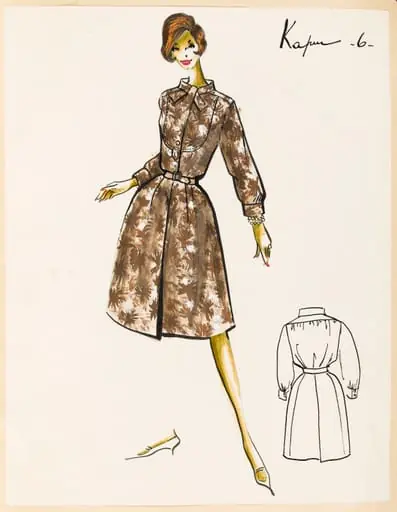 Kapur
Kapur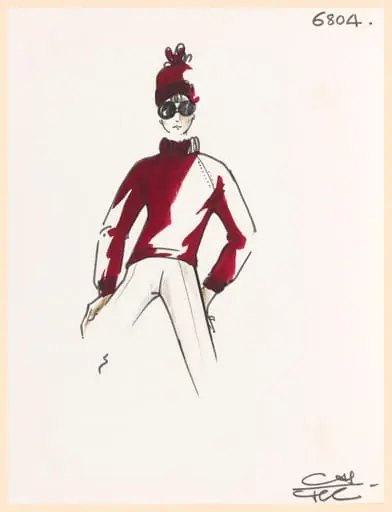 Pull-over à manches longues pourpre, bonnet assorti, pantalon et lunettes de soleil
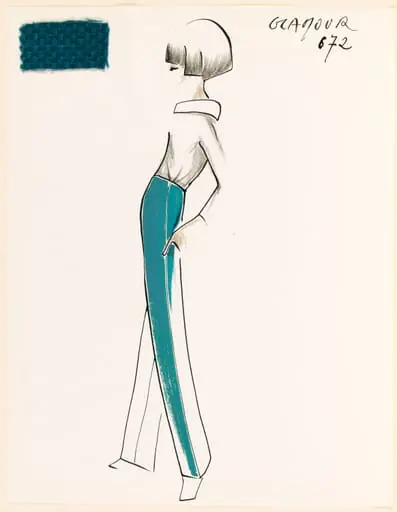 GLAMOUR
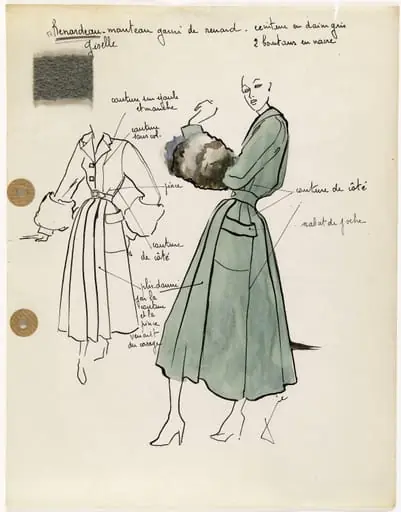 'Renardeau'
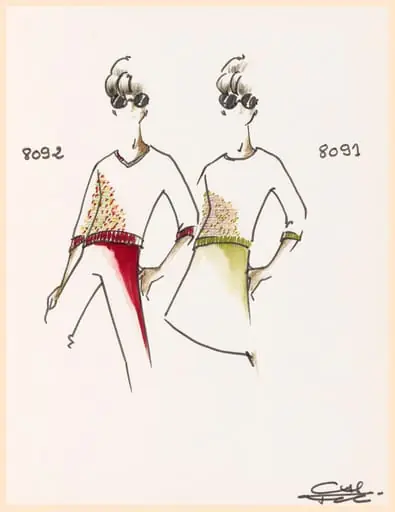 Pull-over à manches trois quarts et à encolure V à motifs multicolores, pantalon cerise et lunettes de soleil
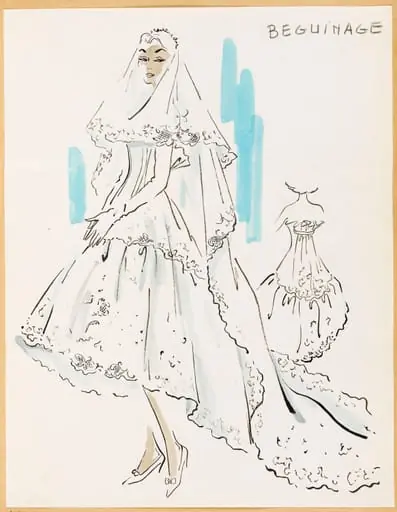 Béguinage