Artwork
Fleur d'oranger
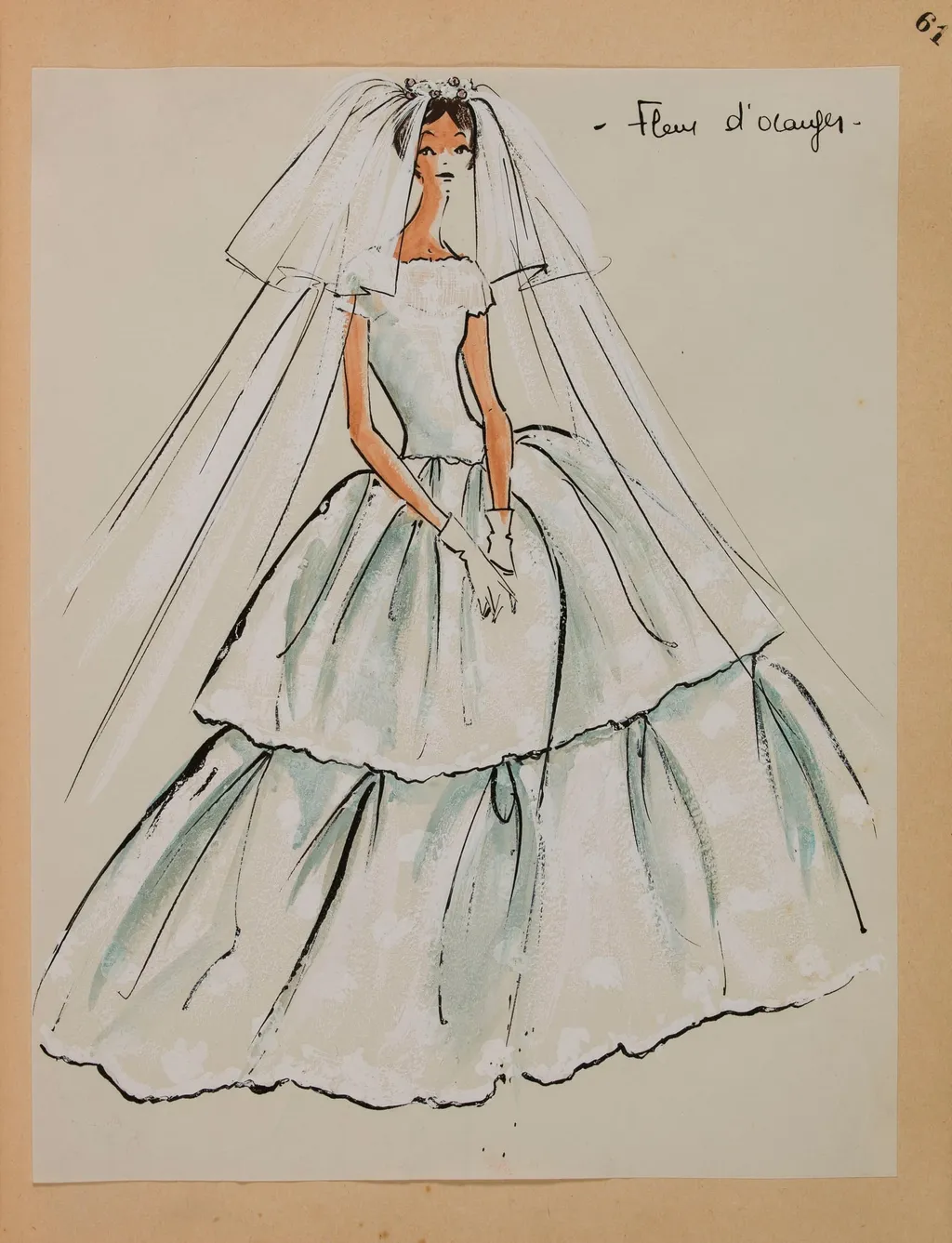
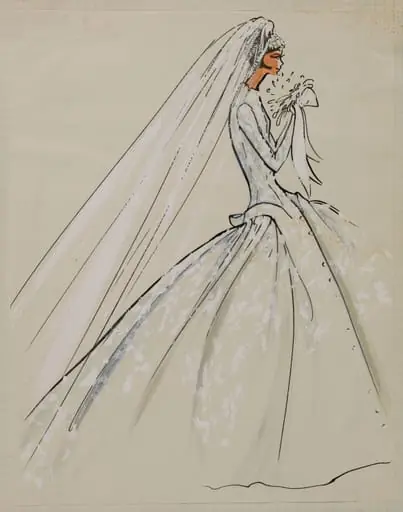
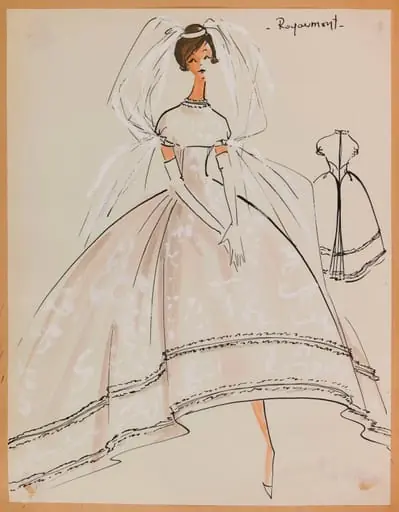
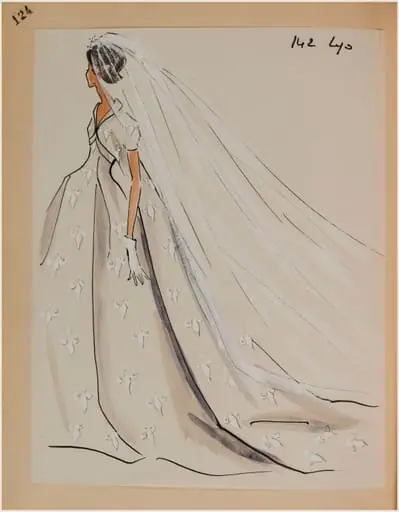
Fleur d'oranger is a drawing by Carven. It dates from 1958 and is held in the collection of the Palais Galliera - Musée de la Mode de la Ville de Paris.
About this work
Overview
Fleur d’oranger is a mid‑century drawing attributed to the French fashion house Carven, dated around 1958. The work is part of the collection of the Museum of Ethnography, where it is displayed as an example of a quick fashion study rather than a finished illustration.
Subject & Meaning
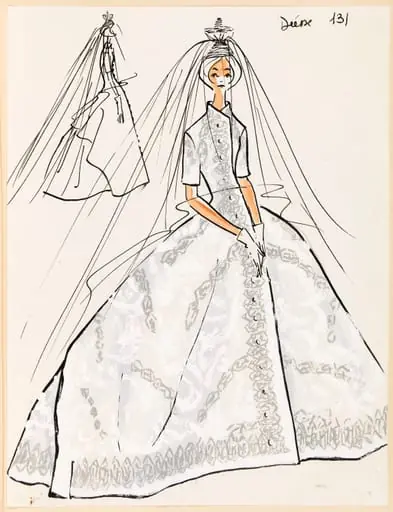
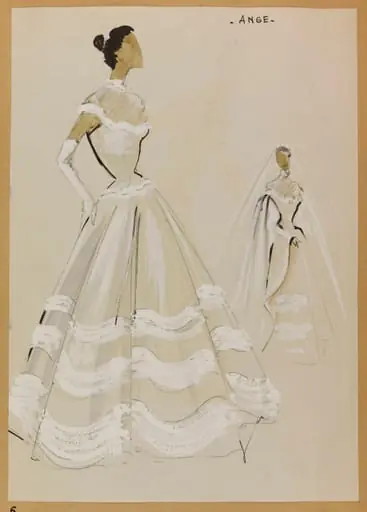
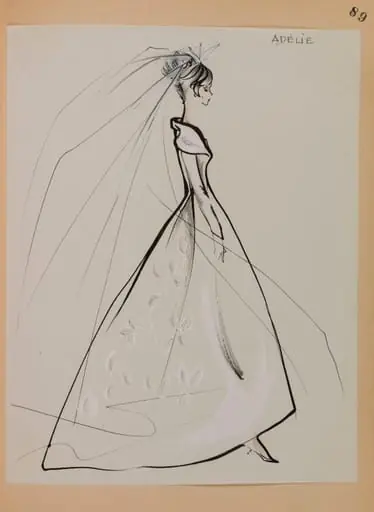
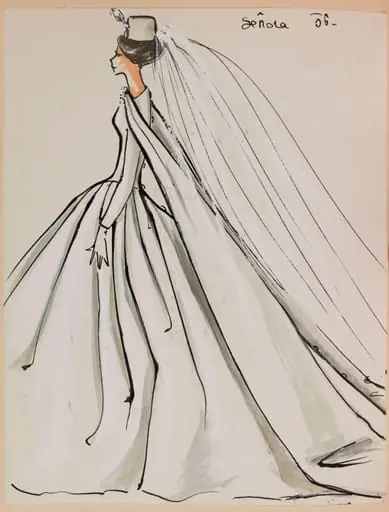
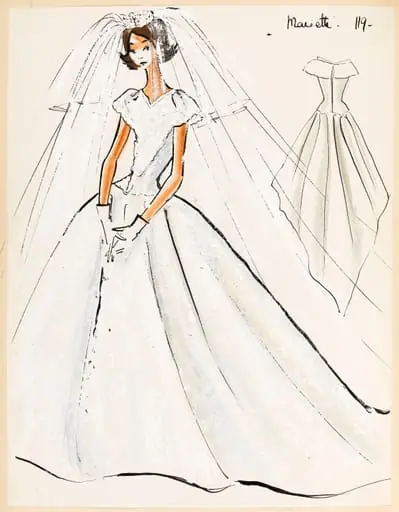
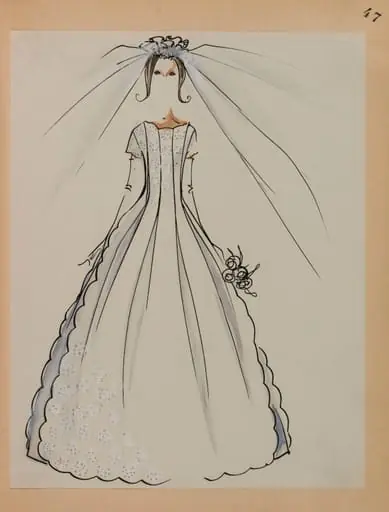
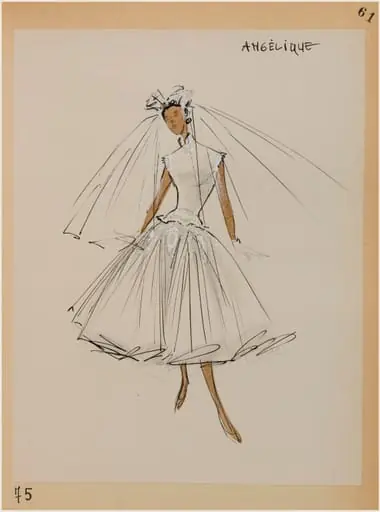
The image depicts a woman in a bridal ensemble, characterized by a loose, flowing gown. The dress combines a fitted bodice with puffed sleeves and a wide, billowing skirt, while a long veil falls over her shoulders. A modest headpiece bearing a single flower reinforces the title’s reference to orange blossom, a traditional symbol of marriage and fragrance.
Technique & Style
Executed in a sketchy manner, the drawing relies on swift, gestural lines and soft, watercolor‑like washes to suggest form and volume. The loose handling of line and the translucent shading convey the lightness of the veil and the airy quality of the fabric, emphasizing the study’s provisional nature.
History & Provenance
Created circa 1958, the piece reflects Carven’s interest in bridal fashion during the post‑war era. It entered the Museum of Ethnography’s holdings at an unspecified date, where it serves as a reference for the intersection of fashion illustration and ethnographic documentation of wedding customs.
Artist & collection
Artist
These delicate ink-on-paper drawings capture the quiet poetry of everyday things: pinecones, reeds, apples.
Museum
Palais Galliera - Musée de la Mode de la Ville de Paris
Continue through works from the same source collection.