Artwork
Mariette
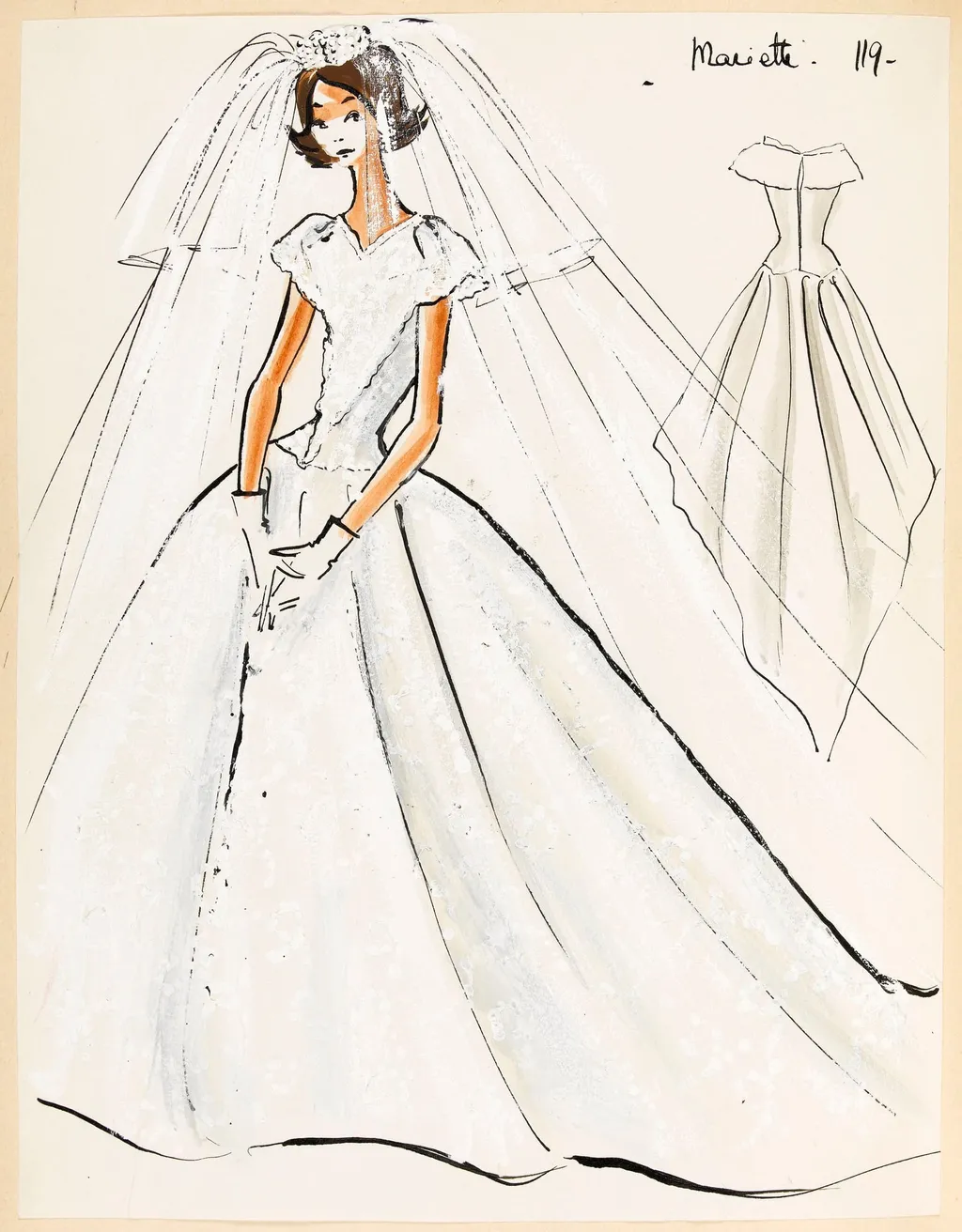
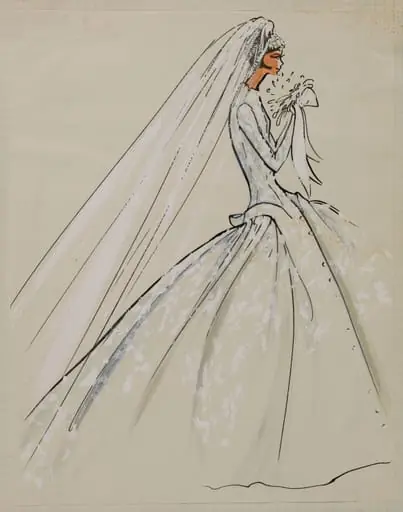
Mariette is a drawing by Carven. It dates from 1959 and is held in the collection of the Palais Galliera - Musée de la Mode de la Ville de Paris.
About this work
Overview
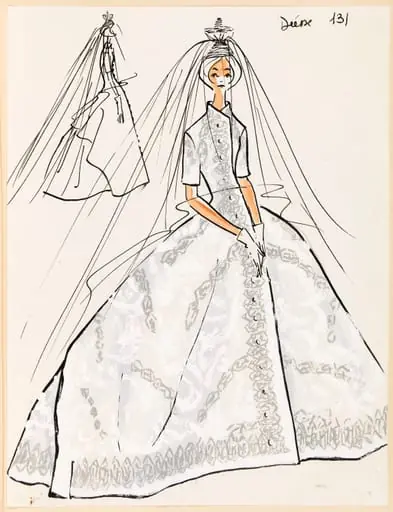
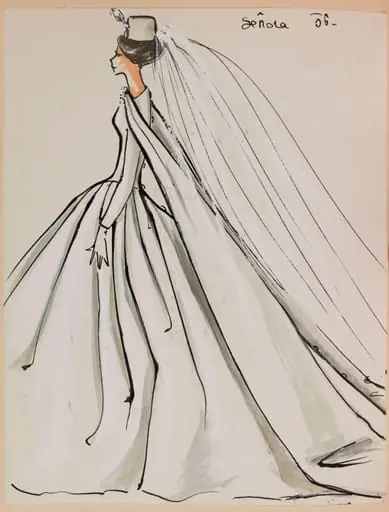
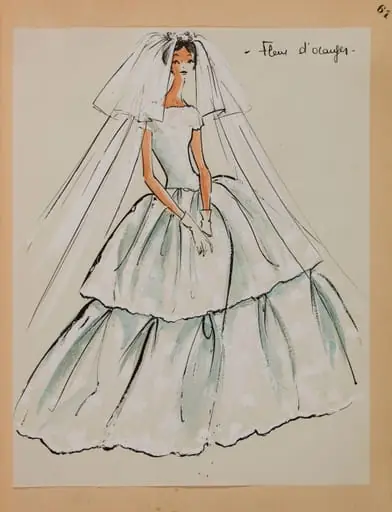
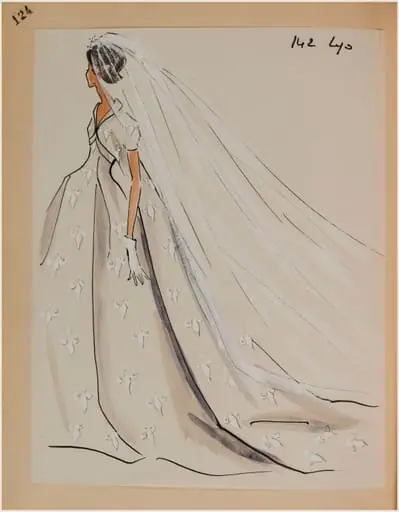
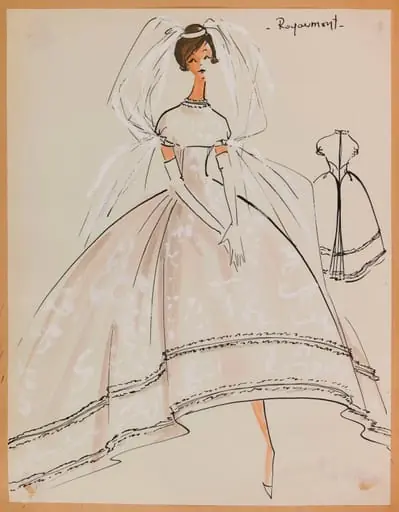
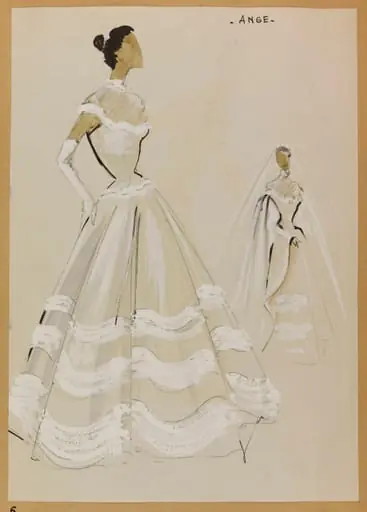
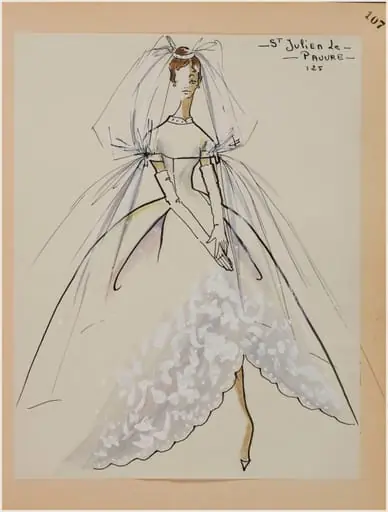
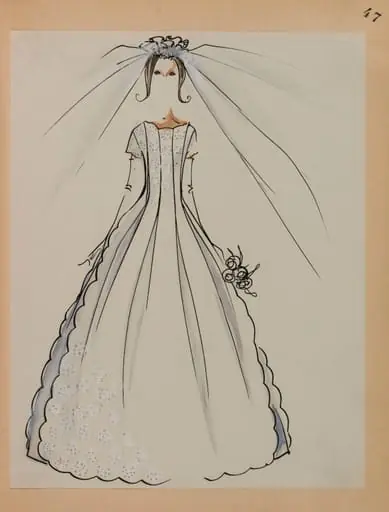
Created around 1959 by Carven, this sketch depicts a woman in a wedding gown alongside a mannequin dressed in a similar but subtly altered garment. Executed in ink or pencil, the work is held in the collection of the Museum of Ethnography. Its informal, rapid execution suggests it was made as a study rather than a finished piece, emphasizing form and motion over precision.
Subject & Meaning
The subject appears to be a bride, rendered with minimal detail, her posture relaxed yet composed. The presence of a mannequin beside her introduces a comparative element, possibly reflecting the designer’s process of evaluating silhouette and fit. The pairing suggests an interest in how clothing behaves on the human form versus a static model, hinting at the practical concerns of fashion design.
Technique & Style
Carven employed loose, fluid lines to suggest the drapery and movement of fabric. Shading is achieved through light, sketchy strokes rather than dense cross-hatching, creating a sense of volume without heavy definition. Areas of the dress are left partially open, allowing the paper to contribute to the illusion of light and airiness. The technique prioritizes immediacy and gesture over finish.
History & Provenance
The work entered the Museum of Ethnography’s collection as part of a broader archive of fashion-related materials. Its origins as a studio sketch imply it was used during the design phase, possibly for internal reference or client presentation. No record of public exhibition exists prior to its acquisition, suggesting it remained within the designer’s private workflow.
Context
Carven’s sketch reflects this era’s emphasis on functional elegance, where the dress was not merely ornamental but an active element in the wearer’s motion.
In the late 1950s, fashion design was increasingly focused on the relationship between garment and body, with designers experimenting with silhouette and movement. Carven’s sketch reflects this era’s emphasis on functional elegance, where the dress was not merely ornamental but an active element in the wearer’s motion. The inclusion of a mannequin aligns with contemporary studio practices in haute couture.
Legacy
This sketch survives as a quiet testament to the iterative nature of fashion creation. It reveals the unseen labor behind finished garments, capturing a moment of decision-making rather than final presentation. Its preservation in an ethnographic museum underscores its value as a cultural artifact of design process, not just aesthetic outcome.
Artist & collection
Artist
These delicate ink-on-paper drawings capture the quiet poetry of everyday things: pinecones, reeds, apples.
Museum
Palais Galliera - Musée de la Mode de la Ville de Paris
Continue through works from the same source collection.