Artwork
Fox trot
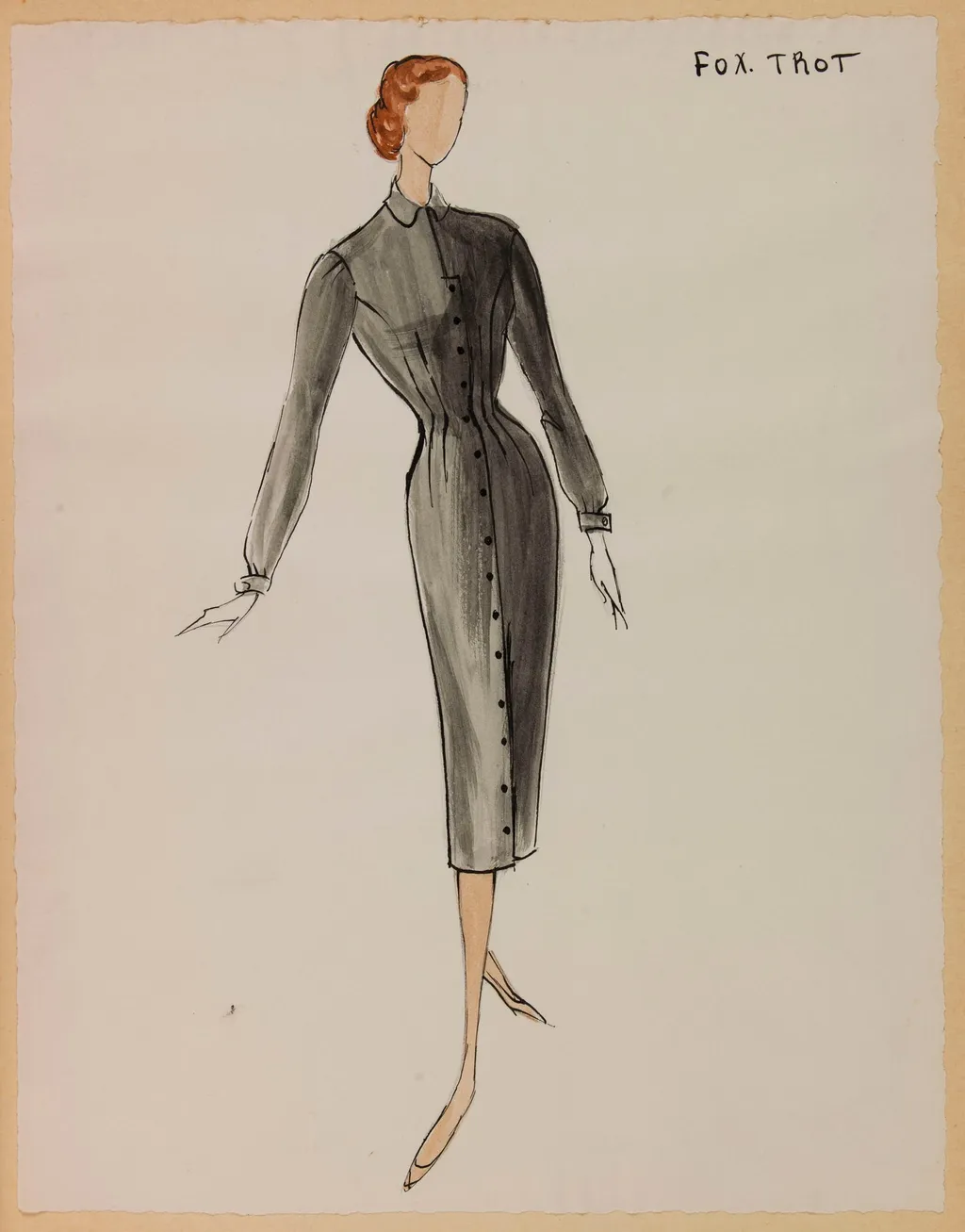
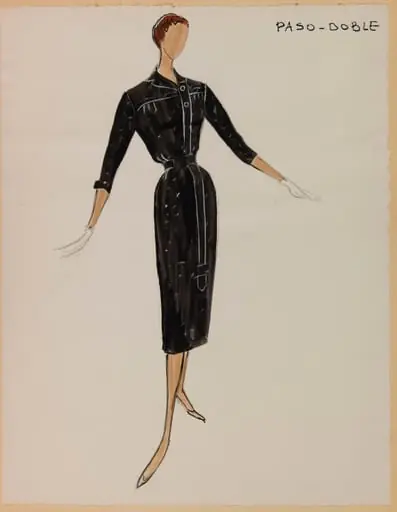
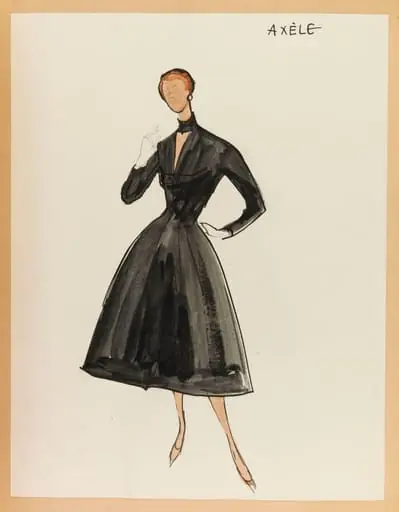
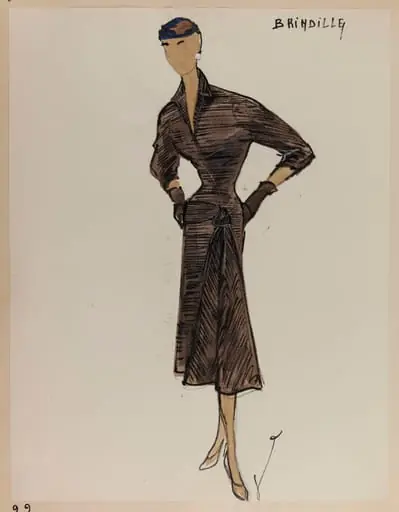
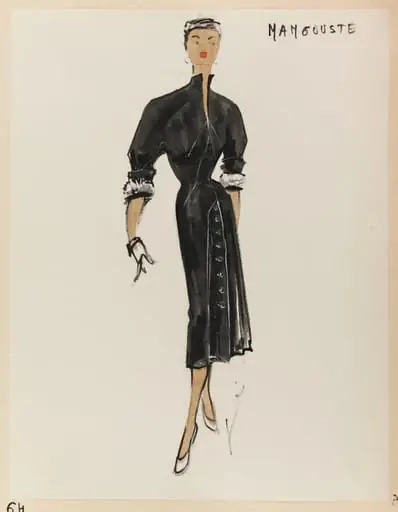
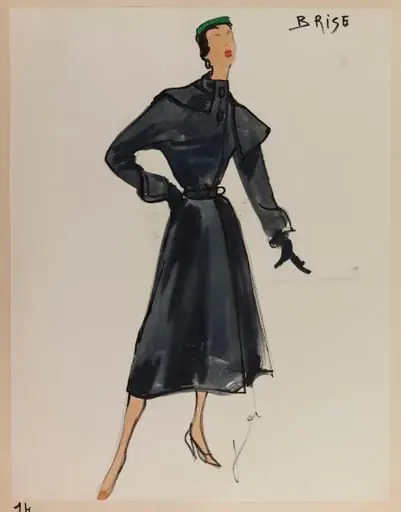
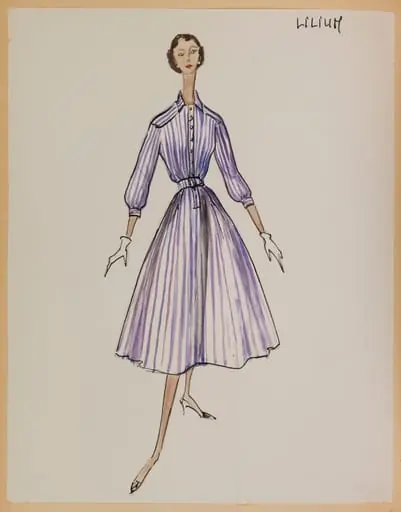
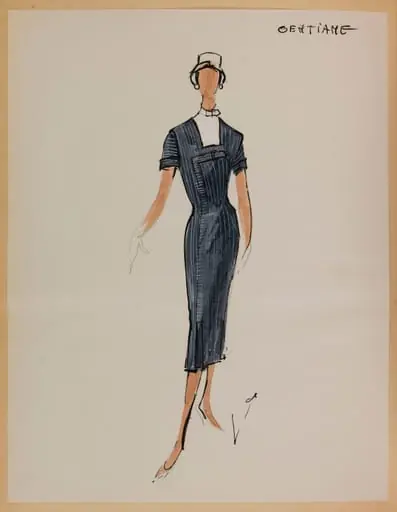
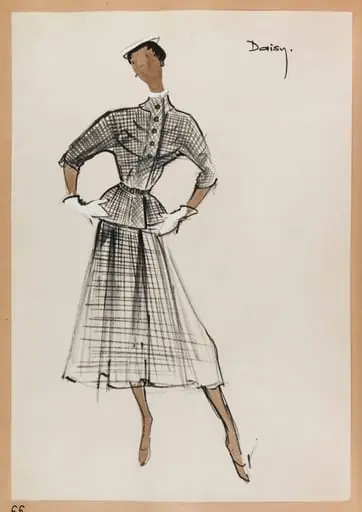
Fox trot is a drawing by Carven. It dates from 1956 and is held in the collection of the Palais Galliera - Musée de la Mode de la Ville de Paris.
About this work
Overview
Created around 1956, Fox trot is a monochrome drawing by the designer Carven. It resides in the collection of the Museum of Ethnography. The work captures a single figure in motion, rendered with swift, unrefined lines and little tonal variation. Its simplicity suggests a study or sketch rather than a finished illustration, emphasizing gesture over detail.
Subject & Meaning
The subject is a woman in a sleeveless dress with a high collar and front buttons, walking with one hand resting on her hip. Her hair is tightly gathered, suggesting a formal or restrained style. The pose conveys a quiet rhythm, possibly evoking the fox trot dance, though no music or setting is indicated. The image focuses on posture and attire as markers of movement and social bearing.
Technique & Style
Executed in ink or graphite, the drawing employs loose, economical strokes with minimal shading. Contours define the dress and figure without refinement, prioritizing flow over precision. The lack of background or contextual elements directs attention to the silhouette and motion. The hand appears spontaneous, as if recorded in real time during a moment of observation.
History & Provenance
The drawing entered the Museum of Ethnography’s collection as part of a broader archive of Carven’s design materials. Its origin as a personal sketch or preparatory study is unconfirmed, but its preservation suggests it was valued for its representation of mid-century fashion and movement. No prior ownership records are publicly documented beyond its institutional acquisition.
Context
Carven, known for fashion design in postwar France, often translated textile and silhouette ideas into quick sketches. This drawing aligns with a period when women’s wear emphasized clean lines and structured yet fluid forms. The figure’s restrained demeanor reflects societal norms of the time, while the focus on walking suggests an interest in how clothing interacts with motion.
Legacy
Fox trot remains a quiet example of Carven’s observational practice, illustrating how fashion designers documented movement and form beyond finished garments. It contributes to scholarly understanding of design processes in mid-century Europe. Though not widely exhibited, it serves as a tangible link between fashion theory and the physicality of dress in daily life.
Artist & collection
Artist
These delicate ink-on-paper drawings capture the quiet poetry of everyday things: pinecones, reeds, apples.
Museum
Palais Galliera - Musée de la Mode de la Ville de Paris
Continue through works from the same source collection.