Artwork
Giboulée
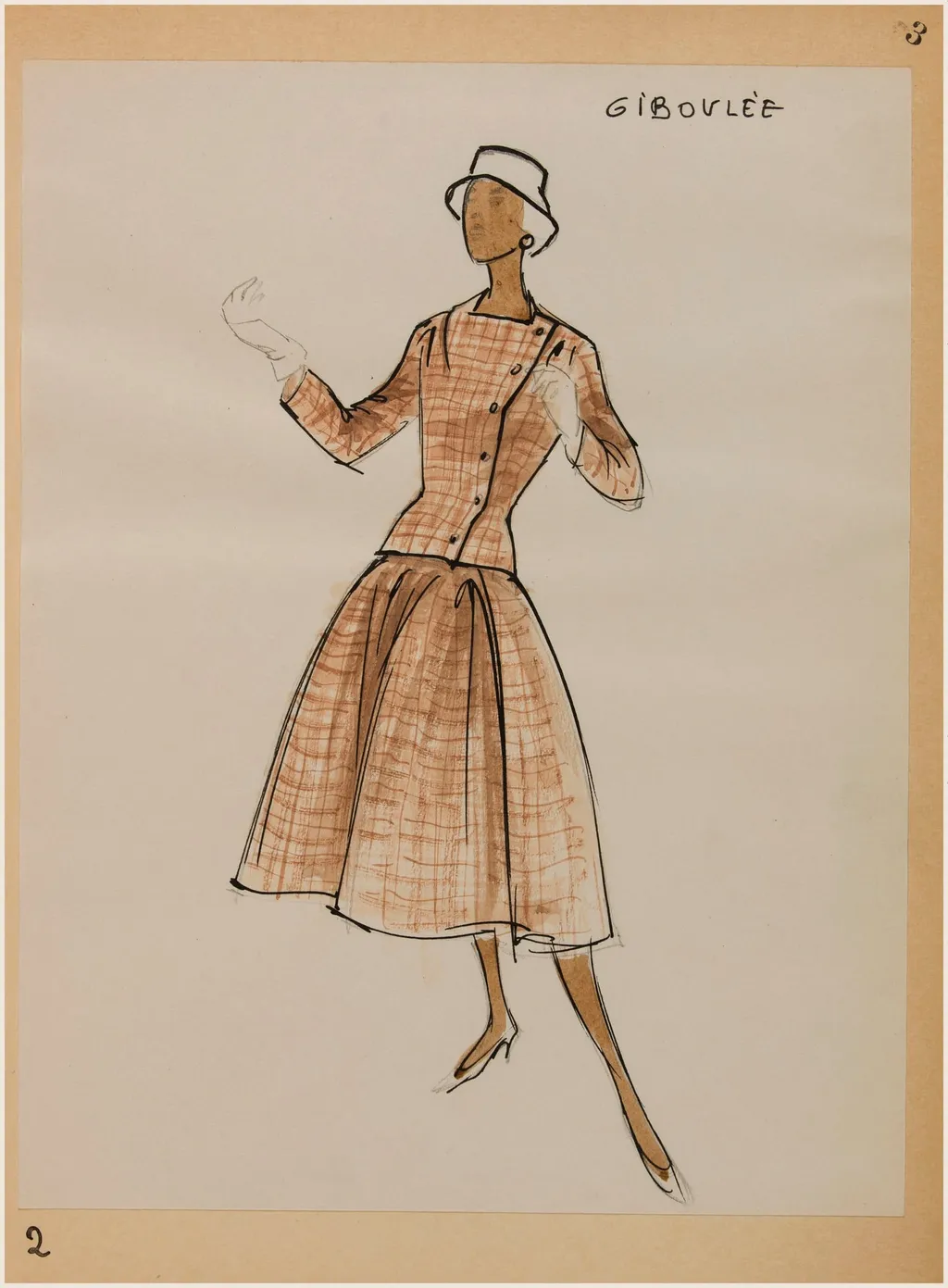
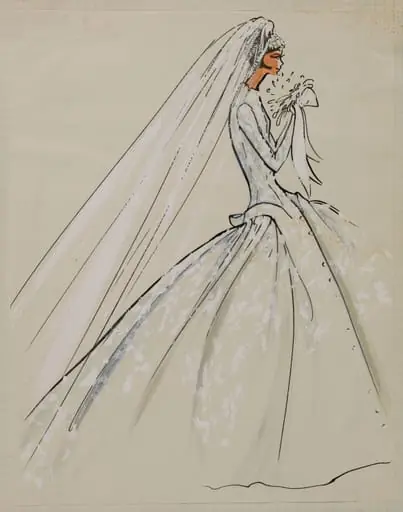
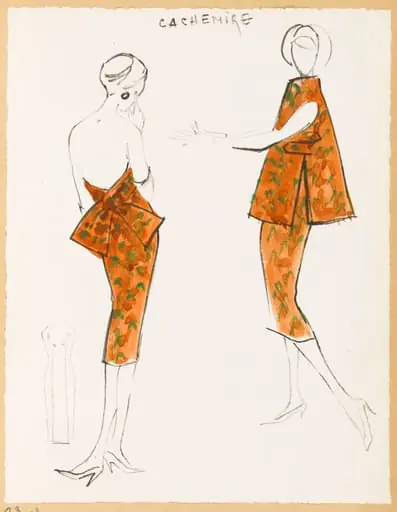
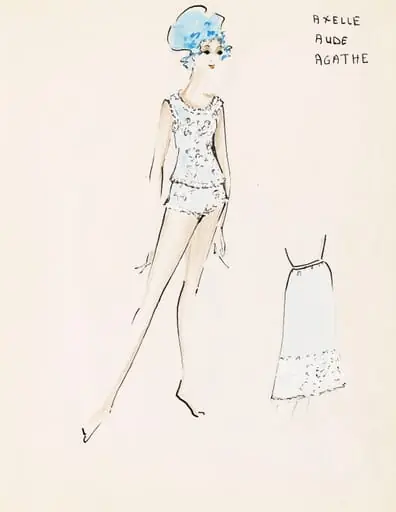
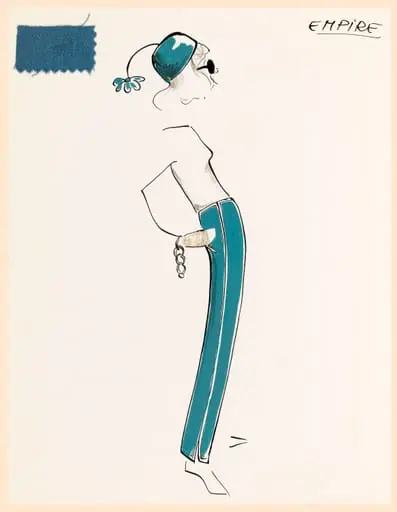
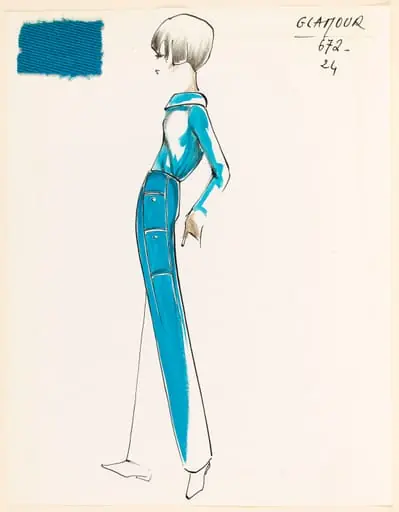
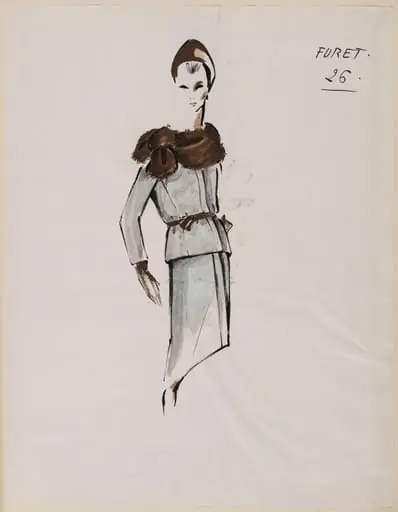
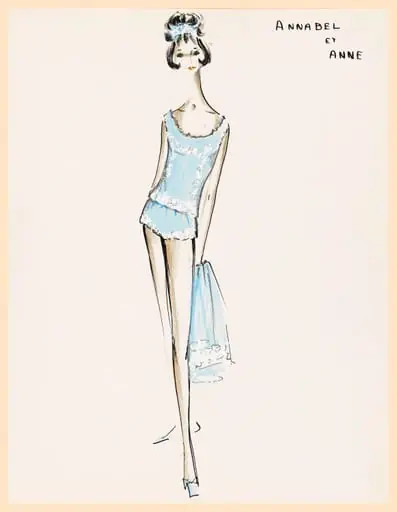
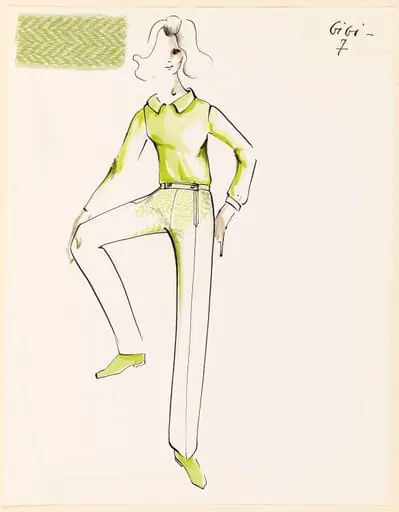
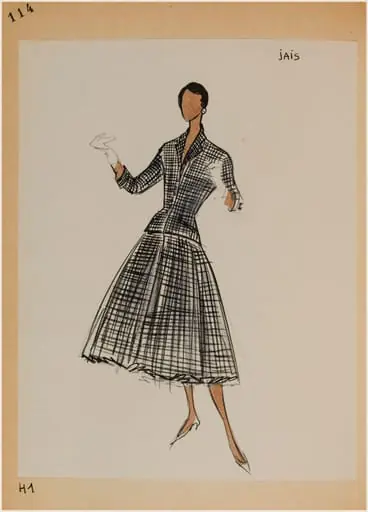
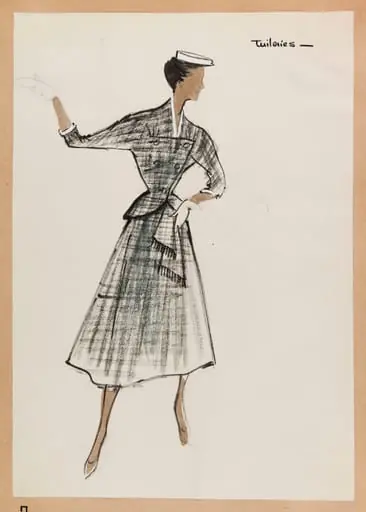
Giboulée is a drawing by Carven. It dates from 1956 and is held in the collection of the Palais Galliera - Musée de la Mode de la Ville de Paris.
About this work
Overview
Giboulée, created in 1956 by the designer Carven, is a pencil sketch on paper that captures a moment of casual motion. It resides in the collection of the Museum of Ethnography, where it is valued as a study in everyday dress and gesture rather than a finished fashion illustration. The work reflects the designer’s interest in documenting real-life movement and textile interaction.
Subject & Meaning
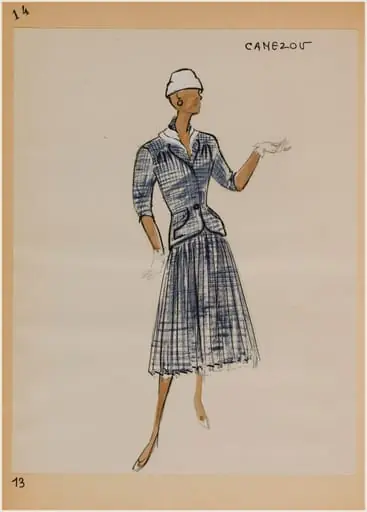
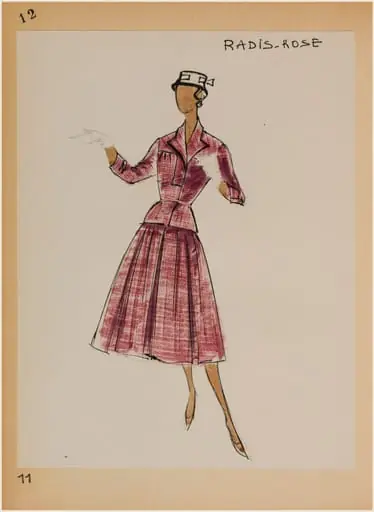
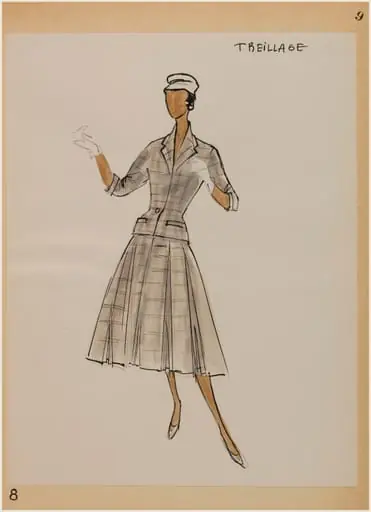
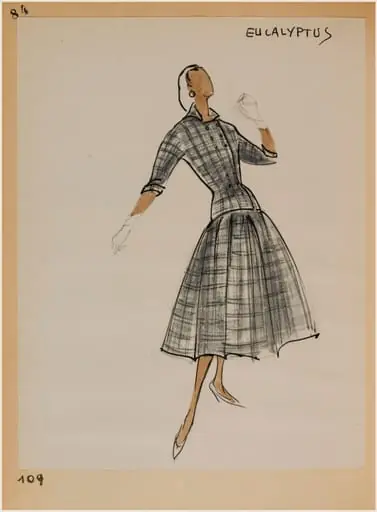
The figure is a woman in mid-stride, dressed in a simple checkered jacket and flared skirt, her hair secured under a hat. Her left arm extends slightly, suggesting a natural, unposed step. The absence of facial detail shifts focus to posture and clothing, emphasizing the relationship between movement and garment. The image conveys quiet, ordinary life rather than performance or spectacle.
Technique & Style
The drawing employs loose, rapid pencil strokes to suggest fabric texture and motion. The checkered pattern is rendered with light, intersecting lines that imply depth without heavy shading. Cross-hatching is used sparingly, allowing the paper’s surface to remain visible and contributing to the sketch’s sense of spontaneity. The line quality is fluid, prioritizing rhythm over precision.
History & Provenance
Created in 1956 during Carven’s active years in Parisian fashion, the sketch entered the Museum of Ethnography’s collection as part of a broader effort to preserve design documentation tied to daily life. Its acquisition reflects the institution’s interest in vernacular fashion and the role of sketching in design practice, rather than haute couture production.
Context
In mid-20th century France, fashion designers increasingly turned to observational drawing to capture real-world wearers, moving beyond idealized runway figures. Giboulée aligns with this trend, reflecting a postwar emphasis on practicality and authenticity. The sketch’s modest subject and informal technique contrast with the grandeur often associated with fashion illustration of the era.
Legacy
Giboulée endures as a quiet testament to the designer’s attention to lived experience. It contributes to scholarly understanding of how fashion was conceived not only as spectacle but as part of routine existence. The sketch remains a reference point for studies on the intersection of clothing, movement, and everyday aesthetics in mid-century design.
Artist & collection
Artist
These delicate ink-on-paper drawings capture the quiet poetry of everyday things: pinecones, reeds, apples.
Museum
Palais Galliera - Musée de la Mode de la Ville de Paris
Continue through works from the same source collection.