Artwork
Savane
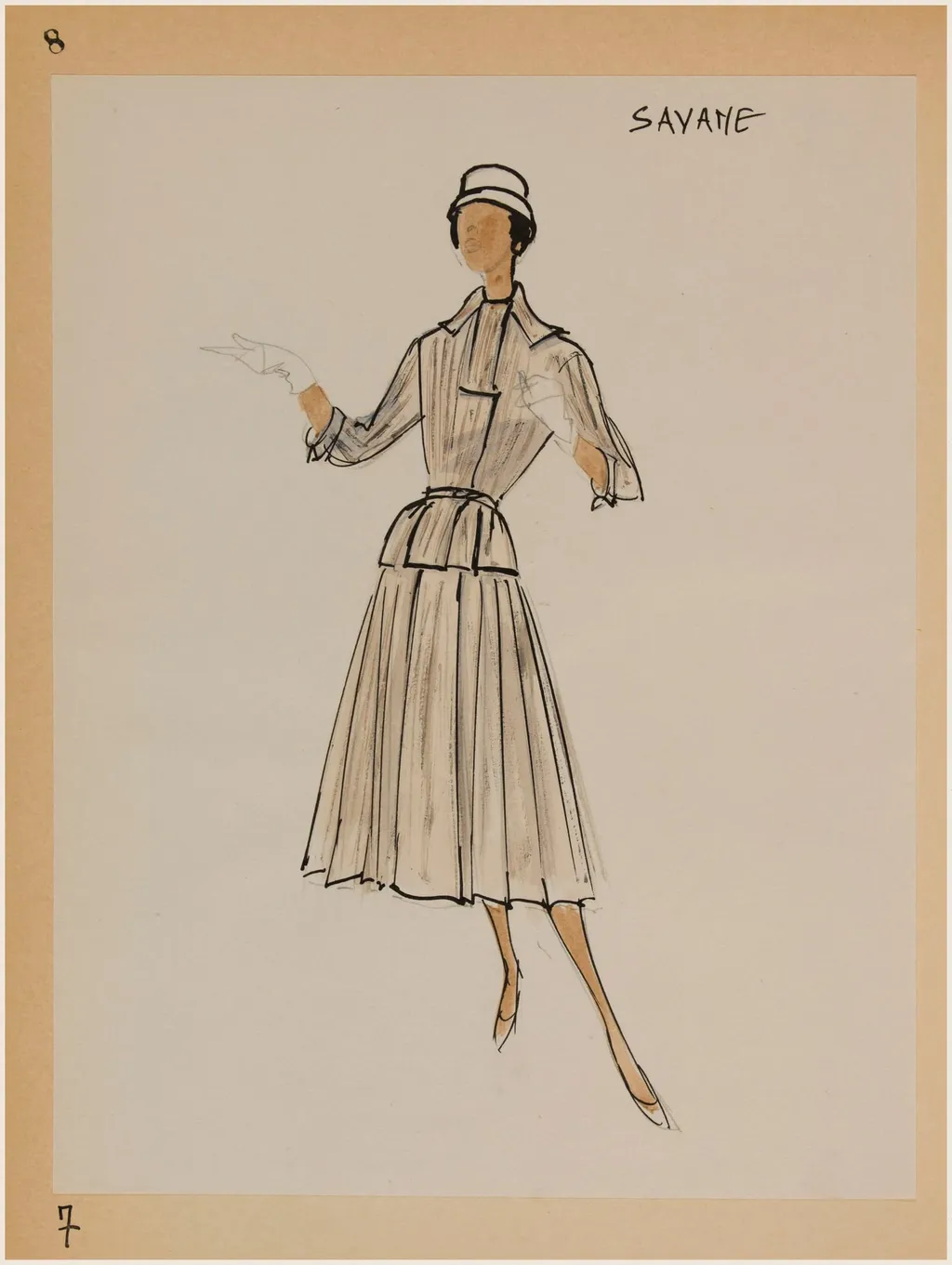
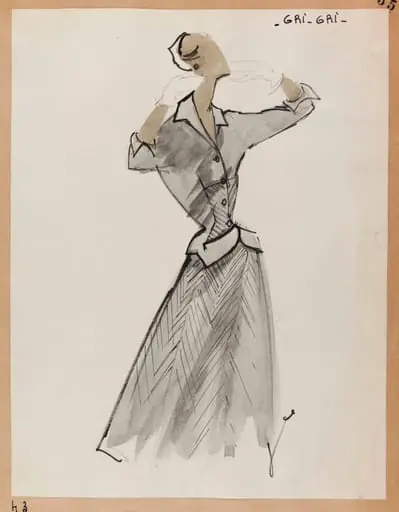
Savane is a drawing by Marie-Louise Carven. It dates from 1956 and is held in the collection of the Palais Galliera - Musée de la Mode de la Ville de Paris.
About this work
Overview
Savane is a 1956 fashion design sketch by Marie-Louise Carven, founder of the Carven fashion house. The piece is part of the Museum of Ethnography’s collection.
Subject & Meaning
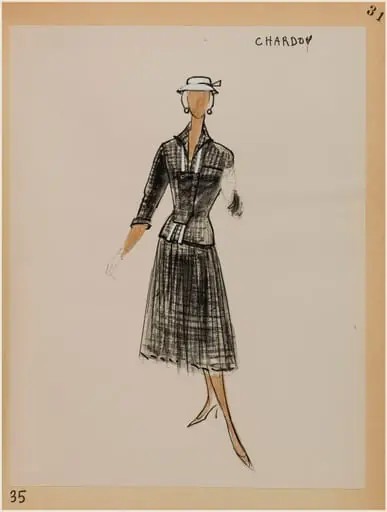
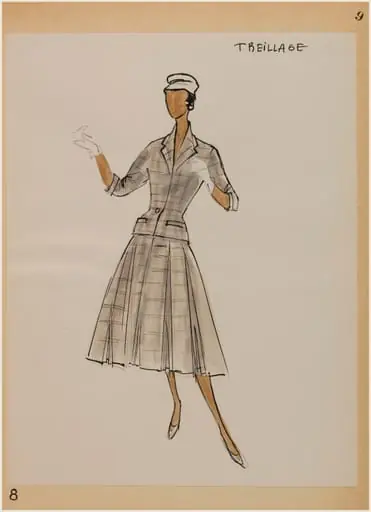
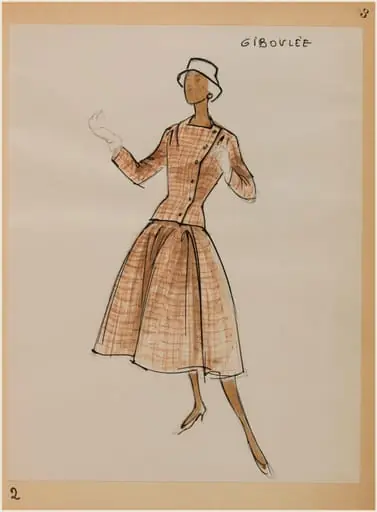
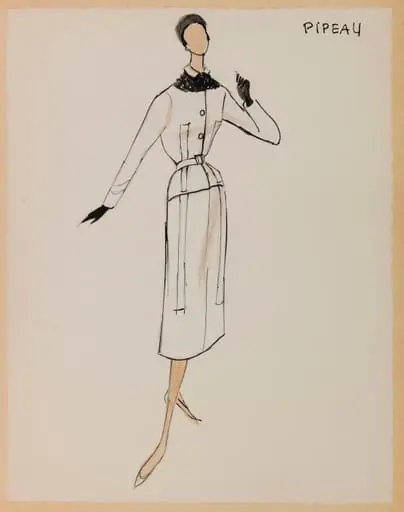
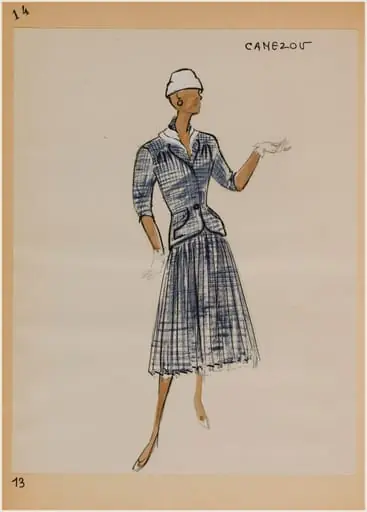
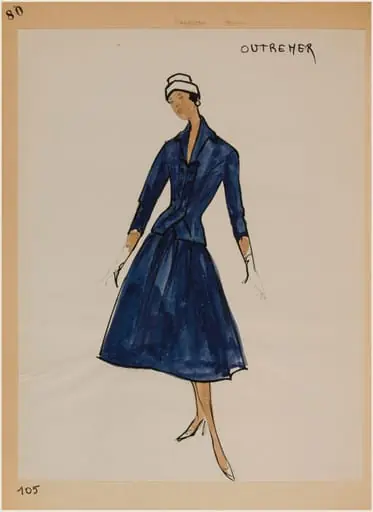
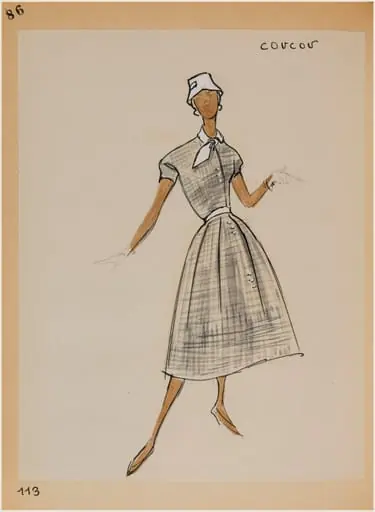
The sketch depicts a woman in a practical yet stylish outfit consisting of a loose, long-sleeved top, wide flared skirt, and belt. Her gesture, with one hand pointing outward, suggests a sense of confidence or explanation, potentially reflecting the empowerment through fashion that Carven's designs embodied, particularly for petite women.
Technique & Style
Executed in quick pencil strokes, the sketch showcases a spontaneous, possibly conceptual, drawing style. The overall aesthetic aligns with Carven’s signature use of lightweight fabrics and accessible, chic designs.
History & Provenance
Created in 1956 by Marie-Louise Carven, a pioneering couturier known for introducing prêt-à-porter lines and innovative undergarments (e.g., the patented push-up bra), Savane is now held in the Museum of Ethnography’s collection.
Context
Savane reflects the mid-20th-century shift towards more practical, ready-to-wear fashion, a movement in which Carven played a significant role. The design's emphasis on comfort and style for everyday life aligns with the era's evolving female roles.
Legacy
As part of Carven’s oeuvre, Savane contributes to the legacy of a designer who democratized high fashion. However, its specific impact or influence on subsequent fashion trends is not prominently documented in available information.
Artist & collection
Artist
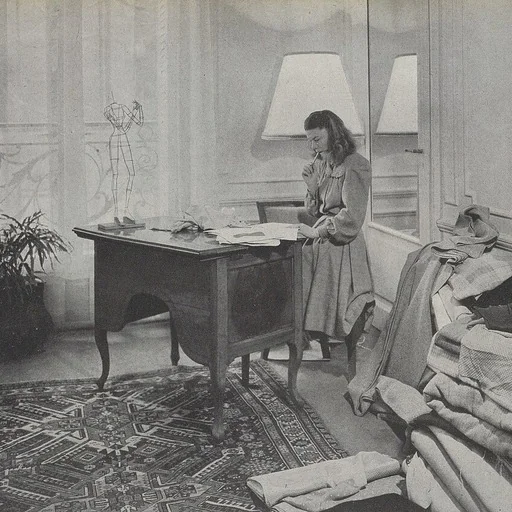
Marie-Louise Carven (31 August 1909 – 8 June 2015), born Carmen de Tommaso, was a French fashion designer who founded the house of Carven in 1945.

Museum
Palais Galliera - Musée de la Mode de la Ville de Paris
Continue through works from the same source collection.
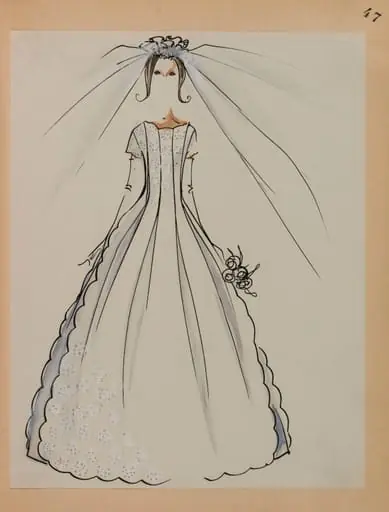 Robe de mariée festonnée et son voile
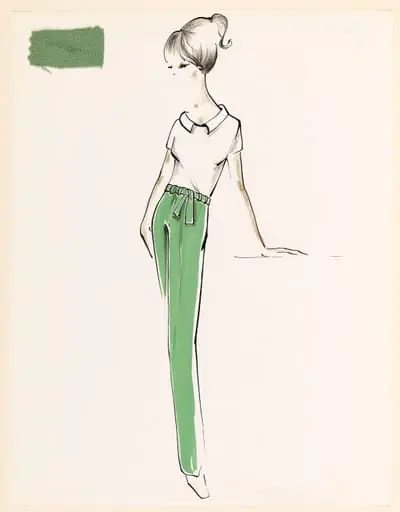 Haut blanc à manches courtes et pantalon vert à ceinture nouée
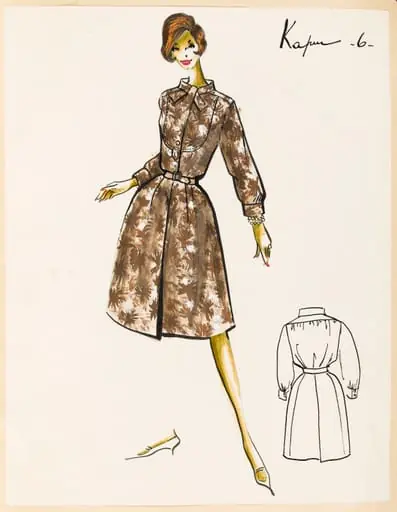 Kapur
Kapur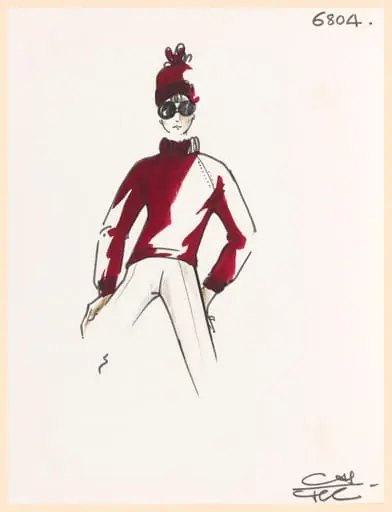 Pull-over à manches longues pourpre, bonnet assorti, pantalon et lunettes de soleil
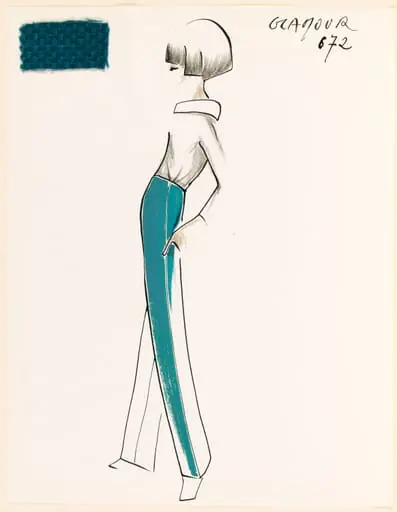 GLAMOUR
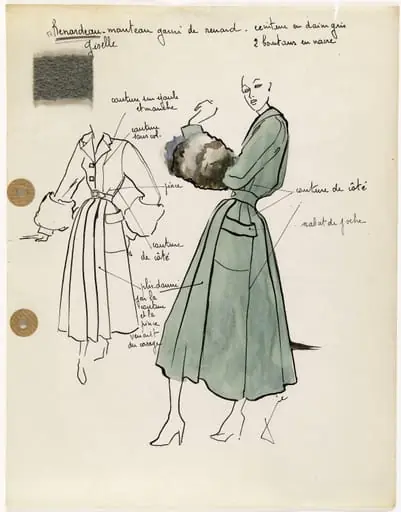 'Renardeau'
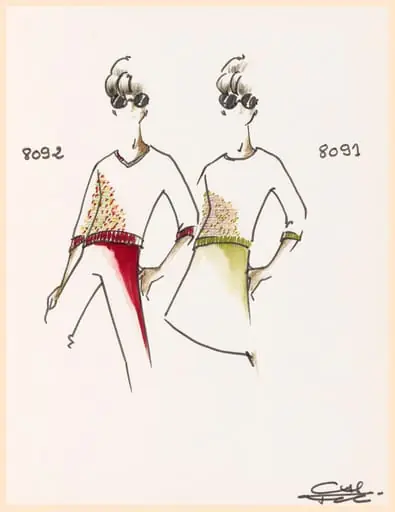 Pull-over à manches trois quarts et à encolure V à motifs multicolores, pantalon cerise et lunettes de soleil
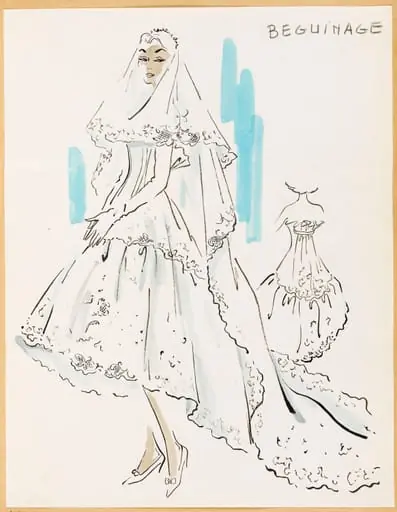 Béguinage