Artwork
Glaïeul
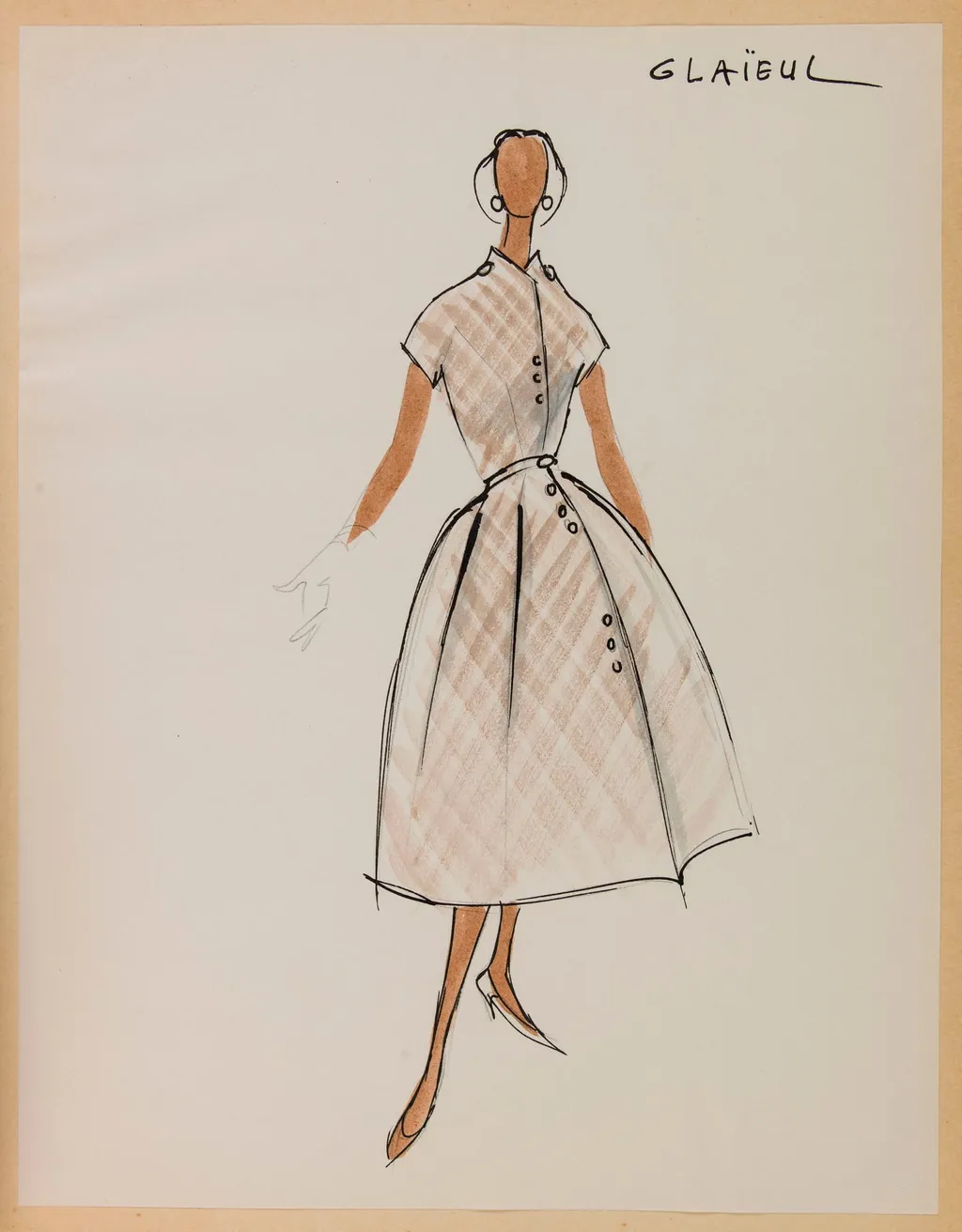
Glaïeul is a drawing by Carven. It dates from 1956 and is held in the collection of the Palais Galliera - Musée de la Mode de la Ville de Paris.
About this work
Overview
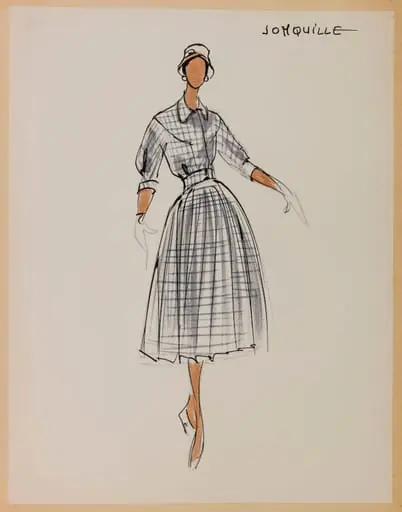
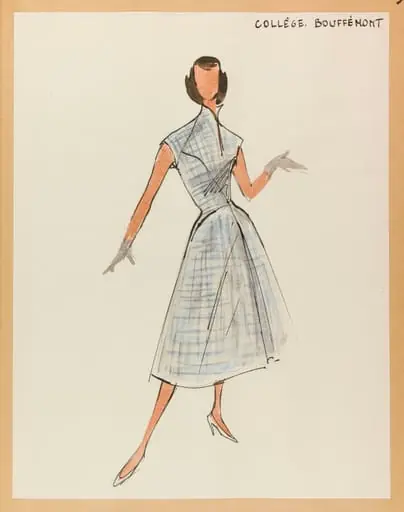
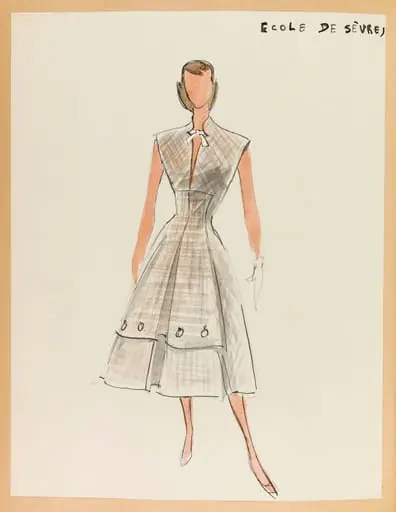
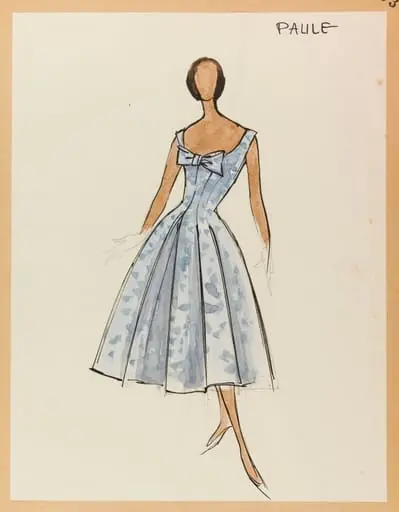
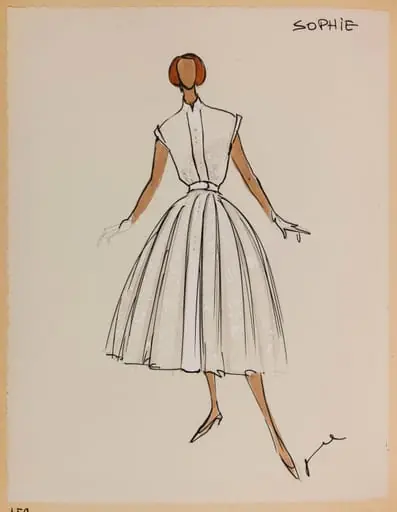
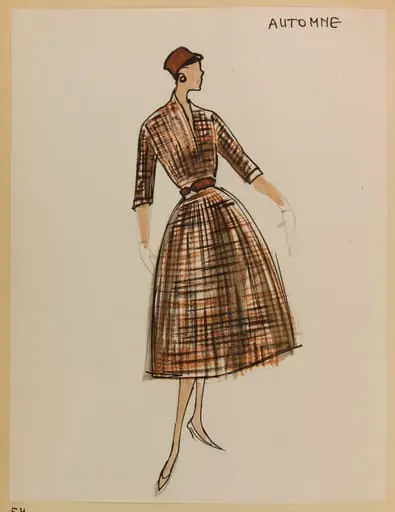
It depicts a woman in a tailored ensemble, rendered with fluid, unpolished lines that suggest a spontaneous design sketch.
Created around 1956, Glaïeul is a pencil drawing attributed to the French fashion house Carven. It depicts a woman in a tailored ensemble, rendered with fluid, unpolished lines that suggest a spontaneous design sketch. The work is part of the Museum of Ethnography’s collection, where it functions as a record of mid-century fashion documentation rather than a finished illustration. Its informal quality implies it was made during the design process, capturing an idea in motion.
Subject & Meaning
The figure represents a contemporary woman of the 1950s, dressed in a short, buttoned jacket and a subtly flared skirt, both marked by a faint checkered texture. Her posture—casual, one hand on the hip—conveys ease and modernity. The title, Glaïeul (French for gladiolus), may reference the dress’s name, possibly evoking the flower’s verticality and structured elegance. The drawing does not illustrate a specific person but rather embodies an idealized, wearable silhouette of its era.
Technique & Style
Executed in pencil, the drawing employs loose, confident strokes and minimal shading to suggest form and fabric. The lines are unrefined, lacking the precision of commercial renderings, which points to its function as a working sketch. Subtle hatching implies texture without detail, and the absence of background focuses attention on the garment’s cut and silhouette. The signature 'Glaïeul' in the corner confirms its identity as a labeled design concept, not a finished artwork.
History & Provenance
The drawing originated in Carven’s design studio during the mid-1950s, a period when the house was known for refined, wearable femininity. It entered the Museum of Ethnography’s collection as part of a broader effort to preserve fashion as cultural artifact. Its preservation reflects a shift in institutional interest toward everyday design practices, valuing the process behind fashion as much as its final product.
Context
In postwar France, fashion design emphasized structure and elegance, balancing utility with aesthetic restraint. Carven’s work stood apart for its quiet sophistication, avoiding overt ornamentation. This sketch aligns with the house’s philosophy: clothing as a second skin, tailored for movement and daily life. The drawing’s immediacy mirrors the pace of seasonal collections, where ideas were rapidly tested and refined before production.
Legacy
Glaïeul survives as a quiet testament to the ephemeral nature of fashion design. Unlike haute couture pieces preserved in museums, such sketches reveal the unseen labor behind clothing. Its inclusion in an ethnographic collection signals a broader recognition of fashion as cultural practice. Today, it offers insight into how mid-century designers translated ideas into wearable form, prioritizing function and subtle detail over spectacle.
Artist & collection
Artist
These delicate ink-on-paper drawings capture the quiet poetry of everyday things: pinecones, reeds, apples.
Museum
Palais Galliera - Musée de la Mode de la Ville de Paris
Continue through works from the same source collection.