Artwork
Automne
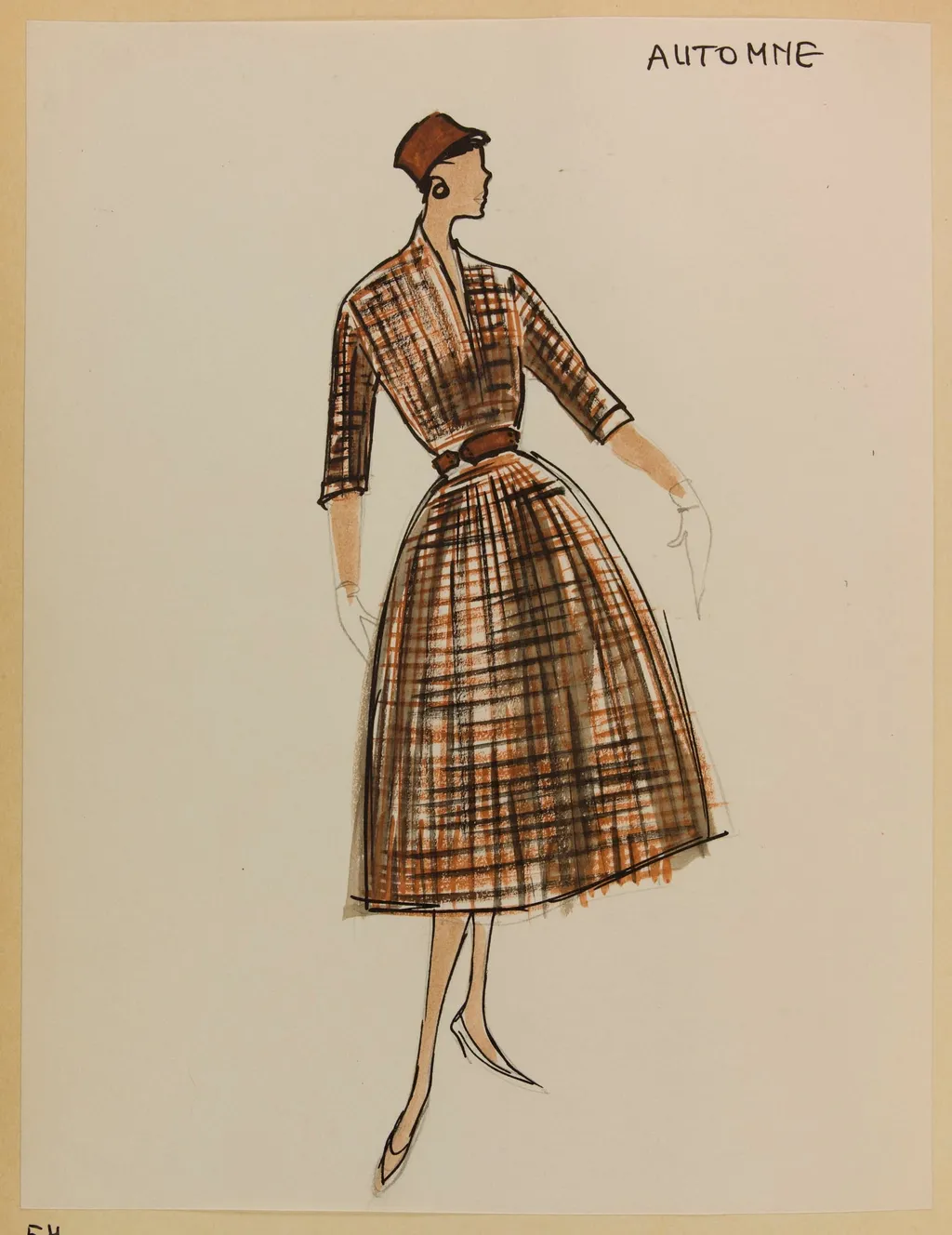
Automne is a drawing by Carven. It dates from 1955 and is held in the collection of the Palais Galliera - Musée de la Mode de la Ville de Paris.
About this work
Overview
Its loose lines and minimal shading suggest it was made as a working study rather than a polished presentation.
Created around 1955, Automne is a fashion sketch by the French designer Carven. It resides in the collection of the Museum of Ethnography. The drawing captures a woman’s silhouette in a casual, fluid style, emphasizing form over fine detail. Its loose lines and minimal shading suggest it was made as a working study rather than a polished presentation. The French title, meaning 'autumn,' links the design to seasonal fashion cycles of the era.
Subject & Meaning
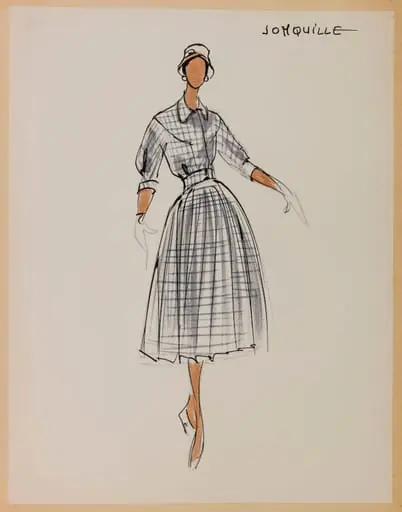
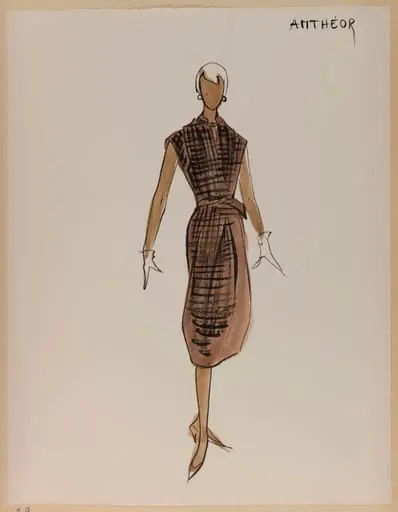
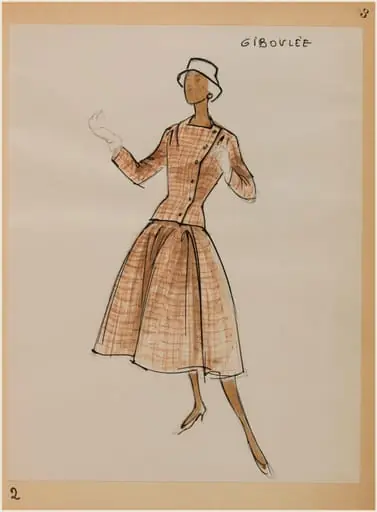
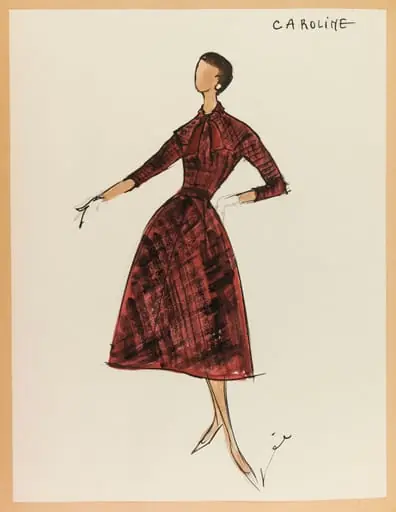
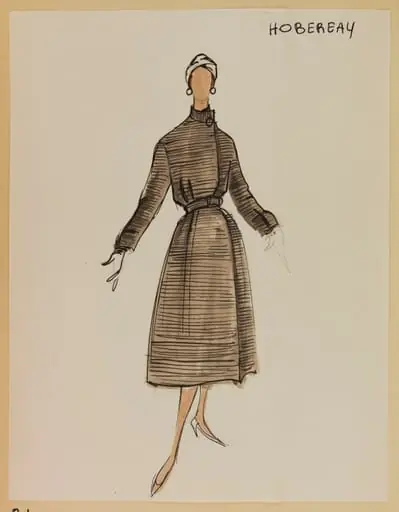
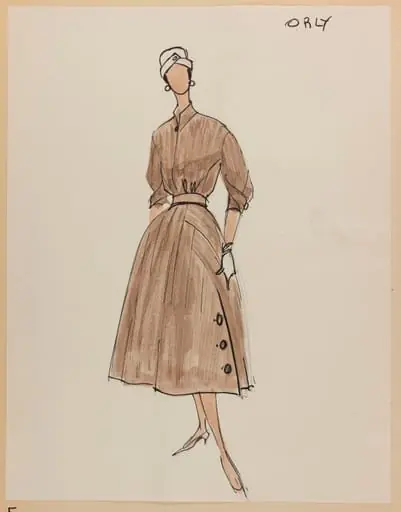
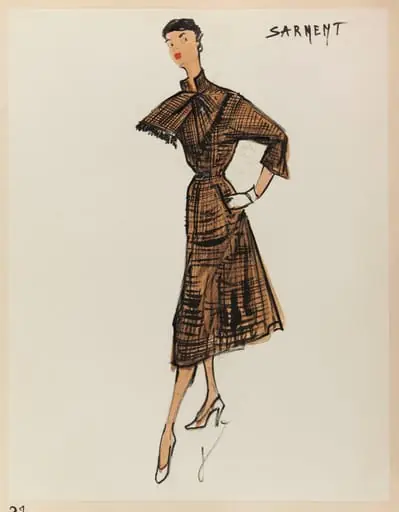
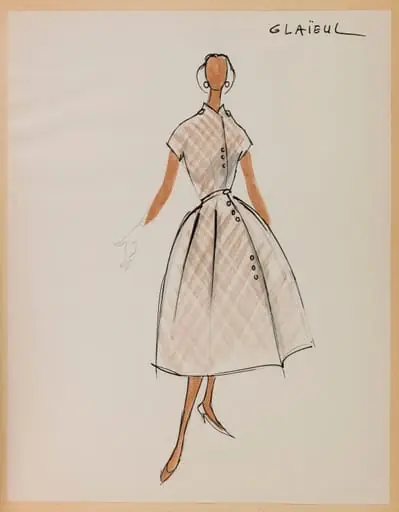
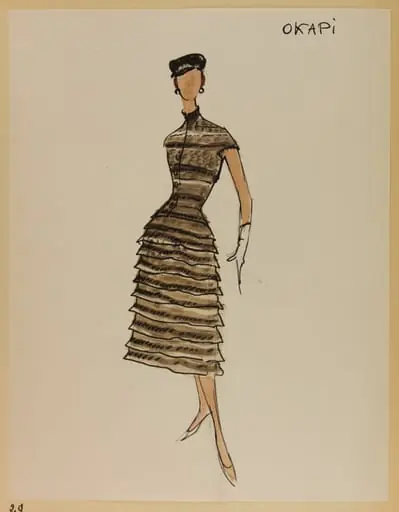
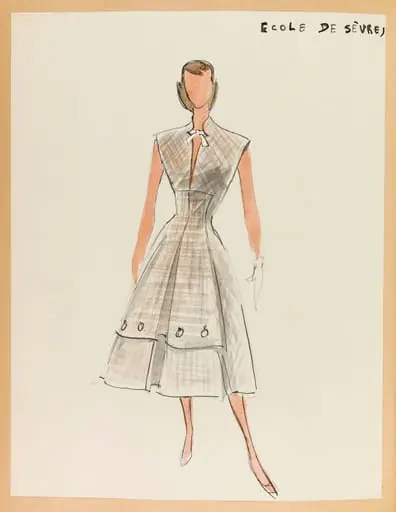
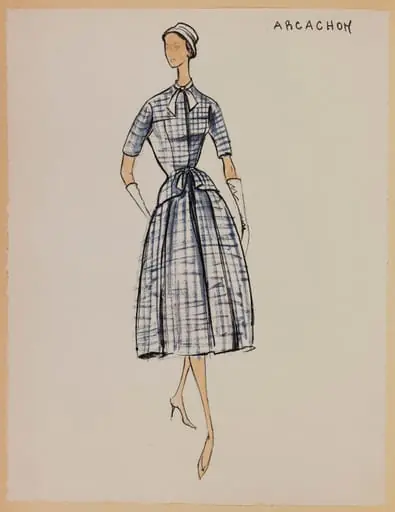
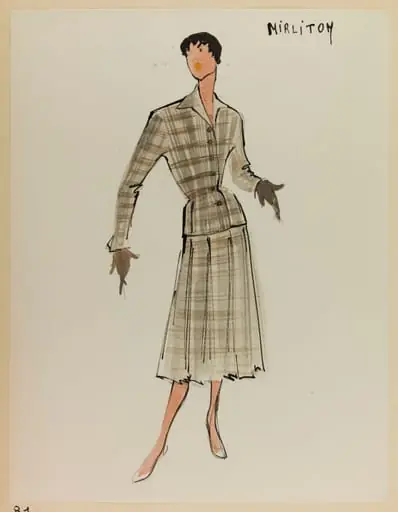
The figure depicts a woman dressed in a tailored short jacket and a flared skirt, both patterned in muted browns and tans. The ensemble reflects mid-century French sensibilities—practical yet refined. A small hat completes the look, suggesting a day out in autumn. The relaxed posture and unadorned features convey ease, aligning with postwar ideals of understated elegance. The seasonal title implies the design was intended for fall wear, tying fashion to natural rhythms.
Technique & Style
Executed in a rapid, sketch-like manner, the drawing uses minimal ink lines to define shape and movement. Details such as fabric texture or facial features are omitted, prioritizing silhouette and proportion. The checkered pattern is suggested through intersecting strokes rather than precise rendering. This approach reflects the functional nature of fashion sketches—meant to communicate ideas quickly to tailors or clients, not to serve as finished art.
History & Provenance
The sketch entered the Museum of Ethnography’s collection as part of a broader archive of mid-20th-century fashion materials. Its origin traces to Carven’s design studio in Paris, where such sketches were used to develop seasonal collections. While no specific commission or client is documented, its preservation suggests it was considered representative of the house’s aesthetic during the 1950s, a period when Carven was gaining recognition for wearable, feminine designs.
Context
In the 1950s, Paris remained a center of fashion innovation, with designers balancing haute couture traditions and emerging ready-to-wear trends. Carven’s work stood out for its simplicity and attention to the female form without excessive ornamentation. Automne reflects this ethos, aligning with the era’s shift toward practical, seasonally responsive clothing. The sketch’s informal style mirrors the growing use of preliminary drawings in design workflows across European ateliers.
Legacy
Though not widely published or exhibited beyond institutional archives, Automne contributes to the understanding of Carven’s design process and the broader culture of fashion sketching in postwar France. It illustrates how designers translated seasonal themes into wearable forms with restraint. As a preserved artifact, it offers insight into the quiet, iterative nature of fashion creation—far removed from the spectacle of runway shows but essential to its foundation.
Artist & collection
Artist
These delicate ink-on-paper drawings capture the quiet poetry of everyday things: pinecones, reeds, apples.
Museum
Palais Galliera - Musée de la Mode de la Ville de Paris
Continue through works from the same source collection.