Artwork
Glycine
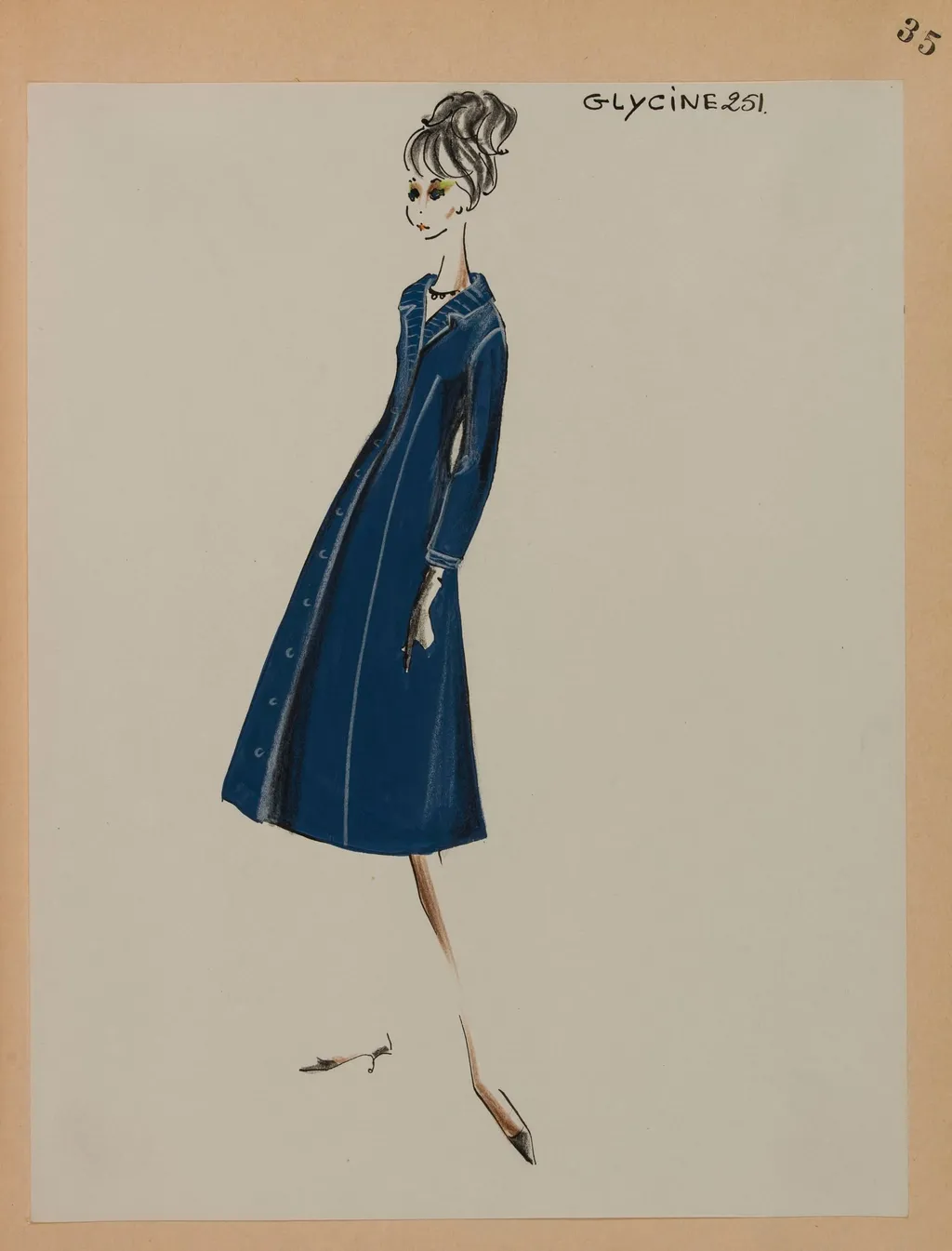
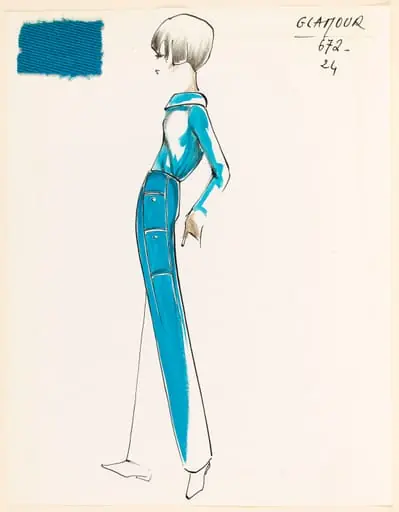
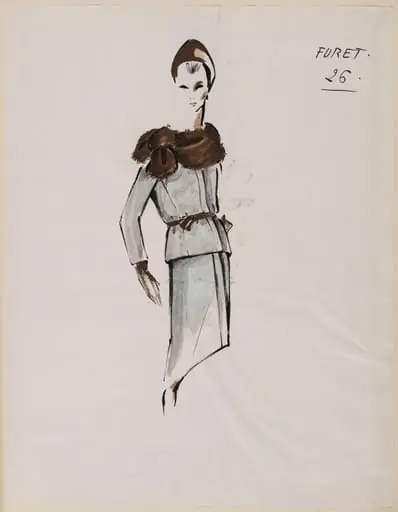
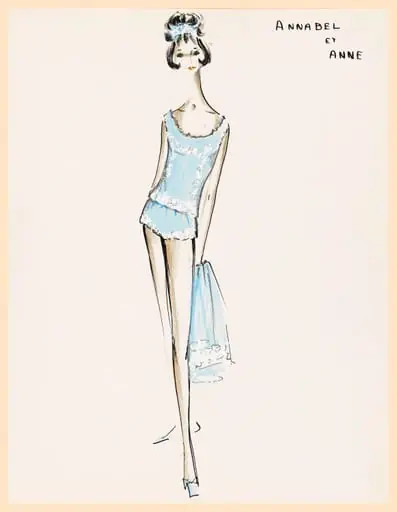
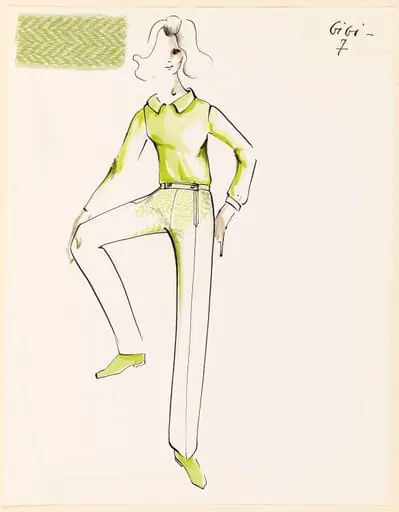
Glycine is a drawing by Carven. It dates from 1963 and is held in the collection of the Palais Galliera - Musée de la Mode de la Ville de Paris.
About this work
Overview
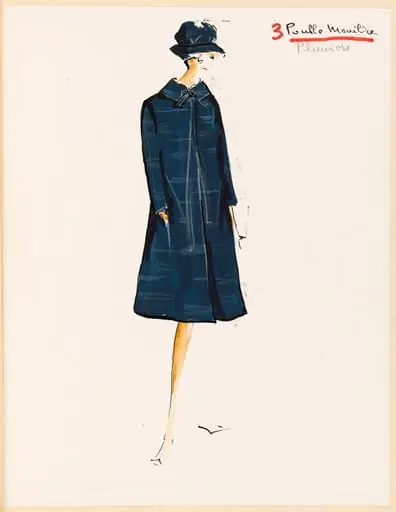
The work captures a woman in a tailored dark blue coat, rendered with swift, confident strokes and minimal color.
Glycine, dated around 1963, is a pencil and ink drawing by the French fashion designer Carven. It resides in the collection of the Museum of Ethnography. The work captures a woman in a tailored dark blue coat, rendered with swift, confident strokes and minimal color. The piece functions as a fashion study, documenting a specific garment and its wearer with attention to silhouette and detail, rather than as a finished portrait.
Subject & Meaning
The figure is depicted in a poised, everyday stance—hand in pocket, clutching a small purse—suggesting a moment of quiet composure. The coat, named 'Glycine' in the corner, may refer to the design or the model, though neither is confirmed. The absence of context or narrative implies the drawing’s purpose was to record fashion rather than convey story, reflecting Carven’s focus on wearable elegance and understated sophistication.
Technique & Style
Executed with rapid, linear precision, the drawing employs flat washes of color and unmodulated contours. Shading is avoided; form is defined by outline and silhouette. The loose yet structured rendering of the coat contrasts with the tightly drawn hair and jewelry, emphasizing texture and cut over realism. This approach aligns with fashion illustration traditions that prioritize clarity and stylistic economy over detailed realism.
History & Provenance
The drawing entered the Museum of Ethnography’s collection as part of a broader acquisition of mid-20th-century fashion materials. Its origin traces to Carven’s atelier, where such sketches served as design records or client presentations. No documentation confirms the identity of the model or the coat’s commercial production, but its preservation suggests it was considered representative of the designer’s aesthetic during this period.
Context
Created in the early 1960s, Glycine reflects a shift in postwar fashion toward cleaner lines and restrained ornamentation. Carven, known for her tailored yet feminine designs, worked within a Parisian milieu that valued craftsmanship over spectacle. This sketch aligns with contemporaneous illustrations by designers like Balenciaga and Givenchy, who prioritized structure and subtlety in their visual documentation.
Legacy
Glycine remains a quiet example of fashion’s documentary function—capturing a garment’s form without theatricality. It contributes to scholarly understanding of how designers visually communicated their work before digital tools. While not widely exhibited, its presence in an ethnographic museum underscores its value as a cultural artifact of everyday style and design practice in mid-century France.
Artist & collection
Artist
These delicate ink-on-paper drawings capture the quiet poetry of everyday things: pinecones, reeds, apples.
Museum
Palais Galliera - Musée de la Mode de la Ville de Paris
Continue through works from the same source collection.