Artwork
Poule mouillée - Pluviose
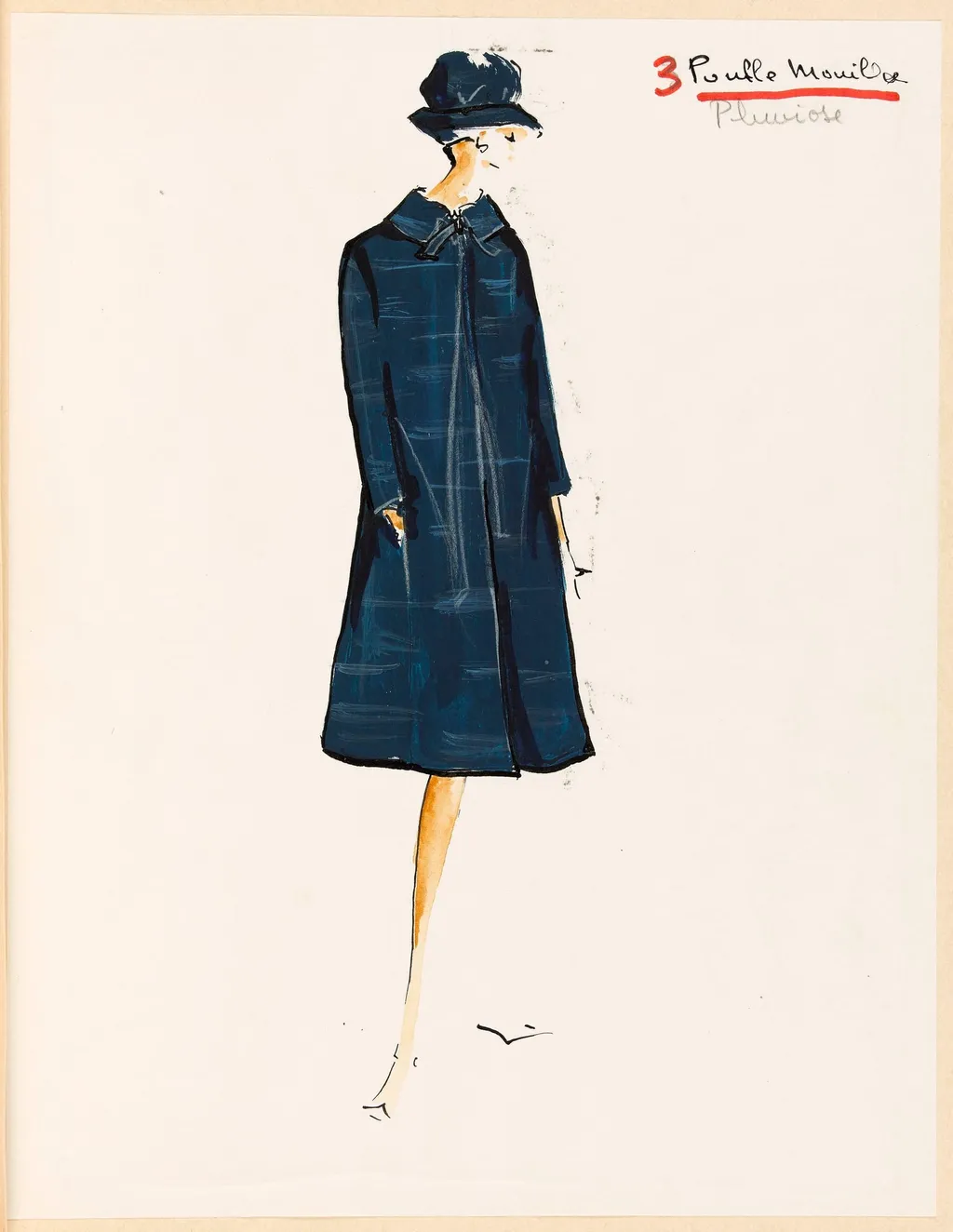
Poule mouillée - Pluviose is a drawing by Marie-Louise Carven. It dates from 1967 and is held in the collection of the Palais Galliera - Musée de la Mode de la Ville de Paris.
About this work
Overview
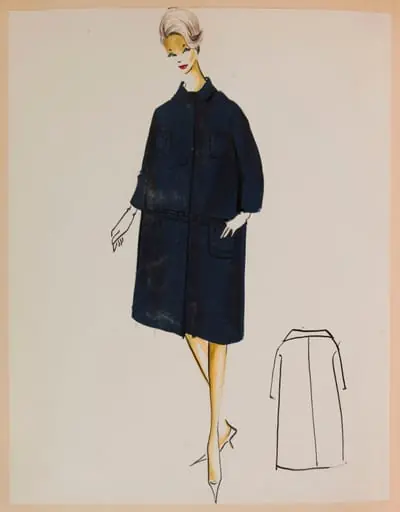
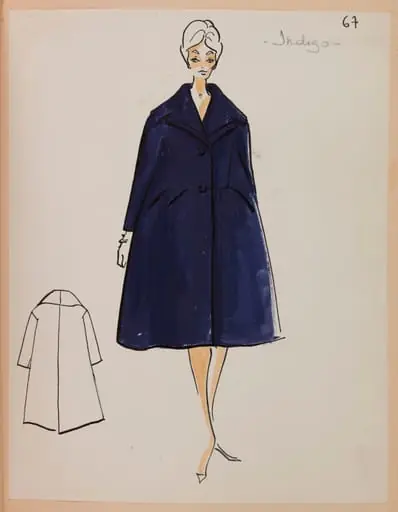
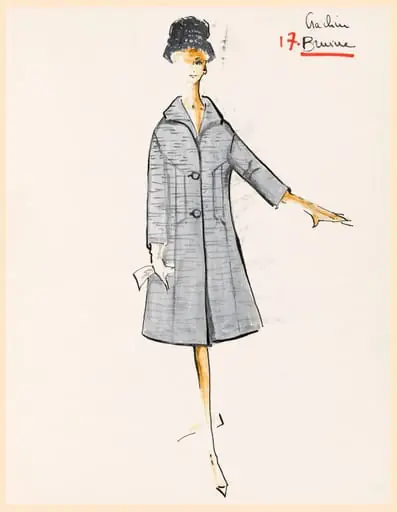
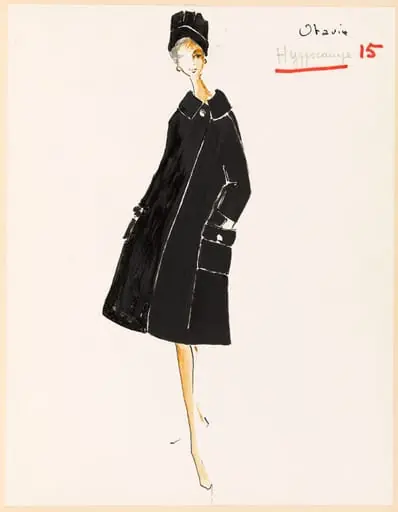
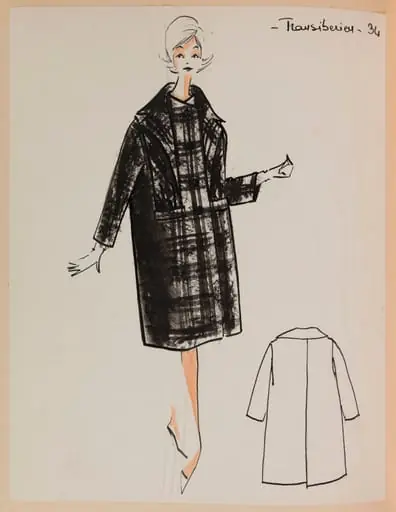
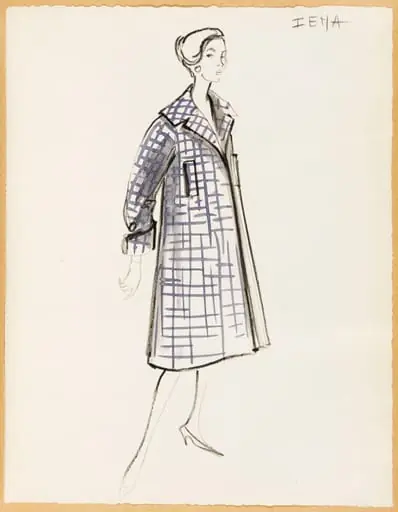
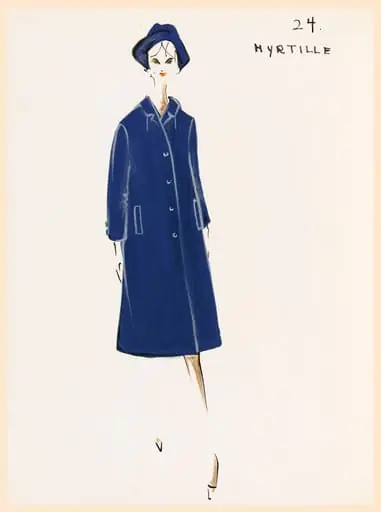
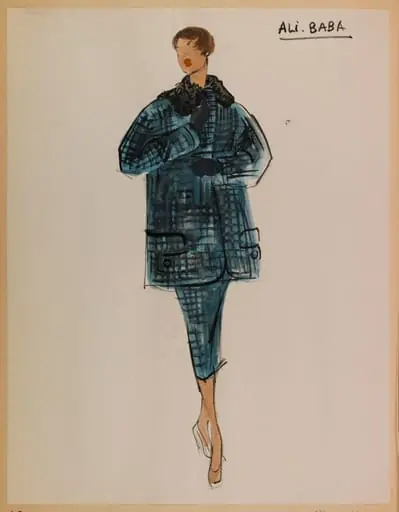
Poule mouillée - Pluviose, created circa 1967 by French fashion designer Marie-Louise Carven, is a drawing depicting a woman in a long, dark coat and wide-brimmed hat. The piece is characterized by bold, confident lines and a mostly blank background, conveying a sense of dynamic movement.
Subject & Meaning
The subject is a woman dressed in a belted, structured coat, suggesting a design for petite women, a demographic Carven's fashion house often catered to. The title's meaning is ambiguous, with 'Poule mouillée' (wet hen) and 'Pluviose' (a month in the French Revolutionary calendar, meaning rainy) possibly implying a rainy day outfit or a poetic interpretation of the subject's state.
Technique & Style
Executed with bold and confident lines, the drawing has a quick, lively feel, akin to a sketch capturing a moment in time. The sparse background emphasizes the subject and the clothing design.
History & Provenance
Created by Marie-Louise Carven, founder of the Carven fashion house (established in 1945), this work is part of the Museum of Ethnography's collection. Carven was a pioneer among Parisian couturiers in introducing prêt-à-porter lines.
Context
Reflecting Carven's focus on lightweight fabrics and designs for petite women, this piece situates itself within the broader context of 1960s French fashion, where prêt-à-porter was gaining prominence.
Legacy
As part of Carven's oeuvre, Poule mouillée - Pluviose contributes to the legacy of a designer who bridged haute couture with accessible, modern fashion, influencing the development of French prêt-à-porter.
Artist & collection
Artist
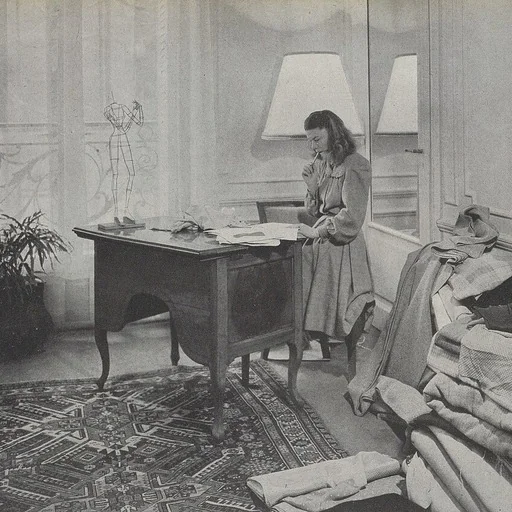
Marie-Louise Carven (31 August 1909 – 8 June 2015), born Carmen de Tommaso, was a French fashion designer who founded the house of Carven in 1945.
Museum
Palais Galliera - Musée de la Mode de la Ville de Paris
Continue through works from the same source collection.
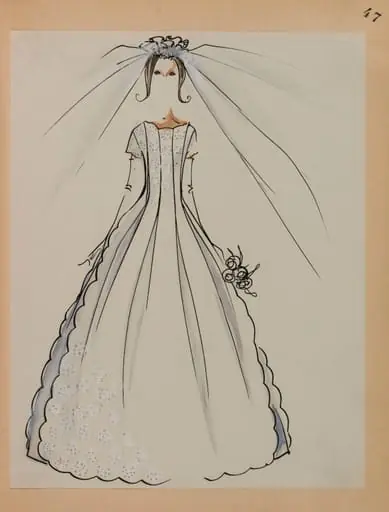 Robe de mariée festonnée et son voile
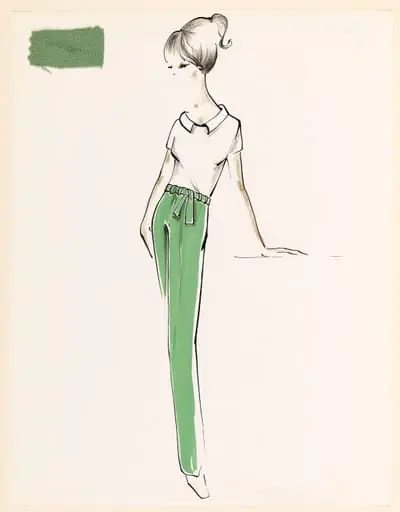 Haut blanc à manches courtes et pantalon vert à ceinture nouée
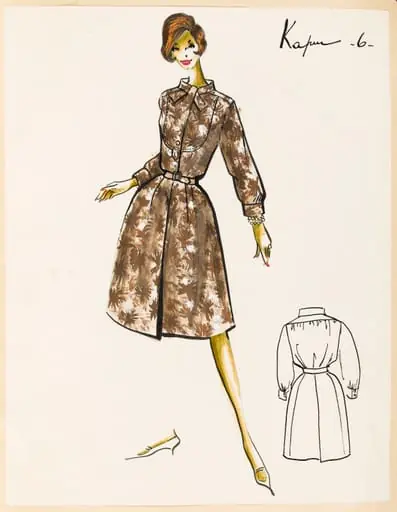 Kapur
Kapur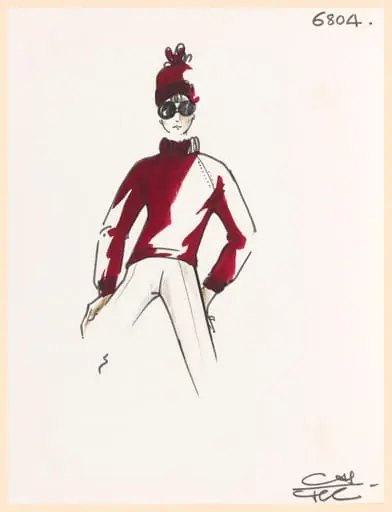 Pull-over à manches longues pourpre, bonnet assorti, pantalon et lunettes de soleil
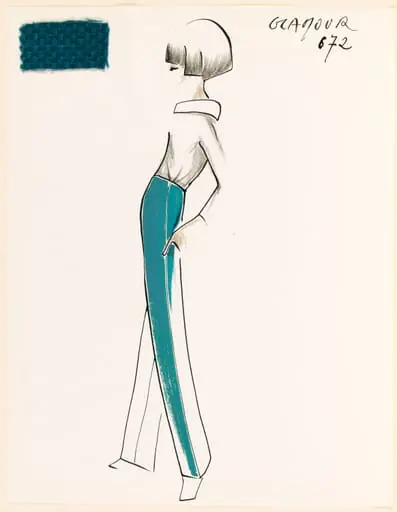 GLAMOUR
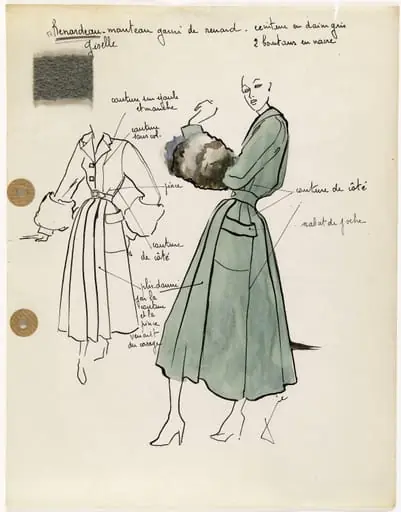 'Renardeau'
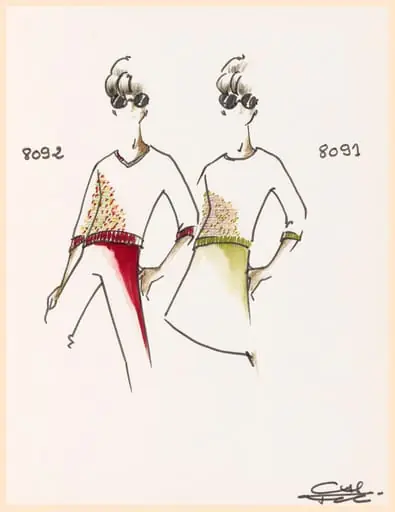 Pull-over à manches trois quarts et à encolure V à motifs multicolores, pantalon cerise et lunettes de soleil
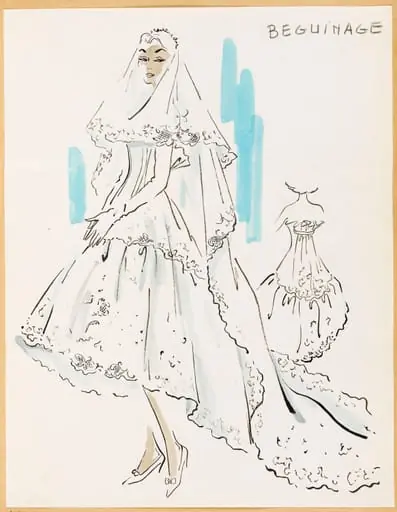 Béguinage