Artwork
Goéland
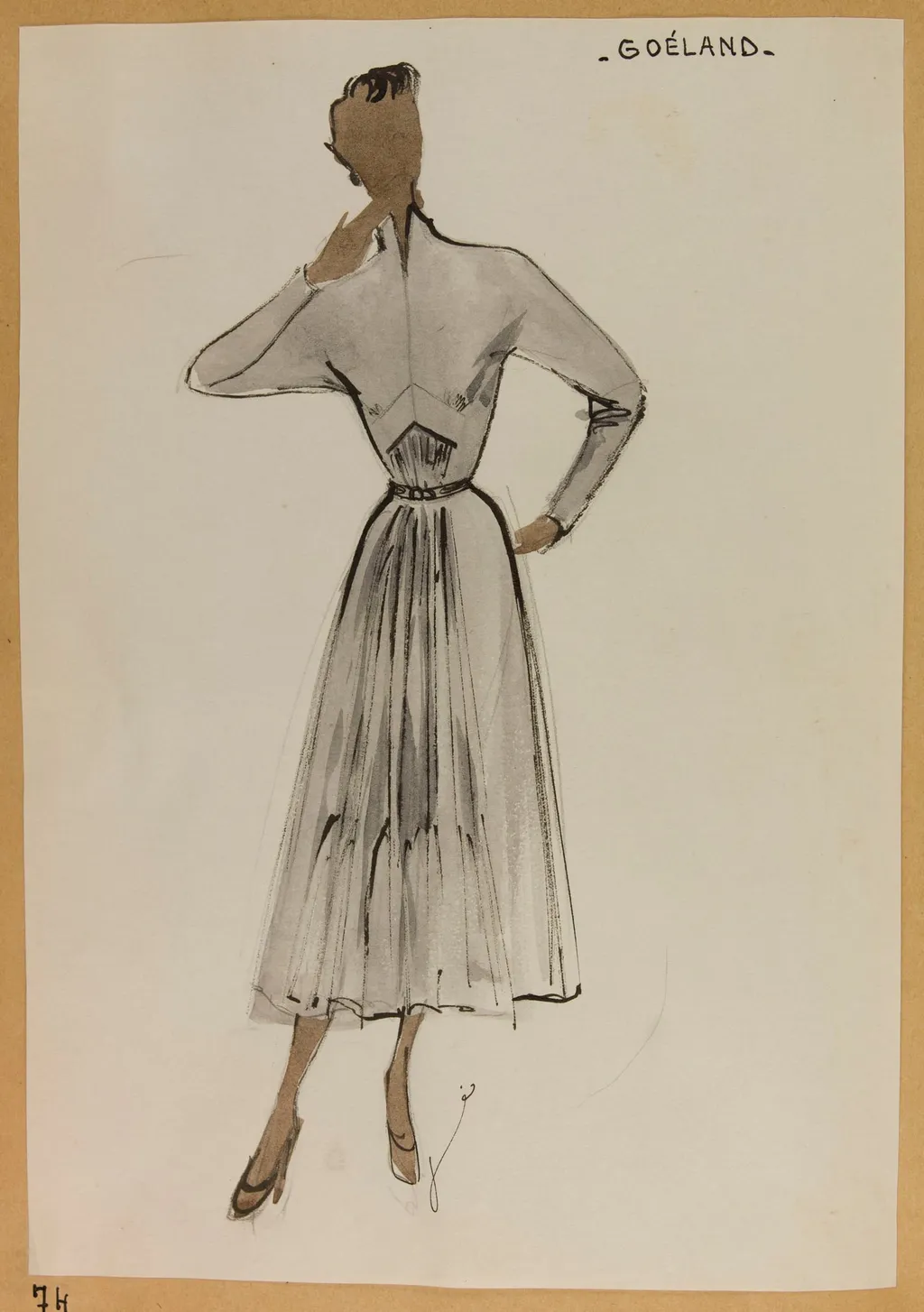
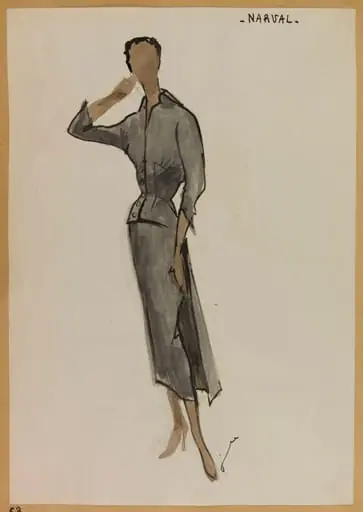
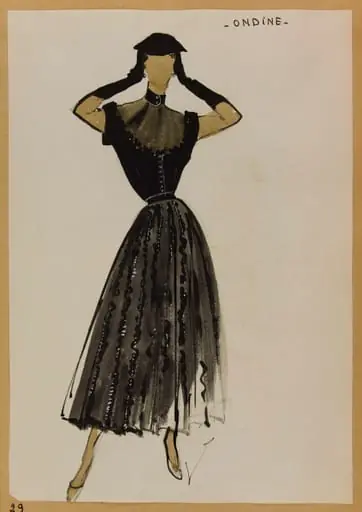
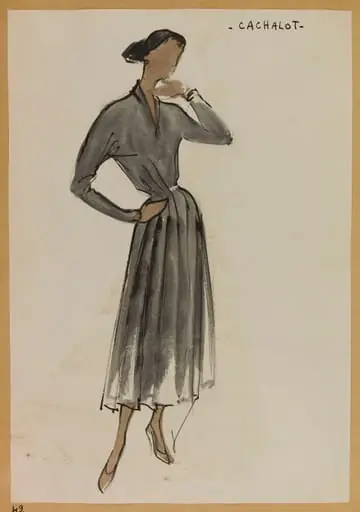
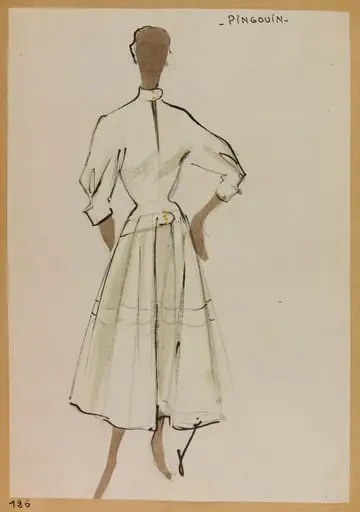
Goéland is a drawing by Carven. It dates from 1952 and is held in the collection of the Palais Galliera - Musée de la Mode de la Ville de Paris.
About this work
Overview
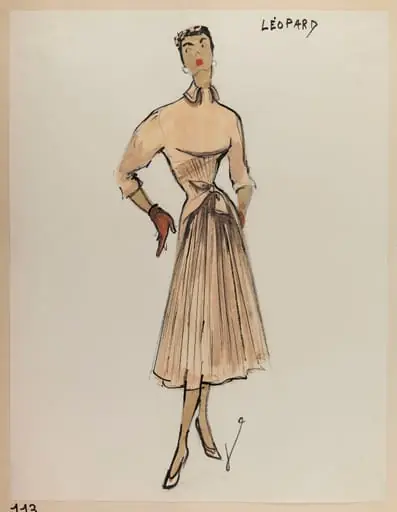
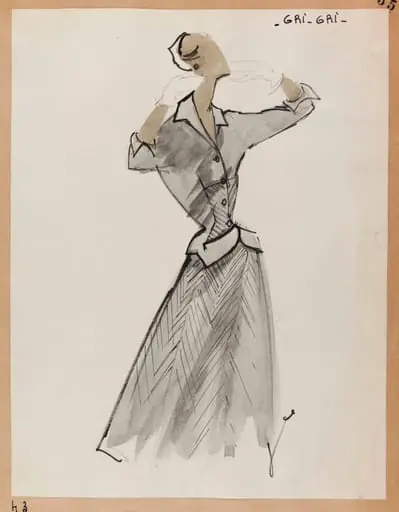
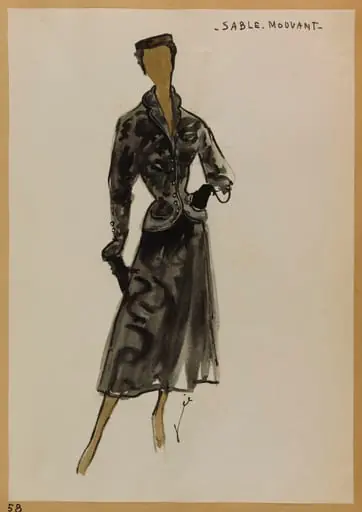
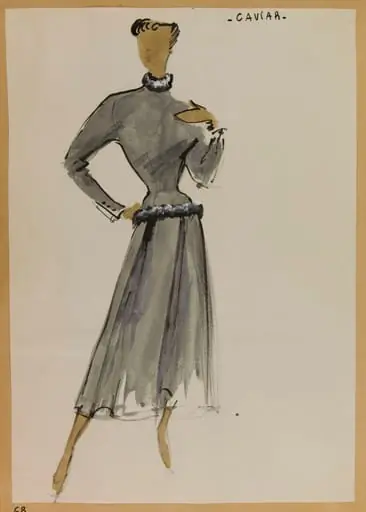
Goéland is a 1952 ink drawing by French designer Carven, held in the collection of the Museum of Ethnography. Executed with swift, minimal strokes, it captures a female figure from behind, emphasizing silhouette over detail. The title, written at the top, is the French word for 'gull,' suggesting a lightness or movement implied by the flowing lines of the garment.
Subject & Meaning
The figure is anonymous, rendered without facial features or identifying traits, focusing instead on posture and dress. One hand rests on the hip, a gesture that conveys casual poise. The title, evoking a seabird in flight, may allude to the dress’s motion and airiness, aligning the wearer’s movement with natural grace rather than static form.
Technique & Style
Carven used loose, unrefined ink lines to suggest form rather than define it. The bodice is indicated with tight contours, while the skirt flows outward in open, gestural strokes. Details like buttons or seams are omitted; the emphasis lies in rhythm and volume. The sketch’s unfinished quality reflects a working method, prioritizing spatial intuition over polish.
History & Provenance
Created in 1952 during Carven’s active years in Parisian fashion, the drawing entered the Museum of Ethnography’s collection as part of a broader effort to document fashion as cultural expression. Its preservation there underscores its value as a record of mid-century design thinking, not merely as a finished garment.
Context
In postwar France, fashion design increasingly turned to rapid sketching as a tool for conceptual development. Carven’s approach aligned with contemporaries who valued spontaneity and fluidity in design. This drawing reflects a moment when fashion illustration bridged artistic expression and practical tailoring, capturing movement before construction.
Legacy
Goéland remains a quiet example of how fashion sketches functioned as both creative records and aesthetic objects. Its presence in an ethnographic museum highlights the shift toward viewing clothing design as part of cultural heritage. The work invites reflection on the transient nature of fashion’s early stages—ideas made visible before they became fabric.
Artist & collection
Artist
These delicate ink-on-paper drawings capture the quiet poetry of everyday things: pinecones, reeds, apples.
Museum
Palais Galliera - Musée de la Mode de la Ville de Paris
Continue through works from the same source collection.