Artwork
Caviar
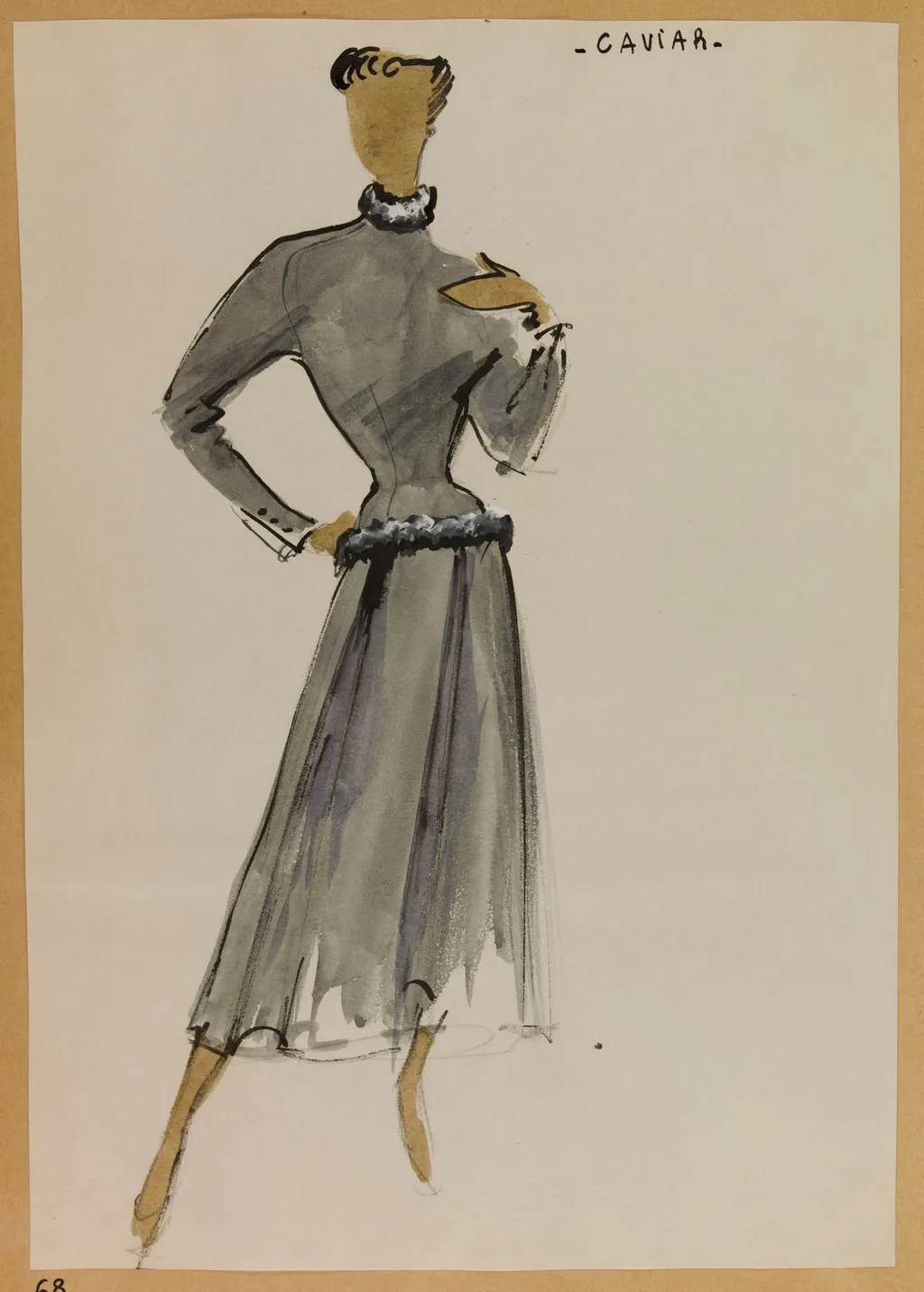
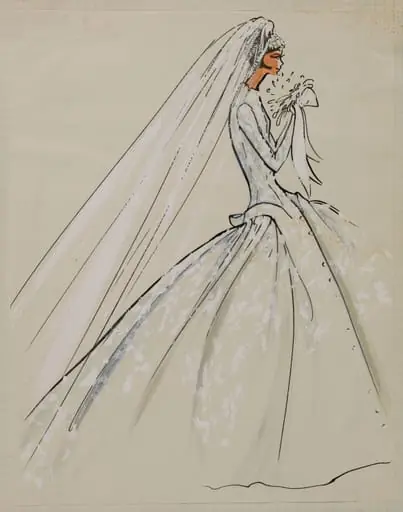
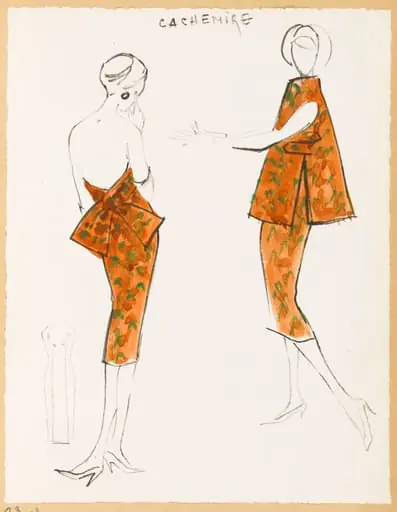
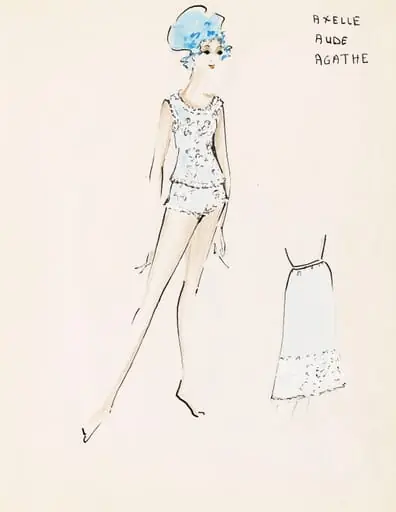
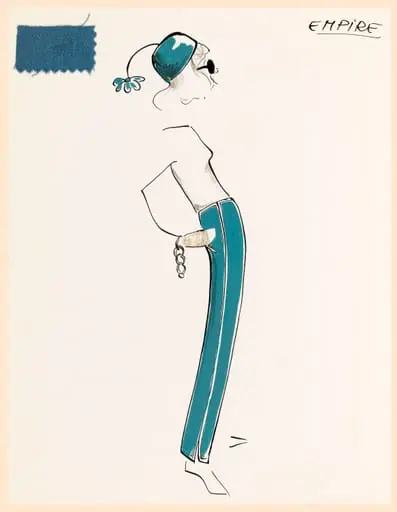
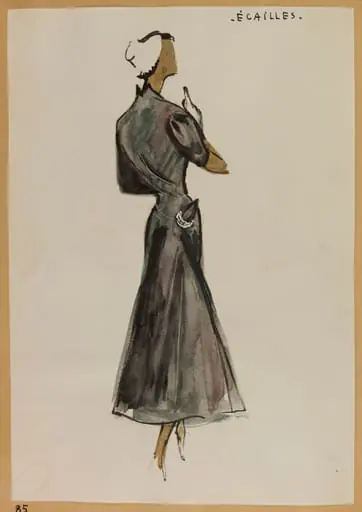
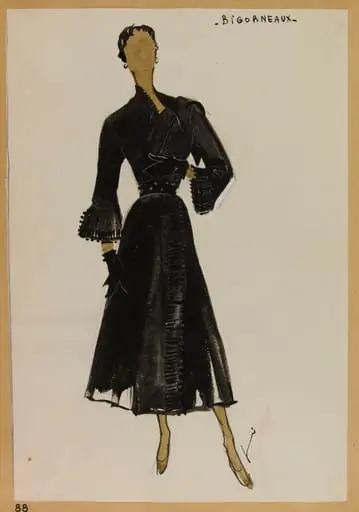
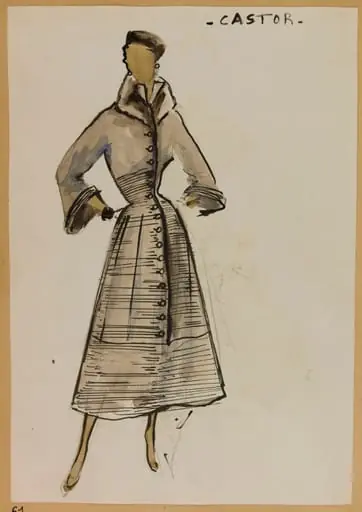
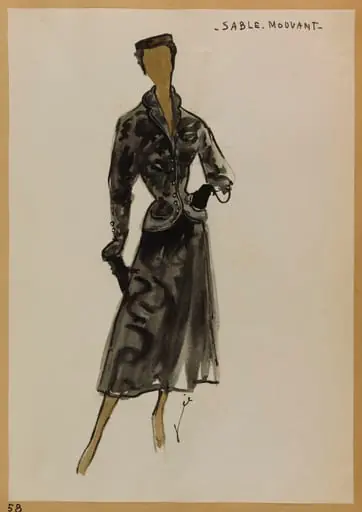
Caviar is a drawing by Carven. It dates from 1952 and is held in the collection of the Palais Galliera - Musée de la Mode de la Ville de Paris.
About this work
Overview
The title, scrawled in the corner, offers no explicit explanation but aligns with the artist’s tendency toward evocative, non-literal naming.
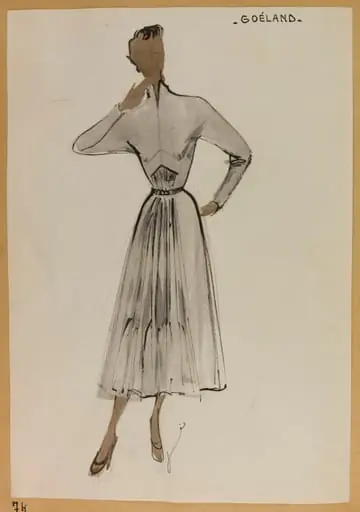
Caviar is a 1952 ink sketch by French designer Carven, held in the collection of the Museum of Ethnography. Executed with swift, assured lines, the drawing captures a female figure in a flowing garment, suggesting movement and ease. The title, scrawled in the corner, offers no explicit explanation but aligns with the artist’s tendency toward evocative, non-literal naming. The work functions as a study in form and gesture rather than a finished illustration.
Subject & Meaning
The figure is depicted in a relaxed, natural stance—one hand on the hip, the other hanging loosely—conveying quiet confidence. Her attire, with a high collar, loose sleeves, and a wide belt, reflects mid-century French fashion sensibilities. The translucent quality of the skirt implies lightness and fluidity, possibly referencing fabric drape in wearable design. The title 'Caviar' may allude to luxury or texture, though no direct link to the garment is established.
Technique & Style
Rendered in bold, economical ink strokes, the drawing emphasizes rhythm over detail. Contours are confident and uncorrected, suggesting rapid execution, likely from life or memory. The artist avoids shading, relying instead on line weight and negative space to suggest volume and fabric flow. The simplicity of the technique underscores a focus on silhouette and posture, characteristic of fashion sketching at the time.
History & Provenance
Created in 1952, the sketch entered the Museum of Ethnography’s collection as part of a broader acquisition of fashion-related materials from Carven’s studio. It was not exhibited publicly until the 1980s, when the museum began contextualizing fashion design within cultural anthropology. Its preservation reflects an institutional interest in documenting design processes, not just finished garments.
Context
In the early 1950s, Parisian fashion houses emphasized tailored elegance, yet Carven’s sketches often captured informal, lived-in moments. This drawing aligns with a shift toward more naturalistic representation in fashion illustration, moving away from rigid poses. The work reflects the designer’s personal aesthetic—refined but unpretentious—and her interest in how clothing interacts with the body in motion.
Legacy
Caviar remains a quiet example of Carven’s sketchbook practice, illustrating her ability to distill fashion into expressive line. While not widely reproduced, it contributes to scholarly understanding of how designers translated textile and silhouette ideas into visual form. The sketch is now referenced in studies of postwar French fashion drawing as an example of intuitive, non-idealized representation.
Artist & collection
Artist
These delicate ink-on-paper drawings capture the quiet poetry of everyday things: pinecones, reeds, apples.
Museum
Palais Galliera - Musée de la Mode de la Ville de Paris
Continue through works from the same source collection.