Artwork
Goémon
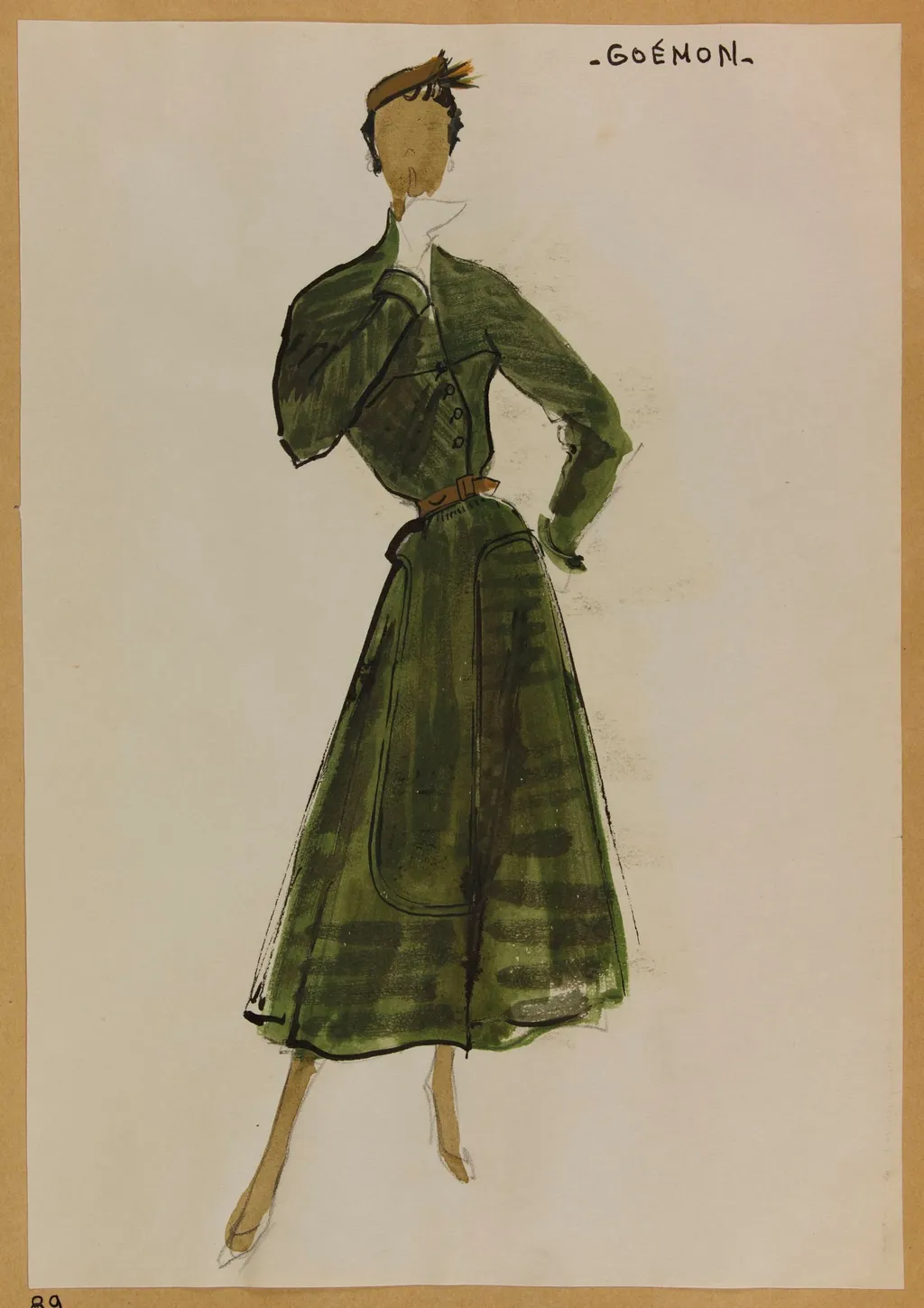
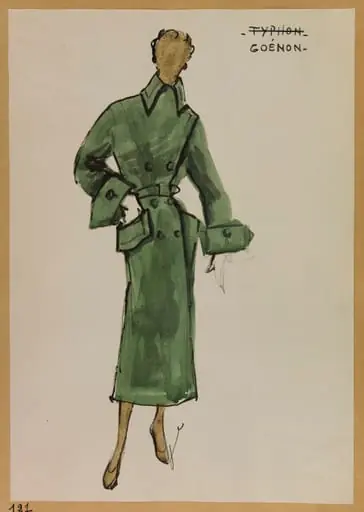
Goémon is a drawing by Carven. It dates from 1952 and is held in the collection of the Palais Galliera - Musée de la Mode de la Ville de Paris.
About this work
Overview
The work reflects Carven’s dual role as a designer and visual artist, capturing fashion not as a garment but as an embodied presence.
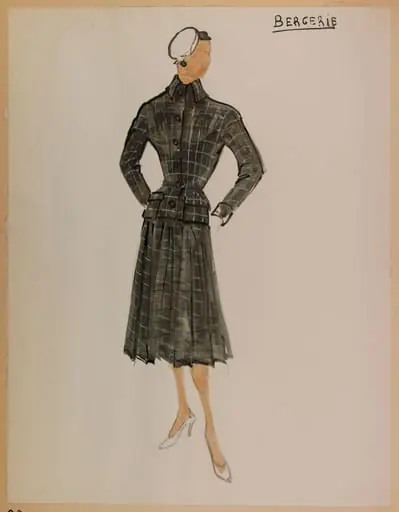
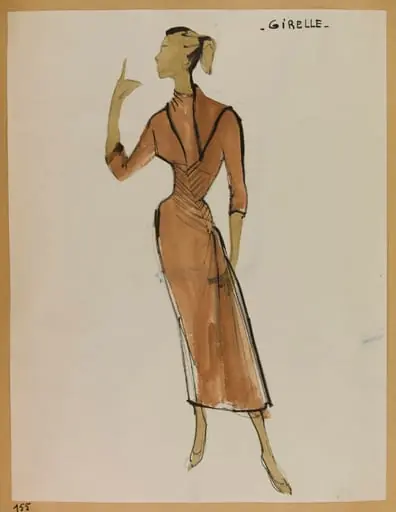
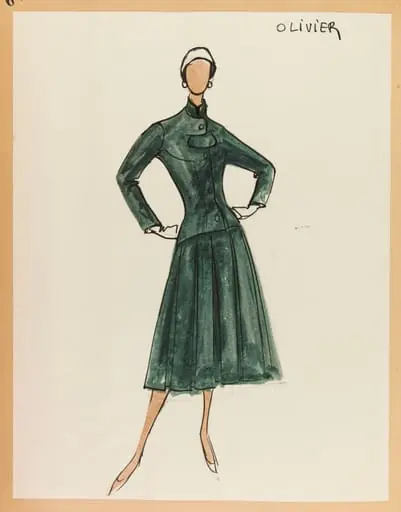
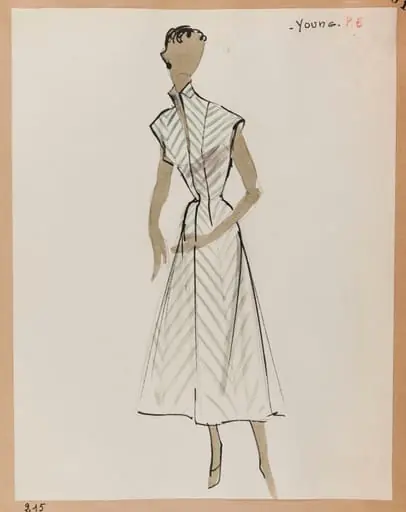
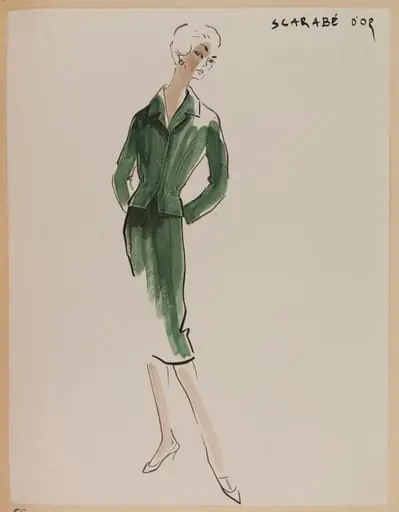
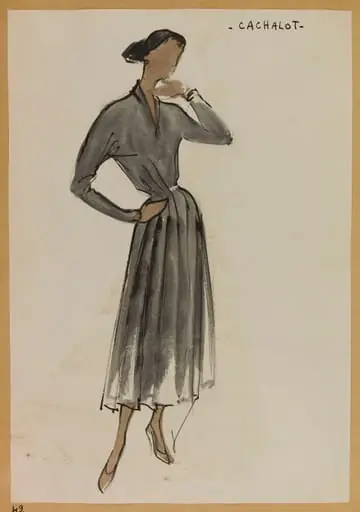
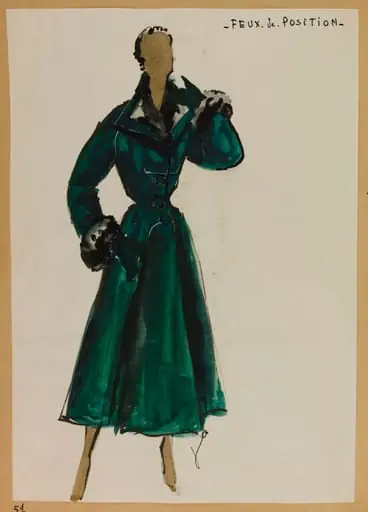
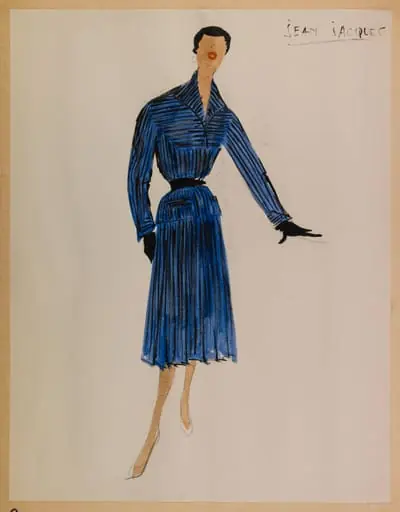
Created in 1952 by the French fashion designer Carven, this drawing is part of the Museum of Ethnography’s collection. It presents a stylized portrait of a woman in mid-century attire, executed with fluid, gestural lines. The work reflects Carven’s dual role as a designer and visual artist, capturing fashion not as a garment but as an embodied presence. Its informal technique distinguishes it from commercial fashion illustrations of the period.
Subject & Meaning
The figure is depicted in a poised, self-assured stance, one hand resting on the hip, suggesting quiet confidence. Her attire—a high-necked green dress with long sleeves and a brown belt and hat—aligns with postwar French femininity, blending modesty with refined elegance. The drawing does not aim for realism but evokes an idealized sense of grace, rooted in the aesthetic values of 1950s Parisian style rather than a specific individual.
Technique & Style
Rendered in ink or pencil, the drawing employs loose, confident strokes and minimal shading to suggest form and texture. The lines are expressive rather than precise, emphasizing movement and silhouette over detail. This approach reflects a deliberate departure from rigid fashion drafting, favoring a more personal, almost sketchbook-like immediacy that conveys vitality and rhythm in the figure’s posture and drapery.
History & Provenance
The work entered the Museum of Ethnography’s collection as part of a broader acquisition of materials related to 20th-century fashion design. While its exact provenance before museum acquisition is not fully documented, it is understood to originate from Carven’s personal archive, likely created as a study or presentation piece during her active years as a couturier in the early 1950s.
Context
In the early 1950s, Paris remained the epicenter of haute couture, and designers like Carven often produced hand-drawn illustrations to communicate their vision. This drawing aligns with a trend among fashion houses to blend artistic expression with commercial design, positioning clothing as an extension of personal and cultural identity. It reflects a moment when fashion was increasingly seen as an art form worthy of museum preservation.
Legacy
Though Carven is primarily remembered for her clothing, this drawing contributes to a growing recognition of designers as visual artists. Its inclusion in an ethnographic museum underscores how fashion artifacts are now studied as cultural documents. The work remains a quiet testament to the intimate, hand-drawn processes that underpinned mid-century fashion before mass production dominated the industry.
Artist & collection
Artist
These delicate ink-on-paper drawings capture the quiet poetry of everyday things: pinecones, reeds, apples.
Museum
Palais Galliera - Musée de la Mode de la Ville de Paris
Continue through works from the same source collection.