Artwork
Young
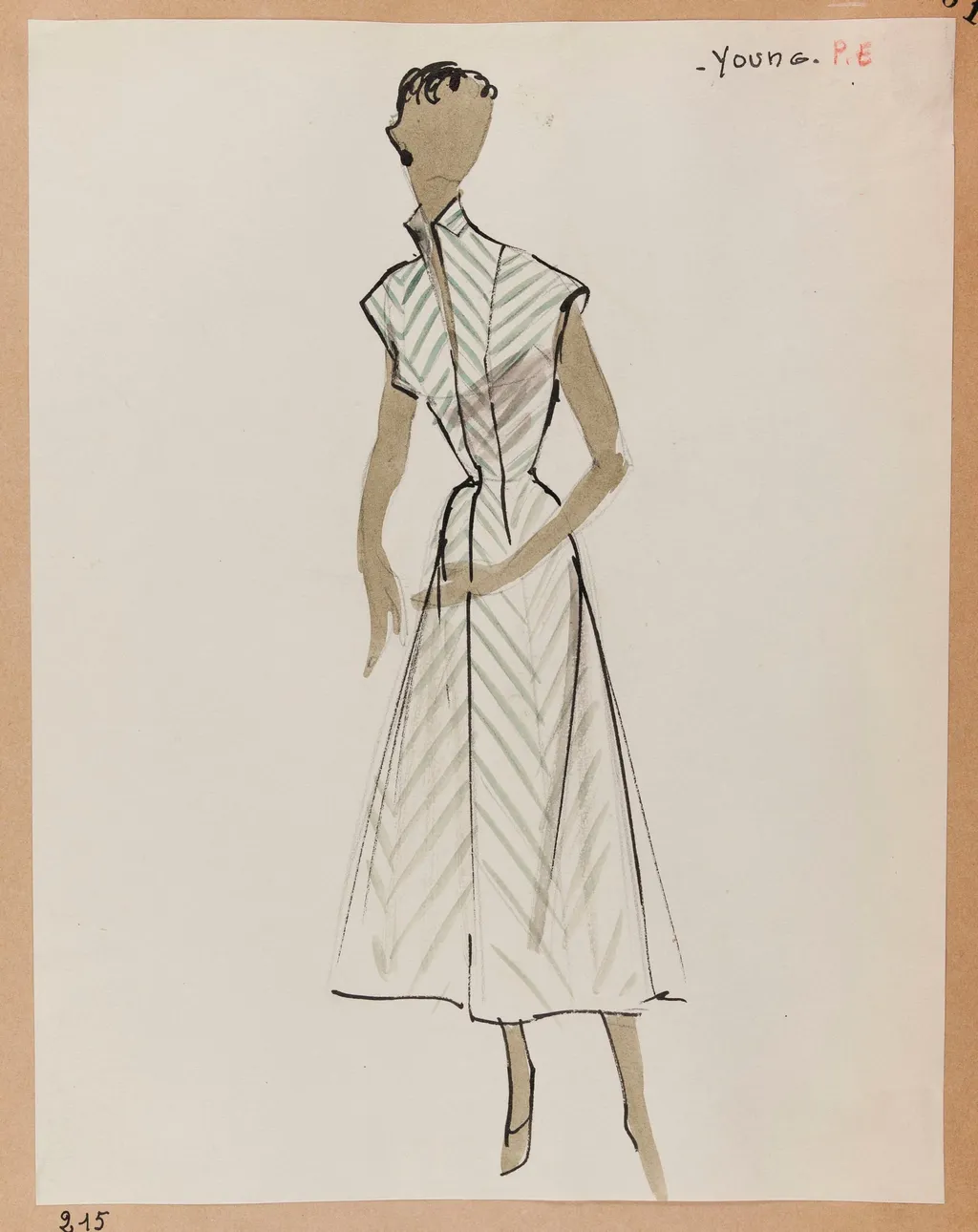
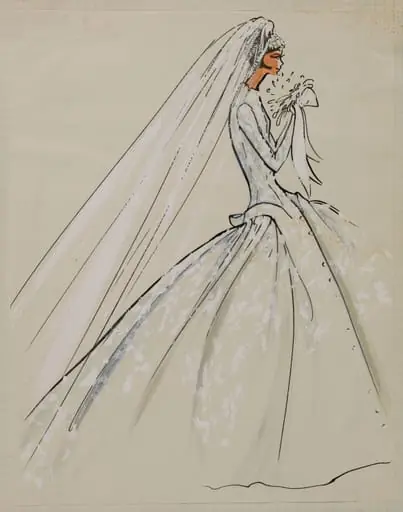
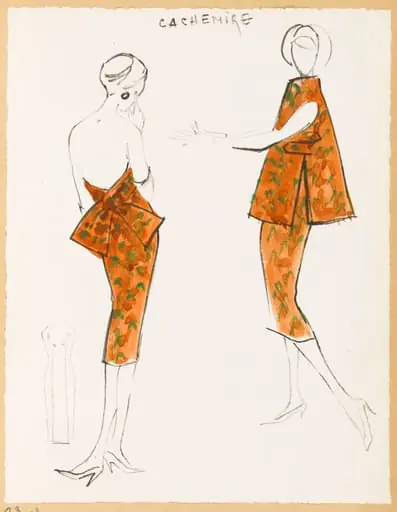
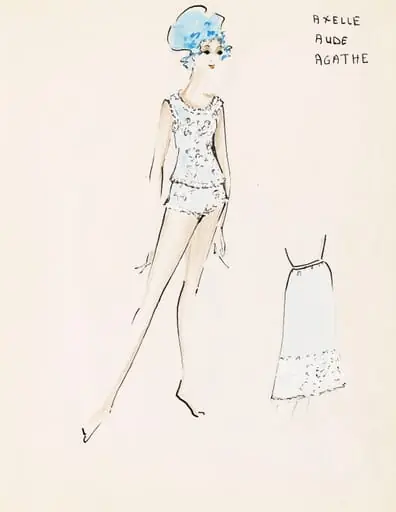
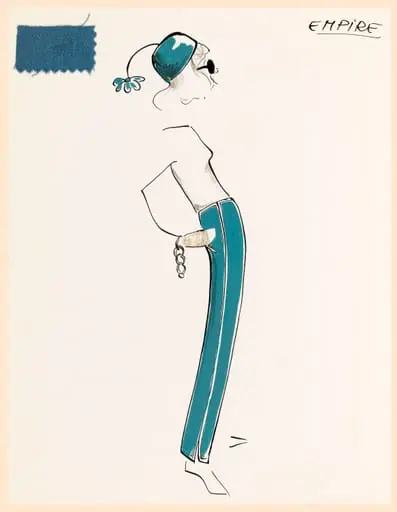
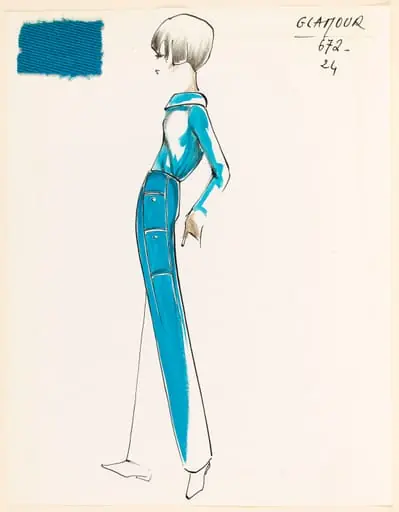
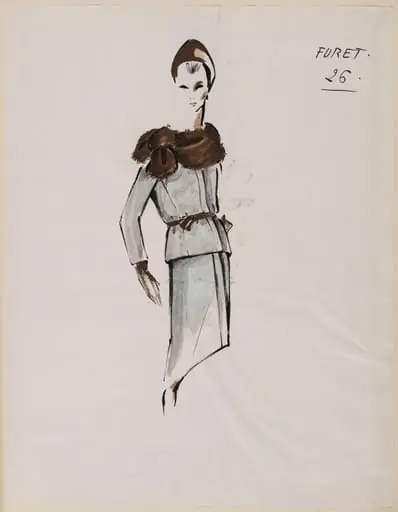
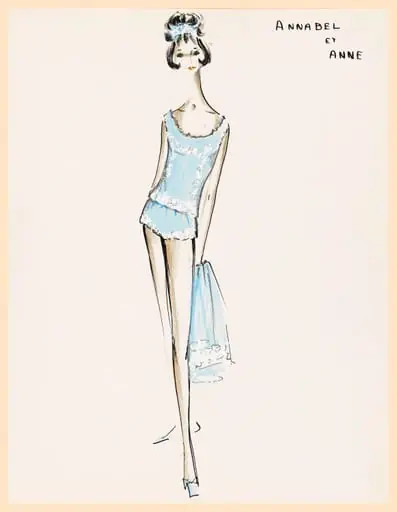
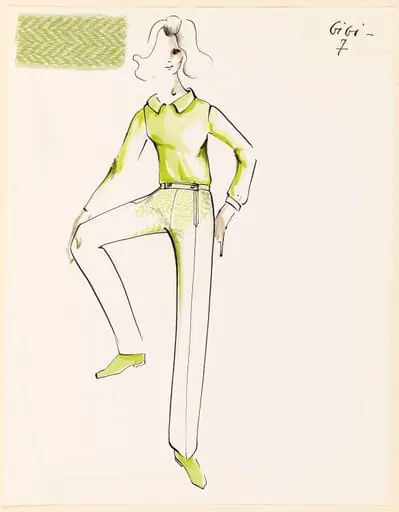
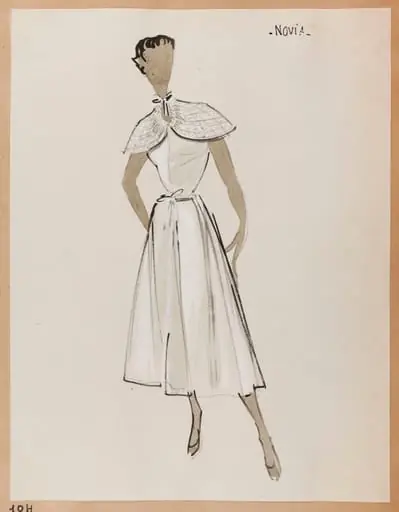
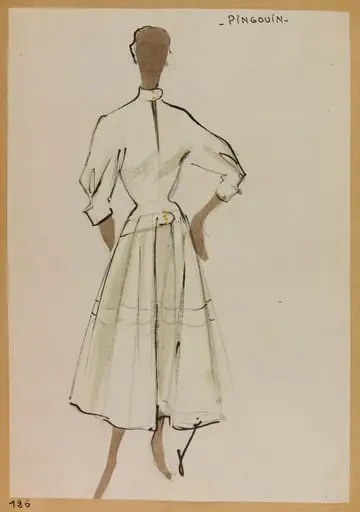
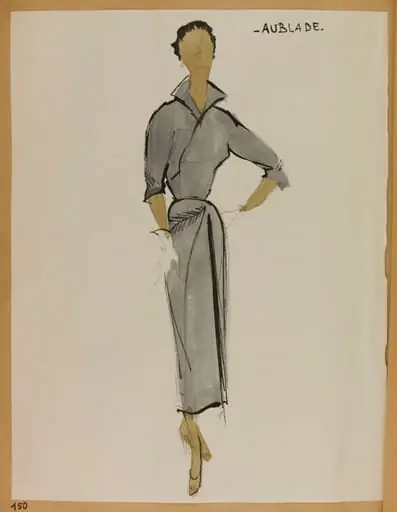
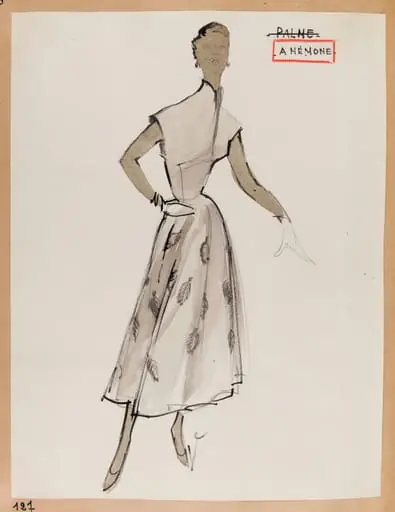
Young is a drawing by Carven. It dates from 1951 and is held in the collection of the Palais Galliera - Musée de la Mode de la Ville de Paris.
About this work
Overview
The loose, rapid linework suggests it was made quickly, likely as a preliminary study rather than a finished illustration.
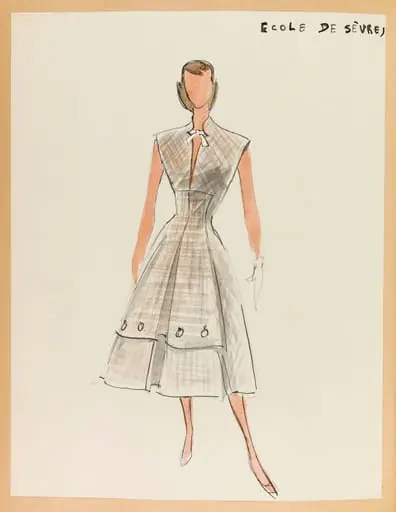
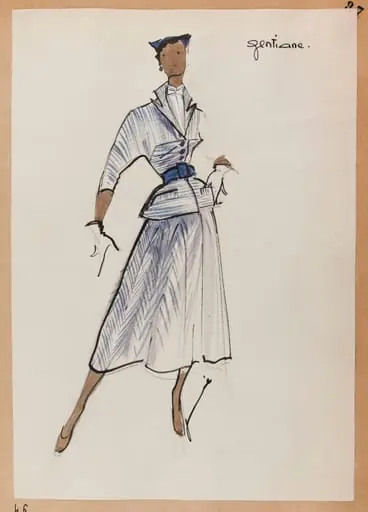
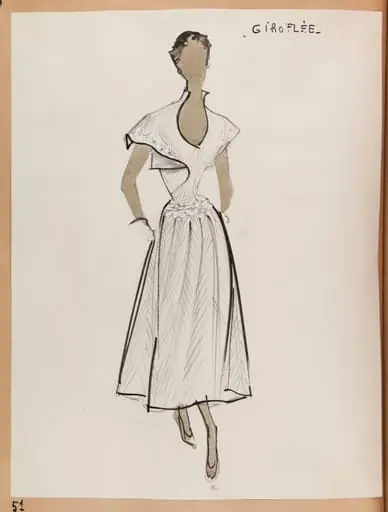
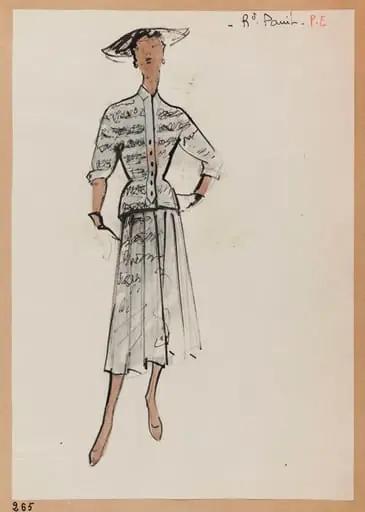
Created around 1951 by the French designer Carven, this ink drawing is part of the Museum of Ethnography’s collection. It depicts a female figure in a simple, flowing dress marked by diagonal stripes. The loose, rapid linework suggests it was made quickly, likely as a preliminary study rather than a finished illustration. A handwritten label reading 'Young' appears in one corner, hinting at its function as a design note.
Subject & Meaning
The figure is rendered without facial features or detailed anatomy, focusing attention on the garment. The dress, with its fitted bodice and wide, striped skirt, reflects mid-century silhouettes favored in postwar Parisian fashion. The label 'Young' may indicate the intended wearer or the collection’s thematic direction, suggesting an emphasis on youthful, dynamic style rather than formal portraiture.
Technique & Style
The drawing employs light, repetitive strokes to suggest the texture of the striped fabric, avoiding solid fills. Lines are fluid and unrefined, characteristic of a working sketch. The absence of shading or background elements reinforces its utilitarian purpose—capturing form and pattern efficiently. The hand-drawn label adds a personal, informal tone, typical of design notebooks from the period.
History & Provenance
The drawing entered the Museum of Ethnography’s holdings as part of a broader acquisition of fashion-related materials from Carven’s atelier. Its preservation suggests recognition of its value as a document of mid-century design practice. No record of public exhibition or commercial use has been documented, reinforcing its status as an internal working study.
Context
In the early 1950s, Parisian fashion houses relied heavily on hand-drawn sketches to communicate designs to tailors and clients. Carven, known for elegant yet accessible clothing, often used quick studies to explore movement and fabric behavior. This drawing aligns with that practice, reflecting a moment when design was still closely tied to manual drafting before the rise of photographic mood boards.
Legacy
As a surviving example of Carven’s design process, the drawing offers insight into how fashion ideas were developed by hand. It contributes to scholarly understanding of mid-century design workflows and the role of informal sketches in couture production. Though not widely known, it remains a quiet testament to the labor behind seemingly effortless garments.
Artist & collection
Artist
These delicate ink-on-paper drawings capture the quiet poetry of everyday things: pinecones, reeds, apples.
Museum
Palais Galliera - Musée de la Mode de la Ville de Paris
Continue through works from the same source collection.