Artwork
Griotte
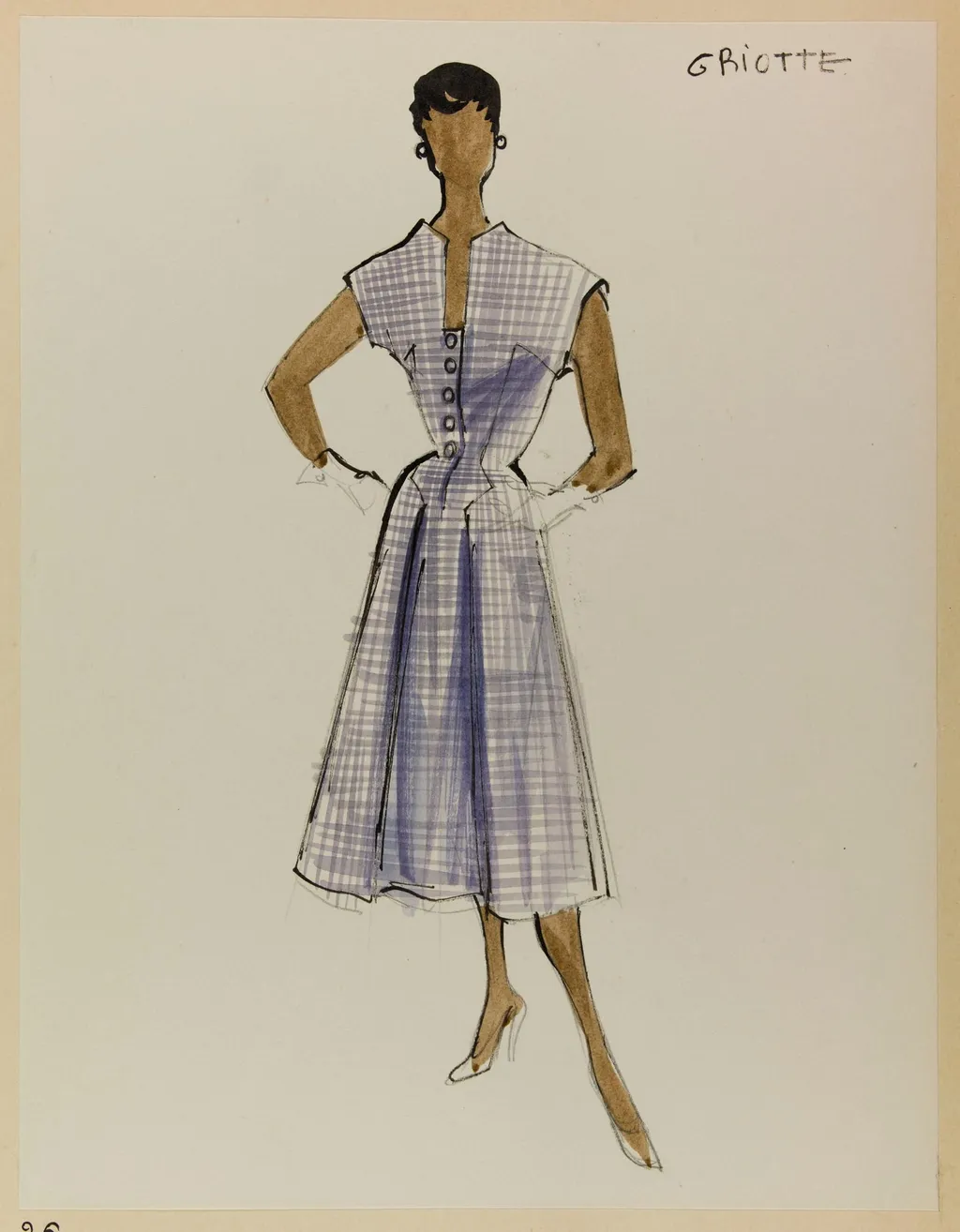
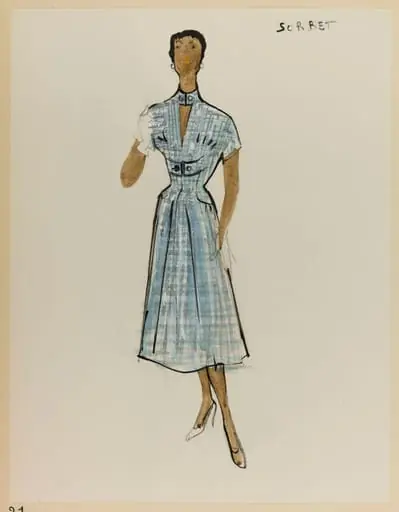
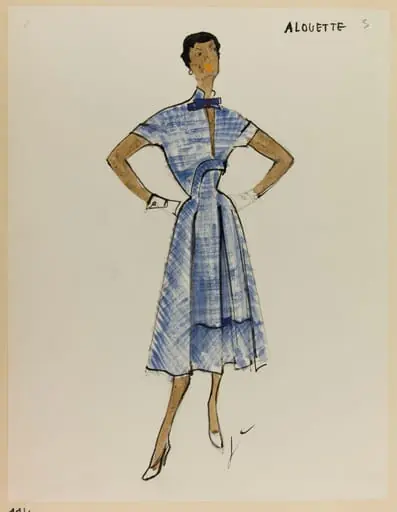
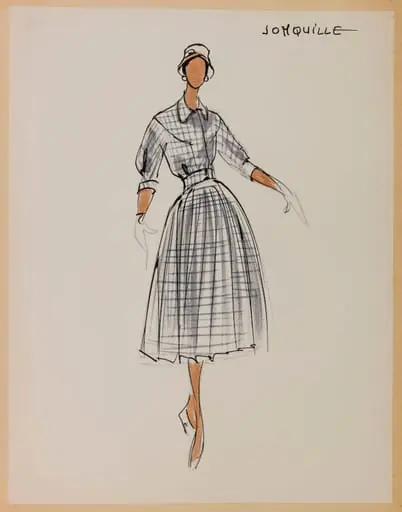
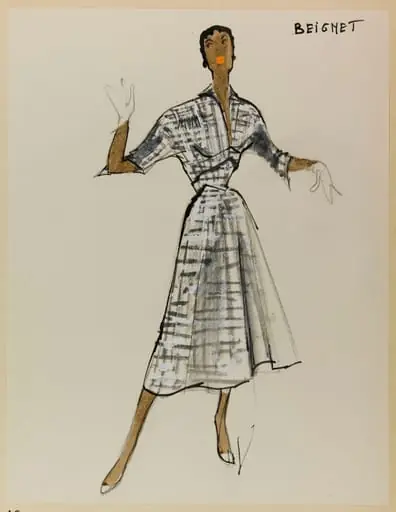
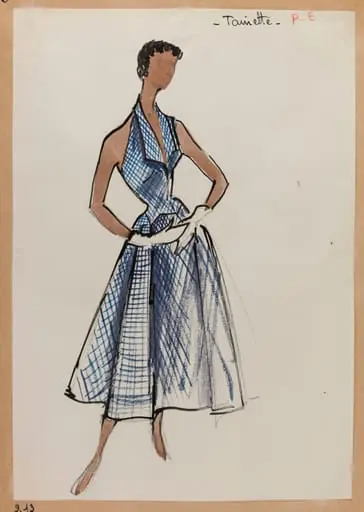
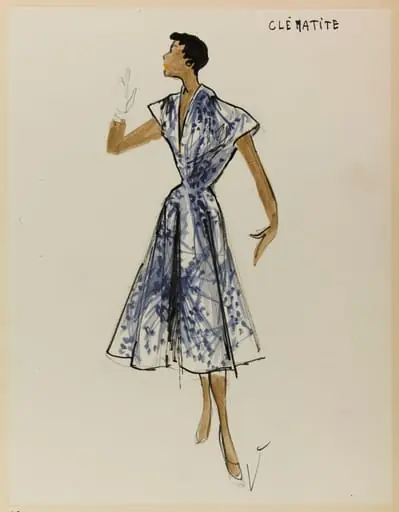
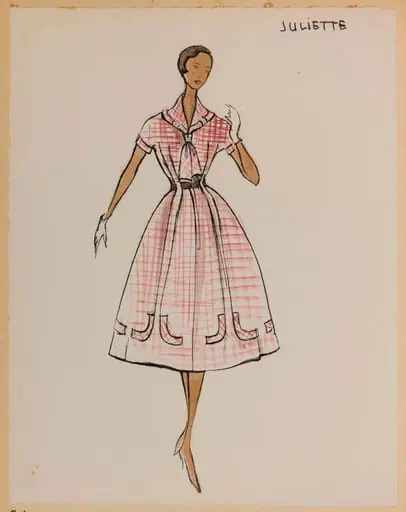
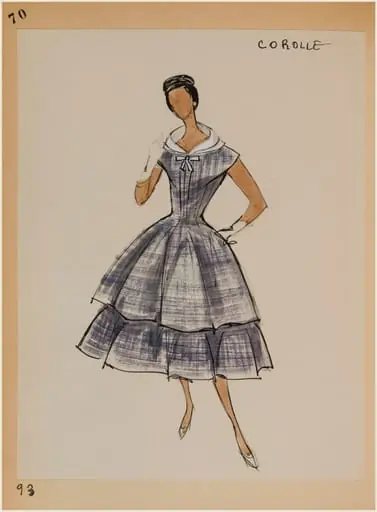
Griotte is a drawing by Carven. It dates from 1953 and is held in the collection of the Palais Galliera - Musée de la Mode de la Ville de Paris.
About this work
Overview
The absence of facial features and minimal shading emphasize form over individuality, aligning with the functional purpose of fashion documentation.
Griotte is a pencil drawing created around 1953 by the French fashion designer Carven. It is part of the collection at the Museum of Ethnography. The work presents a stylized portrait of a woman from the waist up, rendered with clean, unadorned lines and no background detail. The absence of facial features and minimal shading emphasize form over individuality, aligning with the functional purpose of fashion documentation.
Subject & Meaning
The figure wears a plaid dress with a defined collar, front buttons, and a full skirt—elements typical of mid-century women’s wear. Hands resting on the hips suggest a pose of quiet confidence or readiness. By omitting the face, the drawing shifts focus entirely to the garment, treating clothing as the primary subject. This reflects a design ethos prioritizing structure and silhouette over personal identity.
Technique & Style
Executed in pencil with bold, confident strokes, the drawing avoids shading and texture, relying on contour and proportion to convey form. The simplicity of line and lack of detail suggest a working sketch rather than a finished illustration. This restrained approach was common in fashion ateliers, where clarity and reproducibility mattered more than artistic flourish.
History & Provenance
Created during Carven’s active design years, the drawing likely served as a technical reference for garment production. It entered the Museum of Ethnography’s collection as part of a broader effort to preserve mid-century fashion artifacts. Its inclusion underscores the institution’s interest in everyday dress as cultural material, not merely high fashion.
Context
In the early 1950s, fashion houses like Carven produced numerous such sketches to communicate design intent to tailors and clients. These drawings were functional tools, often discarded after use. Griotte’s survival and museum placement reflect a later recognition of their value as records of postwar domestic style and the quiet craftsmanship behind accessible clothing.
Legacy
Griotte exemplifies how fashion design documentation evolved from private workshop aids to public historical artifacts. Its preservation highlights a shift in cultural institutions toward valuing the material culture of ordinary life. As such, it contributes to broader understandings of mid-century women’s dress beyond the runway, grounding fashion in daily practice.
Artist & collection
Artist
These delicate ink-on-paper drawings capture the quiet poetry of everyday things: pinecones, reeds, apples.
Museum
Palais Galliera - Musée de la Mode de la Ville de Paris
Continue through works from the same source collection.