Artwork
Nymphe
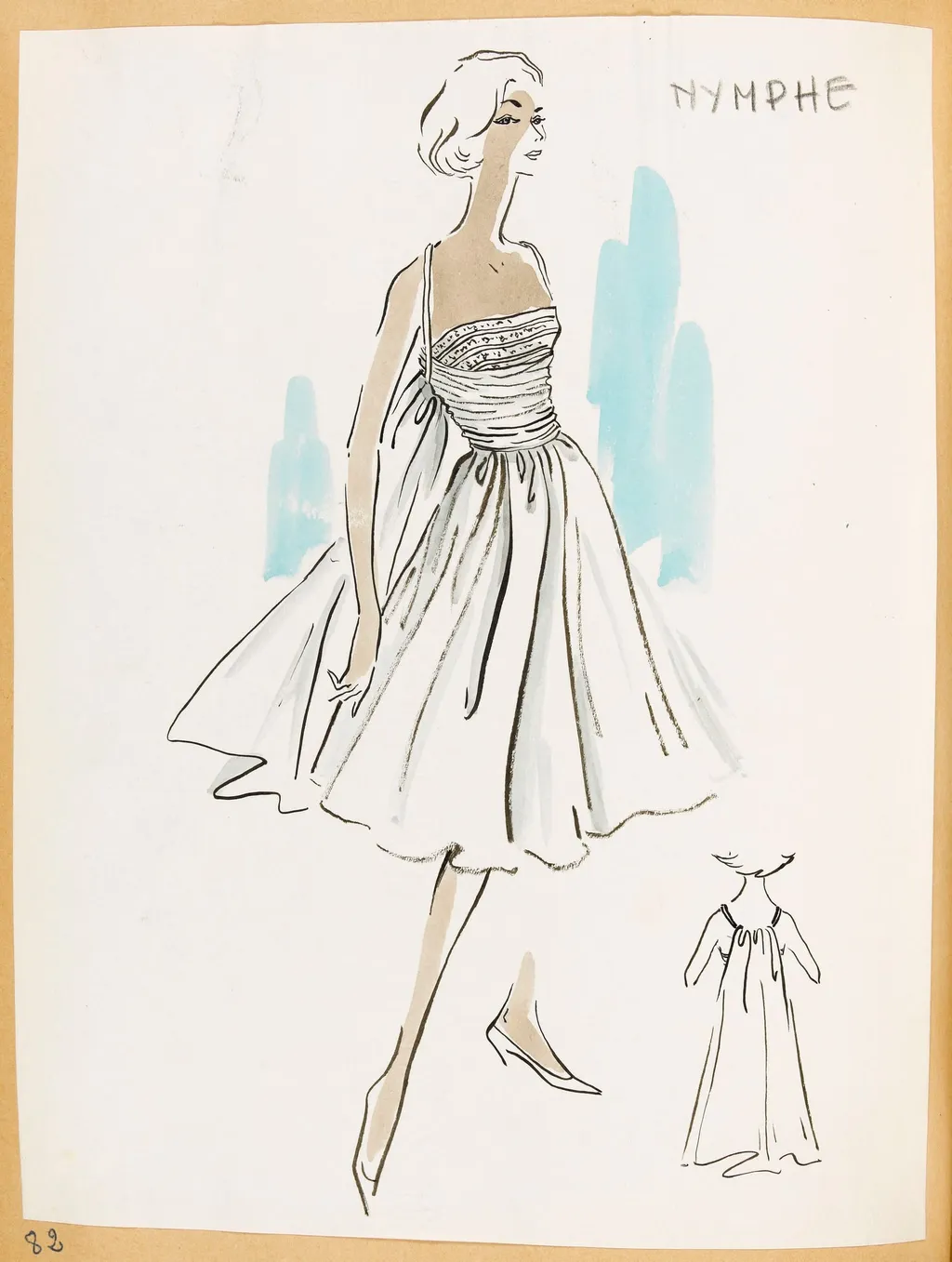
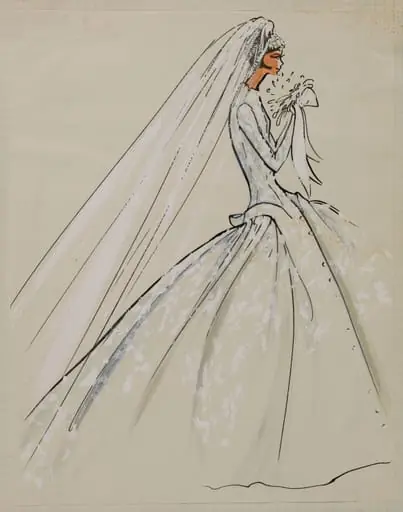
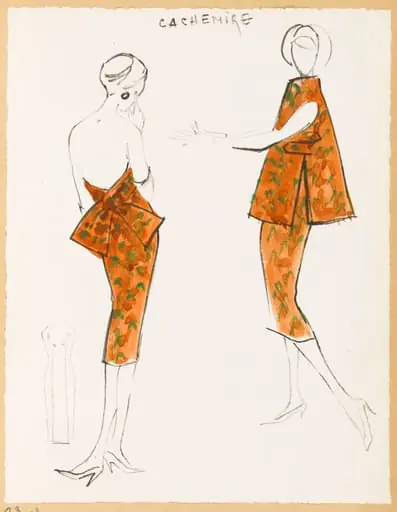
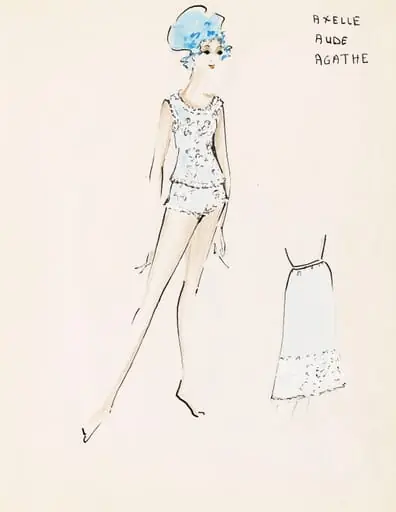
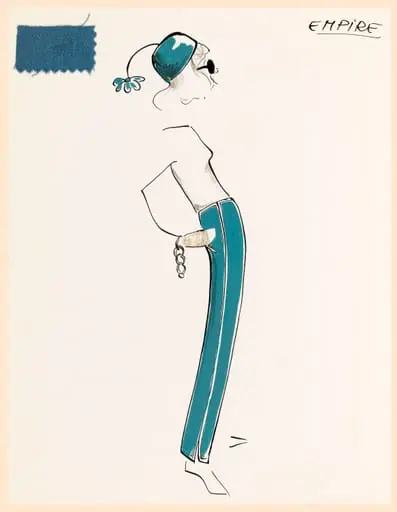
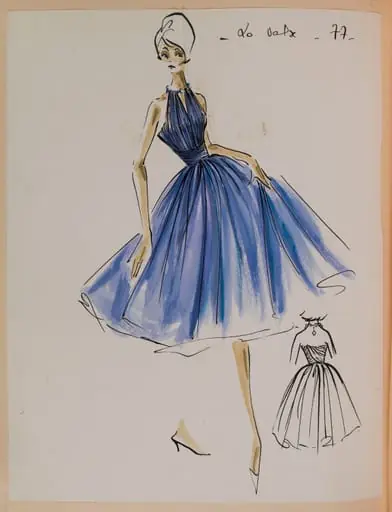
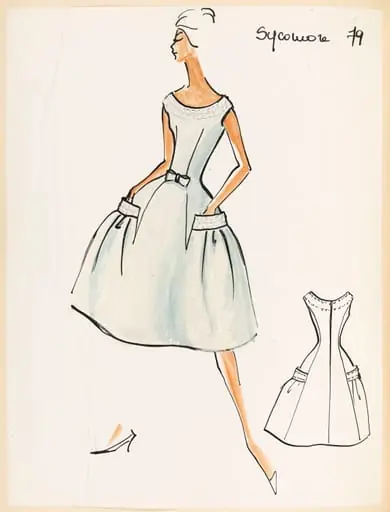
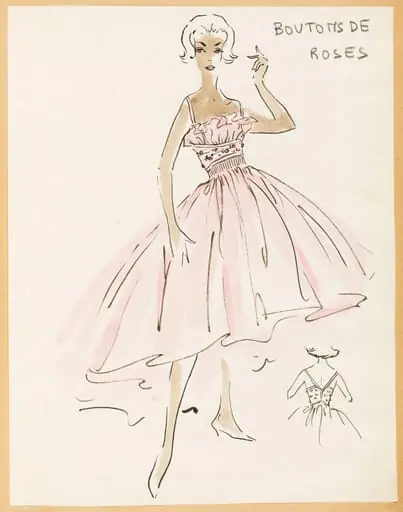
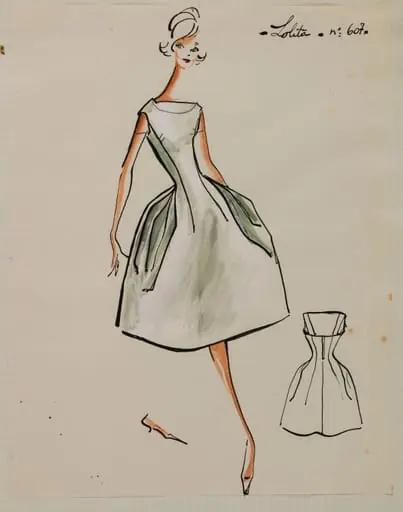
Nymphe is a drawing by Carven. It dates from 1957 and is held in the collection of the Palais Galliera - Musée de la Mode de la Ville de Paris.
About this work
Overview
The work is part of the collection at the Museum of Ethnography, where it is preserved as an example of mid-century fashion illustration rather than fine art.
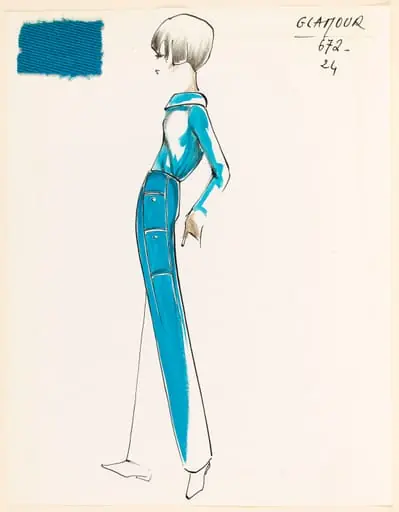
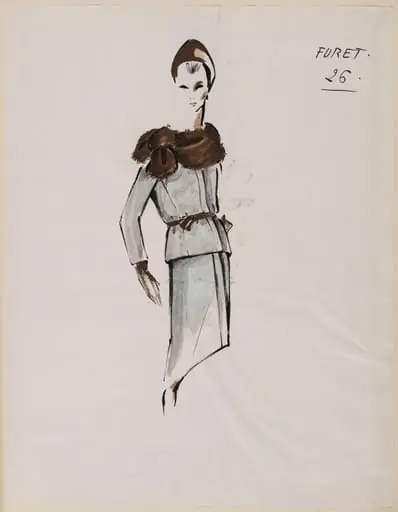
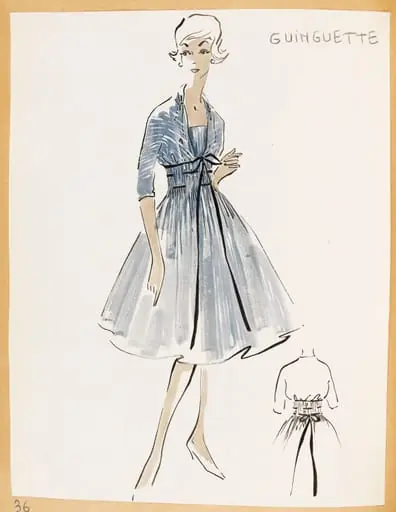
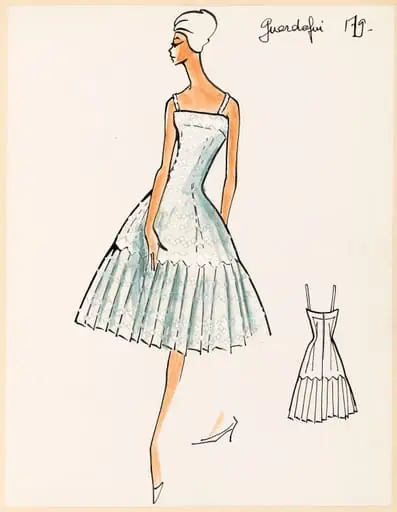
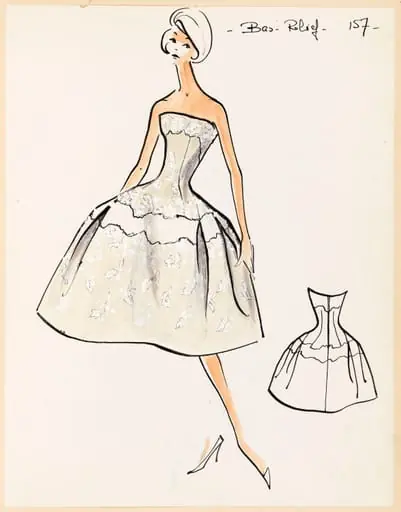
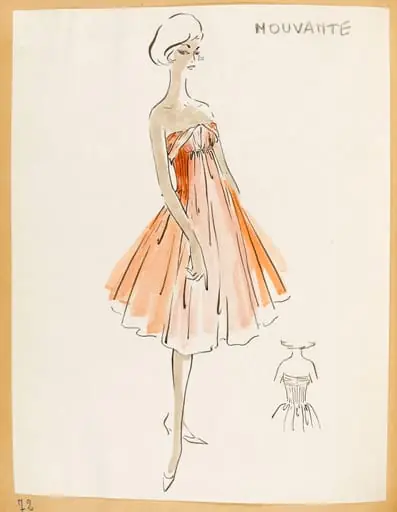
Nymphe is a pencil and watercolor sketch by the French fashion designer Carven, dated around 1957. Executed in delicate, fluid lines, it captures a female figure in motion, dressed in an elegant ensemble. The work is part of the collection at the Museum of Ethnography, where it is preserved as an example of mid-century fashion illustration rather than fine art. Its intimate scale and informal technique suggest it was a design study rather than a finished presentation piece.
Subject & Meaning
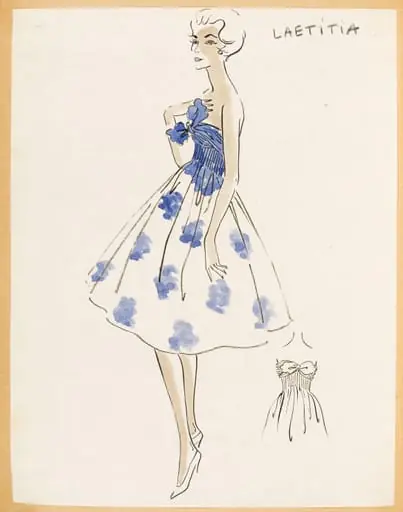
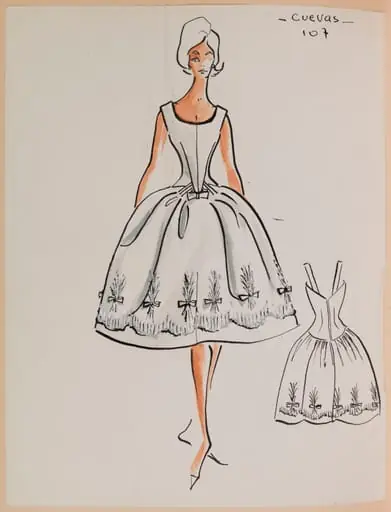
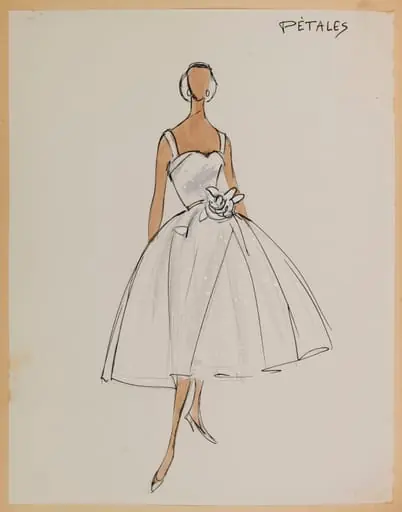
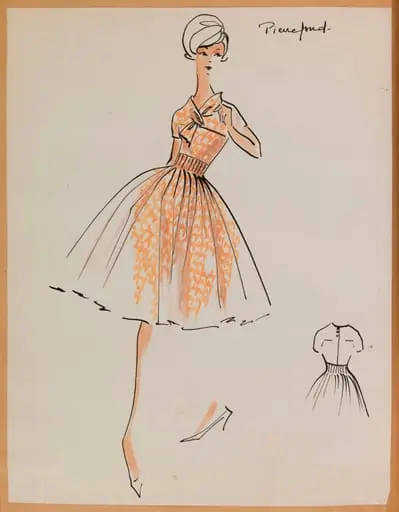
The figure depicted is a woman wearing a fitted bodice and a flared skirt, with a slender belt defining the waist. The title 'Nymphe'—Greek for 'nymph'—evokes a sense of lightness and natural grace, aligning the garment with mythological ideals of ethereal femininity. The loose, gestural rendering enhances the impression of movement, suggesting the dress is designed for fluidity and ease, reflecting postwar preferences for dynamic, wearable silhouettes.
Technique & Style
Carven employed light pencil strokes to outline the figure, with subtle watercolor washes adding depth and shadow without obscuring the draft-like quality. The lines are swift and unrefined, emphasizing spontaneity over precision. This approach prioritizes the garment’s form and flow over anatomical detail, characteristic of fashion sketches intended to convey silhouette and motion rather than serve as finished portraits.
History & Provenance
Created during Carven’s active years as a couturier, Nymphe likely originated as a design note for a seasonal collection. It entered the Museum of Ethnography’s holdings as part of a broader effort to document fashion as cultural artifact. The sketch’s survival suggests it was retained for its representational value, offering insight into the studio practices of mid-century French designers who often blurred the line between art and industry.
Context
In the late 1950s, Parisian fashion houses emphasized feminine silhouettes with structured tops and full skirts, influenced by Dior’s New Look but increasingly relaxed. Carven’s sketches, including Nymphe, reflect this shift toward livelier, less rigid forms. The use of mythological titles was common among designers seeking to imbue garments with poetic resonance, aligning fashion with broader cultural narratives of beauty and nature.
Legacy
Nymphe remains a quiet testament to the role of sketching in fashion design—where ideas are tested, refined, and sometimes lost to time. Its preservation in an ethnographic museum underscores fashion’s status as material culture. While Carven’s name is less prominent today than contemporaries like Dior or Balenciaga, works like this illustrate the thoughtful, human process behind the garments that shaped postwar style.
Artist & collection
Artist
These delicate ink-on-paper drawings capture the quiet poetry of everyday things: pinecones, reeds, apples.
Museum
Palais Galliera - Musée de la Mode de la Ville de Paris
Continue through works from the same source collection.