Artwork
Pépita
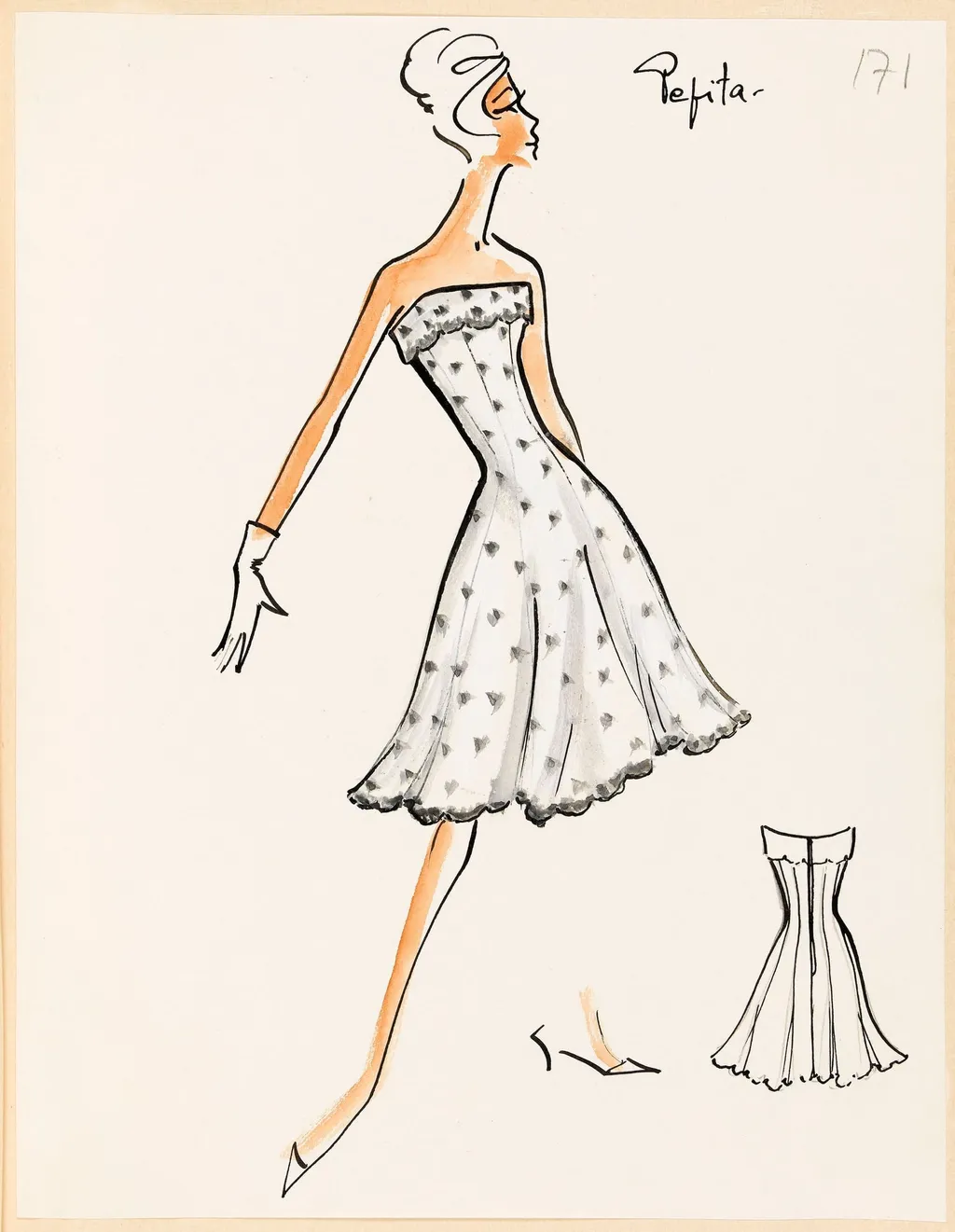
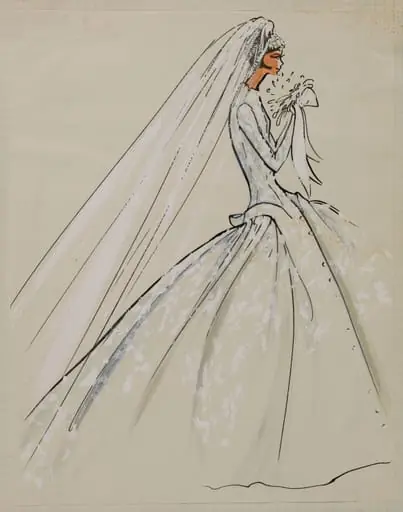
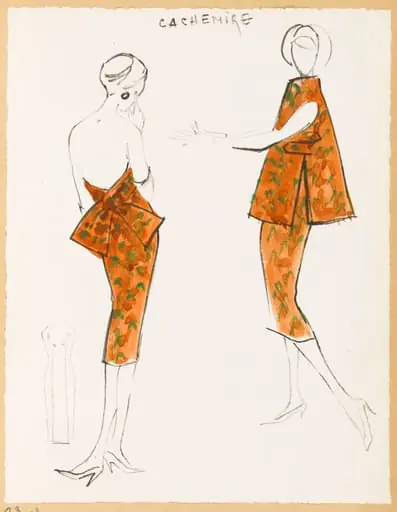
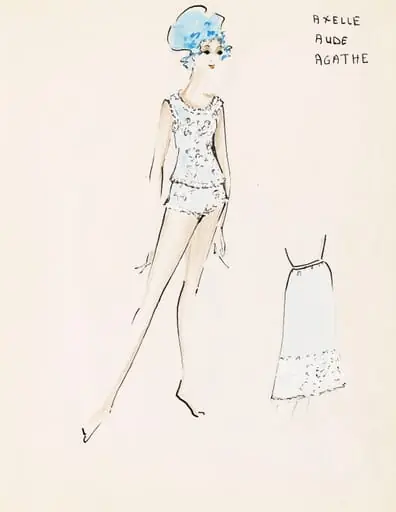
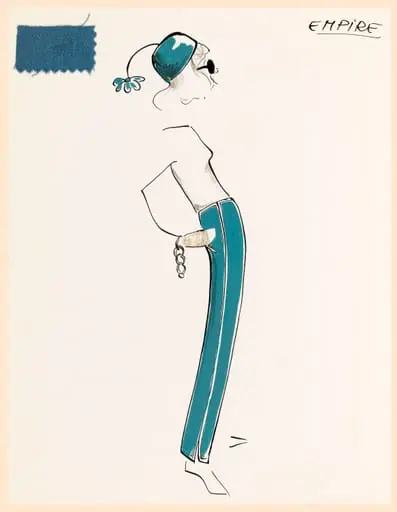
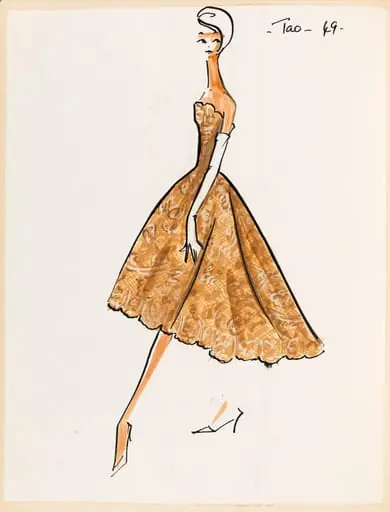
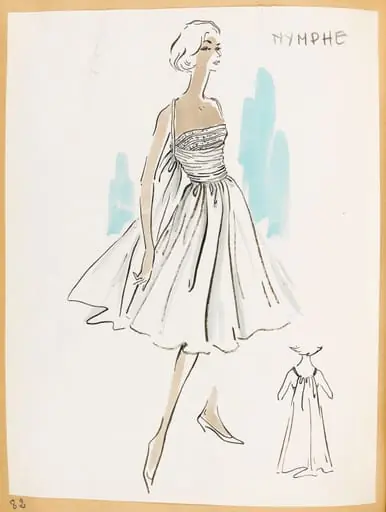
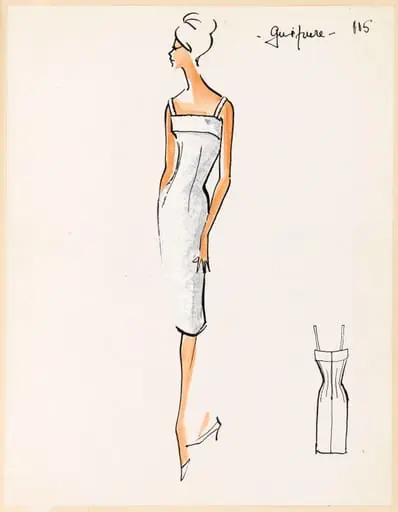
Pépita is a drawing by Carven. It dates from 1959 and is held in the collection of the Palais Galliera - Musée de la Mode de la Ville de Paris.
About this work
Overview
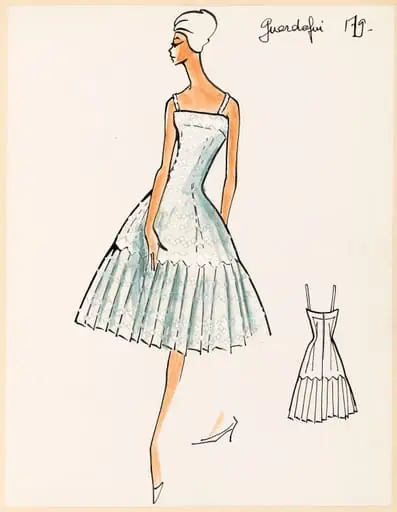
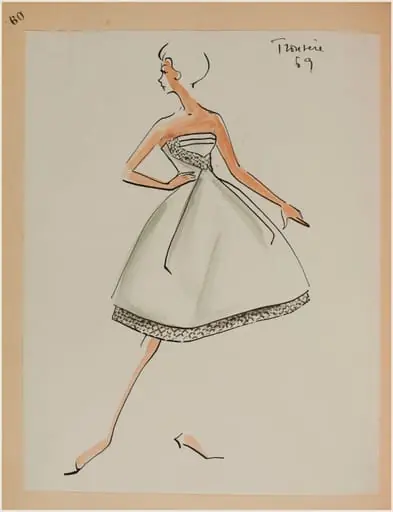
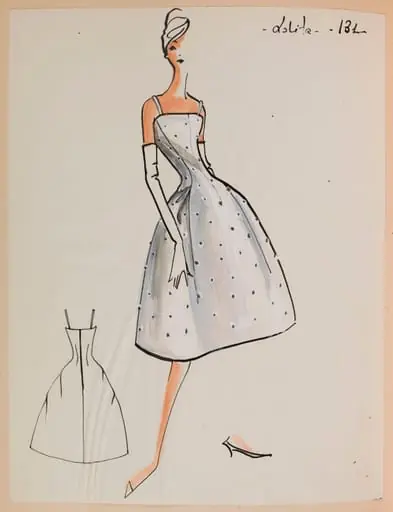
Pépita is a fashion illustration created around 1959 by the designer Carven. The work is part of the collection at the Museum of Ethnography. Rendered in a restrained, graphic style, it presents a stylized female figure in motion, emphasizing the structure and detail of a white dress. The image functions as both a design study and a visual record of mid-century haute couture aesthetics.
Subject & Meaning
The inclusion of a smaller duplicate dress to her right may indicate a design iteration or a symbolic doubling of the garment, highlighting its form.
The figure in Pépita is depicted mid-stride, one leg extended behind, suggesting movement and grace. The inclusion of a smaller duplicate dress to her right may indicate a design iteration or a symbolic doubling of the garment, highlighting its form. The pose and minimal background focus attention on the dress as the central subject, reflecting fashion’s role in expressing identity and elegance during the period.
Technique & Style
The illustration employs clean, precise lines and subtle tonal variations to define the dress’s ruffled bustier and full skirt. Small triangular motifs are evenly distributed across the fabric, adding texture without ornamentation. The use of cross-hatching suggests volume and shadow, while the absence of facial features or detailed environment reinforces the focus on silhouette and construction, typical of fashion drafting of the era.
History & Provenance
Pépita was produced during Carven’s active years in Parisian fashion, likely as part of a design portfolio or editorial presentation. It entered the Museum of Ethnography’s collection as an artifact of 20th-century material culture, valued for its representation of postwar French design sensibilities. Its preservation underscores the institution’s interest in fashion as cultural expression beyond traditional ethnographic objects.
Context
In the late 1950s, Paris remained a global center for couture, where designers like Carven blended simplicity with structural innovation. Pépita reflects this trend, favoring clean lines and refined details over excessive decoration. The illustration aligns with contemporary editorial practices in fashion magazines, where garments were presented as idealized forms, detached from individual identity to emphasize design purity.
Legacy
Pépita endures as a quiet example of mid-century fashion illustration, valued for its clarity and restraint. It contributes to scholarly understanding of how designers communicated their work before digital tools, relying on hand-drawn precision. Its presence in an ethnographic museum signals a broader recognition of fashion as a cultural artifact worthy of historical documentation.
Artist & collection
Artist
These delicate ink-on-paper drawings capture the quiet poetry of everyday things: pinecones, reeds, apples.
Museum
Palais Galliera - Musée de la Mode de la Ville de Paris
Continue through works from the same source collection.