Artwork
Guinguette
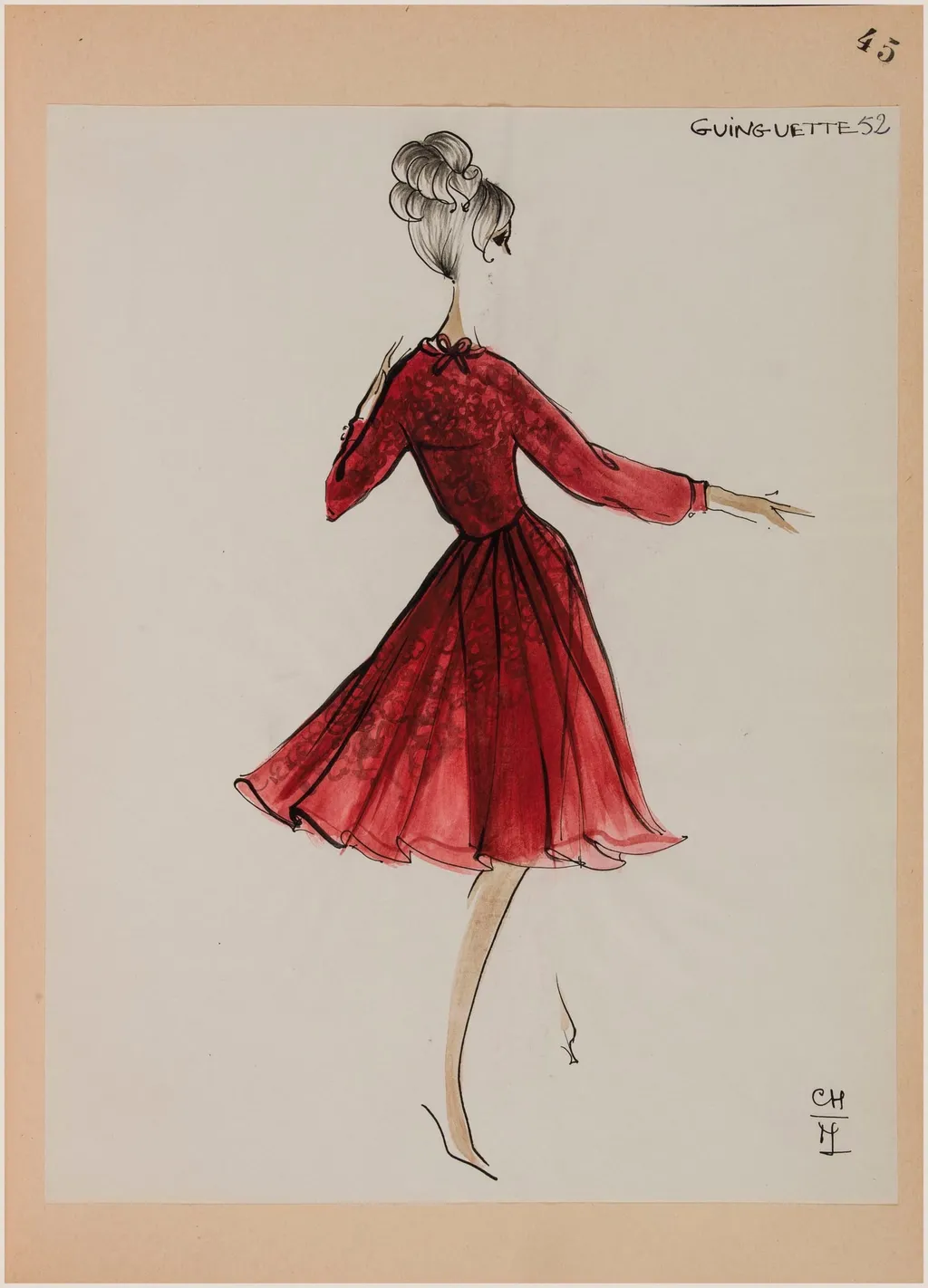
Guinguette is a drawing by Carven. It dates from 1963 and is held in the collection of the Palais Galliera - Musée de la Mode de la Ville de Paris.
About this work
Overview
Created in 1963, Guinguette is a drawn study by the French designer Carven, held in the collection of the Museum of Ethnography.
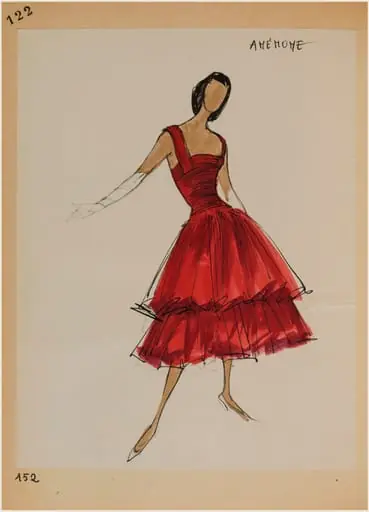
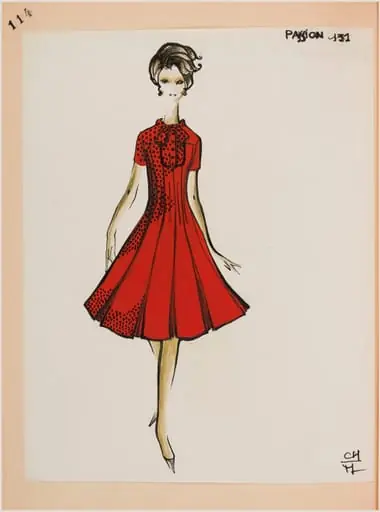
Created in 1963, Guinguette is a drawn study by the French designer Carven, held in the collection of the Museum of Ethnography. The work captures a solitary female figure in motion, rendered with delicate line work and attention to textile detail. Though labeled as a sketch, it functions as both a fashion observation and a fleeting moment of everyday life, reflecting the designer’s interest in movement and dress.
Subject & Meaning
The figure, viewed from behind, appears engaged in a spontaneous dance, one arm extended as if responding to music. The title references a guinguette—a casual riverside dance hall popular in early 20th-century France—suggesting a setting of informal leisure. The ambiguity of the scene allows it to function as both a fashion study and a quiet anthropological record of social ritual.
Technique & Style
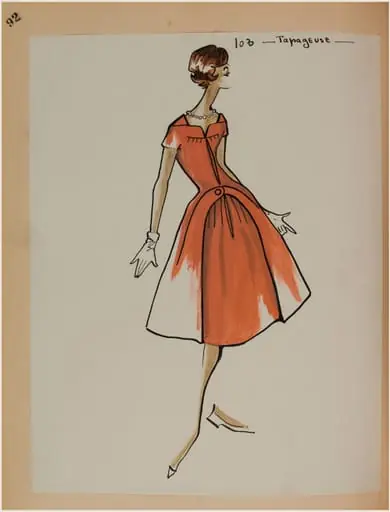
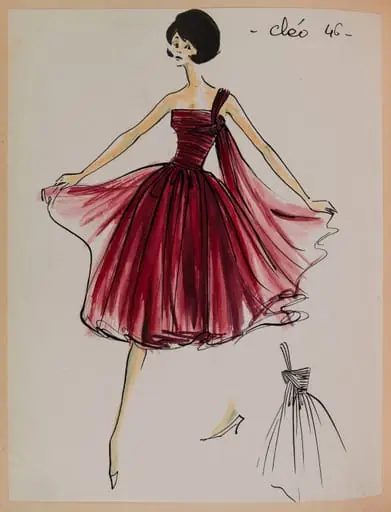
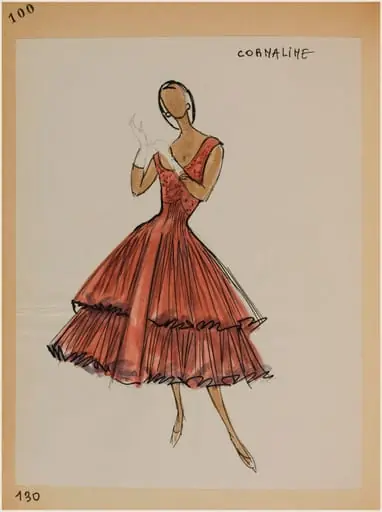
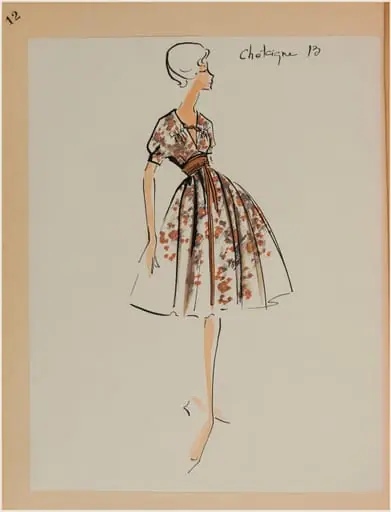
Rendered in pencil or ink, the drawing emphasizes texture and silhouette over detail. The red dress is suggested through flowing lines and subtle tonal variations, with the bodice hinting at patterned fabric without explicit rendering. The loose bun and dynamic posture convey motion, while the softness of the skirt’s flare implies weight and drape, characteristic of Carven’s sensitivity to textile behavior.
History & Provenance
The work is signed with the initials 'CH,' consistent with Carven’s known signature practice. It entered the Museum of Ethnography’s collection as part of a broader acquisition of mid-century fashion sketches, likely donated by the designer’s estate or a close associate. Its classification as an ethnographic object reflects institutional interest in fashion as cultural expression.
Context
In the early 1960s, Carven was known for blending haute couture with accessible, wearable designs. Guinguette aligns with a period when designers increasingly drew inspiration from public life rather than studio isolation. The sketch captures a moment of unscripted movement, mirroring broader cultural shifts toward spontaneity and informal social expression in postwar Europe.
Legacy
Guinguette remains a quiet example of how fashion design intersected with observational art. Though not widely exhibited, it contributes to scholarly understanding of Carven’s process and the role of sketching in documenting everyday aesthetics. Its presence in an ethnographic museum underscores the evolving recognition of fashion as a form of cultural documentation.
Artist & collection
Artist
These delicate ink-on-paper drawings capture the quiet poetry of everyday things: pinecones, reeds, apples.
Museum
Palais Galliera - Musée de la Mode de la Ville de Paris
Continue through works from the same source collection.