Artwork
Passion
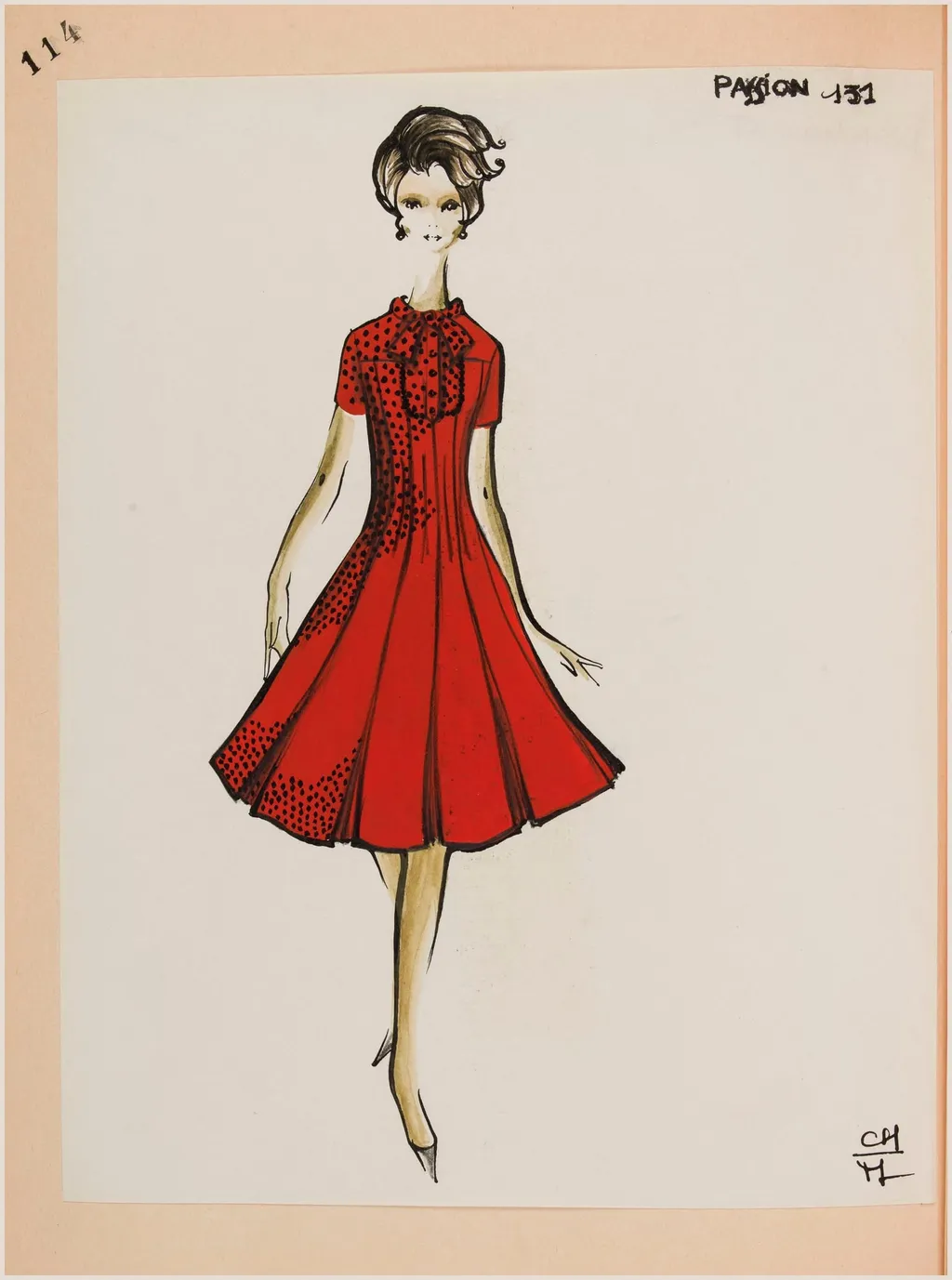
Passion is a drawing by Carven. It dates from 1963 and is held in the collection of the Palais Galliera - Musée de la Mode de la Ville de Paris.
About this work
Overview
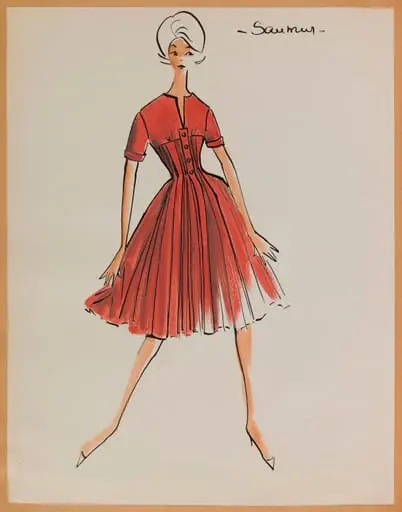
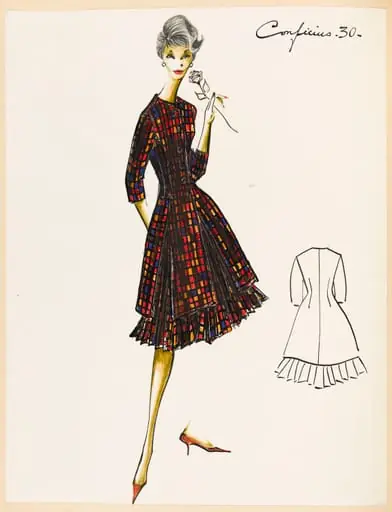
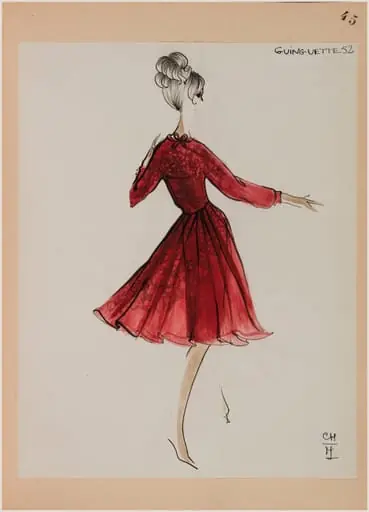
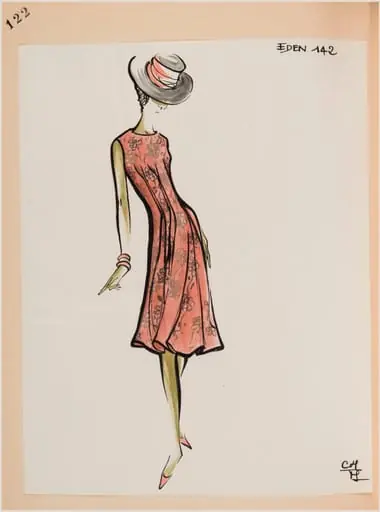
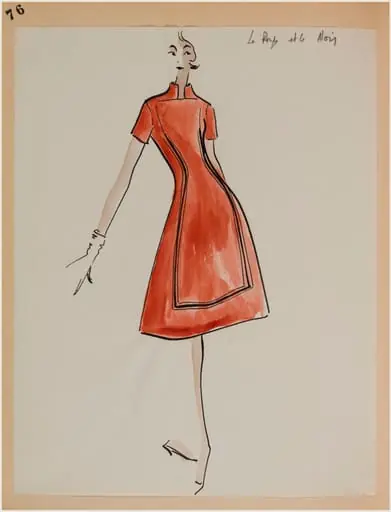
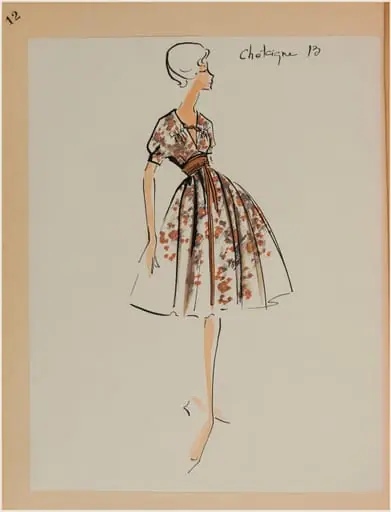
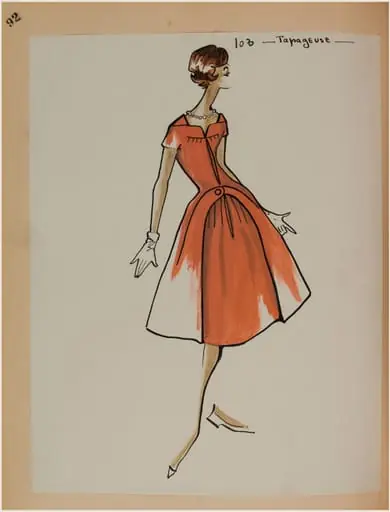
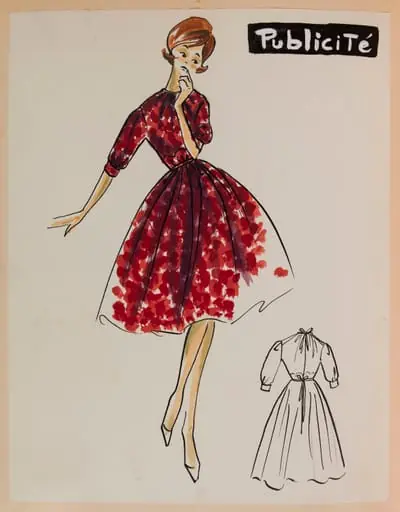
Created in 1963 by the designer and artist Carven, this painting is part of the Museum of Ethnography’s collection. It presents a stylized portrait of a woman in a vibrant red dress adorned with irregular black polka dots, set against a neutral beige background. The composition emphasizes form and color over narrative, reflecting Carven’s interest in fashion as visual expression.
Subject & Meaning
The image does not depict a specific person or event, instead offering a symbolic representation of modern womanhood through costume and gesture.
The figure, posed with one arm relaxed at her side and the other bent at the elbow, conveys a sense of poised self-awareness. Her attire—fitted bodice, knee-length skirt, and high heels—evokes mid-century femininity, but the arbitrary placement of the dots introduces an element of whimsy. The image does not depict a specific person or event, instead offering a symbolic representation of modern womanhood through costume and gesture.
Technique & Style
Carven employs bold, clean outlines and saturated hues to define the figure and her dress. The contrast between the vivid red and the dark dots creates visual rhythm, while the flat, unmodeled background isolates the subject and enhances its graphic quality. Brushwork is deliberate but not expressive, favoring clarity and structure over texture or depth.
History & Provenance
The painting entered the Museum of Ethnography’s holdings shortly after its completion, likely through direct acquisition or donation by the artist. Carven, primarily known for fashion design, produced a limited body of fine art works during the 1960s, of which this is one of the few documented examples. Its preservation in an ethnographic context suggests an interest in fashion as cultural artifact.
Context
Made during a period when fashion designers increasingly engaged with fine art, the work reflects broader postwar trends blurring boundaries between commercial and fine art. Carven’s background in couture informed this piece, aligning it with contemporaries who treated clothing as a medium for visual commentary rather than mere utility.
Legacy
Though Carven’s fine art output was modest, this painting remains a notable example of how fashion designers translated their aesthetic sensibilities into painting. It contributes to scholarly discussions on the intersection of textile design, gender representation, and mid-century visual culture, particularly in institutions that treat fashion as ethnographic material.
Artist & collection
Artist
These delicate ink-on-paper drawings capture the quiet poetry of everyday things: pinecones, reeds, apples.
Museum
Palais Galliera - Musée de la Mode de la Ville de Paris
Continue through works from the same source collection.