Artwork
Cléo
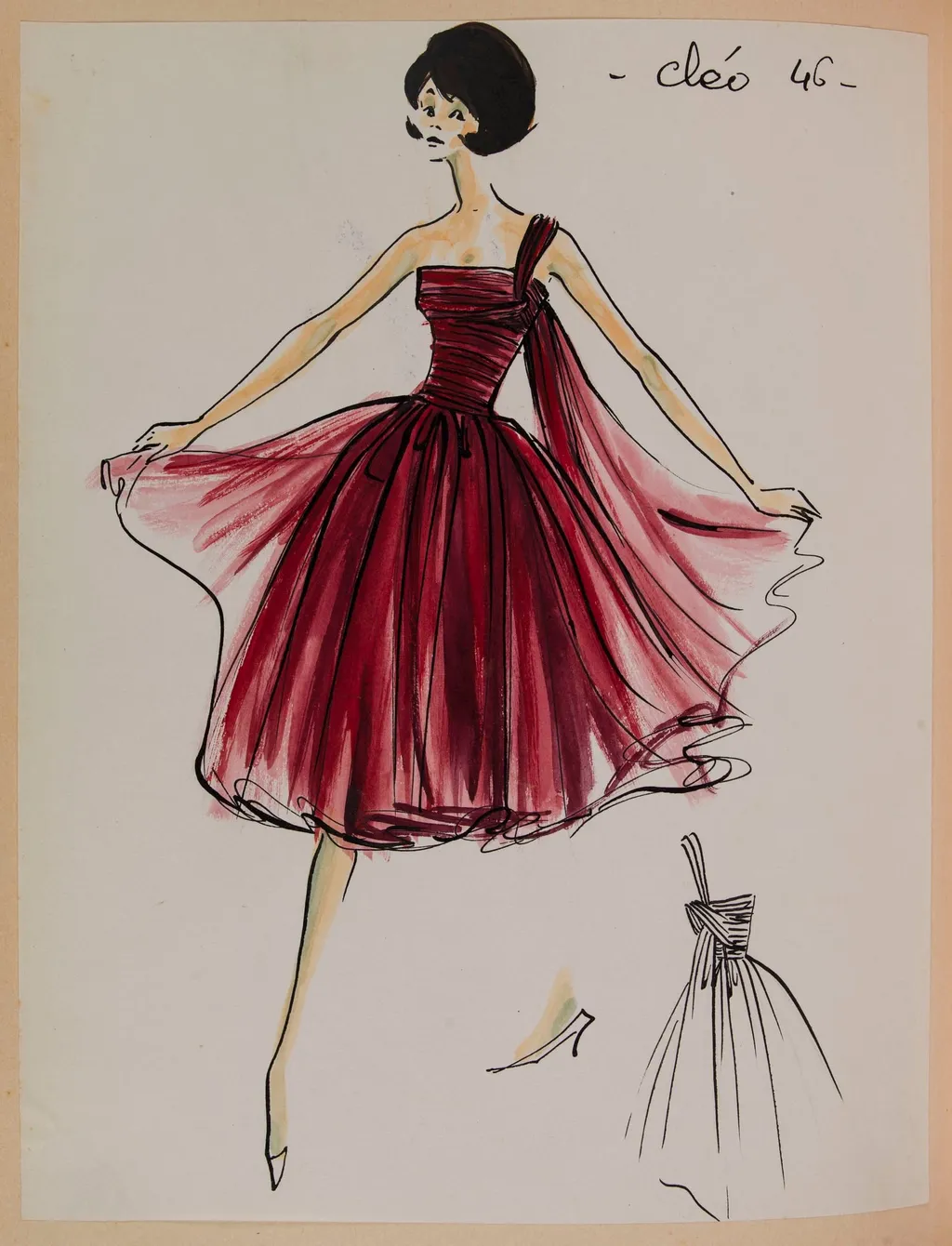
Cléo is a drawing by Marie-Louise Carven. It dates from 1958 and is held in the collection of the Palais Galliera - Musée de la Mode de la Ville de Paris.
About this work
Overview
Though primarily known for her ready-to-wear designs, this drawing reflects her engagement with visual art as an extension of her design practice.
Marie-Louise Carven, founder of the Parisian fashion house Carven, created a sketch titled *Cléo* around 1958. Though primarily known for her ready-to-wear designs, this drawing reflects her engagement with visual art as an extension of her design practice. The work is held in the collection of the Museum of Ethnography, where it is presented as a study in form and movement, distinct from her commercial garments but rooted in the same aesthetic sensibility.
Subject & Meaning
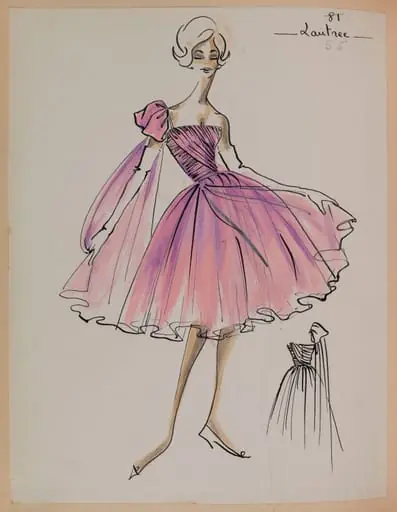
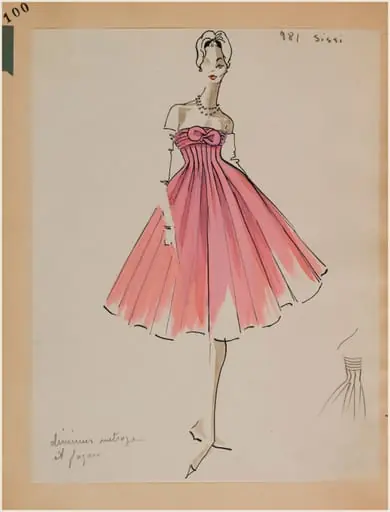
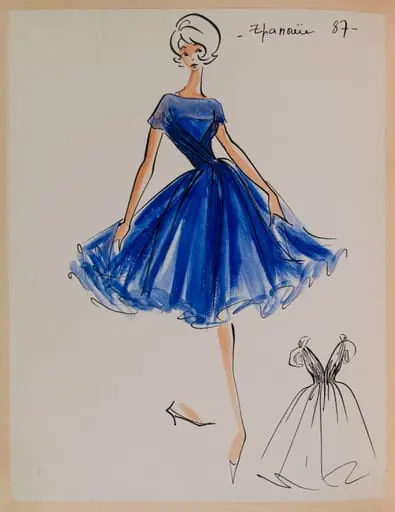
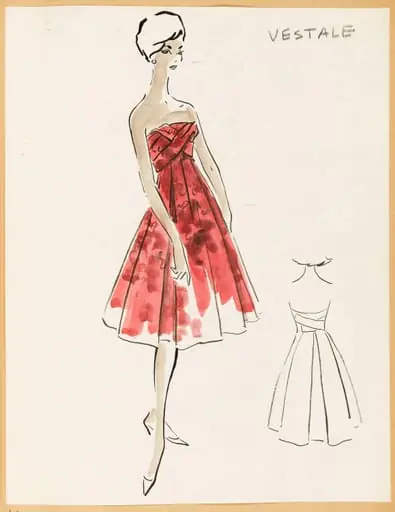
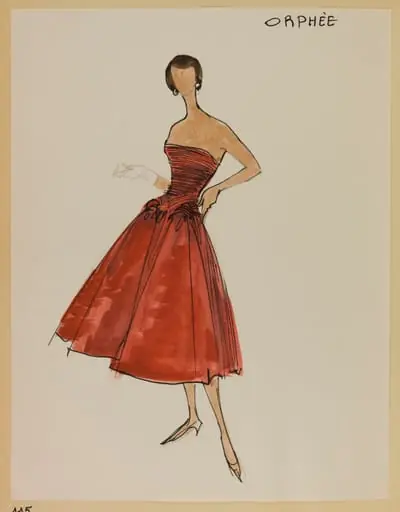
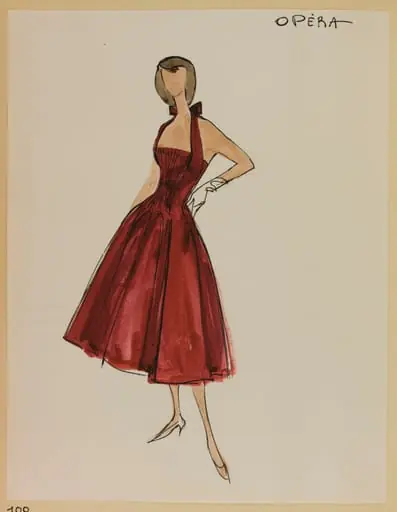
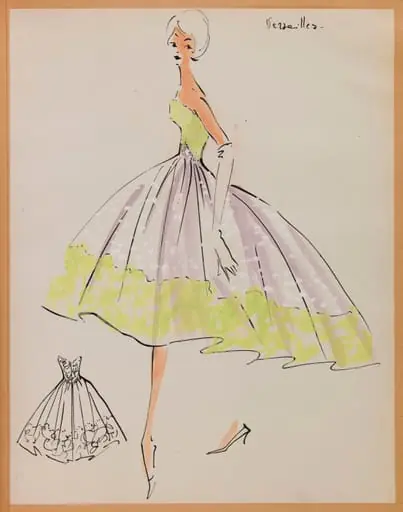
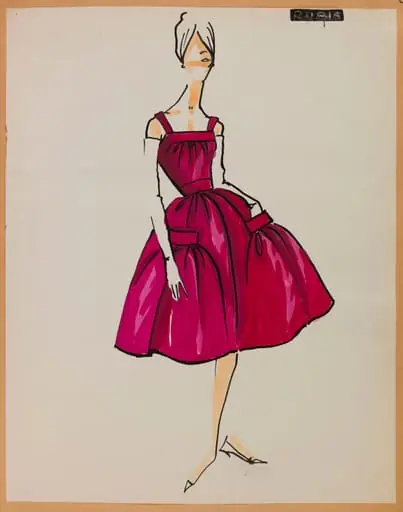
The figure in *Cléo* is a stylized woman in a red dress, posed with one arm extended, suggesting motion or gesture. The clean lines and minimal detail focus attention on the silhouette and fabric flow rather than individual identity. The inclusion of a smaller back-view sketch indicates an interest in structural clarity, aligning with Carven’s design philosophy of practical elegance. The subject embodies an ideal of poised, active femininity common in postwar French fashion.
Technique & Style
Carven rendered the figure with swift, fluid pencil strokes that convey the weight and drape of the dress without heavy shading. The red ink of the garment contrasts sharply against the pale paper, enhancing its dynamism. The loose handling of the fabric suggests spontaneity, while the precise outline of the bodice and the annotated back view reveal a designer’s attention to construction. The drawing balances artistic expression with technical clarity.
History & Provenance
Created circa 1958, *Cléo* entered the collection of the Museum of Ethnography at an unspecified date, likely through donation or acquisition tied to Carven’s broader cultural influence. Its presence in an ethnographic context, rather than a fashion museum, suggests an early institutional recognition of fashion as a cultural artifact. The work remains part of the museum’s holdings, preserved as a personal and professional document of Carven’s creative process.
Context
In the late 1950s, Parisian fashion was shifting toward accessible, modern designs. Carven, already known for pioneering prêt-à-porter for petite figures, used sketches like *Cléo* to explore form beyond commercial constraints. The drawing reflects broader trends in mid-century design, where functionality and aesthetic refinement converged. Its ethnographic placement signals a growing interest in clothing as a marker of social and cultural identity beyond haute couture.
Legacy
*Cléo* stands as a quiet testament to Carven’s dual role as designer and visual observer. While not widely exhibited, its preservation in an ethnographic collection underscores the significance of fashion sketches as cultural records. The work continues to inform understandings of how designers translated movement and structure into visual language, bridging the gap between garment-making and artistic documentation.
Artist & collection
Artist
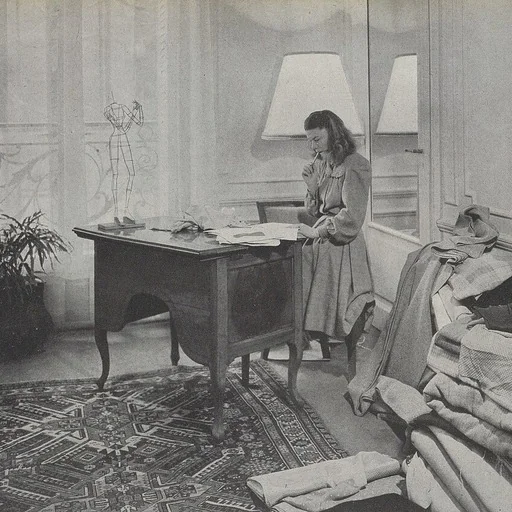
Marie-Louise Carven (31 August 1909 – 8 June 2015), born Carmen de Tommaso, was a French fashion designer who founded the house of Carven in 1945.
Museum
Palais Galliera - Musée de la Mode de la Ville de Paris
Continue through works from the same source collection.
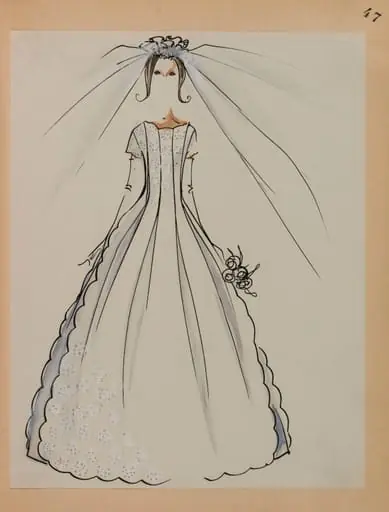 Robe de mariée festonnée et son voile
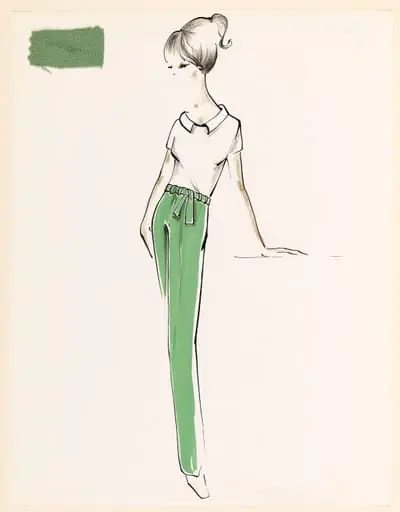 Haut blanc à manches courtes et pantalon vert à ceinture nouée
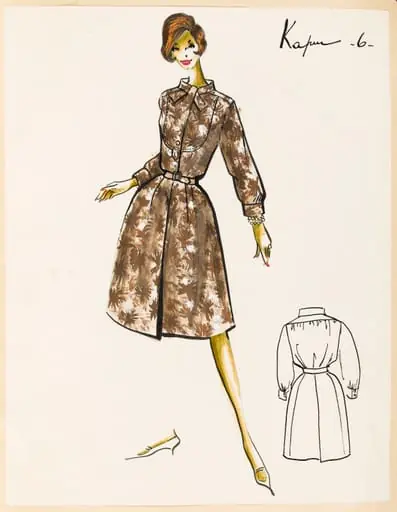 Kapur
Kapur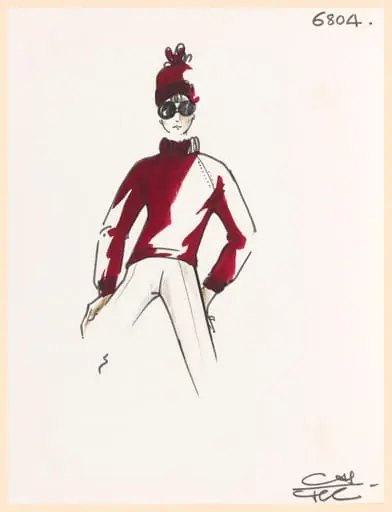 Pull-over à manches longues pourpre, bonnet assorti, pantalon et lunettes de soleil
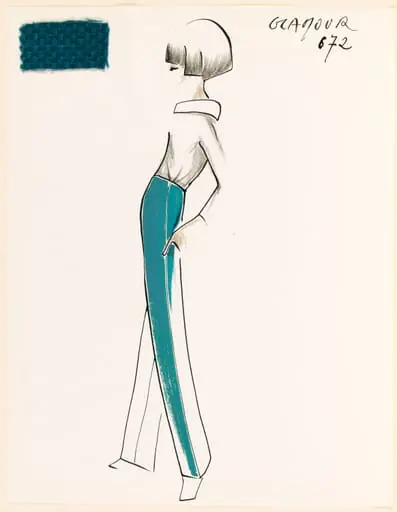 GLAMOUR
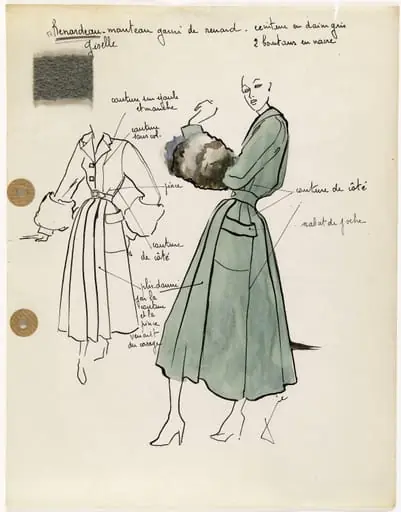 'Renardeau'
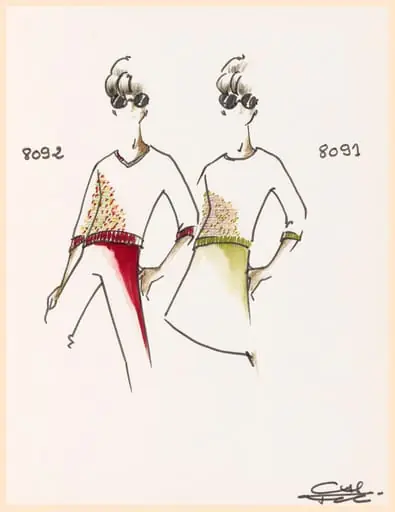 Pull-over à manches trois quarts et à encolure V à motifs multicolores, pantalon cerise et lunettes de soleil
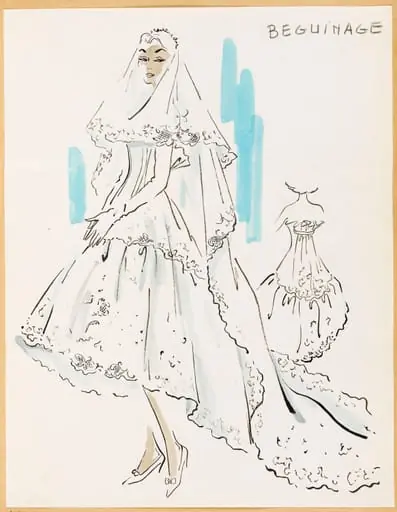 Béguinage