Artwork
Héliopolis
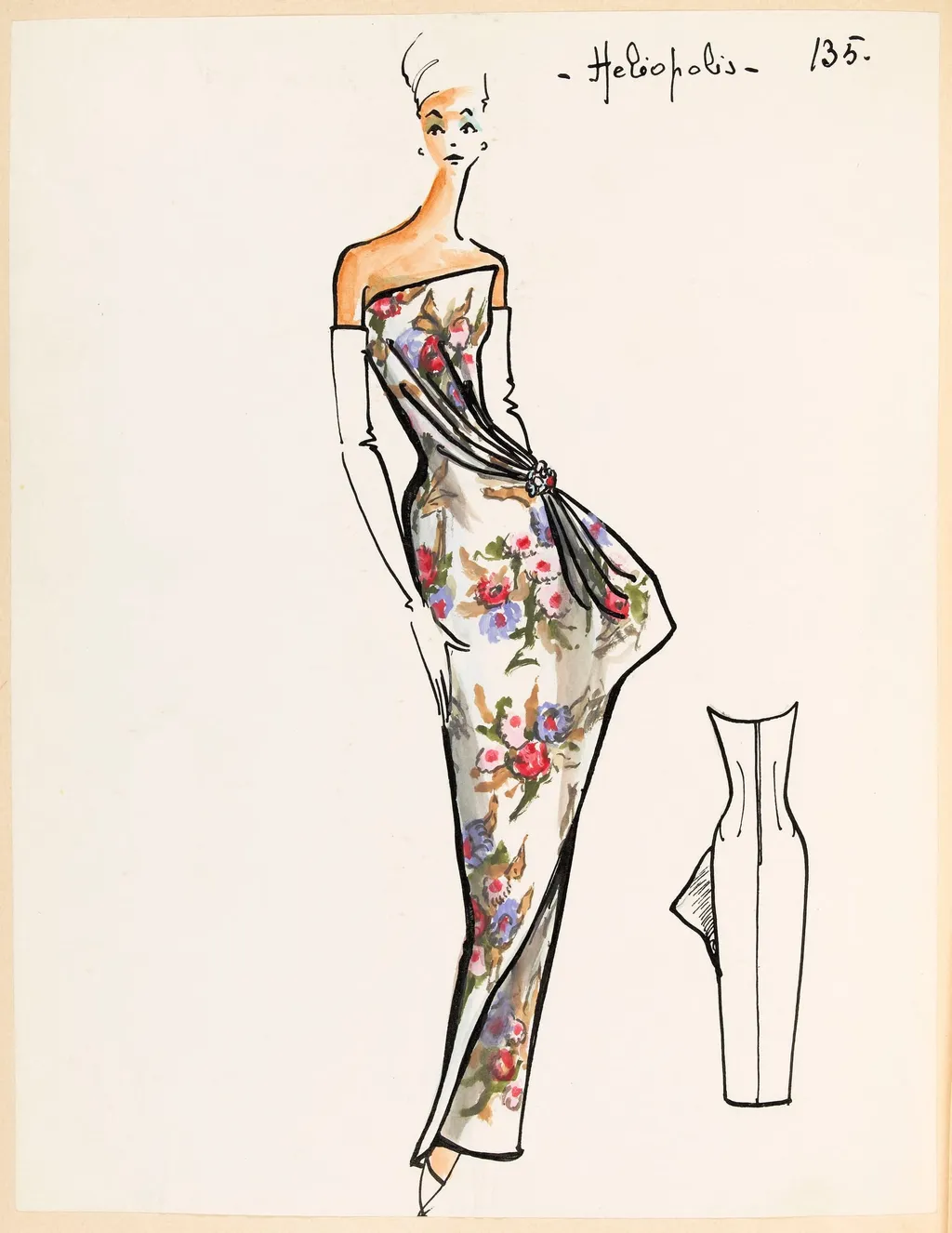
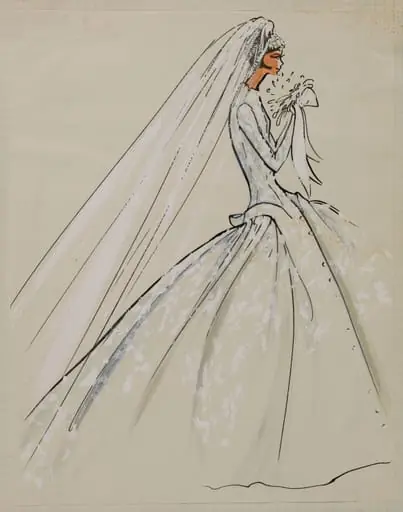
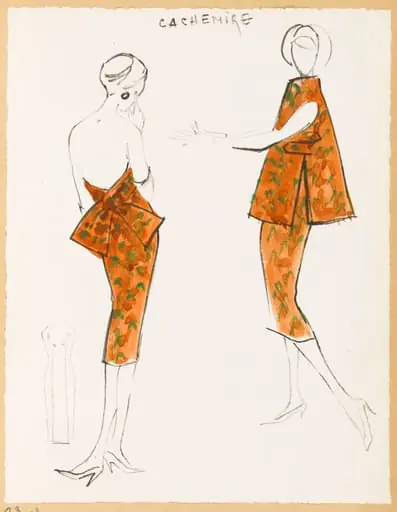
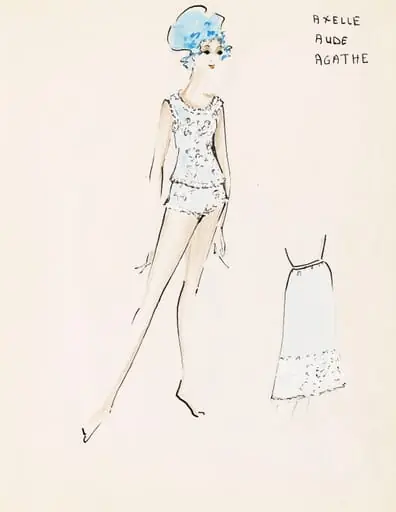
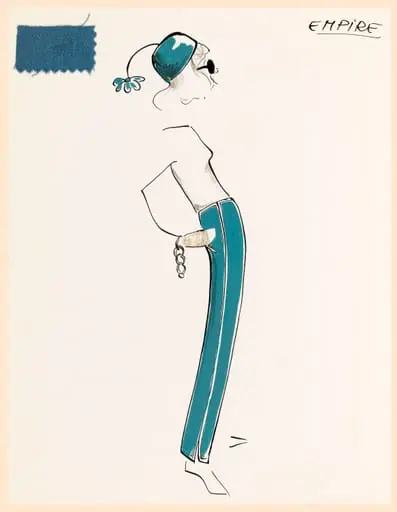
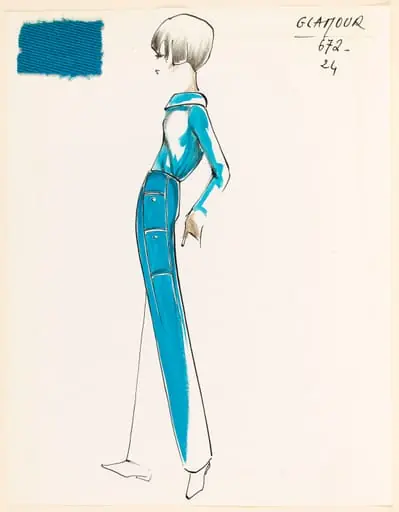
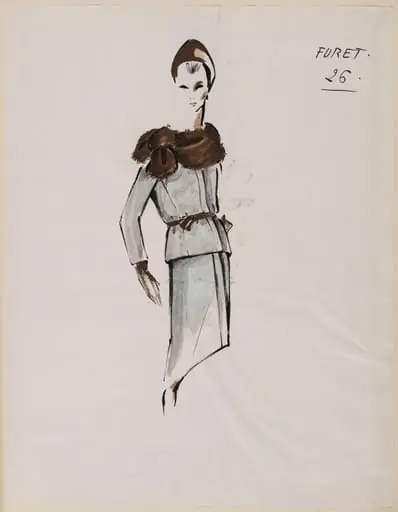
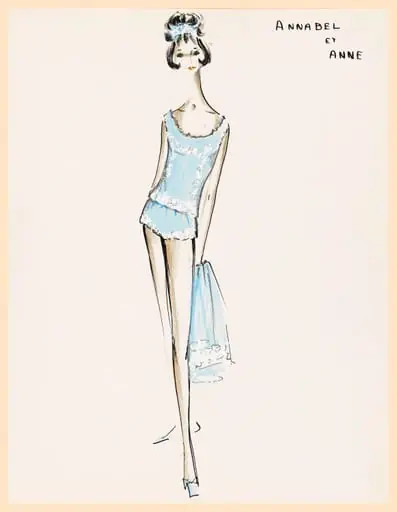
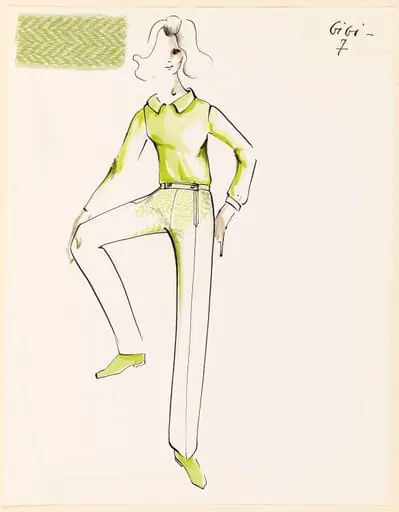
Héliopolis is a drawing by Carven. It dates from 1959 and is held in the collection of the Palais Galliera - Musée de la Mode de la Ville de Paris.
About this work
Overview
The work lacks a clear narrative context but reflects mid-century design sensibilities through its fluid lines and decorative elements.
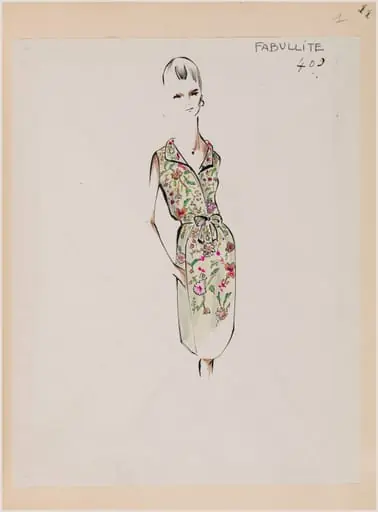
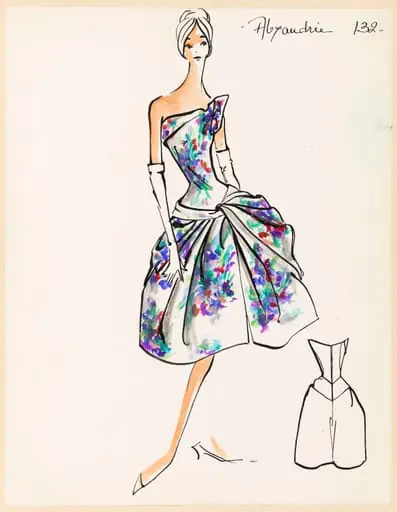
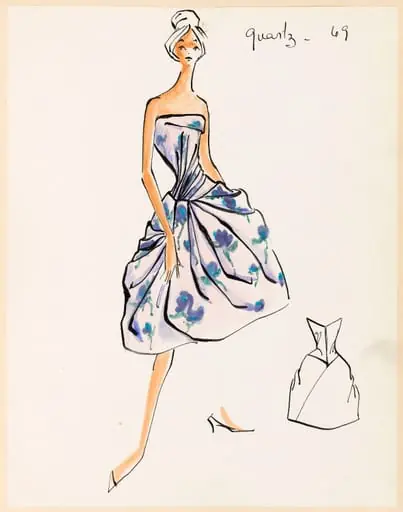
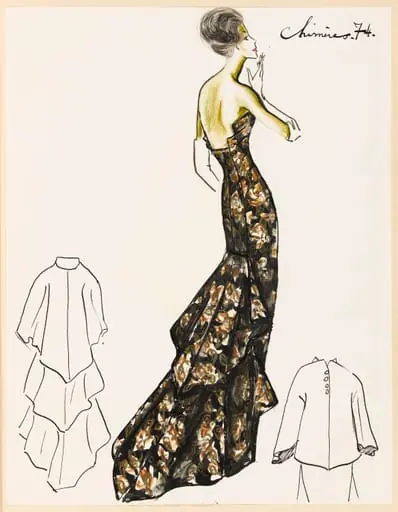
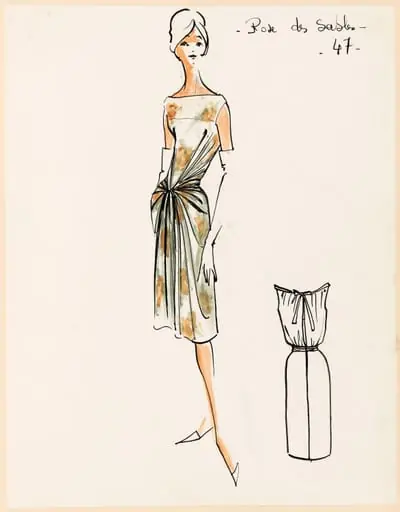
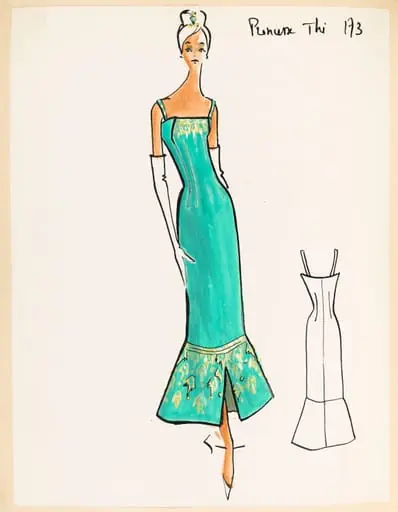
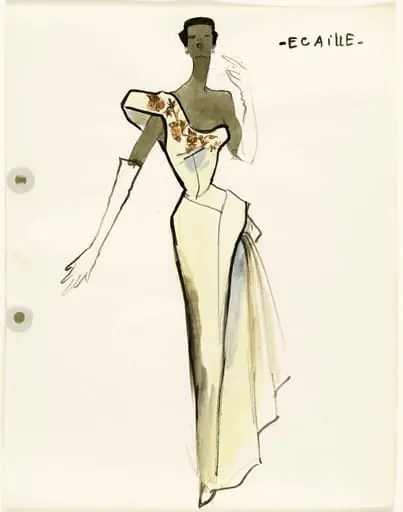
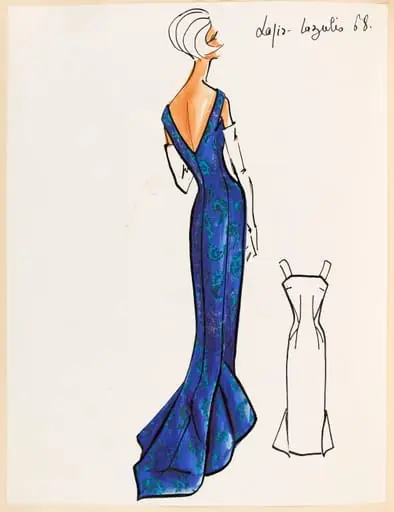
Created around 1959 by the designer Carven, this ink-and-watercolor sketch is part of the Museum of Ethnography’s collection. It captures a single figure in a moment of poised stillness, blending fashion illustration with expressive draftsmanship. The work lacks a clear narrative context but reflects mid-century design sensibilities through its fluid lines and decorative elements. Its informal quality suggests it may have been a preparatory study or personal sketch.
Subject & Meaning
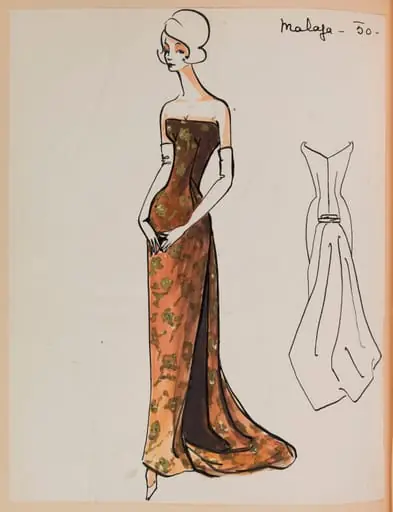
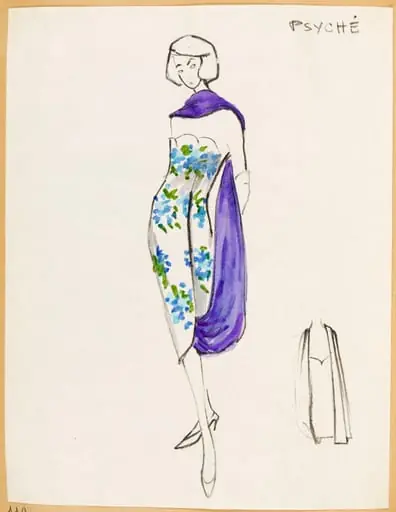
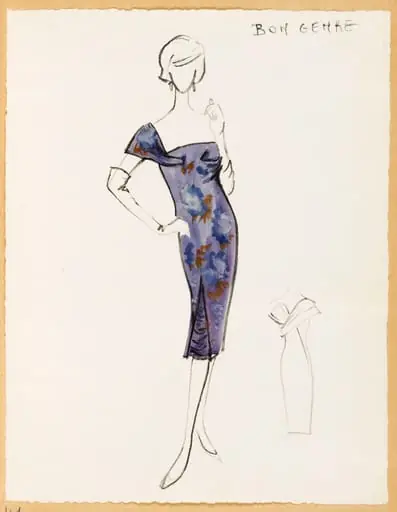
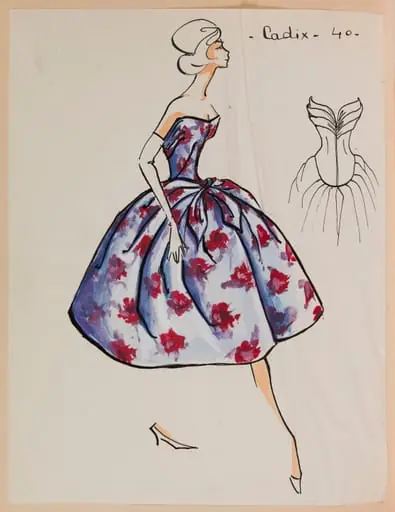
The figure is a woman dressed in a strapless dress adorned with stylized floral patterns. Her posture—hand on hip, arm bent—conveys quiet self-assurance rather than performative glamour. The title 'Héliopolis' remains unexplained; it may reference a place, a collection, or an internal code. No textual or visual clues link the image to a specific event or cultural reference, leaving its meaning open to interpretation.
Technique & Style
The sketch employs loose, rapid ink lines to define the figure’s form, while translucent watercolor washes suggest the floral motifs on the dress. The fabric is rendered with minimal detail, relying on implied movement and weight rather than precise rendering. The contrast between the controlled contours of the body and the spontaneous blooms creates a dynamic tension between structure and fluidity, characteristic of fashion sketches from the period.
History & Provenance
The sketch entered the Museum of Ethnography’s holdings without documented provenance prior to its acquisition. No records indicate its original commission, owner, or exhibition history. Its presence in an ethnographic institution, rather than a fashion archive, suggests it was collected for its cultural or aesthetic representation of mid-century dress, though its exact role in the collection remains unclear.
Context
In the late 1950s, Parisian fashion houses like Carven produced sketches as tools for design development and client presentation. This piece aligns with that tradition but diverges in its informal, almost intimate execution. Unlike commercial illustrations meant for publication, this drawing feels personal—perhaps a private exercise or a moment of inspiration. Its ethnographic placement hints at broader interest in everyday visual culture beyond haute couture.
Legacy
Though not widely published or exhibited, the sketch contributes to understanding how fashion designers worked beyond finished garments. Its preservation in an ethnographic museum underscores a growing recognition of design sketches as cultural artifacts. The work’s ambiguity—its unexplained title, lack of context—invites reflection on how personal creative acts become part of collective memory.
Artist & collection
Artist
These delicate ink-on-paper drawings capture the quiet poetry of everyday things: pinecones, reeds, apples.
Museum
Palais Galliera - Musée de la Mode de la Ville de Paris
Continue through works from the same source collection.