Artwork
Rose des sables
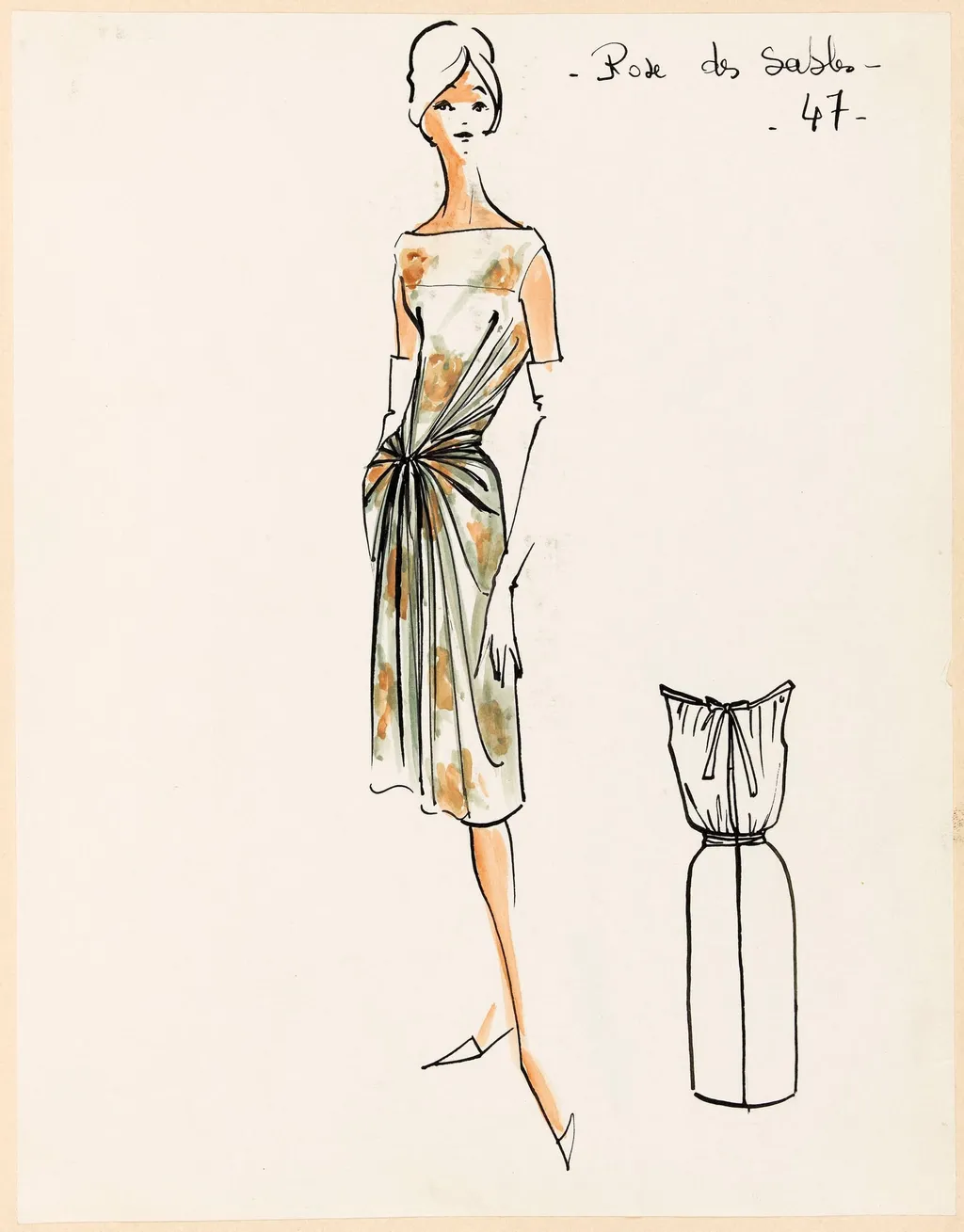
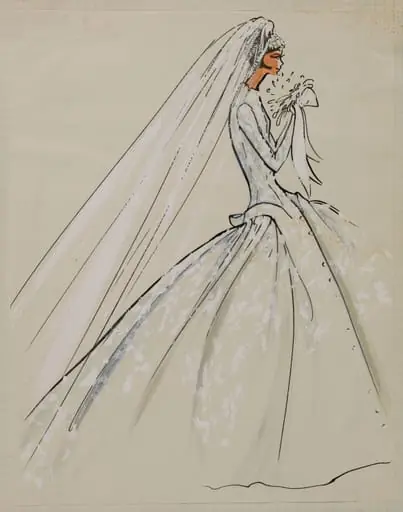
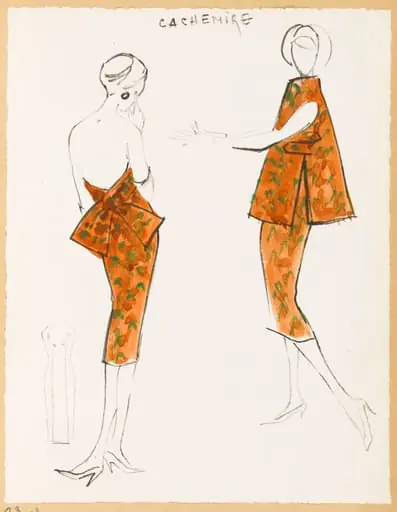
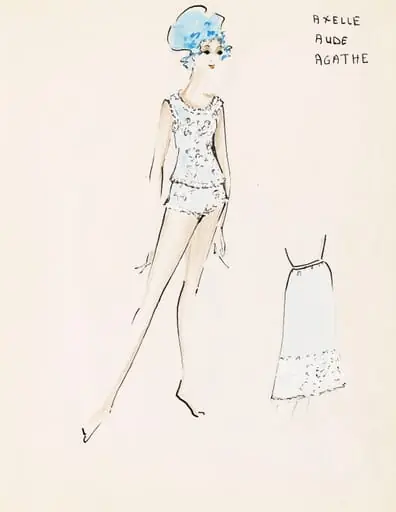
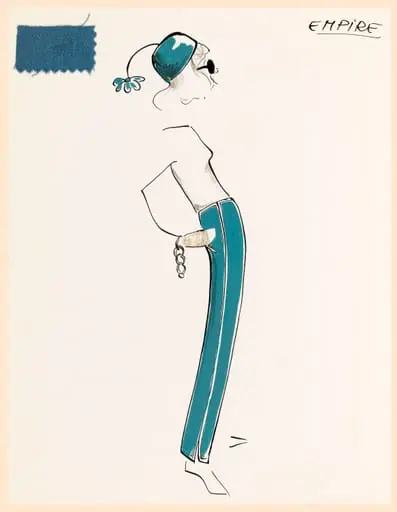
Rose des sables is a drawing by Carven. It dates from 1959 and is held in the collection of the Palais Galliera - Musée de la Mode de la Ville de Paris.
About this work
Overview
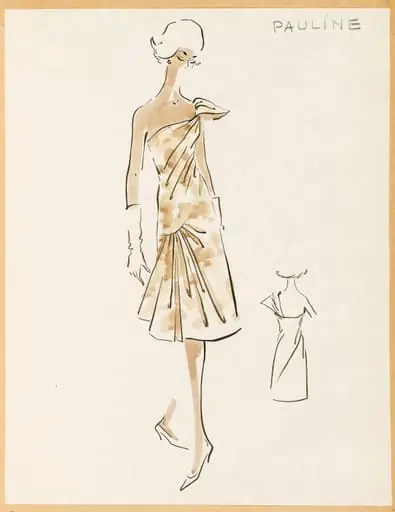
Created around 1959 by the French designer Carven, this ink sketch captures a moment of quiet observation. Executed in a spontaneous, fluid hand, it functions as a fashion study rather than a finished illustration. The work resides in the collection of the Museum of Ethnography, where it is preserved as part of a broader archive of mid-century textile and dress design.
Subject & Meaning
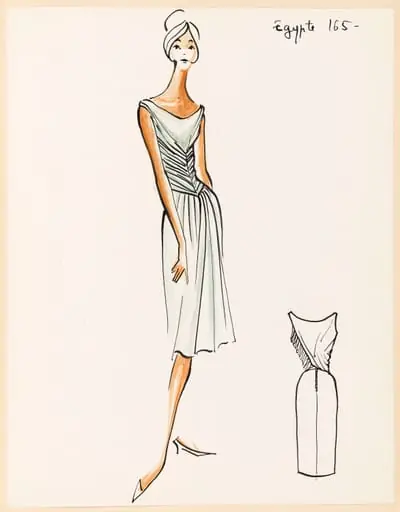
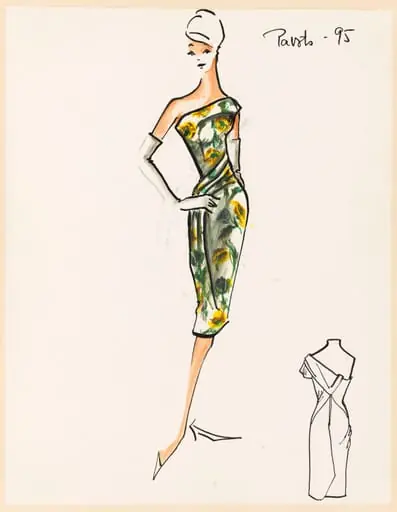
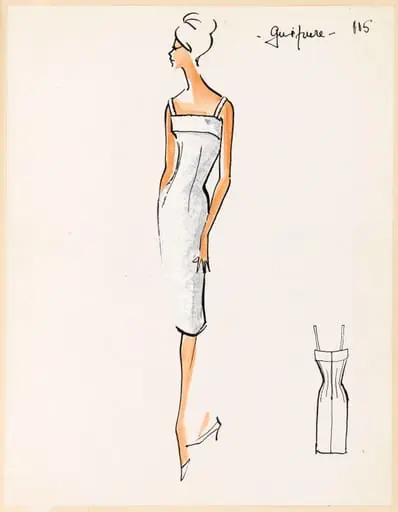
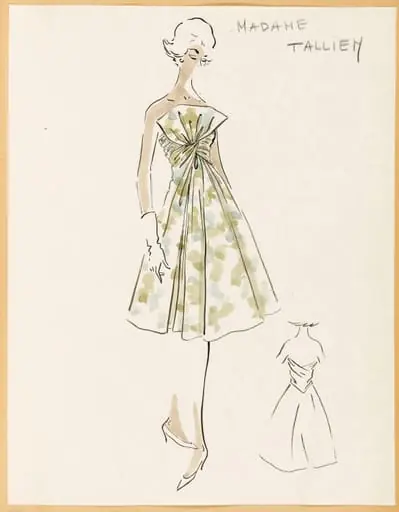
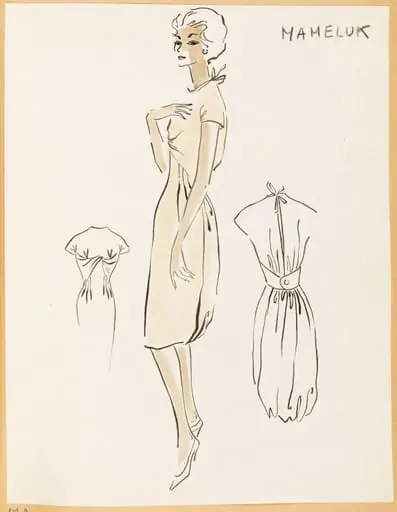
The figure is a woman wearing a lightweight, draped dress with bare shoulders and a waist tie. The accompanying front-view sketch of the garment suggests an interest in construction and fit. The title, Rose des sables—Rose of the Sands—evokes fragility and transience, possibly alluding to the dress’s airy form or a personal nickname, though no direct cultural reference is documented.
Technique & Style
Rendered with loose, rapid strokes, the drawing emphasizes movement and texture over precision. The folds of the fabric are suggested with minimal lines, and the figure’s posture is implied rather than fully modeled. The inclusion of a secondary, annotated view of the dress reveals a designer’s practical focus on silhouette and fastening details.
History & Provenance
The sketch entered the Museum of Ethnography’s collection as part of a group of materials related to postwar French fashion design. Its origin within Carven’s studio is inferred from stylistic consistency with known design notes, though no archival documentation confirms its exact date of creation or intended use.
Context
In the late 1950s, Parisian fashion houses often produced quick sketches to explore new silhouettes before pattern-making. Carven, known for lightweight, feminine designs, frequently used such studies to refine garments for clients seeking elegance without rigidity. This piece reflects that working method, bridging art and industry.
Legacy
The sketch remains a quiet example of how fashion designers documented ideas outside formal presentations. It contributes to understanding the informal, iterative process behind mid-century clothing, offering insight into the tactile and visual thinking of designers at work.
Artist & collection
Artist
These delicate ink-on-paper drawings capture the quiet poetry of everyday things: pinecones, reeds, apples.
Museum
Palais Galliera - Musée de la Mode de la Ville de Paris
Continue through works from the same source collection.