Artwork
Fabullite
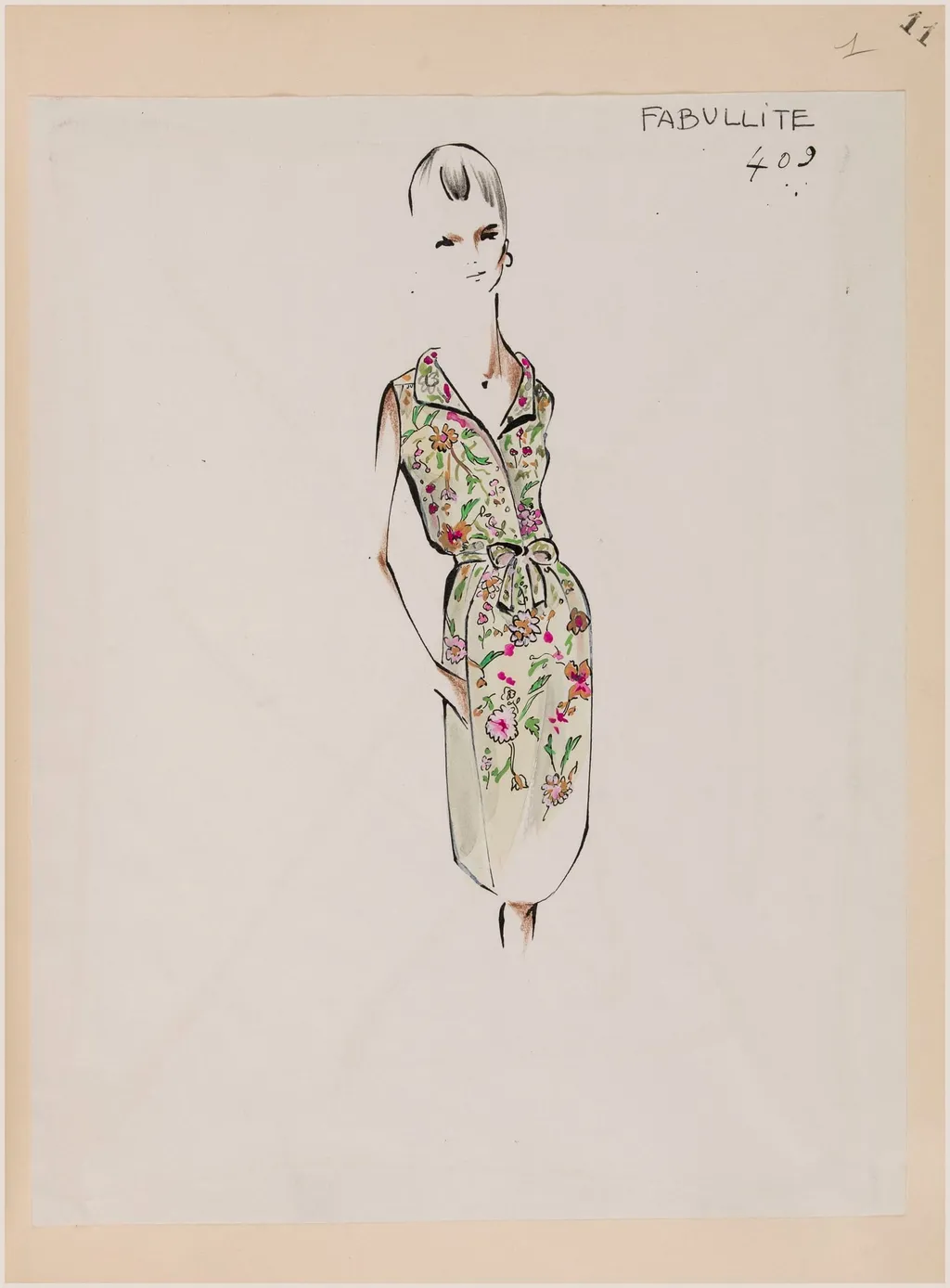
Fabullite is a drawing by Marie-Louise Carven. It dates from 1965 and is held in the collection of the Palais Galliera - Musée de la Mode de la Ville de Paris.
About this work
Overview
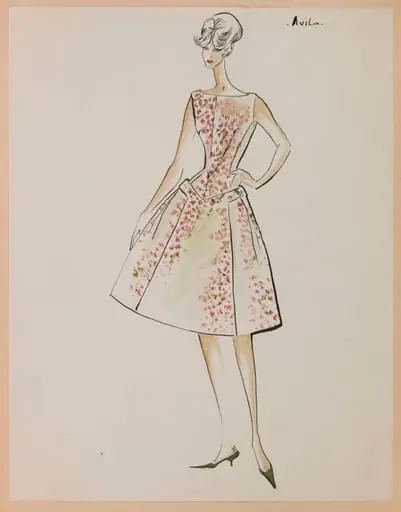
Executed with swift, unembellished strokes, the sketch captures a casual posture—hand on hip—suggesting ease and movement.
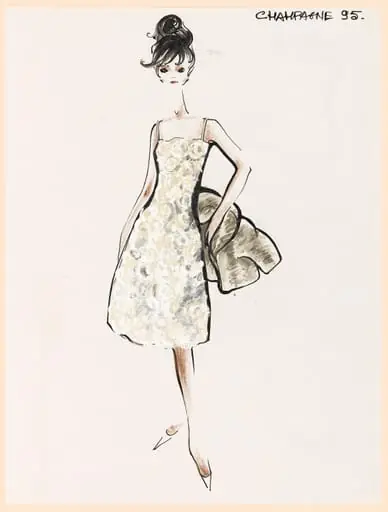
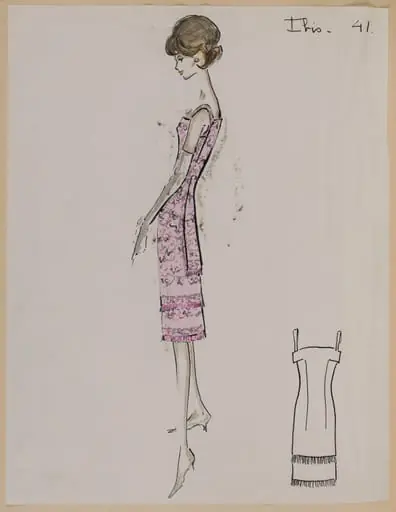
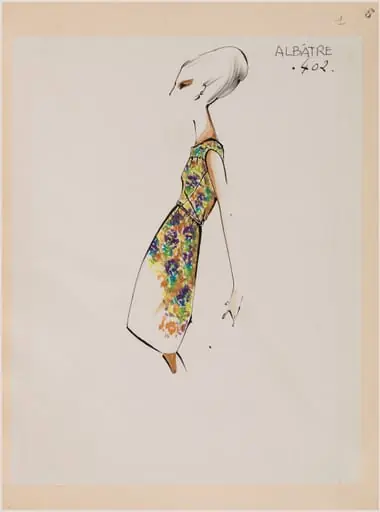
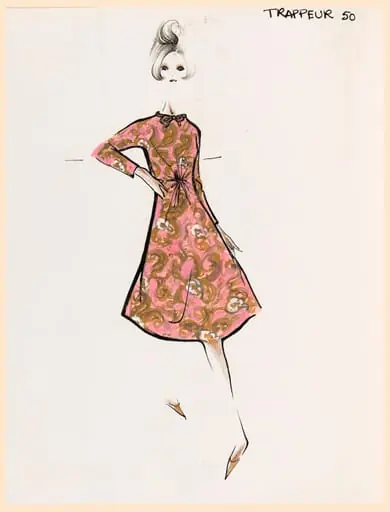
Fabullite is a line drawing from approximately 1965, attributed to the French fashion designer Marie-Louise Carven. It depicts a woman in a flowing dress adorned with a floral motif in pink, green, and white. Executed with swift, unembellished strokes, the sketch captures a casual posture—hand on hip—suggesting ease and movement. The title, inscribed in the corner, may refer to a textile design or collection name. The work resides in the Museum of Ethnography’s holdings.
Subject & Meaning
The figure in Fabullite embodies Carven’s ideal of feminine grace tailored for smaller frames. Her relaxed stance and unadorned features reflect a quiet confidence, avoiding theatricality. The floral pattern suggests a connection to domestic or garden-inspired motifs common in Carven’s ready-to-wear collections. The drawing functions less as a fashion plate and more as a personal study, capturing the spirit of her designs rather than their precise construction.
Technique & Style
Executed in ink or pencil, Fabullite employs loose, economical lines that prioritize rhythm over detail. The absence of shading and minimal use of color convey spontaneity, aligning with Carven’s preference for lightness in both fabric and form. The floral pattern is suggested rather than rendered meticulously, reinforcing the sketch’s immediacy. This approach mirrors her design philosophy: simplicity with subtle charm.
History & Provenance
Created during Carven’s active years as a designer, Fabullite likely originated as a personal or studio sketch, possibly used to communicate textile ideas to collaborators. It entered the Museum of Ethnography’s collection without documented provenance prior to its acquisition. Its inclusion suggests institutional interest in the cultural dimensions of mid-century fashion design, beyond haute couture.
Context
In the 1960s, Carven was recognized for democratizing fashion through accessible prêt-à-porter lines, often using delicate fabrics like gingham and lace. Fabullite aligns with this ethos, translating her aesthetic into a graphic form. Unlike editorial illustrations of the era, it lacks commercial intent, instead reflecting the designer’s private visual language—rooted in everyday elegance and feminine subtlety.
Legacy
Fabullite remains a quiet testament to Carven’s influence on postwar French fashion, particularly in redefining proportion and comfort for petite figures. While not widely exhibited, its presence in an ethnographic collection signals recognition of fashion as cultural artifact. The sketch endures as an unpretentious record of a designer’s intuitive approach to form, fabric, and movement.
Artist & collection
Artist
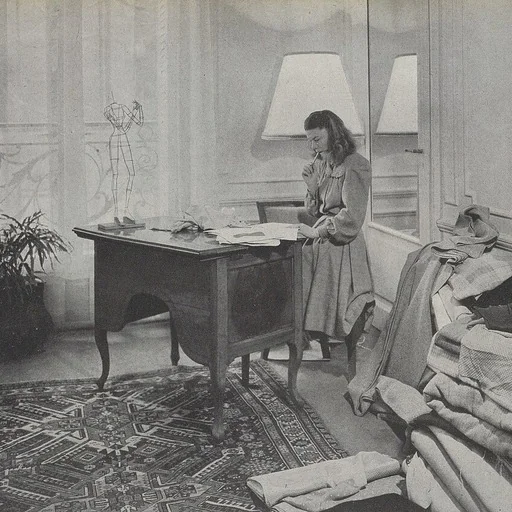
Marie-Louise Carven (31 August 1909 – 8 June 2015), born Carmen de Tommaso, was a French fashion designer who founded the house of Carven in 1945.

Museum
Palais Galliera - Musée de la Mode de la Ville de Paris
Continue through works from the same source collection.
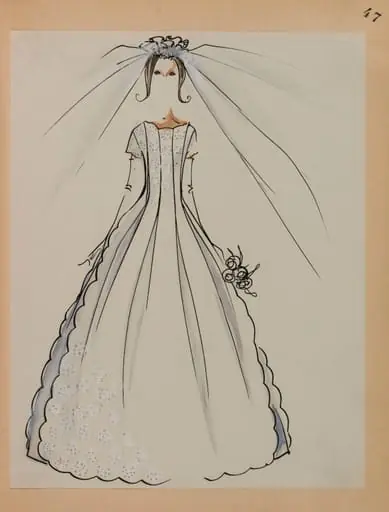 Robe de mariée festonnée et son voile
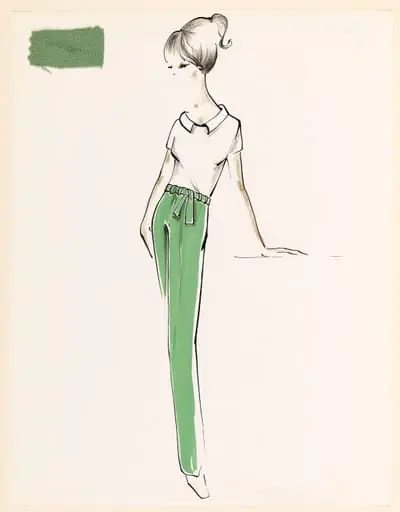 Haut blanc à manches courtes et pantalon vert à ceinture nouée
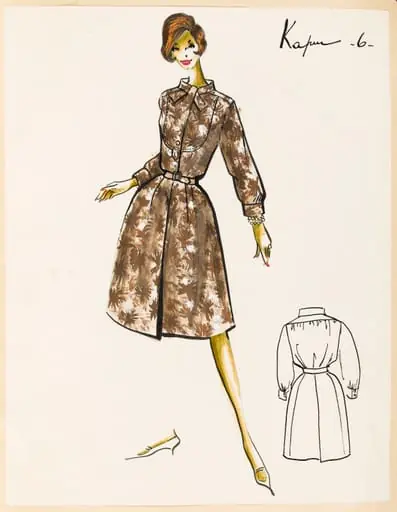 Kapur
Kapur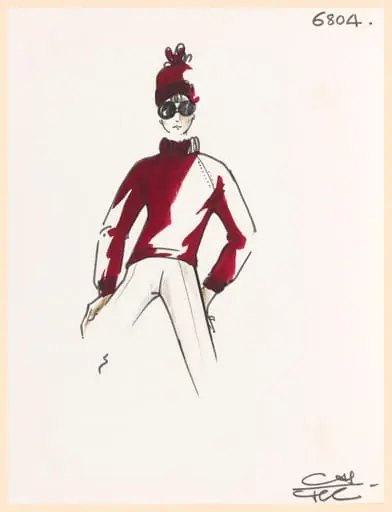 Pull-over à manches longues pourpre, bonnet assorti, pantalon et lunettes de soleil
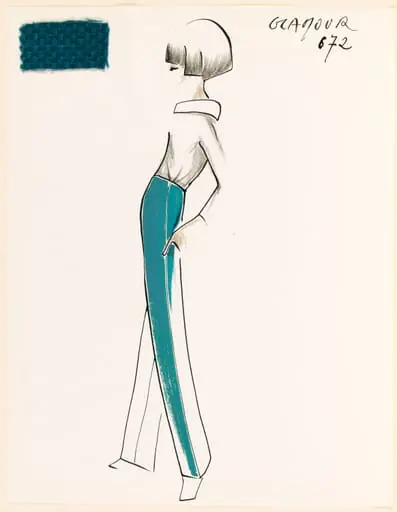 GLAMOUR
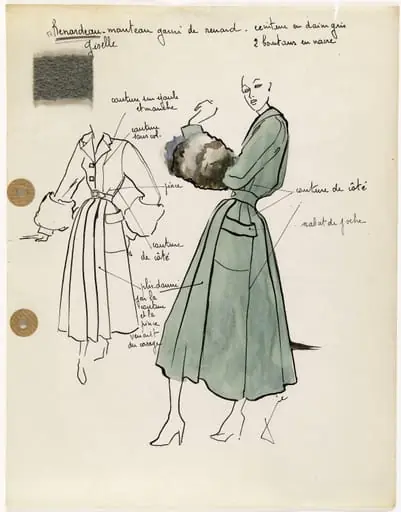 'Renardeau'
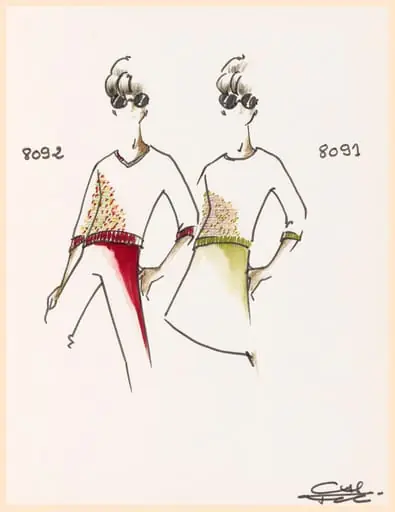 Pull-over à manches trois quarts et à encolure V à motifs multicolores, pantalon cerise et lunettes de soleil
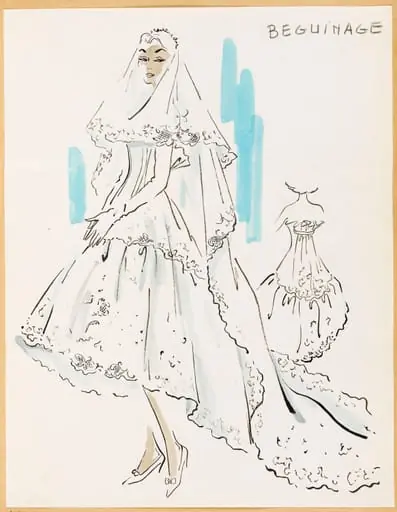 Béguinage