Artwork
Il pleut bergère - raton laveur
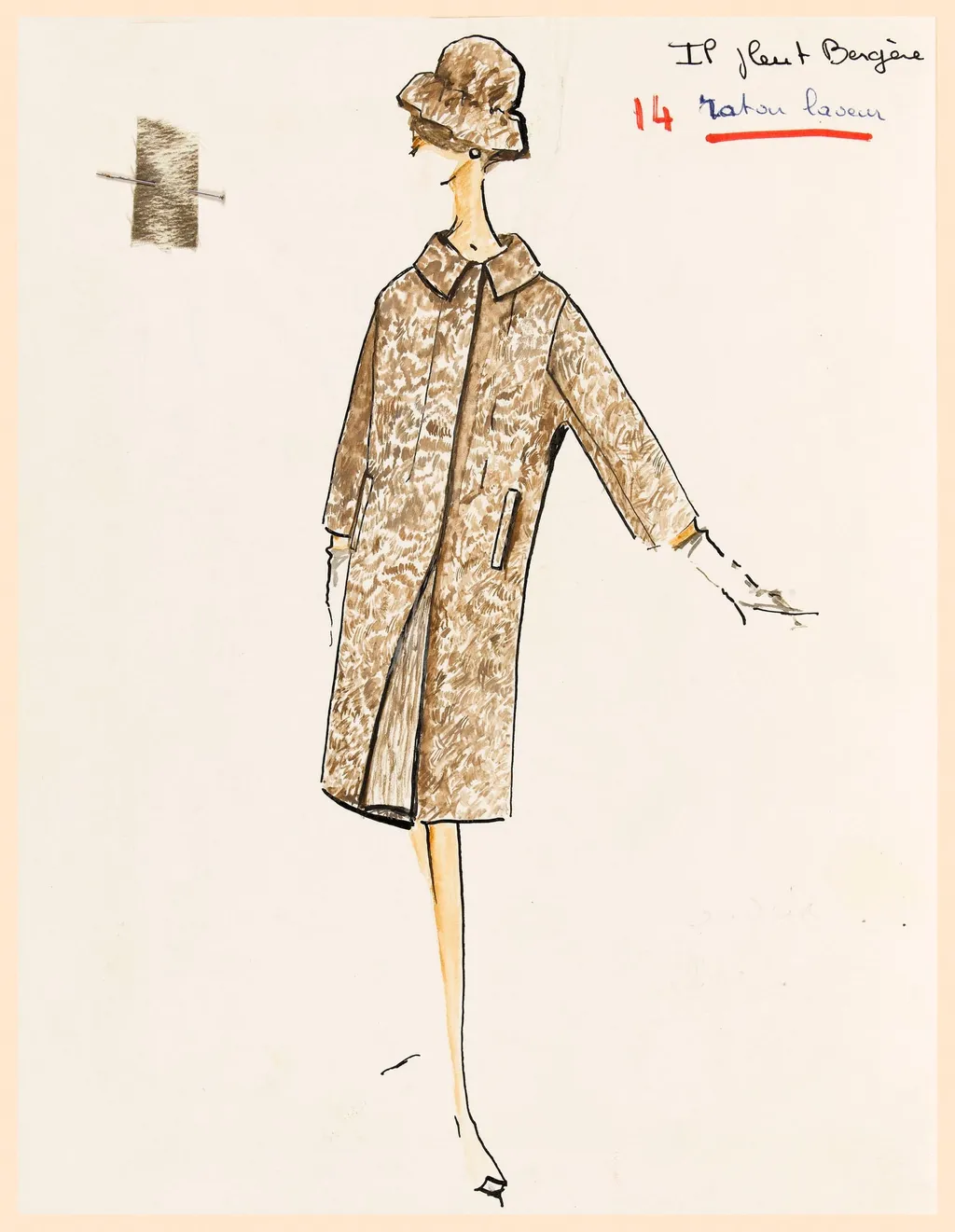
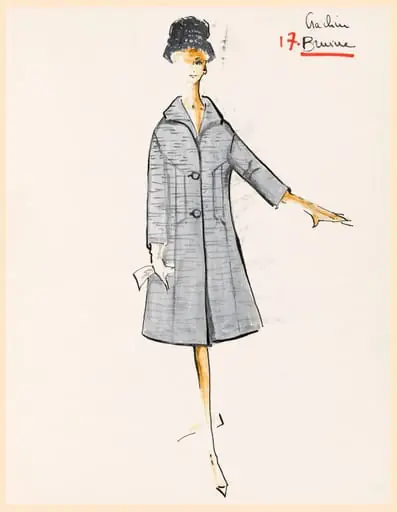
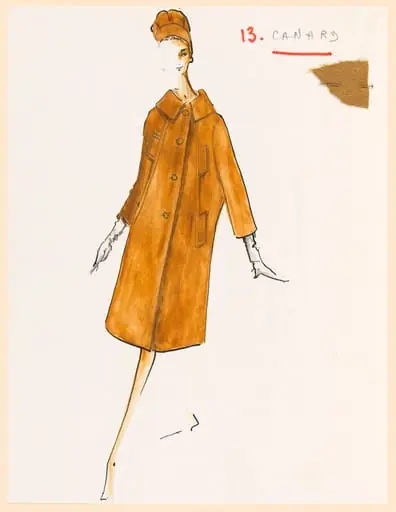
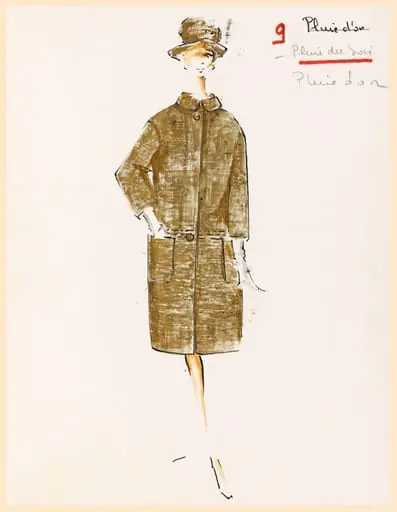
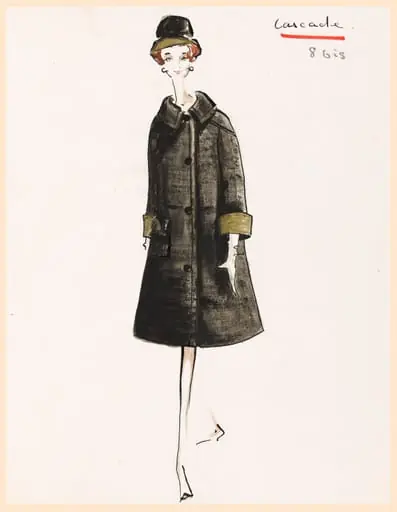
Il pleut bergère - raton laveur is a drawing by Carven. It dates from 1967 and is held in the collection of the Palais Galliera - Musée de la Mode de la Ville de Paris.
About this work
Overview
Created around 1967 by the designer Carven, this small sketch combines text and material in an unconventional way. It is part of the Museum of Ethnography’s collection and blends artistic representation with an actual fur sample. The work resists easy categorization, existing between fashion design, drawing, and artifact.
Subject & Meaning
The figure, labeled 'bergère' (shepherdess) and 'raton laveur' (raccoon), merges pastoral imagery with a wild animal. The handwritten phrases suggest a poetic or ironic juxtaposition—perhaps evoking the tension between domesticated rural life and nature’s intrusion. The fur swatch may imply authenticity or serve as a tactile metaphor for identity and disguise.
Technique & Style
The drawing employs loose, expressive lines to suggest a long, fur-lined coat with a broad collar and wide-brimmed hat. Cross-hatching defines the texture of the fur, mimicking its depth and irregularity. A small, real fur fragment is affixed to the corner, blurring the line between representation and material reality, grounding the image in physical experience.
History & Provenance
The work entered the Museum of Ethnography’s holdings after being acquired from Carven’s personal archive. Its origins are tied to the designer’s experimental phase in the late 1960s, when fashion sketches often incorporated tactile elements. The inclusion of actual fur suggests a deliberate engagement with materiality beyond the page.
Context
Emerging during a period when fashion designers increasingly blurred art and craft, this piece reflects broader postwar interests in hybrid forms. The use of French text and animal symbolism aligns with European surreal and poetic traditions, while the physical fur sample echoes ethnographic collecting practices of the time.
Legacy
Though not widely exhibited, the work has influenced later discussions on materiality in fashion design. Its integration of real fabric into a sketch challenges conventional boundaries of drawing and artifact, encouraging viewers to consider textiles not just as subjects, but as integral components of meaning.
Artist & collection
Artist
These delicate ink-on-paper drawings capture the quiet poetry of everyday things: pinecones, reeds, apples.
Museum
Palais Galliera - Musée de la Mode de la Ville de Paris
Continue through works from the same source collection.