Artwork
Canard
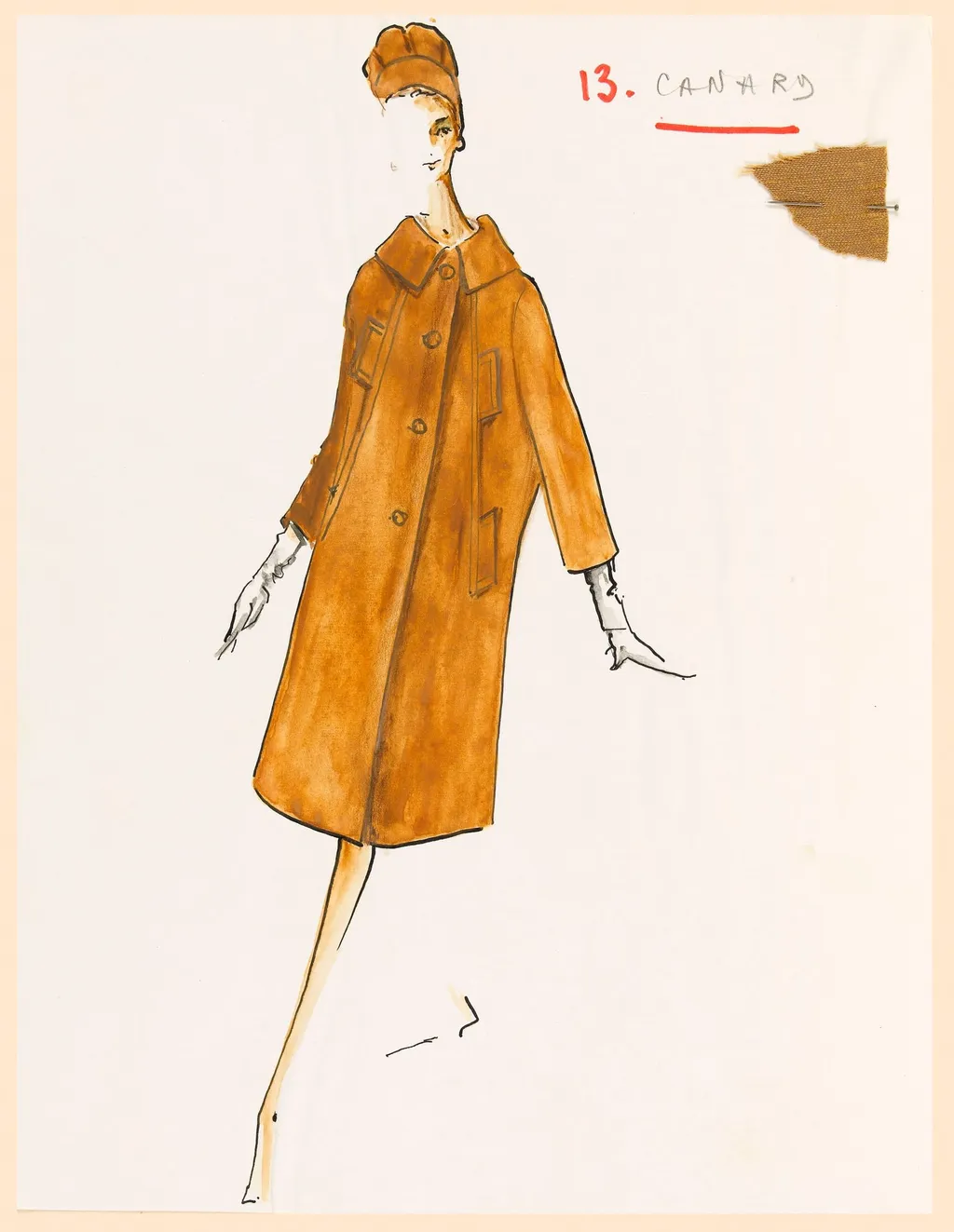
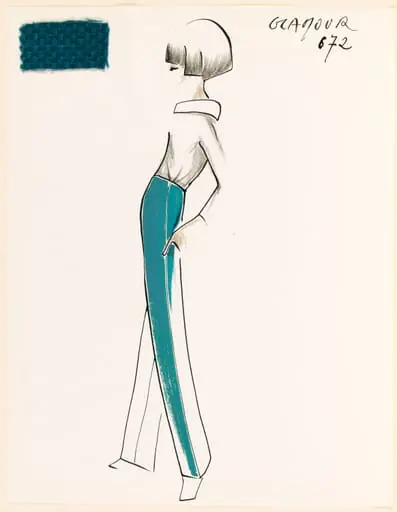
Canard is a drawing by Marie-Louise Carven. It dates from 1967 and is held in the collection of the Palais Galliera - Musée de la Mode de la Ville de Paris.
About this work
Overview
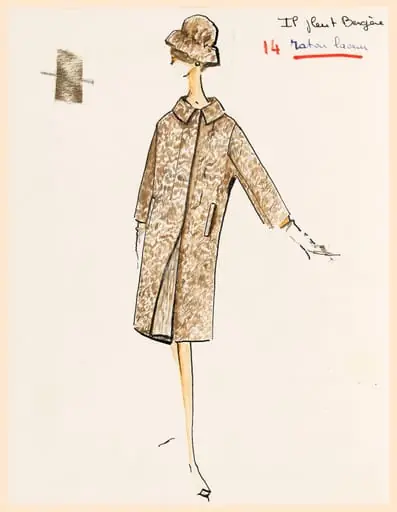
Created around 1967 by French designer Marie-Louise Carven, *Canard* is a fashion sketch that blends design documentation with material experimentation.
Created around 1967 by French designer Marie-Louise Carven, *Canard* is a fashion sketch that blends design documentation with material experimentation. As the founder of the Carven label in 1945, Carven was among the earliest couturiers to embrace ready-to-wear fashion. This drawing, held in the Museum of Ethnography, reflects her interest in practical, wearable garments for smaller frames, executed with a tactile sensitivity to fabric and form.
Subject & Meaning
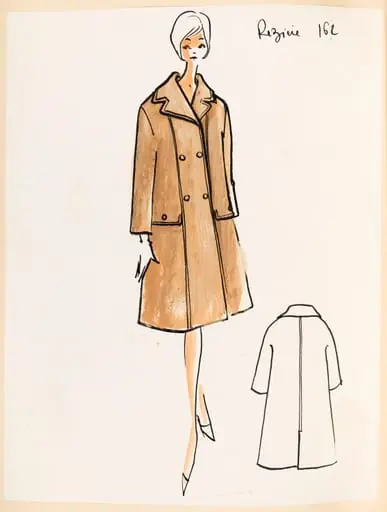
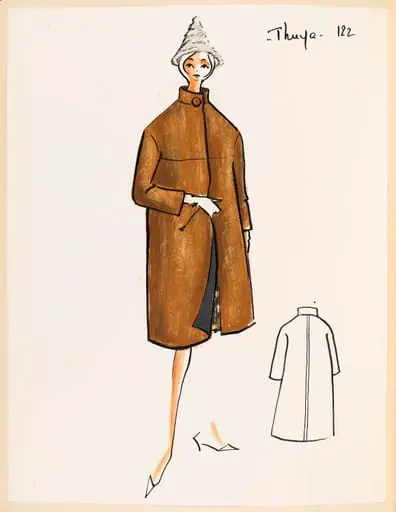
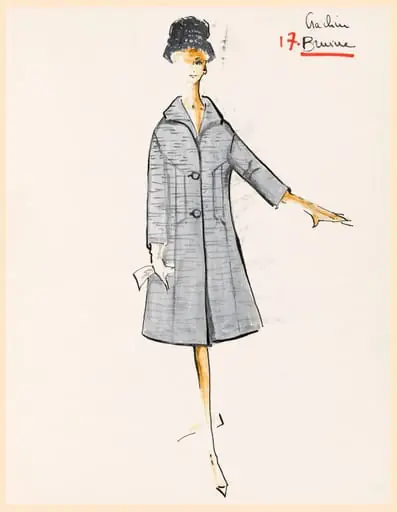
The drawing depicts a figure dressed in a long, woolen coat with a high collar, large pockets, gloves, and a hat—suggesting cold-weather attire. The title 'Canard,' meaning 'duck' in French, may allude to the coat’s protective, layered quality or reference a seasonal motif. The plain white background focuses attention on the garment’s structure, while the inclusion of a fabric swatch anchors the design in physical reality, bridging concept and material.
Technique & Style
Carven rendered the coat with bold, simplified lines that emphasize volume and texture, suggesting thick wool without detailed shading. The figure is minimally defined, prioritizing the garment’s silhouette. A small, real fabric swatch is affixed in the upper right corner, a deliberate technique to communicate materiality directly. Red ink labels the piece, functioning as both title and annotation, reinforcing the sketch’s role as a working document rather than a finished illustration.
History & Provenance
The drawing originated in Carven’s design studio during the late 1960s, a period when her brand was expanding its prêt-à-porter offerings. It entered the collection of the Museum of Ethnography as part of a broader effort to document fashion as cultural artifact. Its preservation reflects institutional recognition of design sketches as significant records of 20th-century textile practice, particularly those that integrate physical materials.
Context
In the 1960s, Parisian fashion houses increasingly shifted toward accessible, mass-produced clothing. Carven’s work, including *Canard*, exemplifies this transition—balancing haute couture precision with the demands of ready-to-wear production. The inclusion of a fabric sample in the sketch aligns with industry practices of the time, where designers used tangible references to ensure consistency between concept and final product.
Legacy
The drawing stands as a quiet testament to Carven’s influence in democratizing fashion without sacrificing craftsmanship. By integrating real fabric into her sketches, she elevated the design process into a tactile dialogue between idea and material. Today, *Canard* contributes to scholarly understanding of how mid-century designers navigated the evolving relationship between art, industry, and everyday wear.
Artist & collection
Artist
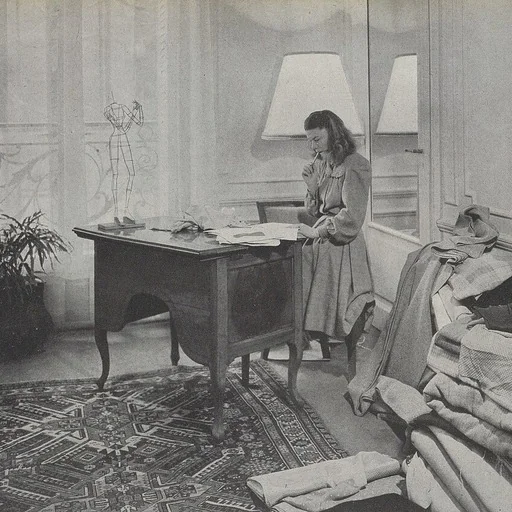
Marie-Louise Carven (31 August 1909 – 8 June 2015), born Carmen de Tommaso, was a French fashion designer who founded the house of Carven in 1945.
Museum
Palais Galliera - Musée de la Mode de la Ville de Paris
Continue through works from the same source collection.
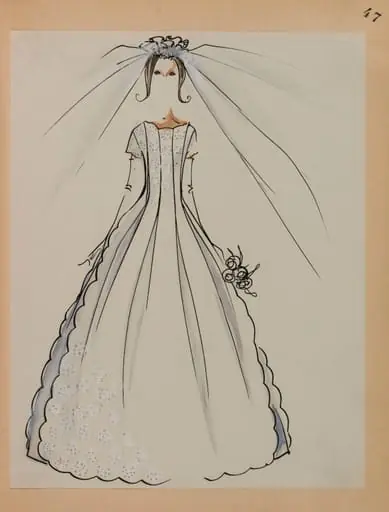 Robe de mariée festonnée et son voile
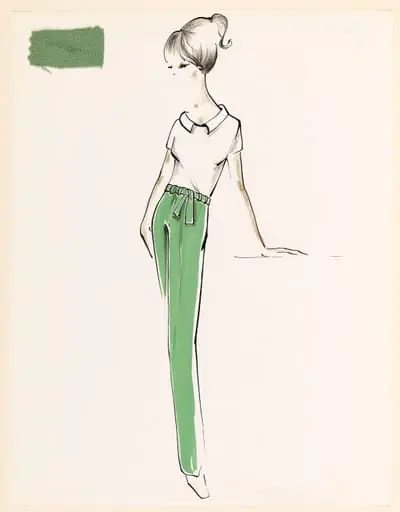 Haut blanc à manches courtes et pantalon vert à ceinture nouée
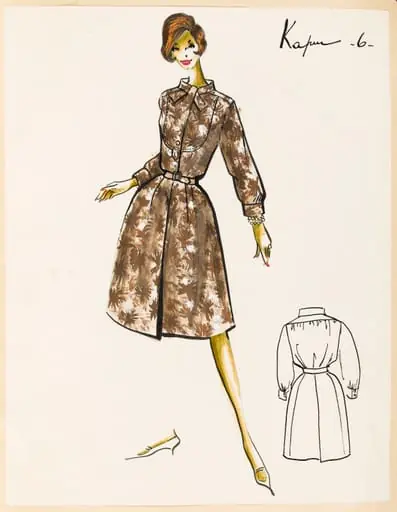 Kapur
Kapur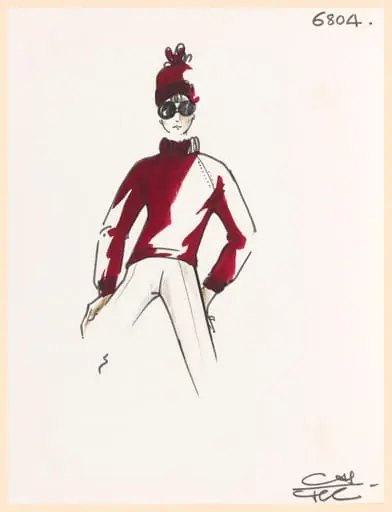 Pull-over à manches longues pourpre, bonnet assorti, pantalon et lunettes de soleil
 GLAMOUR
 'Renardeau'
 Pull-over à manches trois quarts et à encolure V à motifs multicolores, pantalon cerise et lunettes de soleil
 Béguinage