Artwork
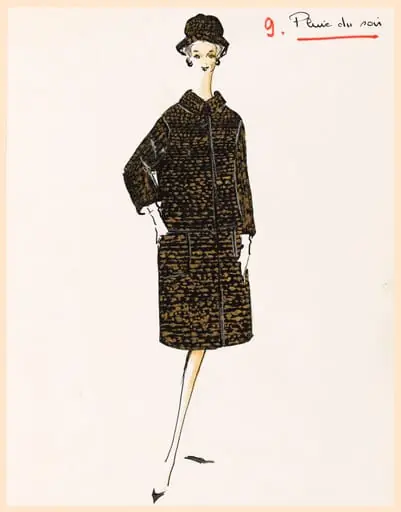
Pluie de Chine - Pluie Câline
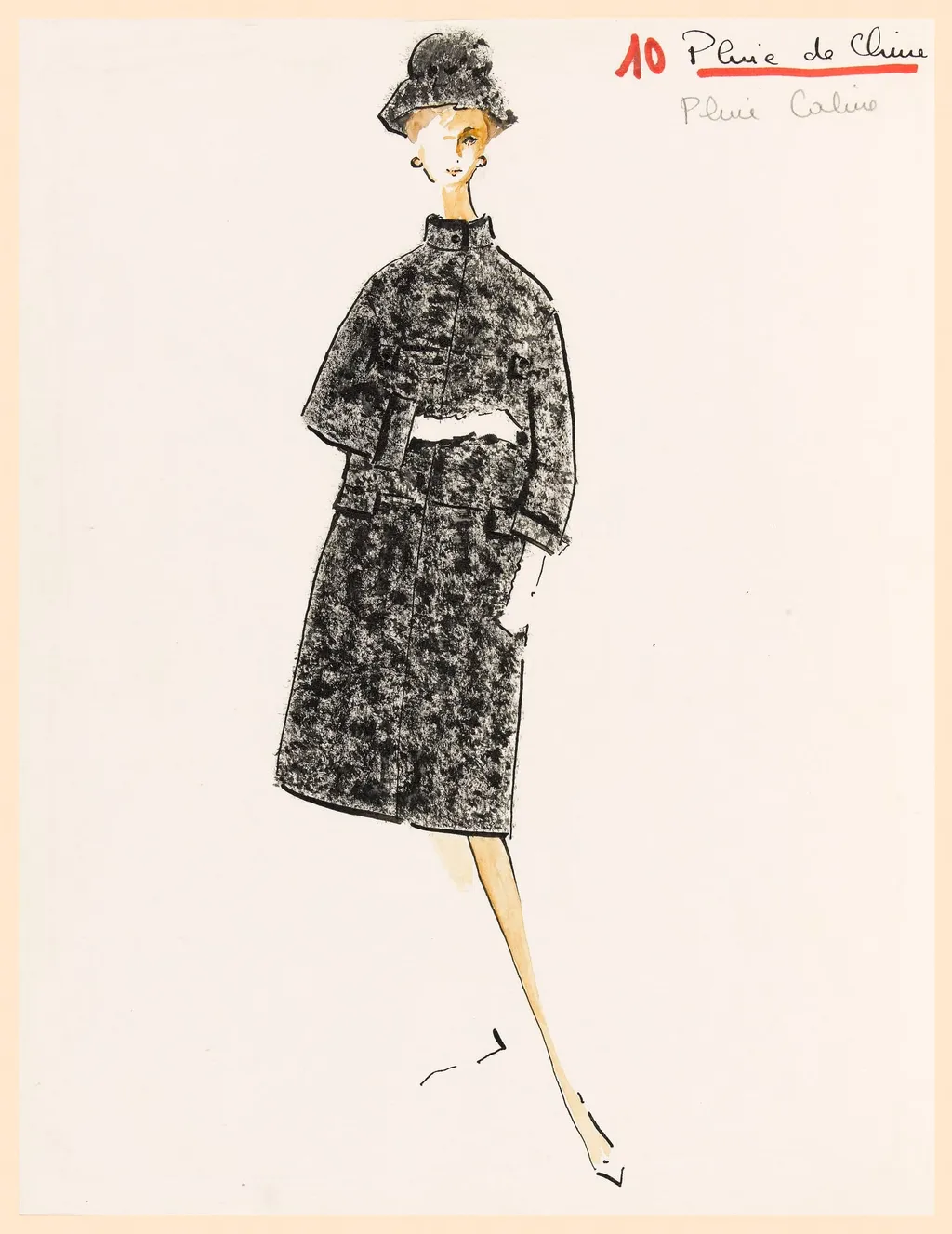
Pluie de Chine - Pluie Câline is a drawing by Carven. It dates from 1967 and is held in the collection of the Palais Galliera - Musée de la Mode de la Ville de Paris.
About this work
Overview
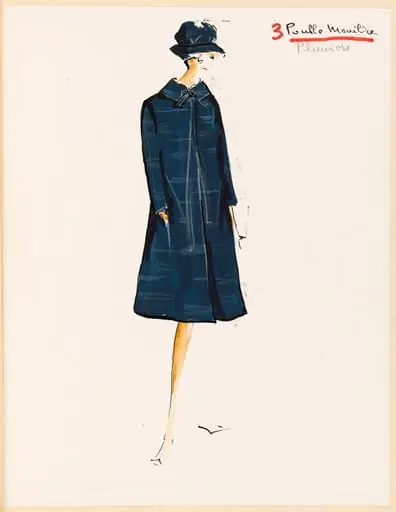
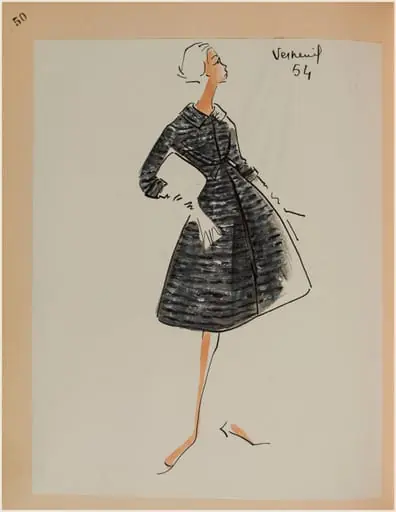
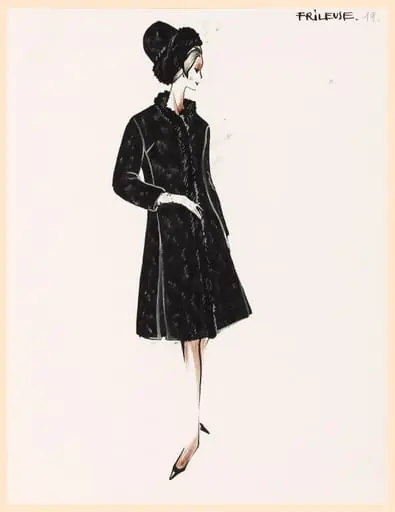
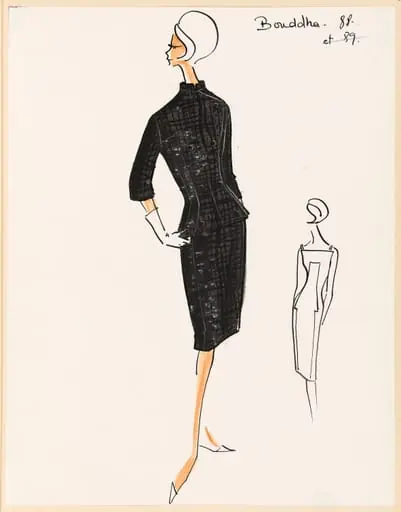
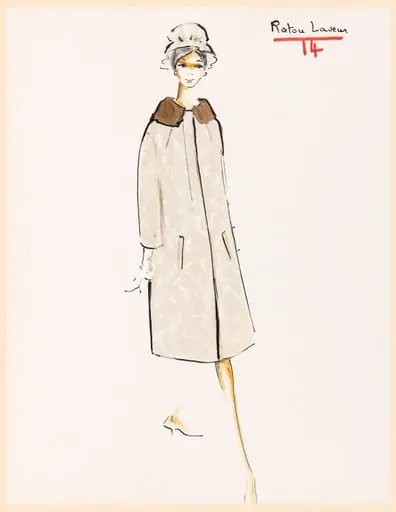
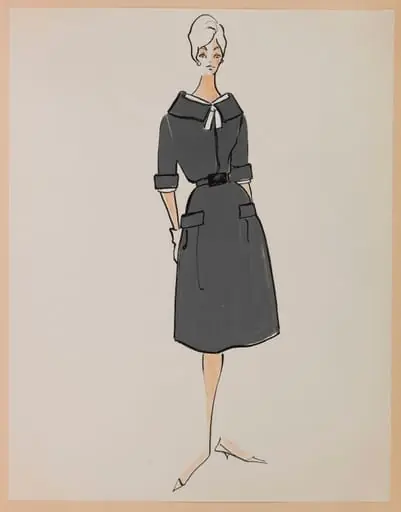
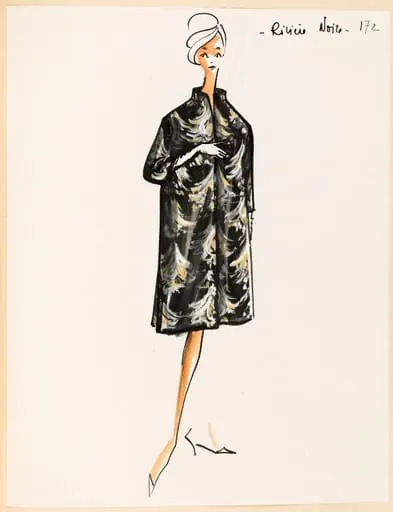
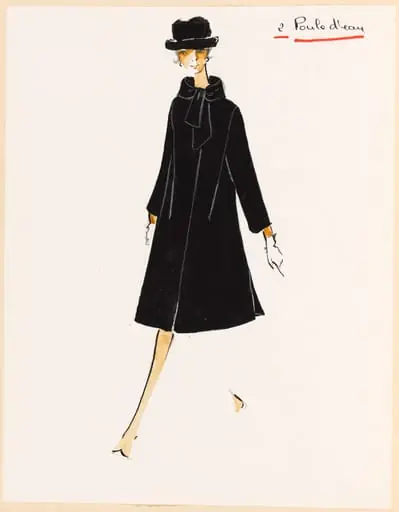
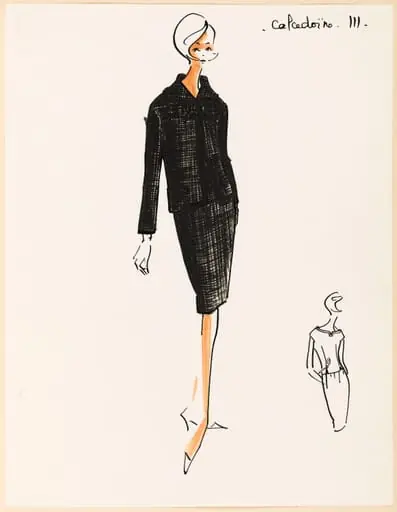
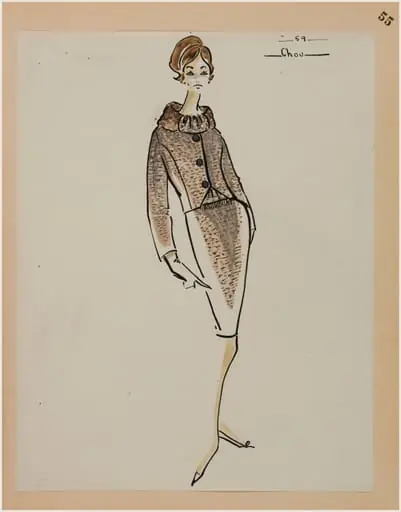
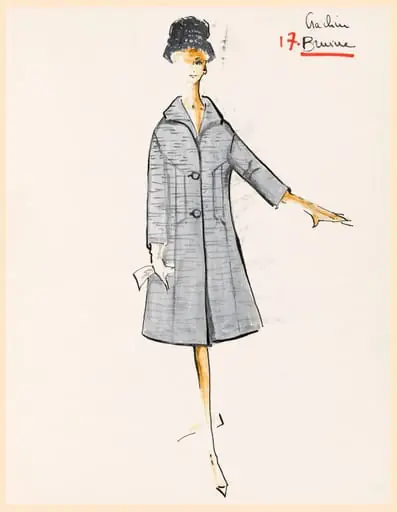
Pluie de Chine - Pluie Câline is a black-and-white fashion drawing from around 1967, attributed to the French design house Carven.
Pluie de Chine - Pluie Câline is a black-and-white fashion drawing from around 1967, attributed to the French design house Carven. It depicts a woman in a refined ensemble, rendered with minimal color accents of yellow and orange. The piece is held in the collection of the Museum of Ethnography, where it is preserved as an example of mid-century fashion illustration, reflecting the aesthetic values of its time rather than fine art traditions.
Subject & Meaning
The subject is a woman dressed in a tailored hat, high-collared jacket, and knee-length skirt, suggesting urban sophistication. Her posture—head turned left, right hand resting near the waist—conveys quiet composure. The title, evoking gentle rain and Chinese imagery, may hint at an exoticized notion of elegance, common in 1960s European fashion narratives, though no explicit narrative is conveyed beyond the poise of the figure and her attire.
Technique & Style
The drawing employs clean, precise lines typical of fashion illustration, emphasizing silhouette and garment structure. Subtle washes of yellow and orange add warmth without overwhelming the monochrome base. The absence of detailed facial features shifts focus entirely to clothing, while the restrained palette and deliberate brushwork reflect a design sensibility aligned with editorial fashion drawing of the era.
History & Provenance
Created circa 1967, the work originated within Carven’s design studio, likely as a promotional or archival sketch. It entered the Museum of Ethnography’s collection at an unknown date, possibly through donation or acquisition of fashion-related materials. Its presence in an ethnographic context suggests an interest in fashion as cultural expression, rather than as high art or commercial product.
Context
In the late 1960s, fashion illustration was a vital medium for designers to communicate style before photography dominated editorial spaces. Carven, known for its feminine yet structured designs, used such drawings to project an image of refined modernity. The work reflects a broader trend of blending European tailoring with stylized, sometimes orientalizing, motifs popular in postwar fashion.
Legacy
Pluie de Chine - Pluie Câline remains a quiet artifact of mid-century fashion design practice. While not widely exhibited, its preservation in an ethnographic museum underscores shifting academic interest in fashion as cultural artifact. It contributes to ongoing documentation of how design houses visually articulated identity, gender, and taste during a period of rapid social change.
Artist & collection
Artist
These delicate ink-on-paper drawings capture the quiet poetry of everyday things: pinecones, reeds, apples.
Museum
Palais Galliera - Musée de la Mode de la Ville de Paris
Continue through works from the same source collection.