Artwork
Indigo
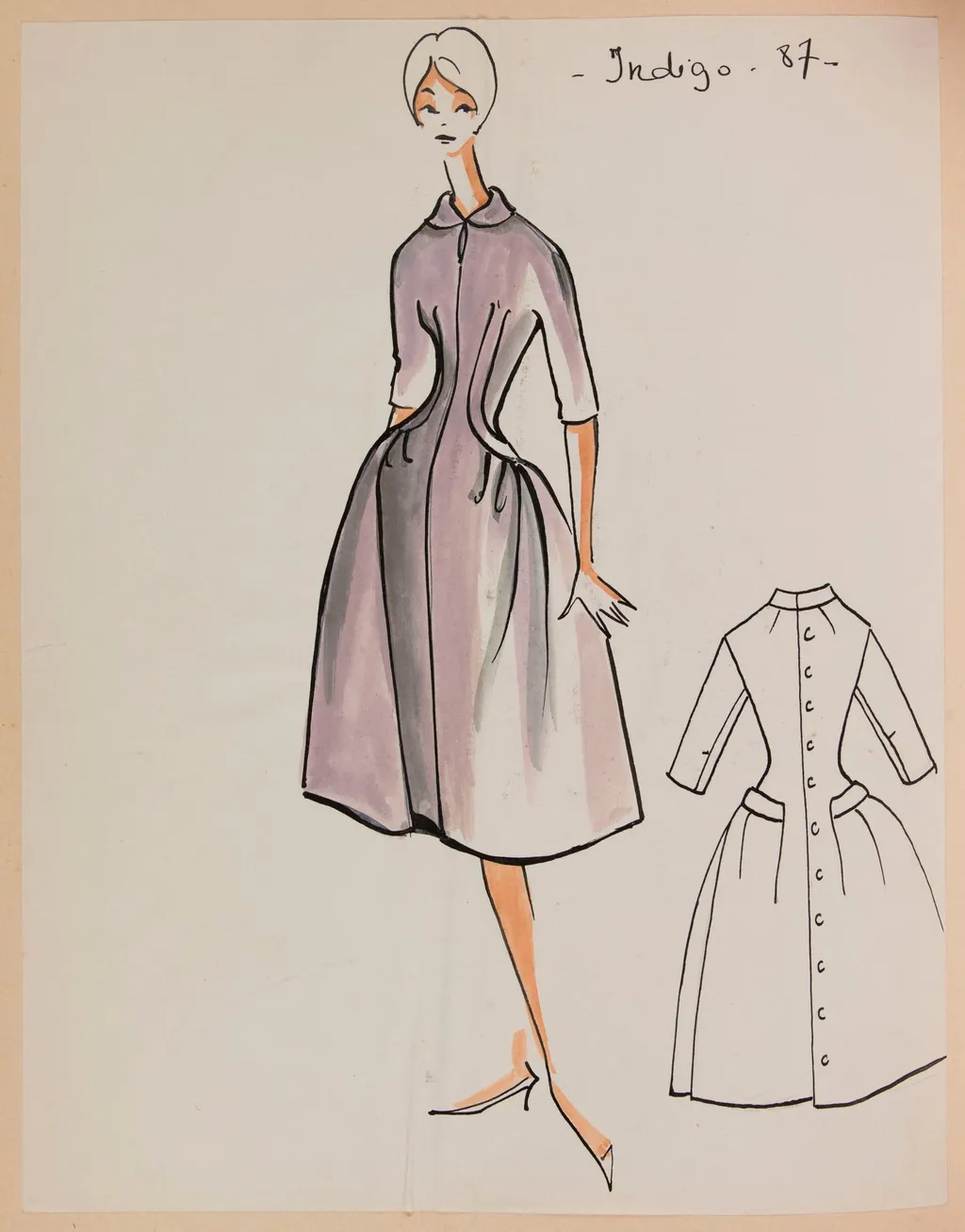
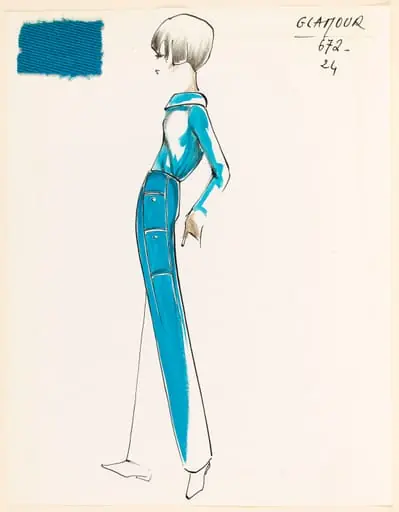
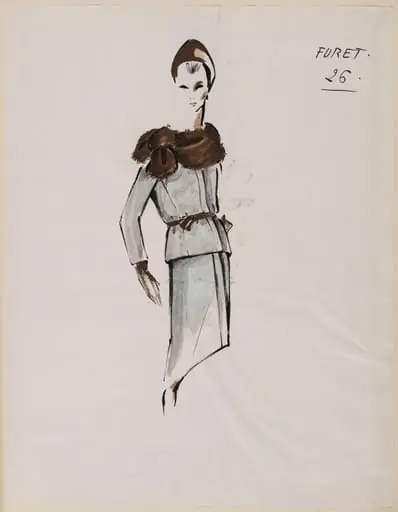
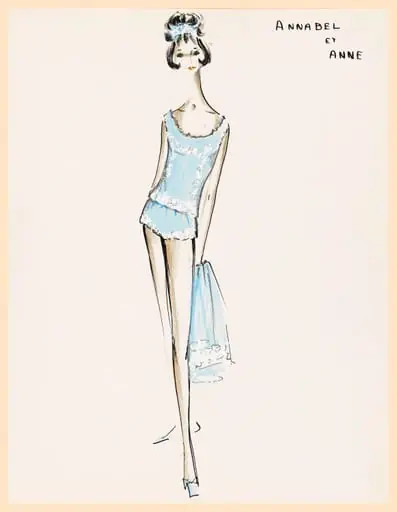
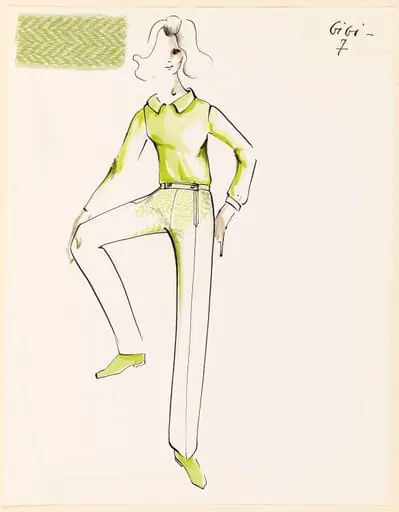
Indigo is a drawing by Carven. It dates from 1958 and is held in the collection of the Palais Galliera - Musée de la Mode de la Ville de Paris.
About this work
Overview
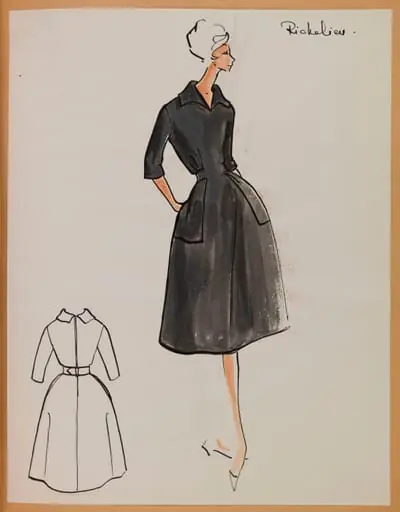
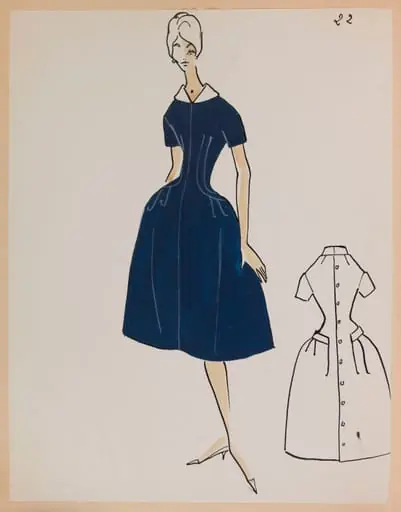
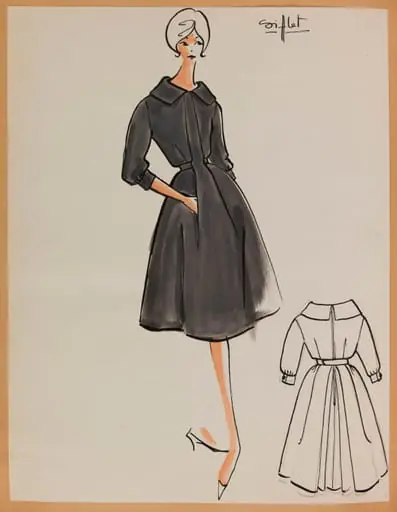
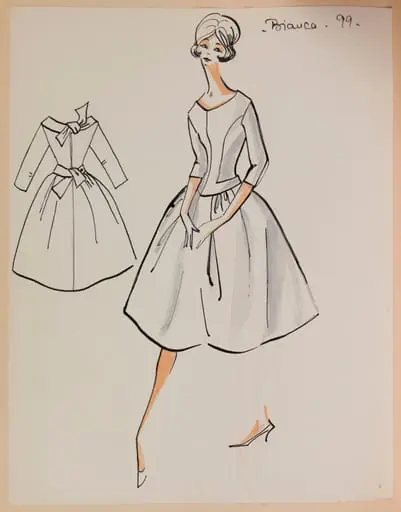
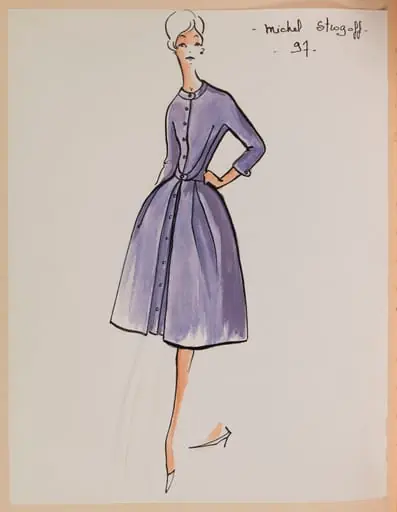
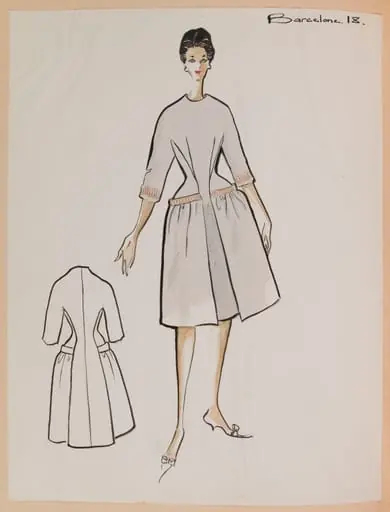
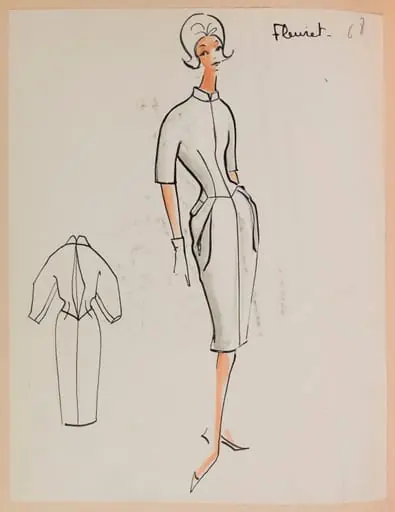
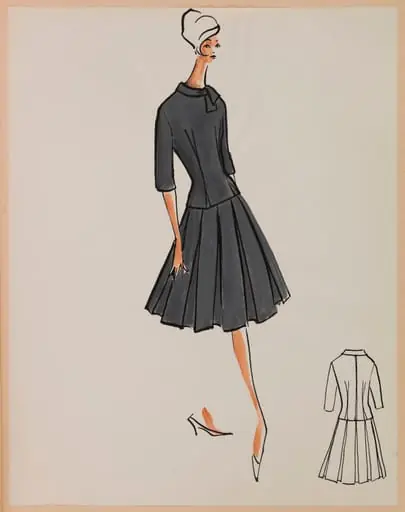
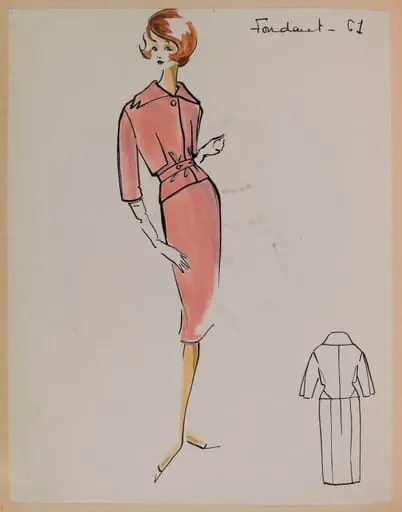
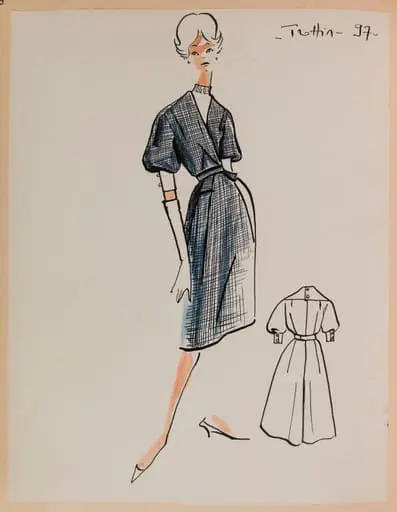
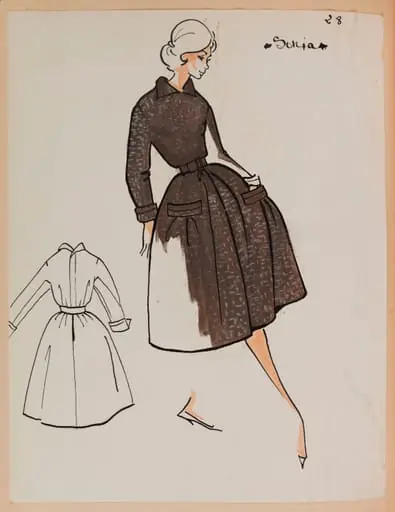
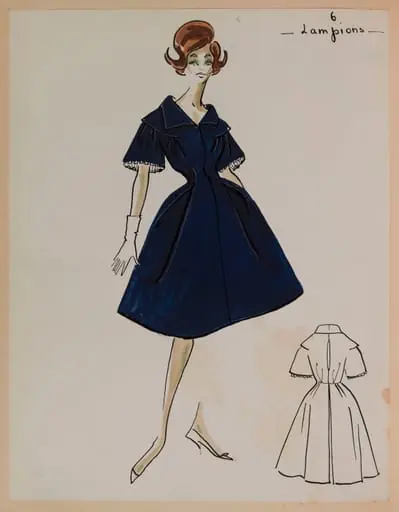
Created around 1958 by Carven, this ink sketch is part of the Museum of Ethnography’s collection. It presents a preliminary study for a garment, capturing the silhouette of a woman in a modest, knee-length dress with short sleeves and a small collar. The drawing’s loose, unrefined lines suggest it was made during the early stages of design, prioritizing form over ornamentation.
Subject & Meaning
The figure depicted is anonymous, her identity subordinated to the garment she wears. The sketch’s focus on the dress—its cut, fit, and seams—indicates an intent to document a wearable design rather than portray a person. The label 'Indigo' implies a connection to dye or fabric choice, possibly signaling the intended material for the final piece.
Technique & Style
Rendered in quick, fluid ink strokes, the sketch emphasizes contour and proportion rather than texture or shading. To the right, a simplified outline of the dress is annotated with small 'c' marks, likely indicating seam placements or construction details. The absence of facial features or background reinforces its function as a technical blueprint.
History & Provenance
The work entered the Museum of Ethnography’s holdings as part of a broader collection of fashion documentation. While the exact circumstances of its acquisition are not recorded, its inclusion suggests institutional interest in preserving the process behind mid-century garment design, not merely finished garments.
Context
In the late 1950s, fashion houses like Carven relied on hand-drawn sketches to communicate designs to ateliers. This piece reflects a transitional moment in design practice, where artisanal drafting coexisted with emerging industrial methods. The sketch’s simplicity aligns with postwar aesthetics favoring clean lines and functional elegance.
Legacy
As a record of design thinking, the sketch offers insight into how clothing was conceived before mass production. It preserves the hand of the designer in an era increasingly dominated by technical templates. Today, it stands as a quiet testament to the labor behind everyday garments of the period.
Artist & collection
Artist
These delicate ink-on-paper drawings capture the quiet poetry of everyday things: pinecones, reeds, apples.
Museum
Palais Galliera - Musée de la Mode de la Ville de Paris
Continue through works from the same source collection.