Artwork
Jade
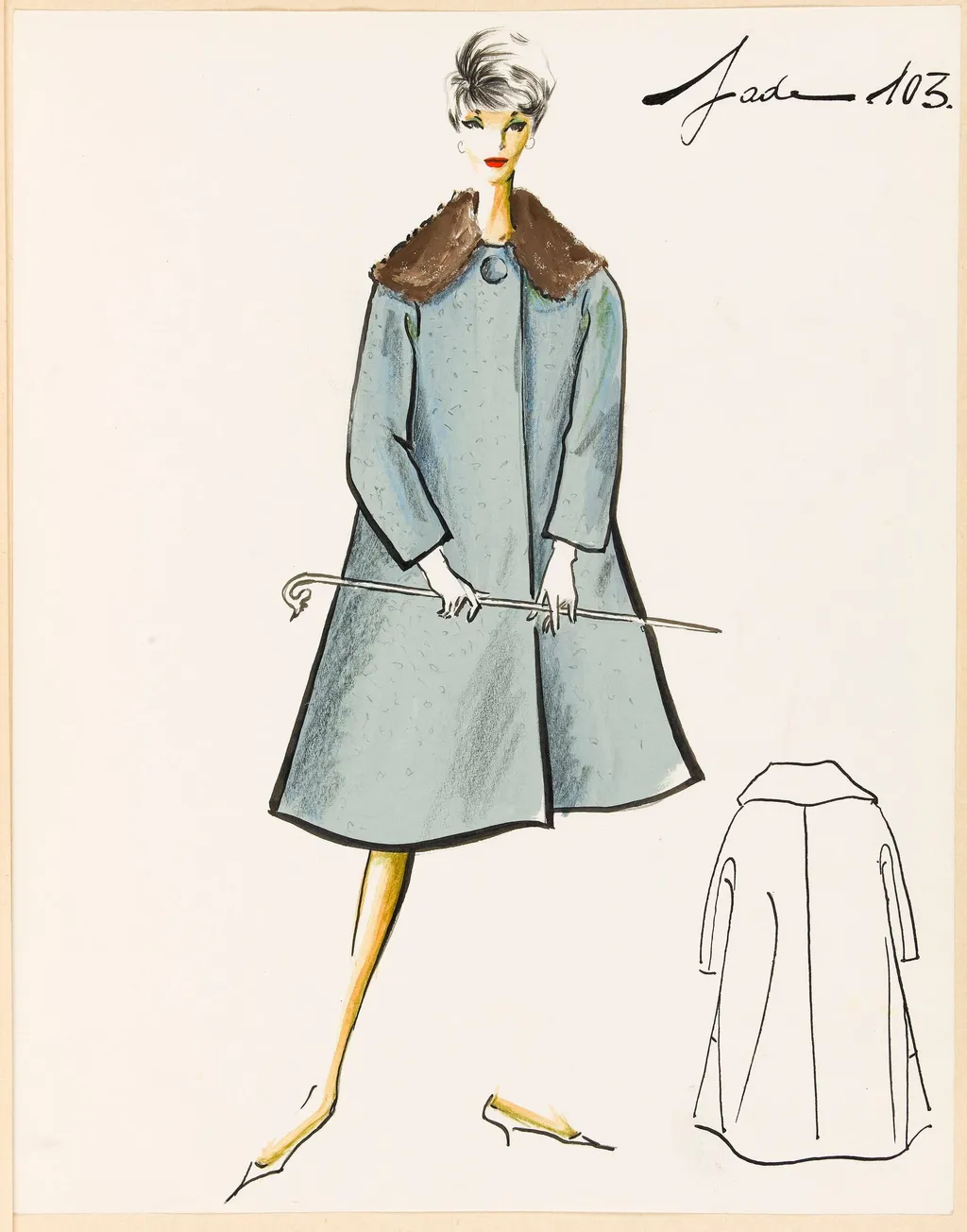
Jade is a drawing by Carven. It dates from 1959 and is held in the collection of the Palais Galliera - Musée de la Mode de la Ville de Paris.
About this work
Overview
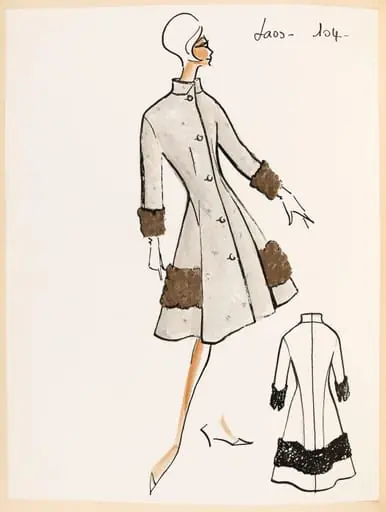
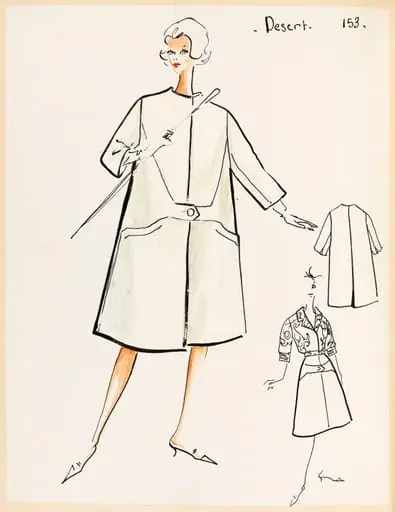
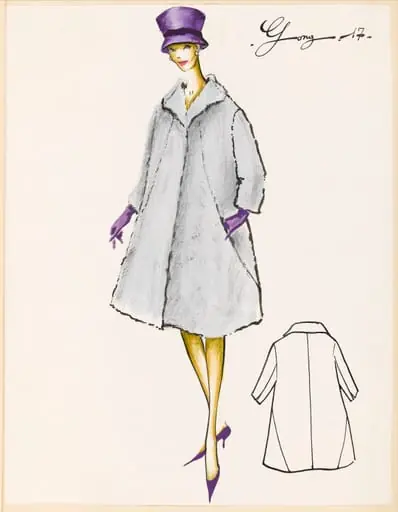
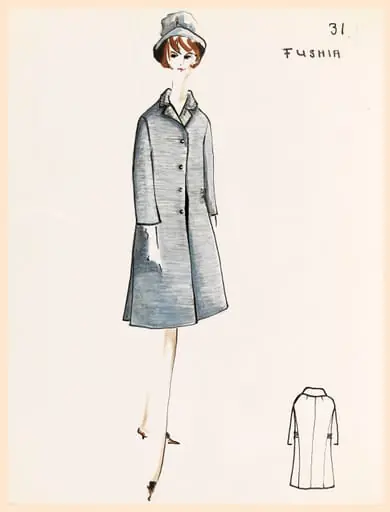
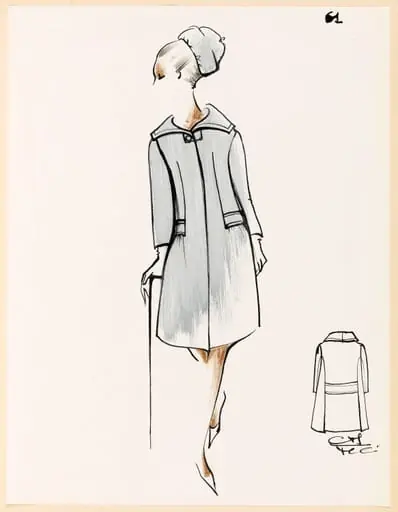
The work presents a seated female figure in a light blue coat with a fur-trimmed collar, holding a walking stick.
Created around 1959, Jade is a drawing attributed to the designer Carven. It resides in the collection of the Museum of Ethnography. The work presents a seated female figure in a light blue coat with a fur-trimmed collar, holding a walking stick. A smaller sketch of the coat’s rear appears beside her, suggesting an interest in garment structure. The signature 'Carven' aligns with the fashion label, blurring boundaries between fashion design and graphic art.
Subject & Meaning
The figure in Jade appears composed and restrained, dressed in a tailored yet loose coat that suggests both elegance and practicality. The walking stick may imply mobility or authority, while the title 'Jade' could reference the cool, polished green hue associated with the stone—perhaps alluding to the fabric’s texture or color. The absence of facial detail invites focus on posture and attire, emphasizing the garment as the central subject.
Technique & Style
The drawing employs clean, precise lines to define the coat’s silhouette, contrasting with softer shading in the fur collar and shoes. The inclusion of a secondary sketch of the coat’s back reveals an analytical approach, typical of fashion drafting. Ink or graphite on paper creates a restrained tonal range, reinforcing the minimalist aesthetic. The composition balances realism with schematic clarity, characteristic of mid-century design studies.
History & Provenance
Jade entered the Museum of Ethnography’s collection in the late 20th century, likely as part of a broader acquisition of fashion-related graphic works. Its attribution to Carven aligns with the designer’s known practice of producing detailed sketches for garment development. The piece was not exhibited publicly until decades after its creation, suggesting it was initially a working drawing rather than a finished artwork.
Context
In the late 1950s, fashion houses increasingly documented design processes through drawings, merging artistic expression with technical precision. Carven, known for understated elegance, operated within this tradition. Jade reflects a moment when fashion design was recognized as a visual discipline worthy of archival preservation, distinct from haute couture’s public presentations but integral to its creation.
Legacy
Jade contributes to the understanding of how fashion designers used drawing not merely for presentation but as a tool for conceptual exploration. Its presence in an ethnographic museum underscores the cultural significance of clothing as material culture. The work remains a quiet example of how design practice, once private, became part of institutional narratives about 20th-century aesthetics.
Artist & collection
Artist
These delicate ink-on-paper drawings capture the quiet poetry of everyday things: pinecones, reeds, apples.
Museum
Palais Galliera - Musée de la Mode de la Ville de Paris
Continue through works from the same source collection.